Xieyi Painting as a Means of Meditation
|
The act of practicing and creating Xieyi painting can be a form of meditation, allowing artists to connect with their inner self, cultivate mindfulness, and find a sense of peace and balance. The process itself can be a spiritual practice. It provides a channel for both artistic and personal growth. 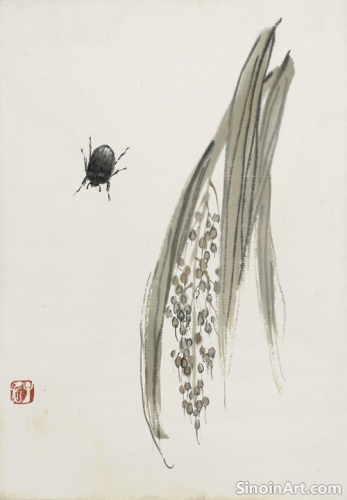 The focus and concentration required for Xieyi, mastering brush control, ink application, and composition, can quiet the mind and allow the artist to enter a state of flow. The act of painting becomes a way to achieve a state of focused presence. It’s a mental state that promotes inner harmony. 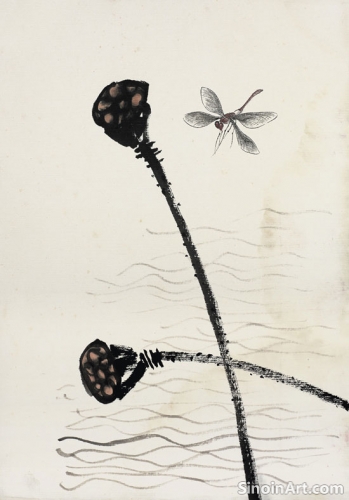 The repetitive and rhythmic movements of the brush on the paper can also be seen as a form of meditative practice, helping the artist to center themselves and to connect with the creative process. The rhythm of creation becomes a form of meditative practice. 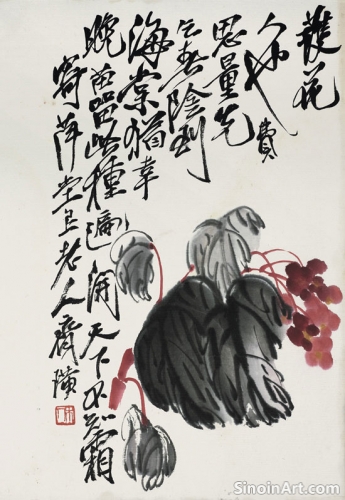 The appreciation of beauty and the pursuit of harmony with nature, which are central to Xieyi, can also cultivate mindfulness and a sense of connection with the larger universe. The focus on these aspects allows the artist to connect to nature and the universal consciousness. Through the act of painting, the artist can express their inner thoughts and feelings, explore their own inner landscape, and find a sense of self-awareness and understanding. This is not only a method of making art, but also a journey towards self-knowledge and spiritual awareness. |
Tag : Meditative art, mindfulness practice, Zen painting, art therapy, spiritual art
Related information
- Ink Wash Techniques in Xieyi: Shades of Meaning
- Famous Xieyi Artists: Masters of the Spontaneous Brush
- The Symbolism of Xieyi: Expressing Inner Worlds
- The Concept of "Yi" in Xieyi Aesthetics
- The Influence of Literati Painting on Xieyi
Ink wash, or shuimo (水墨), is a fundamental technique in Xieyi painting. It involves the skillful application of various shades of ink, diluted with water, to create depth, texture, and atmosphere. Mastery of ink wash is critical for achieving the desired expressive effects.
This article highlights the contributions of famous Xieyi artists throughout history, including Xu Wei, Bada Shanren, Qi Baishi, and Zhang Daqian, discussing their unique styles and their influence on the evolution of the art form.
This article explores the symbolic elements within Xieyi painting, focusing on how subjects, composition, and brushwork contribute to the expression of the artist's inner world and cultural values.
"Yi" (untrammeled) is a highly valued aesthetic in Xieyi painting, referring to effortless freedom, spontaneity, a lack of artifice, and a sense of naturalness, achieved by letting go of rigid rules, allowing intuition to guide the brush, and creating artworks that are both expressive and simple.
Xieyi painting is deeply influenced by the tradition of literati painting, emphasizing personal expression, calligraphic brushwork, the blending of poetry and painting, and the pursuit of simplicity and naturalness.