Xieyi Figures: Capturing the Essence of Humanity
|
While less common than landscapes and flowers/birds, figure painting (人物画, renwuhua) also has a place within the Xieyi tradition. These works often focus on capturing the character and spirit of the individual rather than simply portraying a likeness. The focus is on expression and inner qualities. 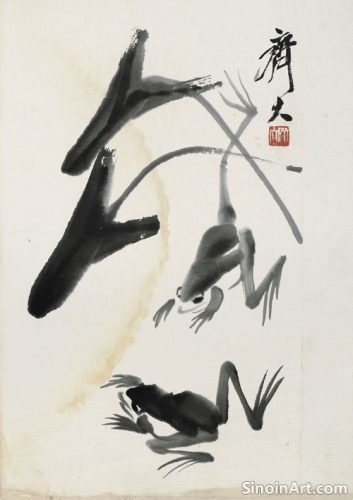 The brushstrokes in Xieyi figure painting are often bold and gestural, emphasizing the form and movement of the figure. Ink wash techniques are used to create depth and suggest the interplay of light and shadow. Artists prioritize capturing the essence of the human form.  Xieyi artists often depict figures in motion or in moments of contemplation, aiming to portray the complexity of human experience. The focus is often on expressing emotions and attitudes through subtle cues. The artist attempts to capture a glimpse into the human experience through their art. 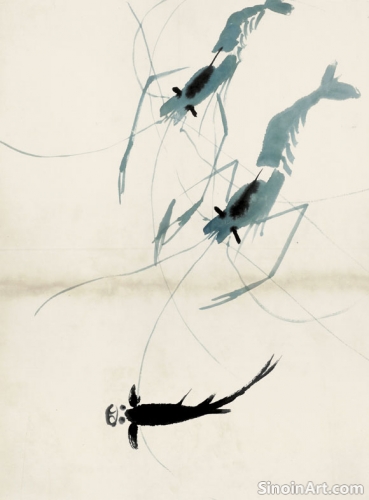 Unlike the carefully rendered details of Gongbi figure painting, Xieyi figures often have a more abstract and suggestive quality. The aim is not to replicate realism but to capture the essence and inner spirit of the figure. The goal is to create a form that resonates with the human experience. Through their unique interpretations of the human form, Xieyi figure painters offer insightful portrayals of the human condition. They strive to express the human experience with spontaneity, leaving an expressive, impactful mark. |
Tag : Xieyi Figure Painting, Chinese Literati Figure Art, Expressive Figure Painting, Ink Wash Figure, Essence of Humanity in Art
Related information
- The Spiritual and Philosophical Dimensions of Xieyi
- The Brushstrokes of Xieyi: Mastering Spontaneity
- Xieyi Painting and the Concept of "Yi Qian Bi Hou"
- The "Three Perfections" in Xieyi
- The Essence of Expression: An Introduction to Xieyi Painting
Xieyi painting is deeply rooted in Chinese philosophy, particularly Daoism and Chan Buddhism, emphasizing the importance of spontaneity, mindfulness, the pursuit of qi or vital energy, and the spiritual significance of emptiness in art.
This article delves into the various brushstrokes and techniques used in Xieyi painting, emphasizing the importance of mastering spontaneity and ink control to convey the spirit of the subject.
"Yi Qian Bi Hou" (intention before the brush) is central to Xieyi, emphasizing the importance of having a clear vision and intention before painting, so that brushstrokes naturally express the artist's inner feelings and ideas, requiring thoughtful preparation, and guiding brushwork with creativity and personal vision.
The "Three Perfections" (sānjué) – poetry, calligraphy, and painting – represent the holistic literati ideal, emphasizing the integration of these three art forms as a complete expression of the artist's personal feeling, thought, and their connection to tradition, with calligraphy’s influence often seen in Xieyi’s brushwork.
This article introduces Xieyi painting, a freehand and expressive style of Chinese painting, emphasizing its focus on capturing the essence of a subject through bold brushwork and simplified forms.