The Essence of Expression: An Introduction to Xieyi Painting
|
Xieyi, which translates to "sketching ideas" or "writing the meaning," is a fundamental style in traditional Chinese painting. Unlike the meticulous detail of Gongbi painting, Xieyi emphasizes freehand brushwork, capturing the spirit and essence of a subject rather than its precise likeness. It's a style that values spontaneity, expressiveness, and the artist's personal interpretation. This approach allows the artist to imbue their paintings with a sense of life, movement, and emotion, making it a uniquely captivating art form. It prioritizes the underlying idea over meticulous accuracy. 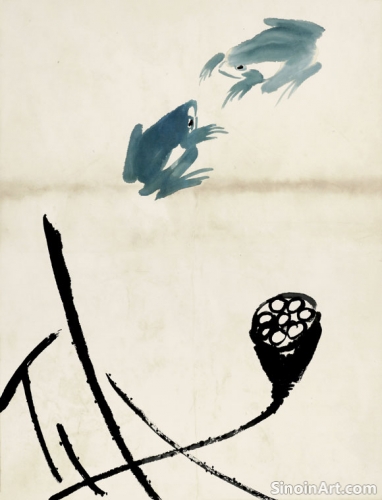 The history of Xieyi painting is deeply intertwined with the development of Chinese calligraphy and the philosophy of Chan (Zen) Buddhism. Its roots can be traced back to the Tang Dynasty, but it truly flourished during the Song Dynasty and beyond. Artists began to move away from purely representational art towards a more expressive style, utilizing bold brushstrokes and simplified forms. This shift reflected a growing emphasis on personal expression and the capture of inner truth, rather than mere external appearances. The tradition is built upon a strong foundation of understanding the balance between form and spirit. 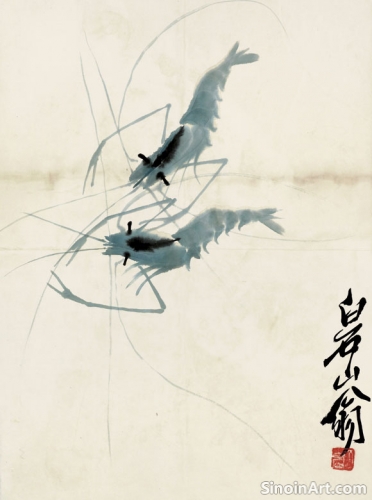 The techniques of Xieyi painting are as unique as its philosophy. The artist employs a variety of brushstrokes, from broad, sweeping gestures to fine, delicate lines, all aimed at conveying the subject’s inherent energy. Ink is the primary medium, often used in varying shades from light washes to deep, rich blacks. The use of color is generally more subdued than in Gongbi painting, with an emphasis on the tonal values of ink to create depth and dimension. The brush itself becomes an extension of the artist’s hand and mind, transmitting emotion directly onto the surface. 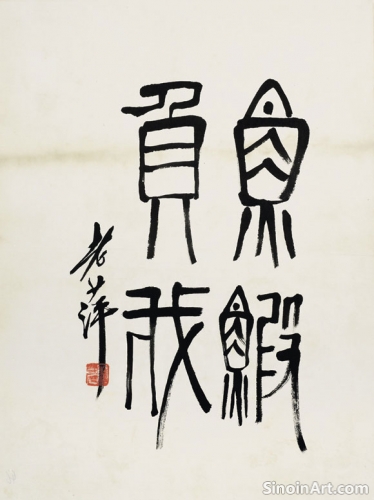 Xieyi painting is not simply about replicating what the eye sees; it's about conveying the underlying spirit or “qi” of the subject. The artist seeks to capture the essence of a bamboo’s resilience, the energy of a galloping horse, or the tranquility of a landscape. This involves a deep understanding of the subject, both internally and externally. It requires intuition, an appreciation for the subject’s inherent qualities, and the artist's ability to translate that onto the canvas using a limited number of strokes. In contemporary times, Xieyi painting continues to be a vital force in Chinese art. While some artists maintain the traditional subjects of landscapes, birds, and flowers, others are experimenting with new themes and abstract forms. This adaptability ensures that the expressive spirit of Xieyi painting continues to resonate with artists and audiences both in China and around the globe, carrying the tradition forward in new and exciting ways. It serves as a bridge between the old and new. |
Tag : Chinese Xieyi Painting, Freehand Painting, Expressive Brushwork, Ink Wash Painting, Chinese Art Style
Related information
- The Influence of Zen Buddhism on Xieyi Painting
- The Legacy of Xieyi: From Tradition to Innovation
- Xieyi Painting and the Depiction of Animals
- The Brushstrokes of Xieyi: Mastering Spontaneity
- The Influence of Chan (Zen) Buddhism on Xieyi
Zen Buddhism has had a significant influence on the philosophy and practice of Xieyi painting. Zen’s emphasis on mindfulness, spontaneity, and direct experience resonates deeply with the core principles of Xieyi art. The relationship between Zen and Xieyi art is profound and ongoing.
This article traces the legacy of Xieyi painting from its origins in the Song Dynasty to its continuous evolution through subsequent dynasties, exploring its transformation from a tradition to a vibrant contemporary practice.
Animals are a common subject in Xieyi painting, used to express emotions, convey philosophical ideas, and capture the essence of the animal with simplified forms and spontaneous brushstrokes, relying on cultural symbolism and careful observation of the natural world, often as metaphors for the human condition.
This article delves into the various brushstrokes and techniques used in Xieyi painting, emphasizing the importance of mastering spontaneity and ink control to convey the spirit of the subject.
Chan (Zen) Buddhism profoundly influences Xieyi painting, emphasizing intuition, direct experience, mindfulness, and the concept of emptiness, aligning with the art form's focus on spontaneity, self-expression, and the pursuit of truth through art.