The Importance of Practice in Xieyi
|
Consistent and dedicated practice is essential for any aspiring Xieyi painter. Mastering the techniques of brushwork, ink control, and composition requires years of study and the commitment to hone one's skills. It is not enough to understand the theory, the techniques must be internalized through repetition. 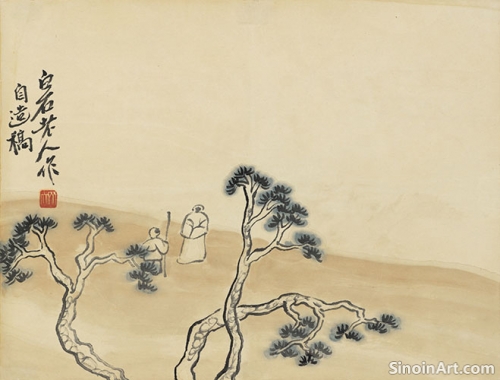 The practice of Xieyi is not just about improving one's technical skills; it is also about developing a deeper understanding of the philosophy, aesthetics, and cultural traditions of the art form. The more one practices, the more one comes to appreciate the deeper meanings. 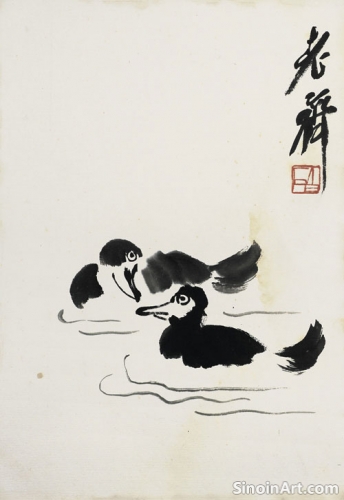 Regular practice helps to develop the artist's intuitive skills and to cultivate a sense of spontaneity. It's not enough to plan each stroke; practice helps the artist to find that balance between planning and intuition, between preparation and freedom. This balance is critical for expressive work. 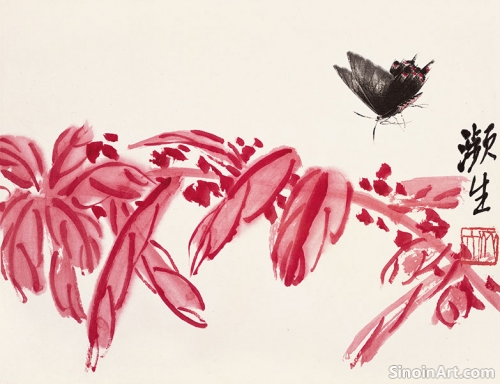 The process of practice also teaches the artist patience, perseverance, and the ability to learn from mistakes. The artist learns to see these as opportunities for growth and exploration, not as reasons for failure. The act of painting becomes a form of self-discovery. The act of practice becomes a form of meditative ritual. It is a way for the artist to connect with their inner self, the materials, and the subject. Through consistent practice, one's technical abilities can be refined, and the artist can begin to express their unique vision and voice. It is a process of continuous growth and artistic self-discovery. |
Tag : Xieyi practice, art learning, brushwork training, consistent art, artistic development
Related information
- Modern Interpretations and Contemporary Xieyi
- The Future of Xieyi: Innovation and Tradition
- The Importance of "Dry Brush" in Xieyi
- Xieyi Painting and the Use of "Contrasting Ink"
- The Concept of "Qing" in Xieyi Painting
Modern Xieyi painting is adapting to contemporary contexts through incorporating new techniques, subject matter, and philosophical ideas, while remaining grounded in the core principles of spontaneity, expression, and the pursuit of qi, and pushing its boundaries into the modern art world.
The future of Xieyi painting balances innovation and tradition, with artists exploring new materials and technologies while honoring core principles, and its global reach ensures a continued cross-cultural exchange and appreciation of its power and expressiveness, allowing it to continue to adapt and resonate through the generations.
The "Dry Brush" (kěbǐ) technique is essential in Xieyi, involving minimal ink and water to create broken, scratchy lines that add texture, depth, a sense of age, and dynamism, requiring a sensitive hand and enhancing the spontaneity and expressiveness of the art form.
"Contrasting Ink" (nóngdànmò) in Xieyi uses both dark and light ink strategically to create depth, volume, texture, and atmosphere through visual contrast, with dark ink creating boldness and light ink adding distance and subtlety, requiring skilled blending to create tonal gradations, expressive depth, and nuanced interplay of light and shadow.
"Qing" (feeling) is a fundamental concept in Xieyi painting, emphasizing the importance of artists imbuing their work with personal emotion and genuine expression, requiring sensitivity, observation, and technical skill to convey feelings through brushstrokes, composition, and connecting with viewers on a deeply human level.