The Future of Xieyi Painting
|
Despite its deep roots in tradition, Xieyi painting continues to evolve and find new forms of expression in the contemporary world. It remains a vital and dynamic art form, offering a rich medium for exploring a wide range of themes and ideas, as well as connecting to a unique artistic heritage. The art form continues to evolve as new generations adapt and interpret it.  Contemporary artists are expanding the boundaries of Xieyi painting, incorporating elements of Western art, experimenting with new materials and techniques, and exploring social and political themes. This evolution ensures that Xieyi remains relevant to contemporary life. The new expressions are not departures but extensions of the core values. 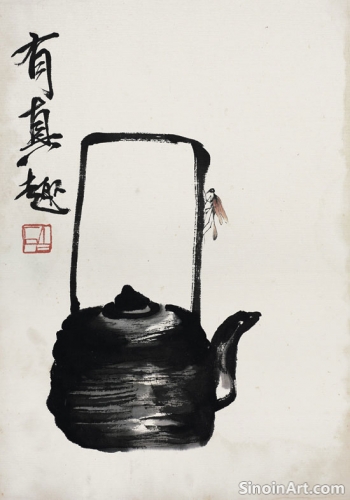 The rise of technology also presents new opportunities for Xieyi artists, allowing them to share their work with a wider audience and to explore digital platforms as creative outlets. This expanded access and experimentation can bring the Xieyi tradition to new audiences around the world.  The enduring appeal of Xieyi painting lies in its ability to connect with viewers on a deeply emotional level. The spontaneous brushstrokes, the suggestive imagery, and the emphasis on personal expression continue to resonate with audiences across cultures. It speaks a language that transcends specific cultures and times. The future of Xieyi painting seems bright as new artists embrace and interpret its rich history and traditions. The art form continues to inspire and to challenge artists, ensuring its continued relevance and vitality in the years to come. It continues to be a living art, and a powerful means of cultural expression. |
Tag : Future of Xieyi, evolving art, contemporary ink, modern Chinese art, artistic innovation
Related information
- Xieyi Painting and the Depiction of Trees
- The Connection Between Xieyi and Chinese Gardens
- The Spirit of Xieyi: An Introduction to Chinese Literati Painting
- Xieyi Painting and the Depiction of Animals
- The Influence of the Seal Script on Xieyi
Trees are a powerful subject in Xieyi painting, depicted through expressive brushwork and washes to capture their unique forms, textures, and symbolic representations of longevity, growth, resilience, and the connection between the human and natural realms, conveying both beauty and a profound appreciation for the cycles of life.
Xieyi painting and traditional Chinese gardens share a focus on naturalness, harmony, strategic use of negative space, and asymmetry, both creating microcosms of nature that foster contemplation, reflection, and a deeper connection to nature and the human spirit, displaying shared design principles and underlying goals.
Xieyi, often translated as sketching thoughts or freehand style, is a significant genre within Chinese painting. It is characterized by its emphasis on capturing the essence and spirit of a subject rather than its exact appearance. This expressive, spontaneous approach prioritizes the artist's personal emotions and inner vision.
Animals are a common subject in Xieyi painting, used to express emotions, convey philosophical ideas, and capture the essence of the animal with simplified forms and spontaneous brushstrokes, relying on cultural symbolism and careful observation of the natural world, often as metaphors for the human condition.
The Seal Script (zhuànshū) influences Xieyi painting through its emphasis on balance, flowing lines, symmetry, organic forms, and its use in artist's seals, inspiring the composition, line quality, and overall design, while also deepening the understanding of brush control, and ink application within the Xieyi tradition.