Bronze Ware and the Development of Ancient Chinese Writing Systems
|
The evolution of Chinese writing systems was closely intertwined with the production and use of bronze ware, with many of the earliest forms of writing found inscribed on bronze objects. These inscriptions provide invaluable insights into the development of written Chinese and the relationship between text and ritual. The study of these texts helps to illuminate a rich period of artistic and technological innovation.  Early bronze inscriptions, known as jinwen, often included simple ideographs and pictorial representations of objects and concepts. These simple forms were the basis from which later more complex forms of writing would develop. 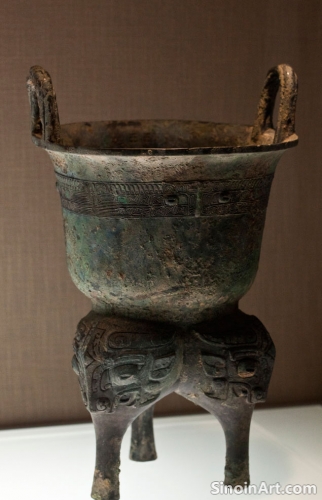 The evolution of writing styles is clearly visible in the changing forms of bronze inscriptions, from the early archaic script to the more standardized forms of later periods. The development of the written language is clearly visible in these bronze inscriptions. 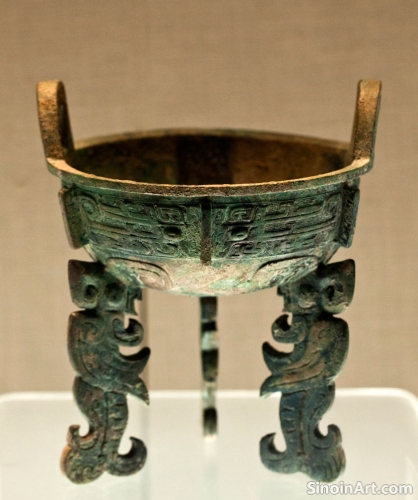 The creation of written language on bronze objects also reflects a growing need to record important information, laws, and cultural practices, as the use of bronze became increasingly important for codifying ideas and traditions. The development of the writing system was an important component of the development of Chinese culture. The study of bronze inscriptions has played a crucial role in the understanding of ancient Chinese writing, allowing us to trace its evolution and to better understand the origins of Chinese script. The careful study of these texts helps to bring to light details of ancient Chinese culture and its relationship to the written word. |
Tag : bronze inscriptions writing, Chinese writing systems, jinwen, script evolution, ancient languages
Related information
- The Preservation of Inscribed Bronzes: Understanding the Text and History
- Bronze Ware and the Representation of Power in Ancient Chinese Royal Courts
- Chinese Bronze Ware in Global Collections: A Transcultural Perspective
- The Role of Bronze in Ancient Chinese Communication: Inscriptions, Messages, and Records
- The Bronze Masks of Sanxingdui: Exploring Ritual, Transformation, and the Unseen Realm
This article focuses on the preservation of inscribed bronze ware, highlighting the importance of protecting both the objects and their historical texts, detailing the techniques used for conservation and analysis, and emphasizing the ongoing academic work to interpret the inscriptions.
This article explores the use of bronze ware in ancient Chinese royal courts, highlighting its role in representing authority, wealth, and social status, demonstrating how bronze objects were used to reinforce the power of the ruling class.
This article explores the global distribution of Chinese bronze ware, highlighting its presence in museums and collections worldwide, the history of collecting, and the value of a transcultural perspective in understanding their significance.
This article explores the role of bronze in ancient Chinese communication, highlighting how bronze objects were used to record messages, transmit laws, document events, and how they served as a medium for communication and knowledge transmission.
This article delves deeper into the bronze masks of Sanxingdui, exploring their unique characteristics, their role in ritual performances, their connection to the spirit world, and the insights they provide into the distinct religious beliefs of the ancient kingdom of Shu.