Bronze Ware and the Development of Ancient Chinese Writing Systems: From Script to Art
|
The evolution of Chinese writing systems was deeply intertwined with the production of bronze ware, with the early forms of writing often being inscribed onto bronze objects. This interaction highlights how material culture can influence the forms and styles of language and communication. The influence of the material upon the written form is one of the most striking features of early Chinese writing. 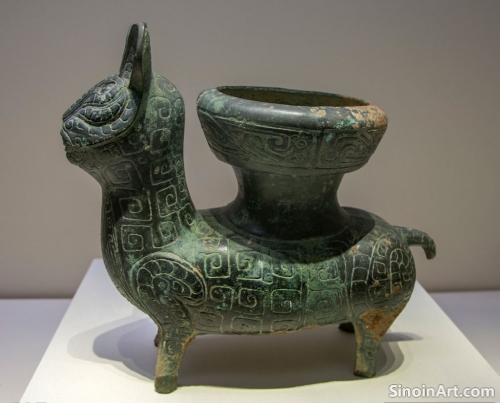 The earliest forms of Chinese writing, often referred to as jinwen (金文) or "bronze script", demonstrate the direct influence of the bronze medium, with its angular lines and stylized characters reflecting the techniques of metal carving. The techniques of metal carving clearly shaped the written word at the earliest stages of its development. The use of these early forms helped to create the foundation for the written word in Chinese culture.  The evolution of these early forms of writing can be directly traced through the bronze objects, showing a progression from simple ideographs to more complex and stylized characters, directly linking the history of language with the history of artistic expression. The styles and techniques used in working with bronze directly influenced the overall appearance of written Chinese. The changes in the written style reveal much about the changing culture of the time.  The bronze medium also helped to establish the importance of writing in ancient Chinese society, using the permanence of metal to record important historical events, genealogies, and religious beliefs. The use of bronze to record important information helped to codify and preserve this information for future generations. The use of bronze for written records helped to establish the importance of the written word in ancient Chinese culture. The study of bronze inscriptions and their connection to the evolution of writing helps to reveal the profound connection between language, art, and material culture in ancient China. The integration of these different aspects of culture helped to enhance the status and importance of the written word. |
Tag : bronze inscriptions, jinwen, ancient Chinese writing, script evolution, calligraphy origins
Related information
- Bronze Ware and Ancient Chinese Astronomy: Celestial Symbols and Interpretations
- The Use of Bronze in Ancient Chinese Medicine: Exploring the Relationship Between Materials and Healing
- A Guide to Further Study: Navigating the World of Chinese Bronze Ware Resources
- Bronze Ware and Ancient Chinese Textile Production: Spindle Whorls, Weaving Tools, and Textile Art
- The Use of Bronze in Ancient Chinese Textile Production: Tools and Decorative Elements
This article explores the connection between bronze ware and ancient Chinese astronomy, highlighting the use of celestial symbols, the representation of astronomical phenomena, and the use of bronze in astronomical instruments, showcasing the interplay between art and science.
This article explores the use of bronze in ancient Chinese medicine, highlighting the belief that the material itself possessed healing properties, and how it was used in creating vessels for preparing remedies, and in some therapeutic practices.
This article provides a guide to further study on Chinese bronze ware, highlighting academic journals, museum websites, online collections, and books, and providing a roadmap for continued exploration and research into this fascinating area of art and culture.
This article explores the use of bronze in ancient Chinese textile production, highlighting its role in creating spindle whorls, weaving tools, decorative elements, and the interplay between metalworking and textile crafts.
This article explores the use of bronze in ancient Chinese textile production, highlighting its role in creating tools like hooks and needles, decorative elements like buckles, and revealing the interplay of metalworking and textile craftsmanship.