Bronze Ware and Ancient Chinese Textile Production: Tools, Weights, and Decorative Embellishments
|
While bronze is not a textile material, it played a supporting role in ancient Chinese textile production, used to create tools, weights, and other devices that were essential for weaving, spinning, and creating fine fabrics. The use of bronze in the textile arts helped to both improve efficiency and also to create new and innovative forms of textile design. The interplay between metalworking and textiles is a valuable insight into the ingenuity and skill of the era. 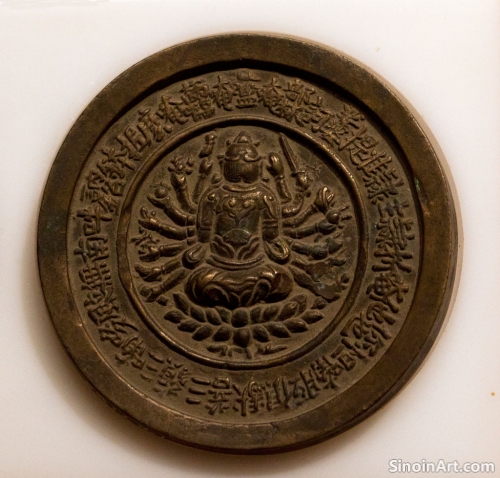 Bronze spindle whorls, with their consistent weight and balanced form, were used to spin fine threads for weaving, and they helped to create more durable and reliable methods for the production of high quality textiles. The integration of bronze tools into the textile production process helped to create more reliable and efficient techniques for spinning and weaving.  Bronze weights were used to maintain tension on looms and also to ensure the even distribution of threads, helping to create fabrics with consistent weave and texture. The careful management of the weaving process was key to producing high-quality textiles. 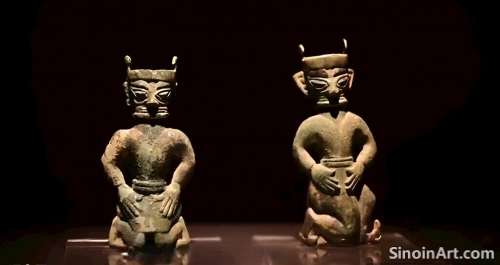 Bronze was also used to create decorative elements for textiles, including buckles, clasps, and belt hooks, which were used to embellish clothing and to help highlight both the artistry of the textile itself and also the skill of the artisans. The integration of decorative elements into textile design helped to make clothing into a form of artistic expression. The study of bronze in the textile arts reveals the complex interplay between different technologies and the ways in which materials were adapted to meet a wide variety of practical and artistic needs. The connection between these different fields is essential for understanding the full breadth of ancient Chinese artistry and technology. |
Tag : bronze textile tools, ancient weaving, Chinese textiles, spinning implements, decorative elements
Related information
- Bronze Ware and the Rise of Cities in Ancient China: Power, Trade, and Urban Centers
- The Use of Bronze in Ancient Chinese Food Preparation and Dining: Utensils and Vessels
- Bronze Ware and Ancient Chinese Beliefs About Immortality: The Quest for Everlasting Life
- Bronze Ware and Ancient Chinese Astronomy: Decoding Celestial Patterns and Calendars
- Bronze Ware and Ancient Chinese Philosophy: Exploring the Connection Between Material Culture and Intellectual Thought
This article explores the connection between bronze ware and the rise of cities in ancient China, highlighting its role in economic activity, the concentration of wealth, the reinforcement of power, and the cultural flourishing of urban centers.
This article explores the use of bronze in ancient Chinese food preparation and dining, highlighting the creation of cooking pots, serving utensils, and tableware, and demonstrating how bronze was integrated into both daily life and social customs.
This article explores the connection between bronze ware and ancient Chinese beliefs about immortality, highlighting how mirrors, vessels, and symbolic designs were used to ensure the well-being of the deceased, and to help with their passage to an eternal existence.
This article explores how bronze ware reflects ancient Chinese understandings of astronomy, highlighting the use of celestial patterns, depictions of constellations, and the connection between astronomical knowledge and ritual practices.
This article explores the connection between bronze ware and ancient Chinese philosophy, highlighting how Confucian, Daoist, and Legalist ideas influenced the forms, designs, and symbolic meanings of these objects, demonstrating the interplay between material culture and intellectual thought.