Xieyi Painting and the Concept of "Tian Qu"
|
"Tian Qu" (天趣), often translated as "natural charm," "heavenly interest," or "divine spontaneity," is a crucial aesthetic ideal in Xieyi painting. It refers to the quality of art that seems to arise naturally, without effort or artifice, reflecting a sense of spontaneity and a deep connection to the natural world. It is the seemingly effortless quality that is often the most prized in Xieyi painting. It is an expression of the underlying harmony of the universe. 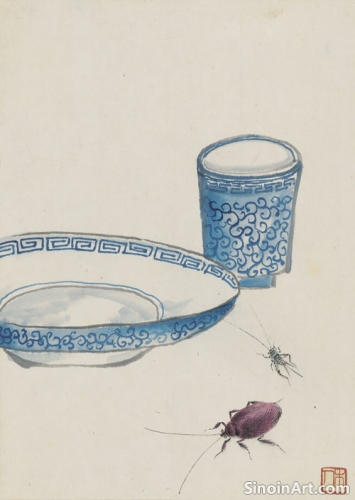 The pursuit of "Tian Qu" involves allowing the creative process to flow freely and naturally, without forcing or controlling the brushstrokes. The goal is to be in alignment with natural forces and to allow the art to emerge without any sense of effort. The work should feel natural, organic, and spontaneous. 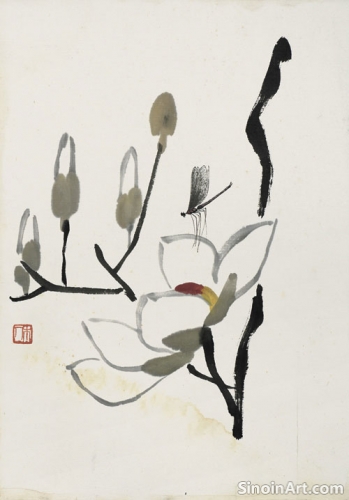 This concept underscores the importance of connecting with one’s intuition and inner feelings, allowing them to guide the creative process, rather than relying solely on technical knowledge or pre-conceived ideas. It comes from a place of internal balance and a clear connection to creative intention. 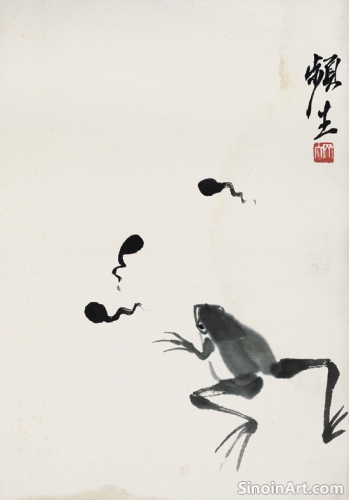 An artwork that embodies "Tian Qu" often appears to be simple, effortless, and deeply moving. The artwork is imbued with a feeling of life and vitality. It resonates on a deeper emotional and intuitive level. It is a state of natural harmony with both the artist’s inner self, and also with the nature of the universe. Ultimately, "Tian Qu" reflects the belief that true art should be a reflection of the natural world, spontaneous, and imbued with a sense of beauty and wonder. The artist is not just painting an image, they are reflecting the beauty of the world, and their own inner response to it. It is the subtle and nuanced expression of the beauty and wonder of the universe. |
Tag : natural charm, spontaneous art, divine style, Xieyi beauty
Related information
- The Ink of Xieyi: A Palette of Grays
- Early Development of Xieyi: Song and Yuan Dynasties
- The Connection Between Xieyi and Chinese Gardens
- The Legacy of Xieyi: From Tradition to Innovation
- The History and Evolution of Xieyi
This article focuses on the significance of ink in Xieyi painting, exploring its tonal variations, preparation process, and application techniques, emphasizing its role in capturing the essence of a subject.
The roots of Xieyi painting can be traced back to the Song Dynasty (960-1279), when scholar-officials began to develop a distinctive style of painting that reflected their unique values and aesthetics. The emphasis shifted from courtly patronage to individual expression, setting the stage for the emergence of Xieyi.
Xieyi painting and traditional Chinese gardens share a focus on naturalness, harmony, strategic use of negative space, and asymmetry, both creating microcosms of nature that foster contemplation, reflection, and a deeper connection to nature and the human spirit, displaying shared design principles and underlying goals.
This article traces the legacy of Xieyi painting from its origins in the Song Dynasty to its continuous evolution through subsequent dynasties, exploring its transformation from a tradition to a vibrant contemporary practice.
Xieyi painting evolved from the Song Dynasty literati tradition through subsequent dynasties, with key figures like Xu Wei, Qi Baishi, and Pan Tianshou contributing to its development, and continuing to influence contemporary artists.