The Influence of Gongbi on Other Art Forms
|
While Gongbi painting is a significant art form in its own right, its influence extends beyond the realm of traditional painting. Its emphasis on meticulous detail, precise linework, and vibrant colors has inspired artists and designers in a variety of other fields, from decorative arts to digital media. This influence demonstrates the power and enduring appeal of the Gongbi aesthetic.  In the decorative arts, such as porcelain and lacquerware, elements of Gongbi design are often incorporated. Intricate floral and bird patterns, with their precise details, are used to embellish these objects, adding a touch of elegance and sophistication. This transfer of design and technique brings the artistic language of painting into the decorative arts.  In the field of illustration and animation, the precise linework and detailed rendering characteristic of Gongbi are often adapted to create stylized characters and detailed scenes. The influence of Gongbi can be seen in character design, background illustrations, and overall aesthetic sensibility. The controlled and detailed approach can be translated to different digital formats. 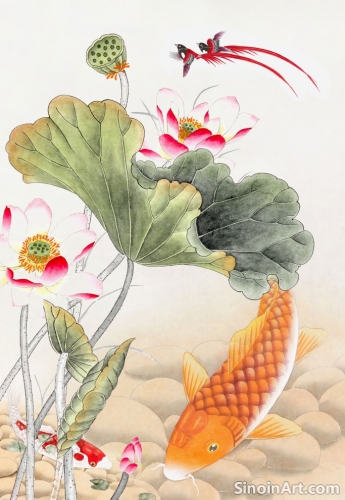 Textile and fashion designers are also drawing inspiration from the patterns and motifs found in Gongbi painting. Floral designs, geometric patterns, and detailed linework from Gongbi are being adapted and translated onto fabrics, creating unique and visually striking garments. The visual language of painting provides inspiration for fashion design. Even in contemporary digital art, the detailed rendering and intricate compositions of Gongbi are influencing a new generation of artists. The principles of layering, color mixing, and fine brushwork are being adapted to create digital works that are both technically masterful and visually stunning. The traditional art form has had a strong influence on digital aesthetics. The influence of Gongbi on other art forms demonstrates its enduring appeal and its capacity to transcend the boundaries of traditional painting. The aesthetic principles and technical mastery of Gongbi continue to inspire creative innovation across various fields. This ability to influence different mediums is a testament to the power of the art form. |
Tag : Gongbi influence, art inspiration, cross-disciplinary art, design elements, art crossover
Related information
- The Influence of Western Art on Contemporary Gongbi Painting
- The Use of White Space in Gongbi Composition
- Gongbi Painting in the Modern Era: Reinterpretations and Adaptations
- Gongbi Painting and its Role in Cultural Diplomacy
- Gongbi Painting and the Concept of "Qi Yun Sheng Dong"
This article explores the influence of Western art on contemporary Gongbi painting, highlighting the adoption of new perspectives, compositions, materials, techniques, and themes, and how these influences have created a unique hybrid style.
This article explores the importance of white space in Gongbi composition, highlighting its role in defining the main subject, creating depth, contributing to overall balance, and reflecting the philosophical principles of emptiness and the interplay of yin and yang.
Discusses the reinterpretations and adaptations of Gongbi painting in the modern era, highlighting new themes, techniques, and the blending of tradition with contemporary sensibilities.
This article explores the role of Gongbi painting in cultural diplomacy, highlighting its ability to foster cross-cultural understanding, promote artistic collaboration, and serve as a symbol of Chinese cultural identity on the global stage.
This article explores the significance of “Qi Yun Sheng Dong” (spirit resonance and lifelike movement) in Gongbi painting, highlighting the artist’s pursuit of capturing the essence and vital energy of the subject matter beyond mere visual representation.