
In the annals of the Qing Dynasty's Imperial Painting Academy, Chen Mei stands as a titan of the "New Court Style." His work "Peach Blossoms and Azure Winged Magpie" (Bitao Lanque Tu) is a quintessential example of the 18th-century artistic pursuit: a flawless marriage of nature’s delicate fleetingness and the permanence of imperial craft. This painting captures a vivid spring moment, where the ethereal beauty of blossoms meets the spirited presence of a rare bird.
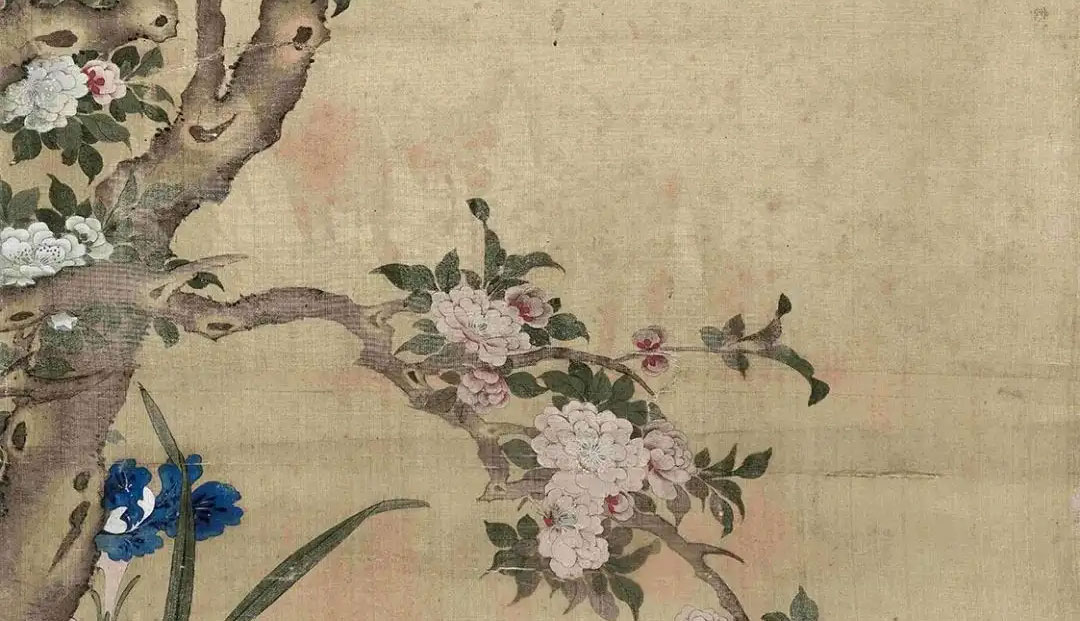
One of the most striking features of this masterpiece is its vibrant color palette. Chen Mei masterfully contrasts the soft, pastel pinks and whites of the peach blossoms (Bitao) with the deep, saturated azure of the magpie’s plumage. The use of mineral pigments allows the colors to retain their intensity even after centuries. The "Azure-winged Magpie" is rendered with such precision that its blue feathers appear to shimmer against the earthy tones of the gnarled branches, demonstrating a sophisticated understanding of color theory that predates many modern concepts.
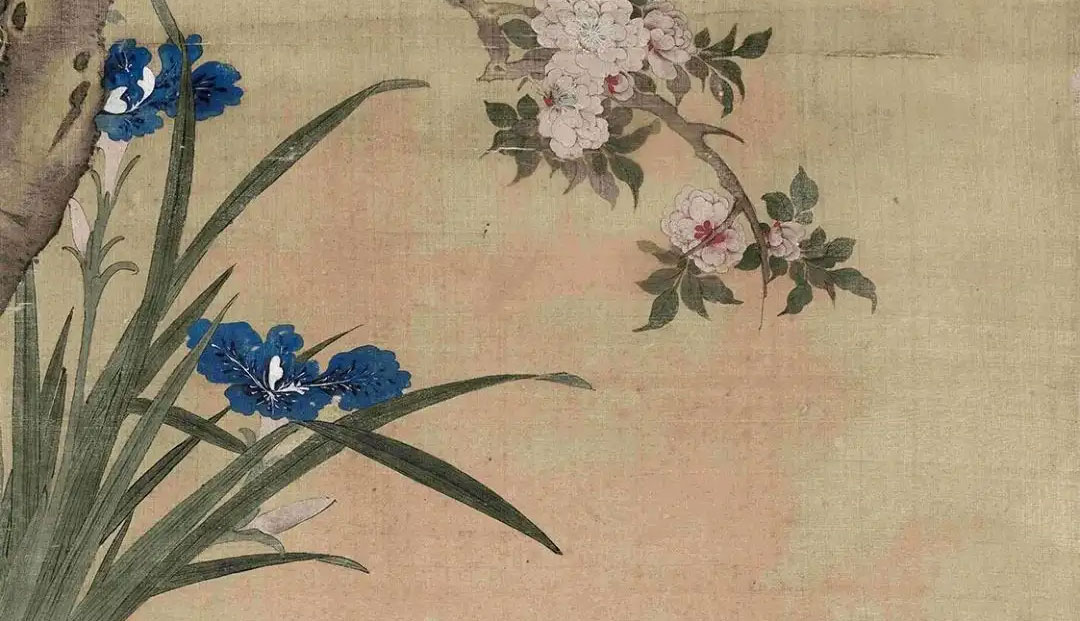
Like his other renowned works, this piece reflects the fusion of East and West. Under the influence of the European Jesuit painters serving the Qing court, Chen Mei moved beyond the flat two-dimensionality of traditional ink painting. In the rendering of the peach blossoms, one can observe subtle gradients and light-modeling that suggest volume and roundness. The branches are not merely outlined but "sculpted" through ink washes to show texture and age, while the magpie’s eye possesses a spark of lifelike realism—a hallmark of the realism introduced by Western artists like Giuseppe Castiglione.
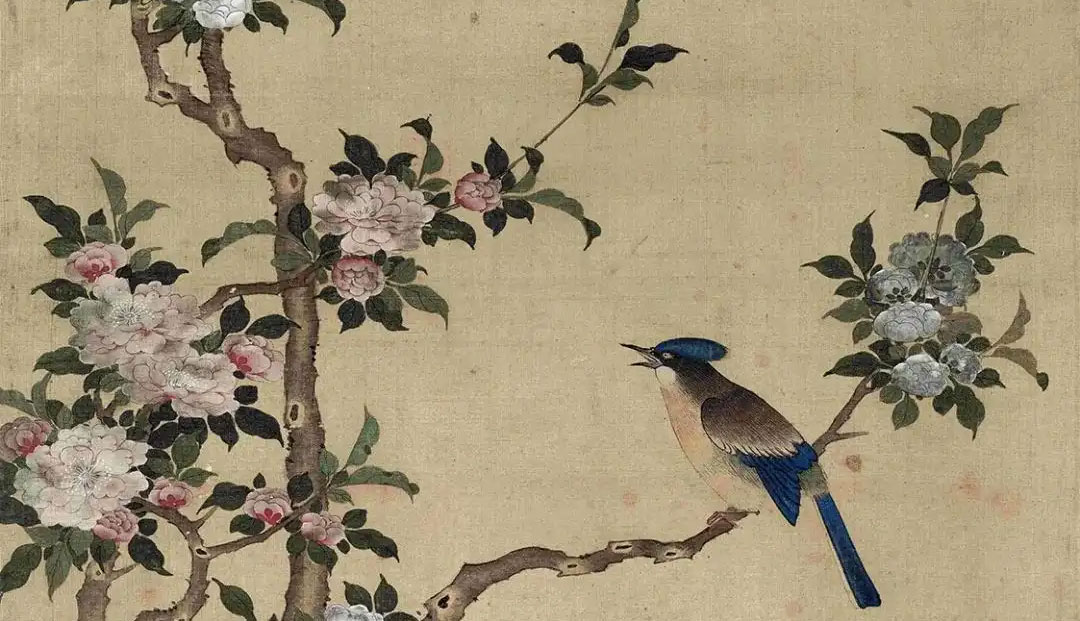
The composition follows the "broken branch" (zhezhi) tradition, focusing the viewer’s gaze on a concentrated segment of nature. The magpie is perched with a sense of alert vitality, its body angled as if it might take flight at any moment. This dynamic pose creates a "dialogue" with the static, blooming branches. The interplay between the "heavy" clusters of blossoms and the "light" grace of the bird’s long tail feathers gives the painting a rhythmic tension, embodying the Qi (life force) that is central to Chinese aesthetic philosophy.
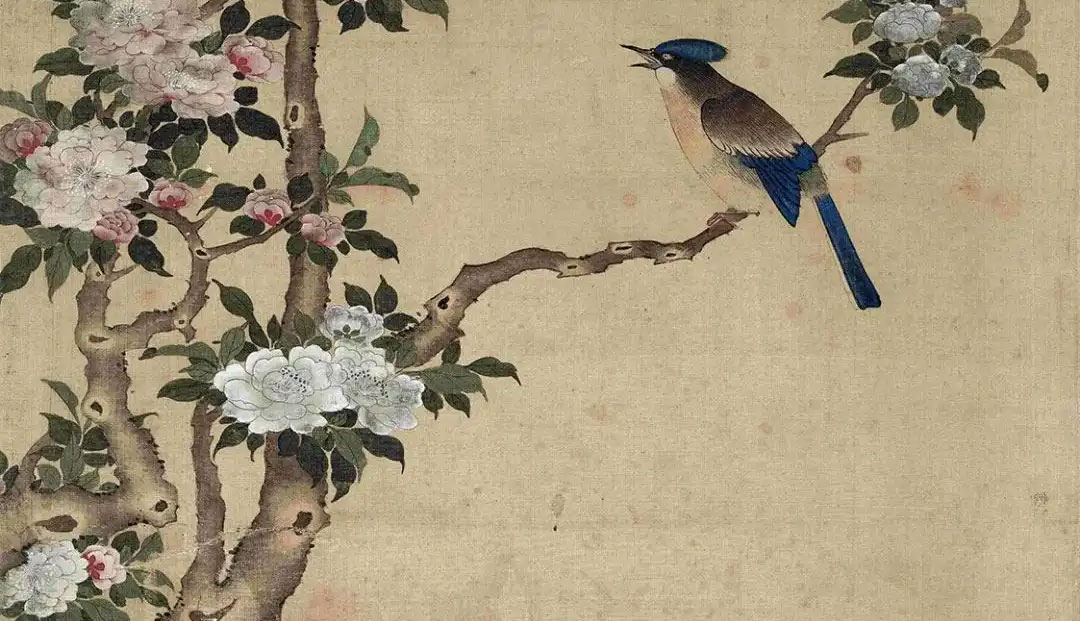
Beyond its visual splendor, the painting is rich in cultural symbolism. Peach blossoms are enduring symbols of spring, longevity, and even immortality in Chinese mythology (linked to the peaches of the Queen Mother of the West). The magpie, known as the "joyful bird" (Xique), is a harbinger of good news and happiness. Combined, the peach blossoms and the azure magpie represent a wish for "eternal spring and abundant joy." For the Qing emperors, such a painting was not merely art but a visual prayer for the enduring prosperity and happiness of the realm.
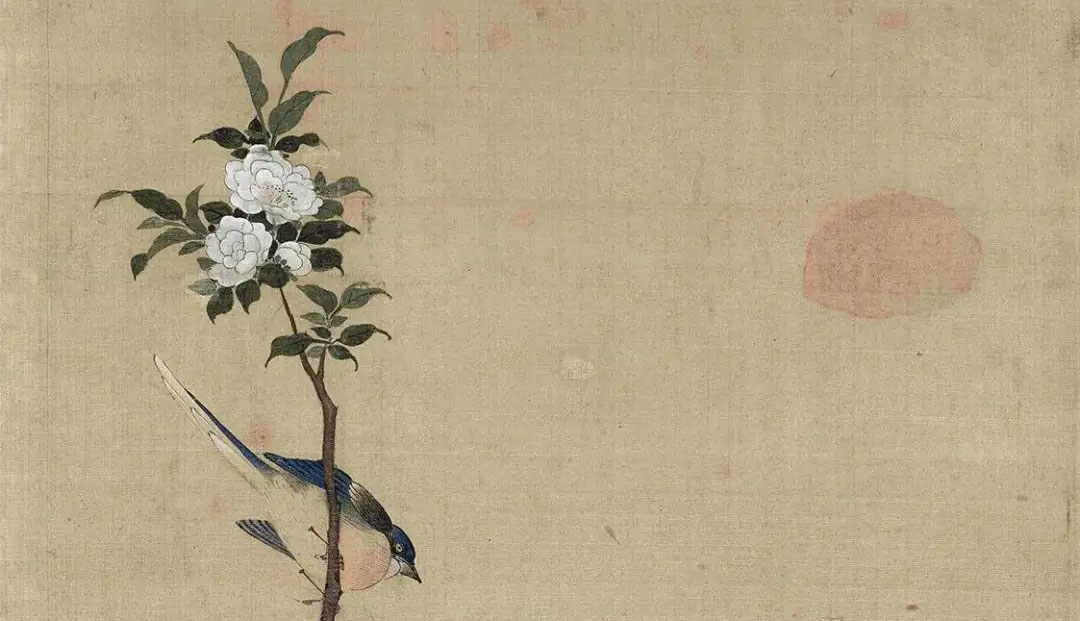
Chen Mei’s "Peach Blossoms and Azure Winged Magpie" remains a cornerstone of Qing Dynasty flower-and-bird painting. It represents the height of technical perfection achieved by the court artists, serving as a bridge between the ancient traditions of the Song Dynasty and the innovative, cross-cultural influences of the 18th century. It is a timeless testament to the beauty of the natural world, refined through the meticulous lens of an imperial master.