
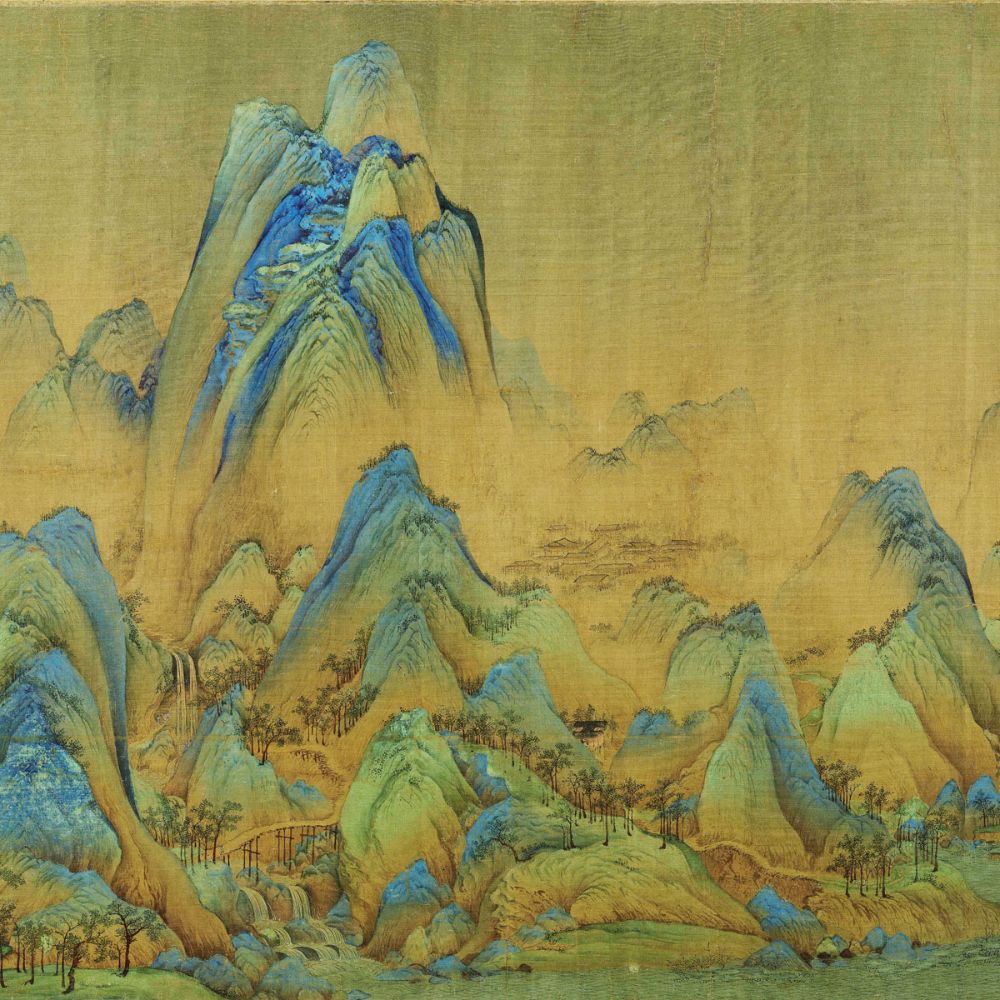
A Thousand Li of Rivers and Mountains (千里江山图) is the undisputed crown jewel of traditional Chinese landscape painting. Created around 1113 AD during the Northern Song Dynasty, it remains the only surviving work by the prodigy Wang Ximeng. At just eighteen years old, Wang was a student at the Imperial Painting Academy under the personal mentorship of Emperor Huizong, a renowned artist-monarch. The Emperor recognized Wang’s divine spark and provided him with the rarest mineral pigments and the finest silk. Wang completed this nearly twelve-meter-long scroll in a mere six months and vanished from historical records shortly after. His short, brilliant life—reminiscent of a meteor streaking across the night sky—bestowed upon this scroll an aura of tragic romance and celestial inspiration that has fascinated historians for nearly a millennium.
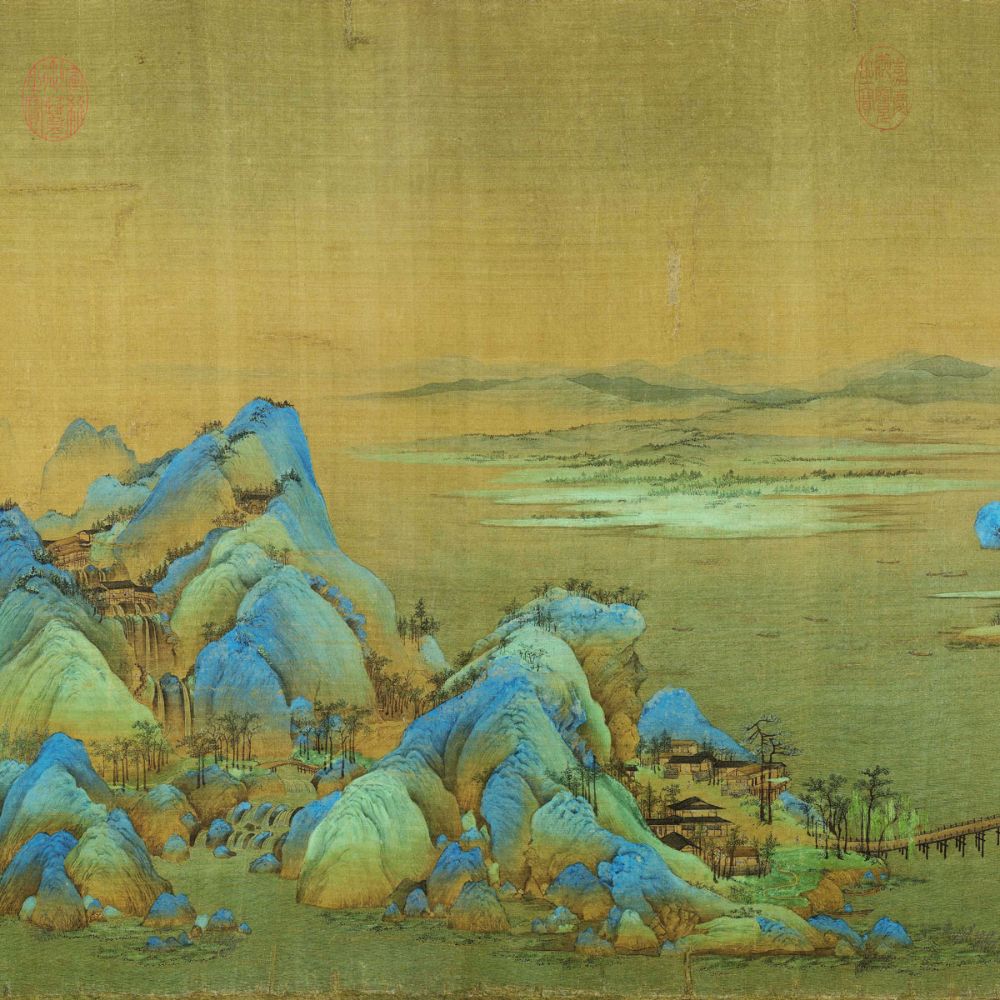
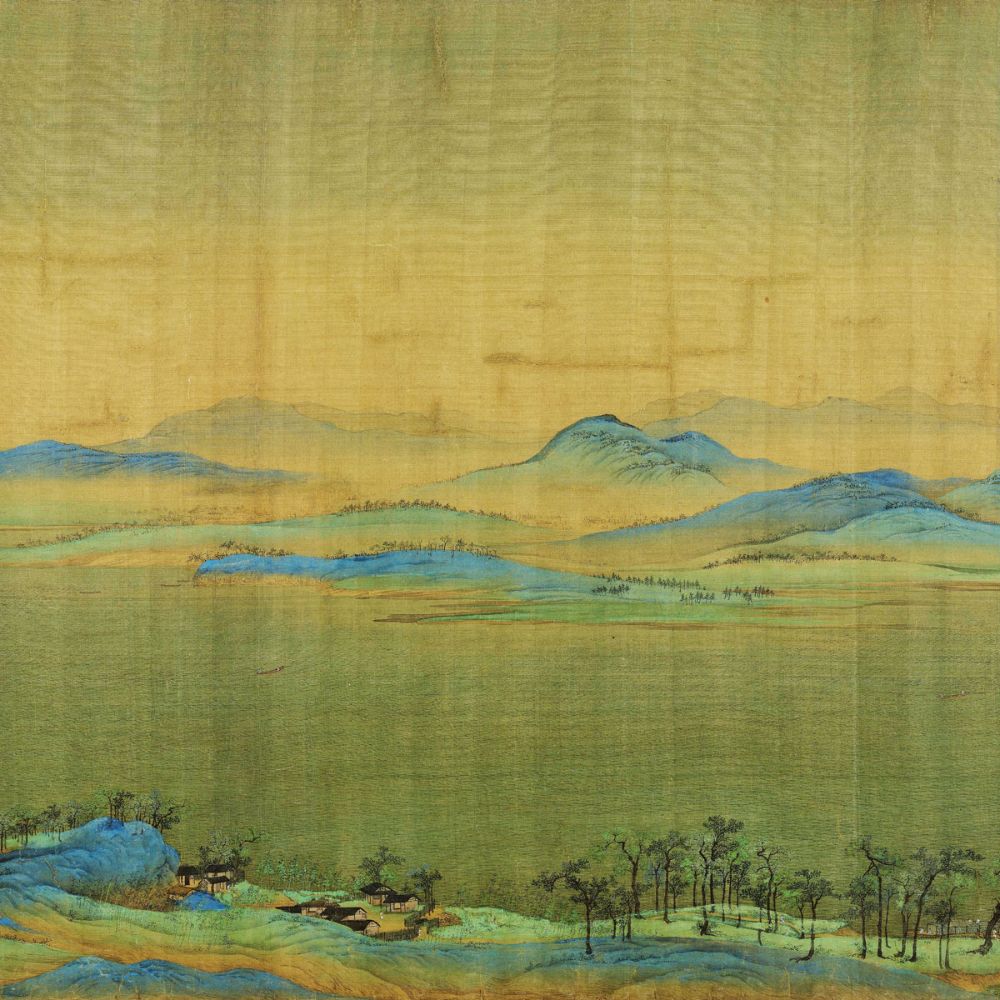
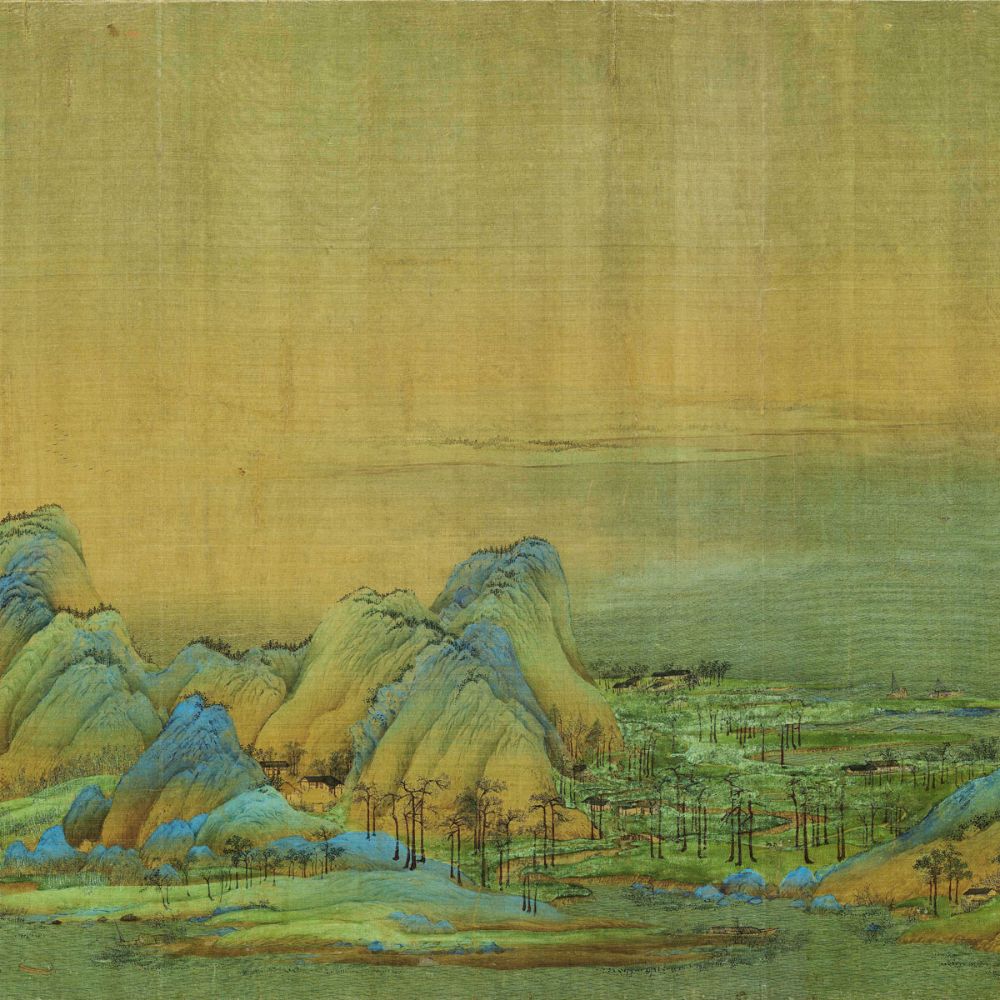
The painting represents the definitive peak of the Qinglu (Blue-and-Green) style, a vibrant departure from the monochromatic ink-wash traditions that followed. This style celebrated the luminous vitality of the natural world through the use of precious, pulverized minerals. Wang utilized malachite for the shimmering emerald greens and azurite for the deep, celestial blues. Because these are heavy mineral ores rather than vegetable dyes, they do not fade over time; instead, they possess a jewel-like luster that seems to glow from within the fibers of the medium. This luminosity was achieved through a meticulous five-layer technique, involving ink foundations and ochre washes beneath multiple applications of mineral color, creating a three-dimensional effect where the peaks appear to vibrate with "Qi," or life force.
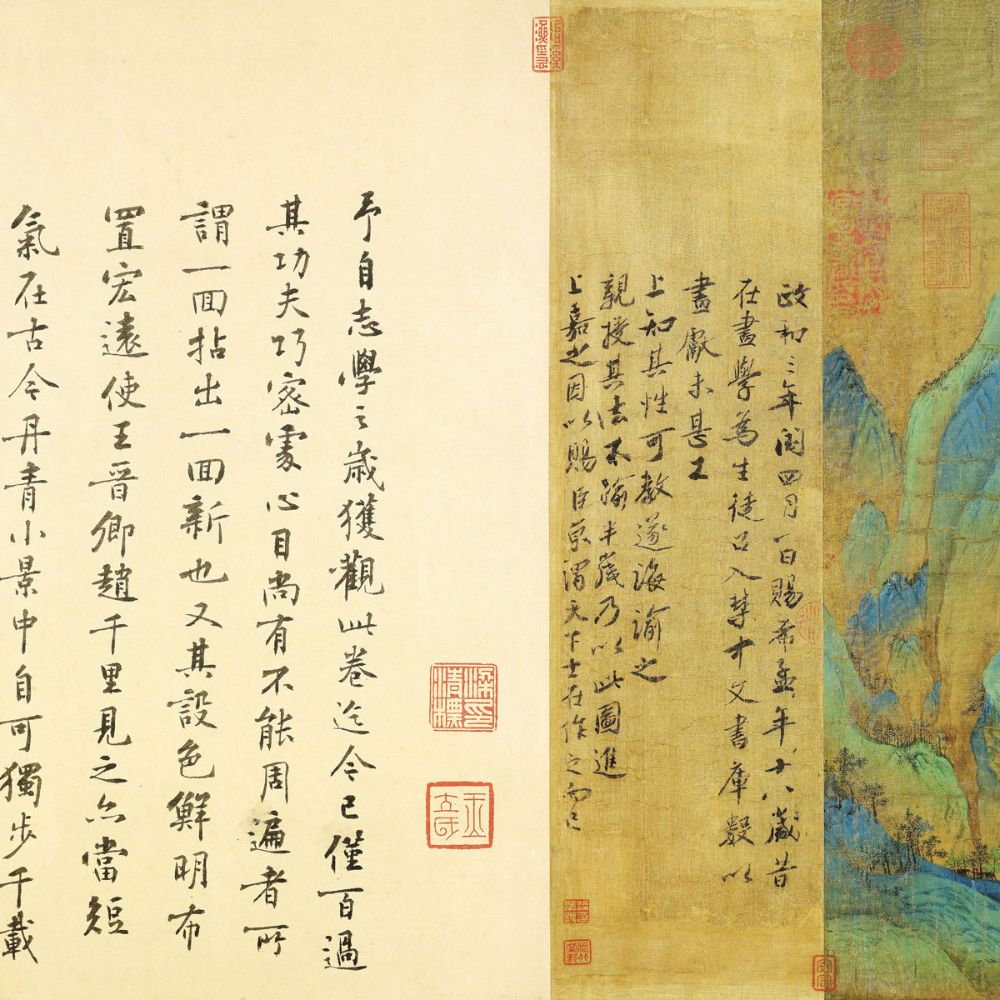
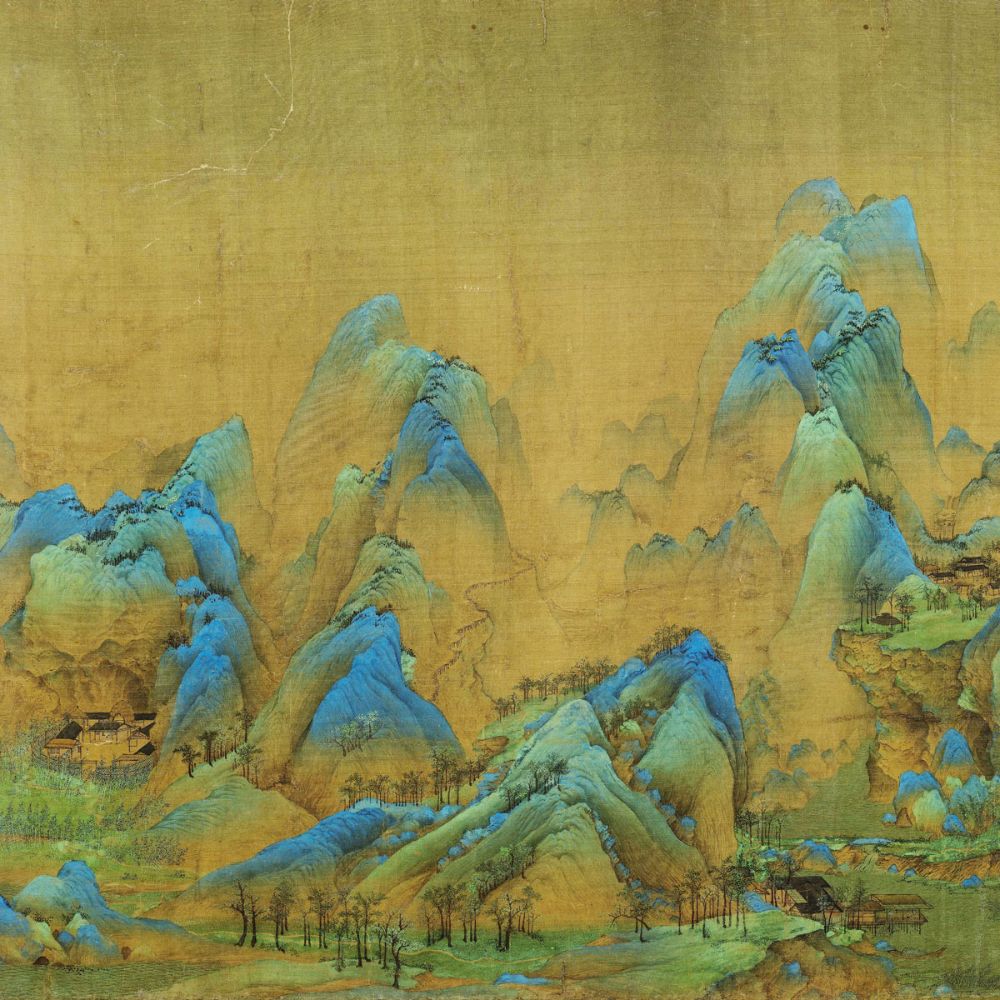
Measuring a staggering 11.91 meters (39.1 feet) in length, the scroll is a masterpiece of architectural composition. It employs "scattered perspective," a traditional Chinese technique that allows the viewer’s eye to wander freely across multiple horizons. As the scroll unrolls from right to left, the observer embarks on a cinematic journey through misty riverbanks, jagged peaks reaching for the clouds, intricate water mills, and bustling thatched-roof villages. While the macroscopic scale is epic, the microscopic details are equally breathtaking. Thousands of tiny figures—fishermen casting nets, scholars meditating in pavilions, and travelers crossing bridges—are rendered with such precision that their poses and activities illustrate a Taoist utopia where humanity and nature exist in perfect, rhythmic harmony.
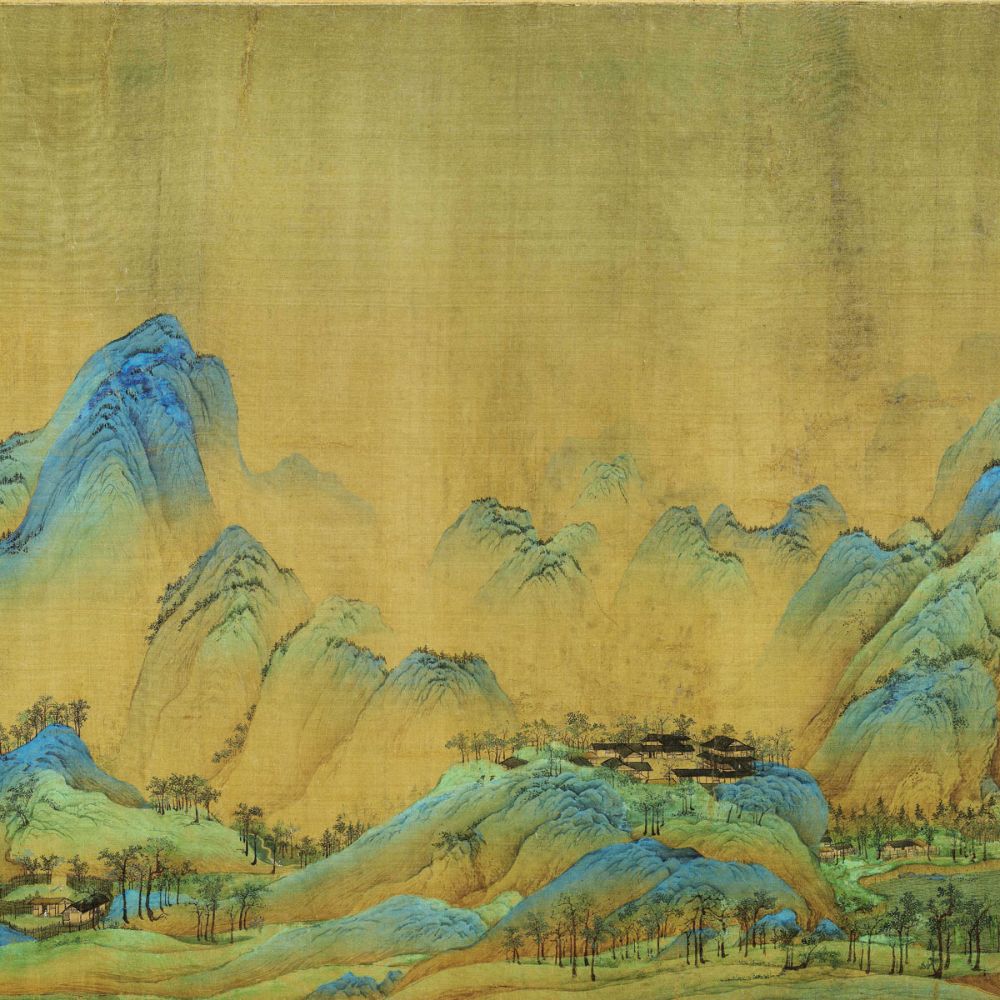
Beyond its visual beauty, the scroll embodies the core philosophies of Ancient China. The vastness of the mountains reflects the Confucian ideal of social order and stability, while the flowing waters represent the Taoist belief in the fluidity of the universe. In Chinese culture, this painting serves the purpose of Wo You (Reclining Travel). However, because the mineral pigments are so thick and the silk is nearly a thousand years old, the original scroll is incredibly fragile. Today, it resides in the Palace Museum in Beijing and is so sensitive to light and movement that it is only exhibited once every several decades. This makes it a national treasure that remains largely inaccessible to the general public in its physical form, creating a profound need for high-quality alternatives for true admirers of the art.
Recognizing the inaccessibility of the original, SinoInArt has developed a unique reproduction process that respects tradition while embracing modern durability. For our high-fidelity reproductions, we utilize Authentic Xuan Paper (宣纸), often referred to as the "King of Paper." Unlike cold, industrial synthetic materials, Xuan paper is made from the natural bark of the Pteroceltis tatarinowii tree and high-quality rice straw. Its organic fibers absorb pigments in a way that creates a soft, misty depth, perfectly mimicking the "breathable" quality of ancient masterpieces. Xuan paper is famous for being resistant to a thousand years of aging; it does not turn brittle or yellow easily, ensuring that the brilliant colors of the "Thousand Li" landscape remain a vibrant centerpiece in your collection for generations to come.
While the paper reflects ancient tradition, our mounting process embraces Modern Precision Techniques to ensure the scroll meets the standards of 21st-century luxury. Using advanced thermal-dry mounting and acid-free adhesives, SinoInArt ensures that each scroll remains perfectly flat and tension-balanced. Unlike traditional wet-mounting, which can be susceptible to humidity and "bubbling" over time, our modern craft provides a smooth, museum-grade finish that is highly resistant to warping even in climate-controlled environments. Our modern mounting features clean, refined borders made from premium high-density silk fabrics, allowing this 900-year-old masterpiece to integrate seamlessly into minimalist, industrial, or contemporary interior designs.
At SinoInArt, we bridge the gap between 12th-century artistry and modern high-tech reproduction. Our collection is based on ultra-high-resolution digital scans of the original work, capturing every microscopic brushstroke, every ripple of water, and even the subtle silk-crack patterns of the 1113 AD original. We utilize a proprietary 12-color archival pigment system that matches the specific "Mineral Malachite" and "Azure" colors with over 99% accuracy. These modern protective layers also shield the Xuan paper from dust and UV rays, preserving the intensity of the peaks far better than traditional methods.
The original A Thousand Li of Rivers and Mountains belongs to history, but its beauty belongs to the world. SinoInArt offers the most faithful and high-quality alternative for those who refuse to settle for anything less than museum-quality excellence. By combining the organic soul of Xuan Paper with the durability of modern mounting, we provide an opportunity for private collectors to own a piece of this cultural heritage. Displaying this work is a statement of cultural sophistication—a focal point that radiates peace, stability, and prosperity. We invite you to bring the majesty of the Forbidden City into your private space with a piece that is as stable as it is beautiful.