
Wang Meng, a pivotal figure among the Four Masters of the Yuan Dynasty, demonstrates his peerless ability to manipulate atmosphere and texture in "Jingxi Shicui" (荆溪湿翠). This work is not merely a landscape, but a sensory immersion into the damp, verdant essence of the Jiangnan region, captured through a sophisticated application of ink and light.
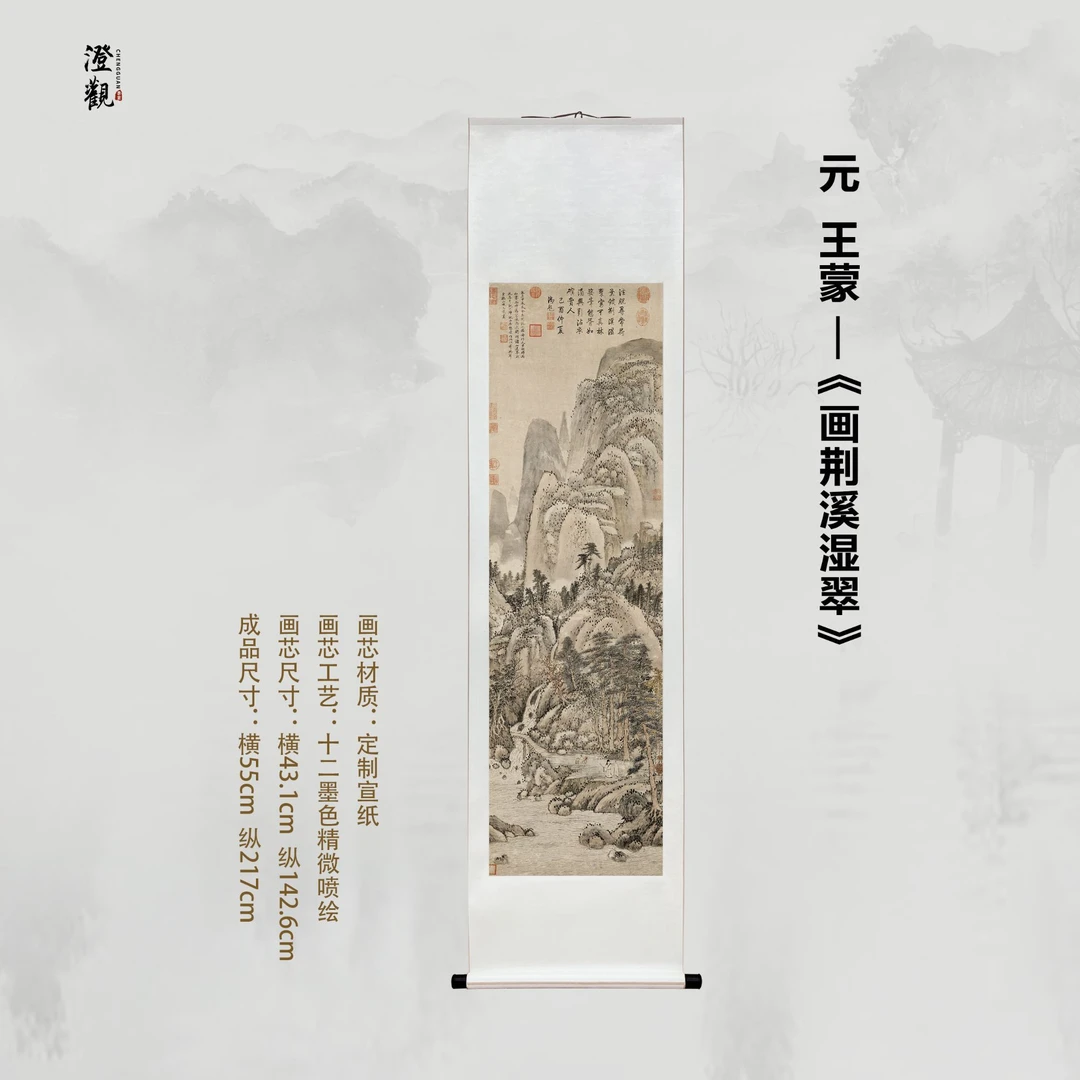
From a compositional perspective, the painting employs a vertical orientation that emphasizes depth and elevation. Wang Meng uses his signature "crinkled" brushwork (解索皴) to build layers of complex terrain, where mountains emerge from a veil of mist. This technique creates a rhythmic density that guides the viewer through winding streams and hidden groves, reflecting the artist’s mastery of internalized space.
The theme of "wet greenery" (湿翠) is achieved through masterful ink-wash layering (积墨法). Wang Meng transitions between dry, scratchy lines and soft, saturated washes to replicate the feeling of moisture-laden air and lush, post-rain vegetation. This evocative quality transports the viewer to a contemplative sanctuary, far removed from the political strife of the late Yuan era.
Symbolically, "Jingxi Shicui" functions as an allegorical landscape. The seclusion depicted within the lush, verdant mountains serves as a testament to the literati (文人) ideal of spiritual retreat. It suggests that even in a world of turmoil, the scholar finds permanence and renewal in the eternal cycles of nature.
Technically and philosophically, "Jingxi Shicui" stands as a monumental achievement in Chinese ink art. It challenges the boundaries between physical reality and subjective emotional expression, making it a cornerstone piece for anyone seeking to understand the aesthetic brilliance of the 14th-century master.