
In the long history of Chinese art, few works capture the opulence and grand spirit of the Tang Dynasty as vividly as "Travelers in the Spring Mountains" (Chunshan Xinglü Tu). Attributed to the legendary painter Li Zhaodao, this masterpiece stands as a definitive pillar of the "Blue-and-Green" landscape tradition, offering a window into a world of celestial beauty and rugged adventure.
Li Zhaodao (c. 675–758 AD) was not just a painter; he was royalty. As a member of the Tang imperial family and the son of the renowned general and artist Li Sixun, he was affectionately known as the "Junior General Li" (Xiao Li Jiangjun). Together, the father and son duo are credited with founding the "Northern School" of Chinese landscape painting. While Li Sixun established the rigorous, decorative style, it was Li Zhaodao who refined it, injecting a sense of movement and spatial depth that would influence Chinese art for over a millennium.
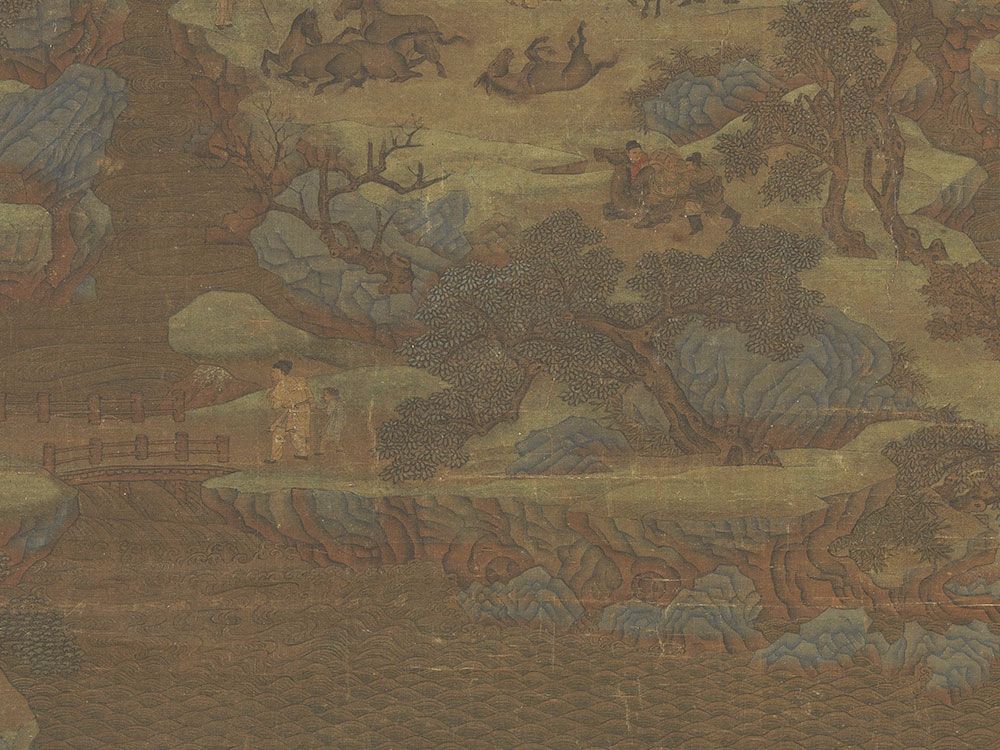
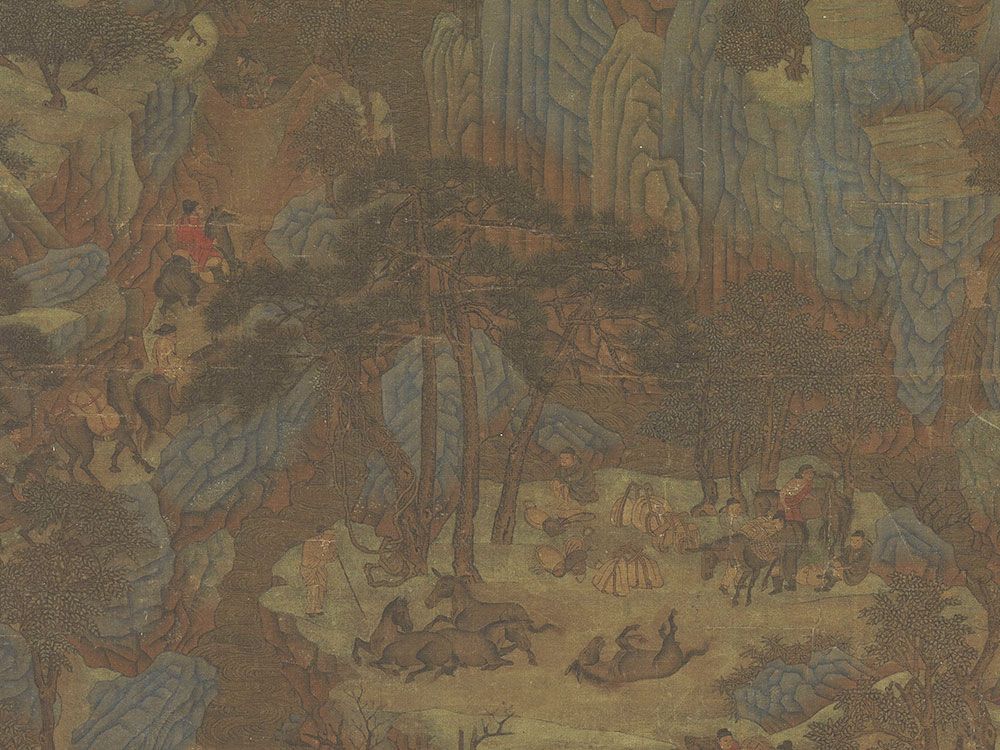
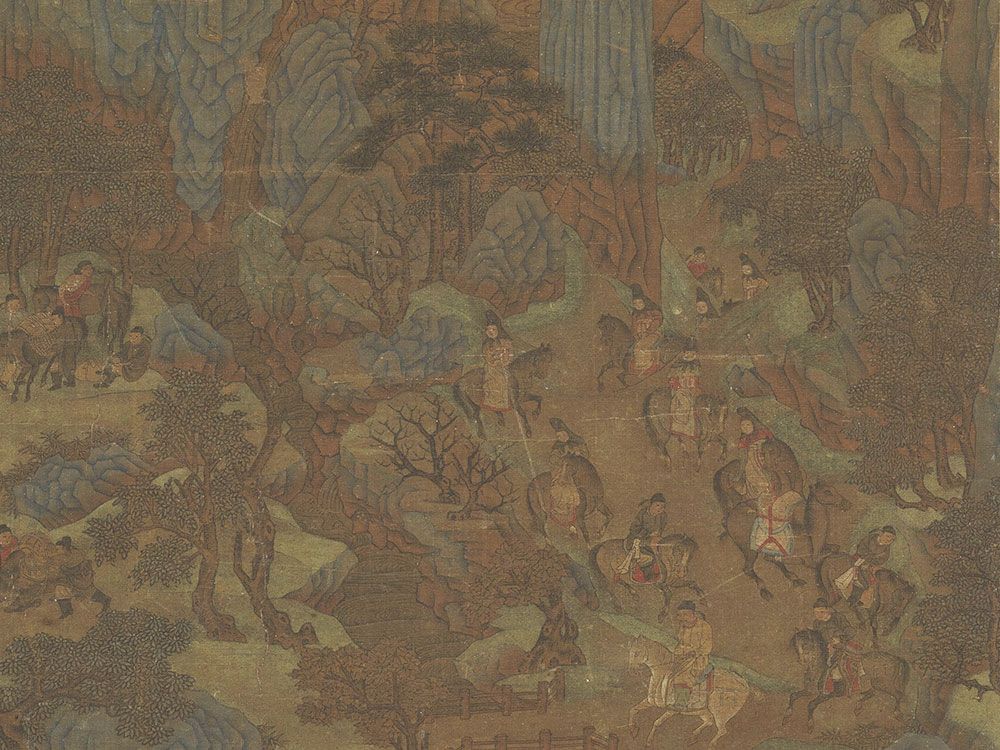
The painting invites the viewer on a serpentine journey through a vertical landscape. The eye is led along an "S-shaped" path that winds from the bustling foreground, through misty mid-grounds, and up into the formidable, jagged peaks of the Shu (Sichuan) region. Amidst the overwhelming scale of nature, we see a caravan of travelers and weary mules. Some are seen navigating narrow mountain passes, while others rest in flat clearings. Their tiny but detailed forms provide a human pulse to the wild landscape, depicting the arduous yet poetic nature of ancient travel.
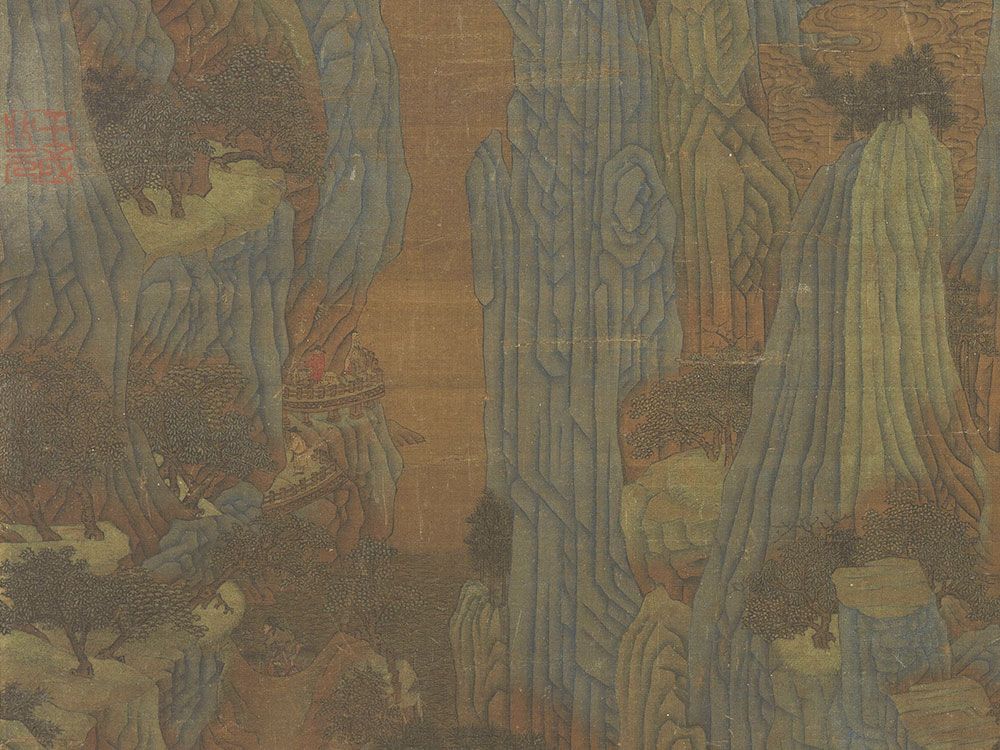
As the title suggests, the work perfectly encapsulates the essence of springtime. Delicate dots of red and white signify blooming flowers, while vibrant greens represent new life. Wisps of white clouds drift across the waist of the mountains, creating a sense of "breath" and atmospheric perspective that balances the density of the rock formations. What makes this work instantly recognizable is its striking palette, representing the Blue-and-Green (Qinglü) style at its zenith.
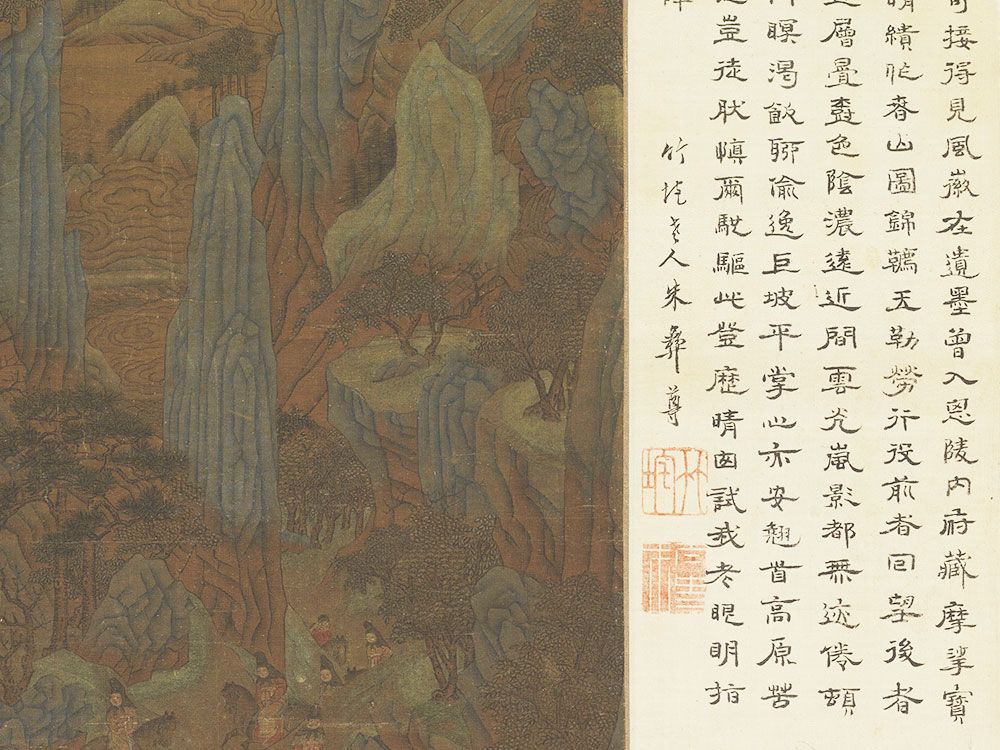
The artist utilized heavy applications of mineral pigments, specifically azurite for blue and malachite for green. These materials provide a jewel-like brilliance that remains vivid even after centuries. Unlike the later "ink-wash" styles that favored soft, blurred edges, Li Zhaodao used precise, "iron-wire" outlines to define the craggy rock faces and architectural details. In many versions of this style, touches of gold pigment were used to highlight the edges of clouds and rocks, reflecting the "High Tang" aesthetic of luxury and power.
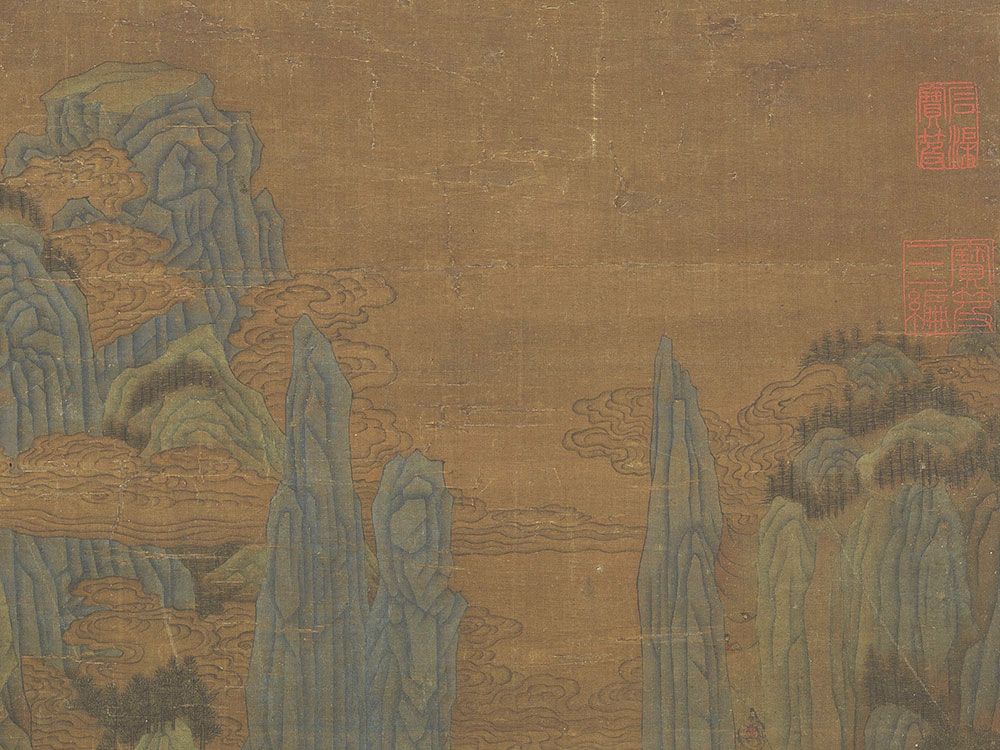
For centuries, historians have debated the true subject of the painting. Due to the depictions of the treacherous mountain paths, some believe the painting represents Emperor Xuanzong’s flight to Shu during the An Lushan Rebellion. If true, the painting transforms from a serene travelogue into a poignant historical document of a dynasty in crisis. However, most modern scholars prefer to view it as a celebratory depiction of the grandeur of the imperial landscape and the joys of spring travel.
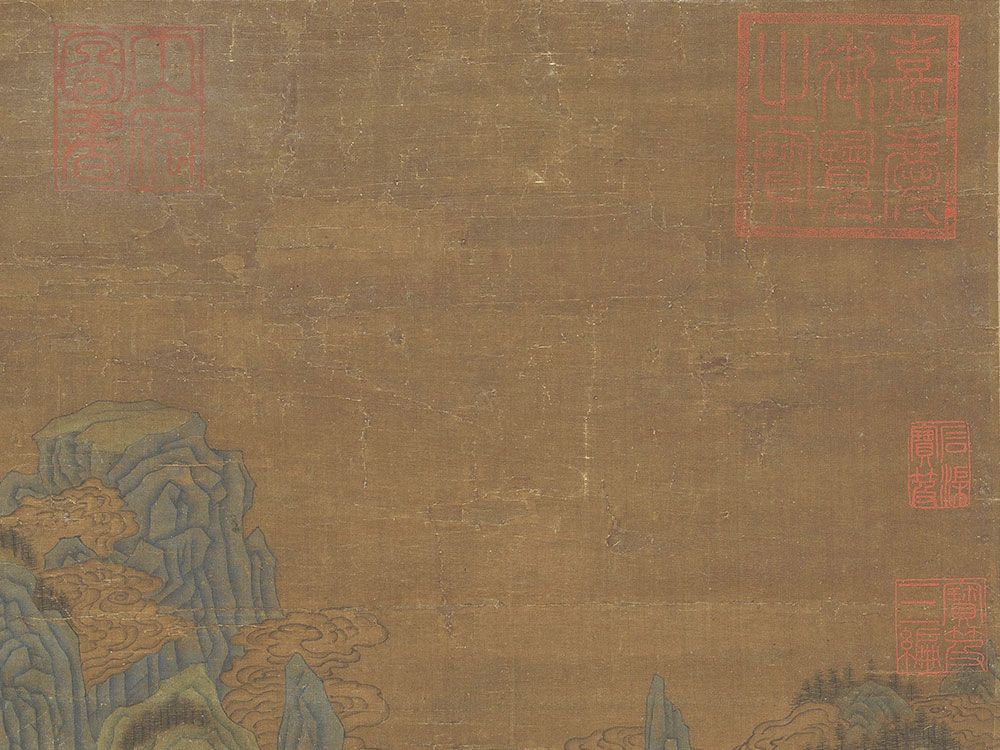
Although the original Tang Dynasty painting has not survived the ravages of time, the version housed in the National Palace Museum in Taipei is a magnificent Song Dynasty copy. It is so meticulously executed that it is considered the most faithful representation of Li Zhaodao’s artistic genius, preserving the tangible spirit of a golden age. This masterpiece marks the moment when landscape painting moved from being a mere backdrop for human activity to becoming a spiritual destination in its own right.
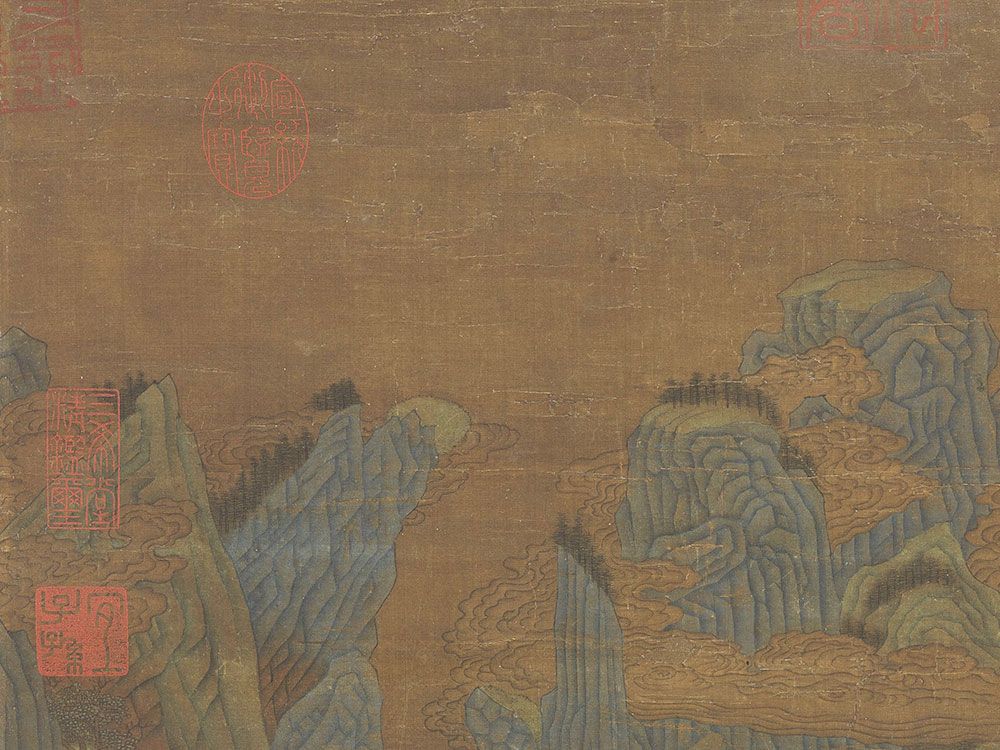
To gaze upon this scroll today is to step back into the 8th century—to feel the crisp spring air of the Sichuan mountains and to witness the bold, colorful confidence of the Tang Empire at its peak. It remains an architectural blueprint of Chinese spatial philosophy and a testament to the enduring beauty of the natural world as seen through the eyes of ancient masters.
Now, this imperial elegance is made accessible to discerning collectors through the SinoInArt high-fidelity replica. Every detail is reproduced with museum-grade precision, capturing the vibrant mineral hues of the original. Each piece is meticulously crafted using authentic Xuan paper from Anhui, a material legendary for its durability and its unique ability to hold the soul of Chinese ink and color. To complete the experience of authentic mastery, the scroll is professionally mounted using luxurious Anhui-crafted brocade (Yunjin), known for its intricate patterns and cloud-like texture. This commitment to traditional materials—from the heart of China’s paper-making heritage to the finest mounting silks—ensures that the SinoInArt replica is not just a reproduction, but a true cultural artifact that brings the profound legacy of Li Zhaodao into your private collection.