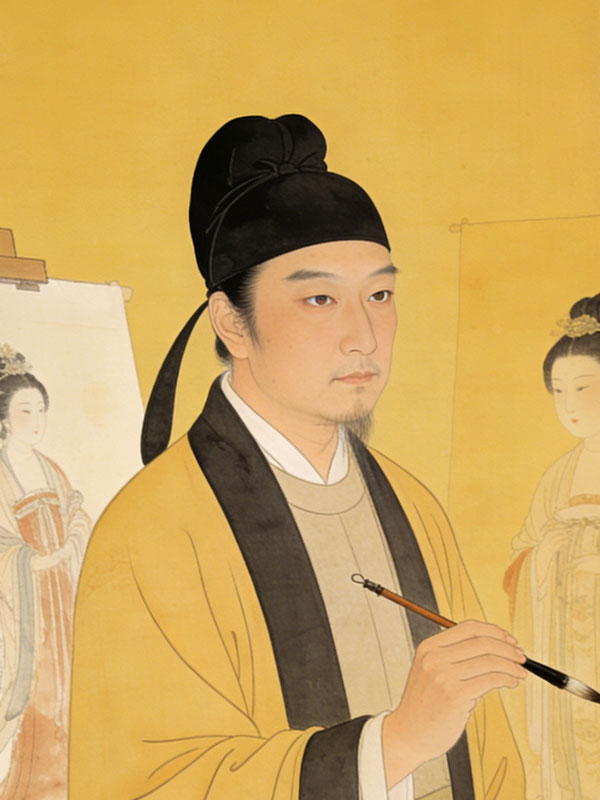
Li Zhaodao: The Master of Gold and Azure Landscapes
Li Zhaodao (active c. 675–758 AD) was a celebrated painter and high-ranking official of the Tang Dynasty. As the son of the famous general and artist Li Sixun, he is historically referred to as "Small Li" (Xiao Li) to distinguish him from his father, who was known as "Big Li." Together, they are credited with establishing and perfecting the "Blue and Green Landscape" (Qinglu Shanshui) tradition, a style that defined the splendor and formal elegance of the Tang imperial court.
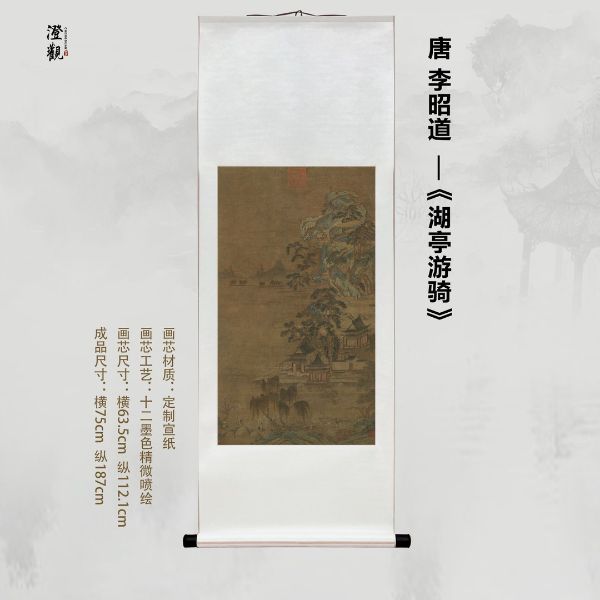
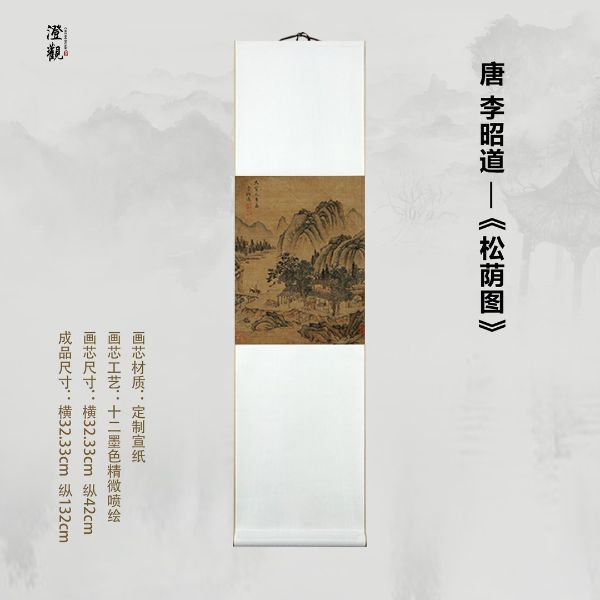
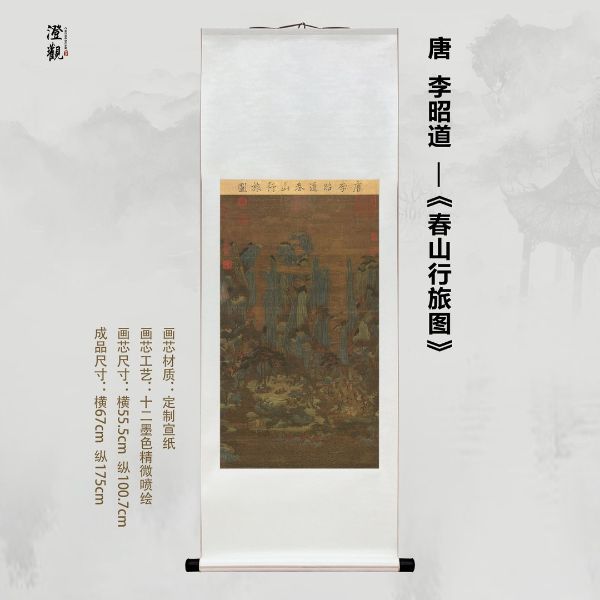
He was a member of the Tang imperial family, which provided him with a unique perspective on the majesty of the empire. His style is characterized by the use of mineral pigments—specifically azurite blue and malachite green—often accented with gold outlines (Jinbi Shanshui). This technique created a shimmering, decorative effect that transformed rugged mountains and winding rivers into a vision of paradise. His brushwork was exceptionally meticulous and precise, capturing the fine details of architecture, figures, and steep mountain paths with mathematical clarity.
His most famous attributed masterpiece, "Emperor Minghuang's Journey to Shu" (明皇幸蜀图), is a pivotal work in Chinese art history. The painting depicts the emperor's flight to Sichuan during the An Lushan Rebellion. Despite the tragic historical context, the painting is rendered with vibrant colors and a rhythmic composition, showing a procession of figures navigating precipitous cliffs and plank roads. This work is often cited as a prime example of how Tang artists combined narrative storytelling with grand-scale landscape painting.
An interesting artistic critique from historical records suggests that while his father, Li Sixun, laid the foundation for landscape structures, Li Zhaodao actually surpassed his father in terms of refinement and complexity. He was known for his innovation in depicting "the change of seasons" and the subtle atmosphere of ocean waves and distant horizons. His ability to integrate palatial architecture (Jiehua) into natural settings with perfect spatial logic made his work a standard for later generations of professional court painters.
The legacy of Li Zhaodao is immense, as he is considered a founding patriarch of the Northern School of Chinese landscape painting. His influence can be traced through the centuries, impacting the Song Dynasty masters and later revivalists in the Ming and Qing eras who sought to recapture the aristocratic dignity of the Tang. Today, his surviving works and early copies are housed in prestigious institutions like the National Palace Museum, serving as a testament to the golden age of Chinese coloristic landscape art.
— ALL MASTERPIECES LOADED —