
In the history of Chinese Shanshui (landscape) painting, the Tang Dynasty represents a peak of colorful opulence and imperial confidence. Among the era’s most revered masterpieces is "Travelers in the Pine Shade" (Songyin Tu), a work attributed to the legendary Li Zhaodao. As a definitive example of the "Blue-and-Green" style, this painting offers more than just a view of nature; it provides a portal into the aristocratic elegance of 8th-century China.
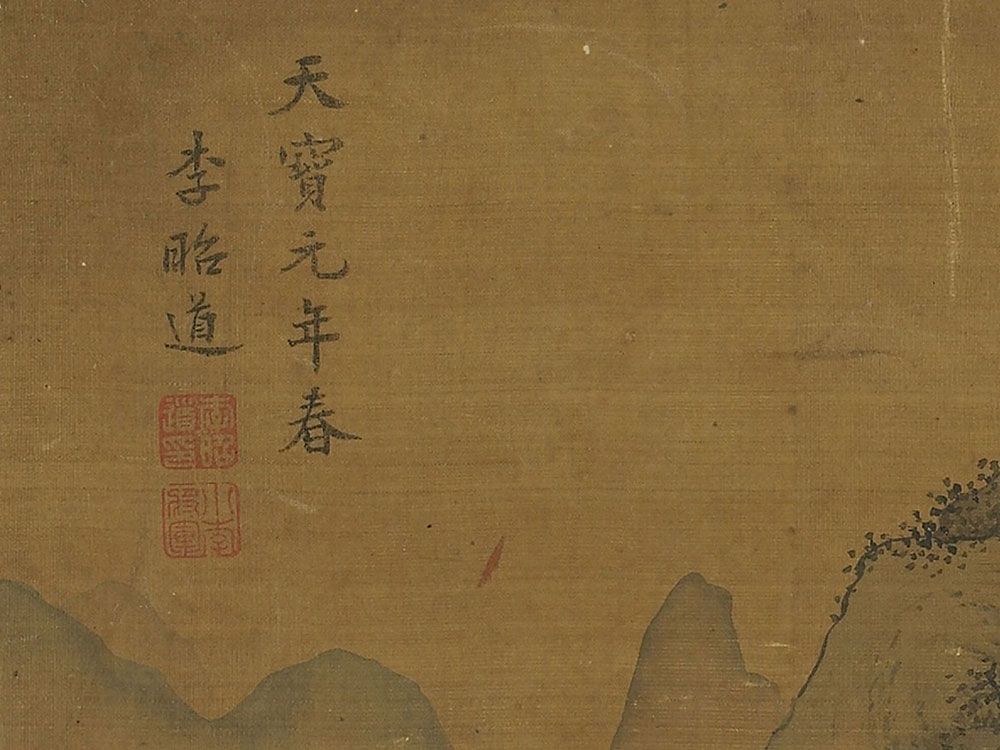
Li Zhaodao (c. 675–758 AD) was a member of the Tang imperial family and the son of the great general and artist Li Sixun. History remembers them as the "Big and Junior General Li," the founding fathers of the Northern School of Chinese landscape painting. Li Zhaodao was celebrated for his ability to transform rugged mountain terrain into a rhythmic, decorative symphony of color and line, a style that would set the standard for imperial art for a thousand years.
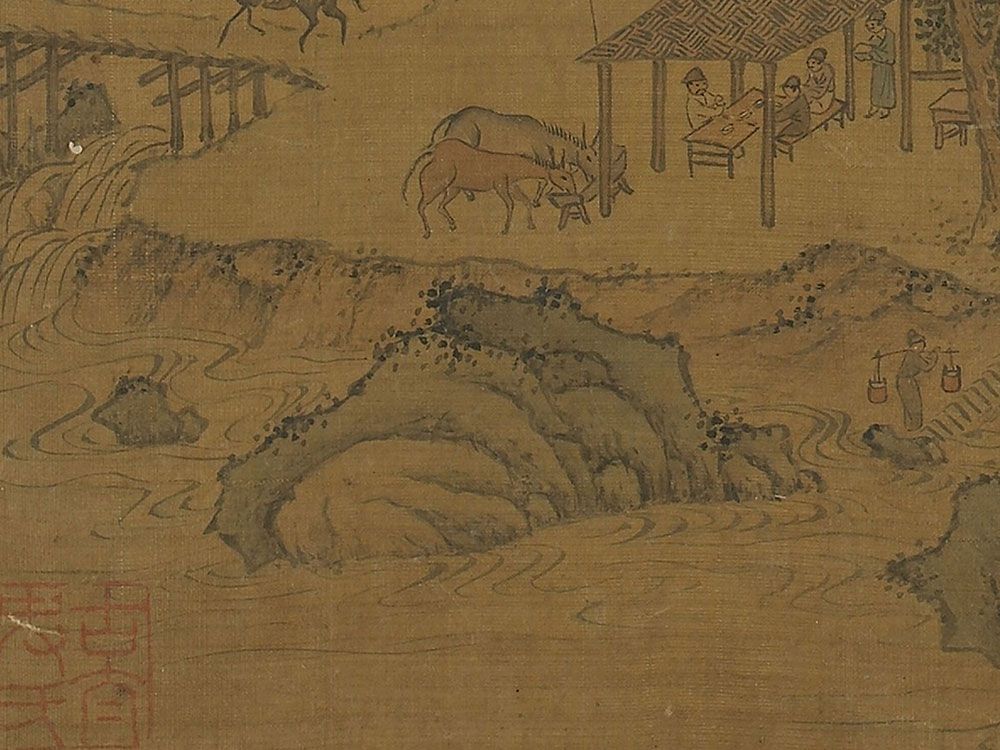
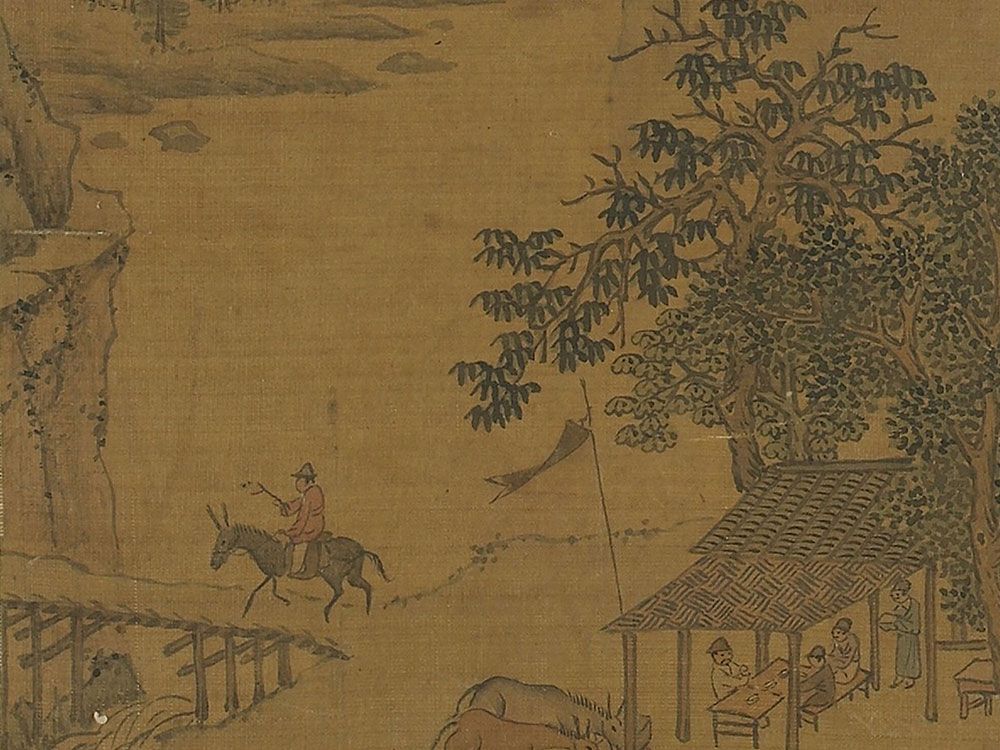
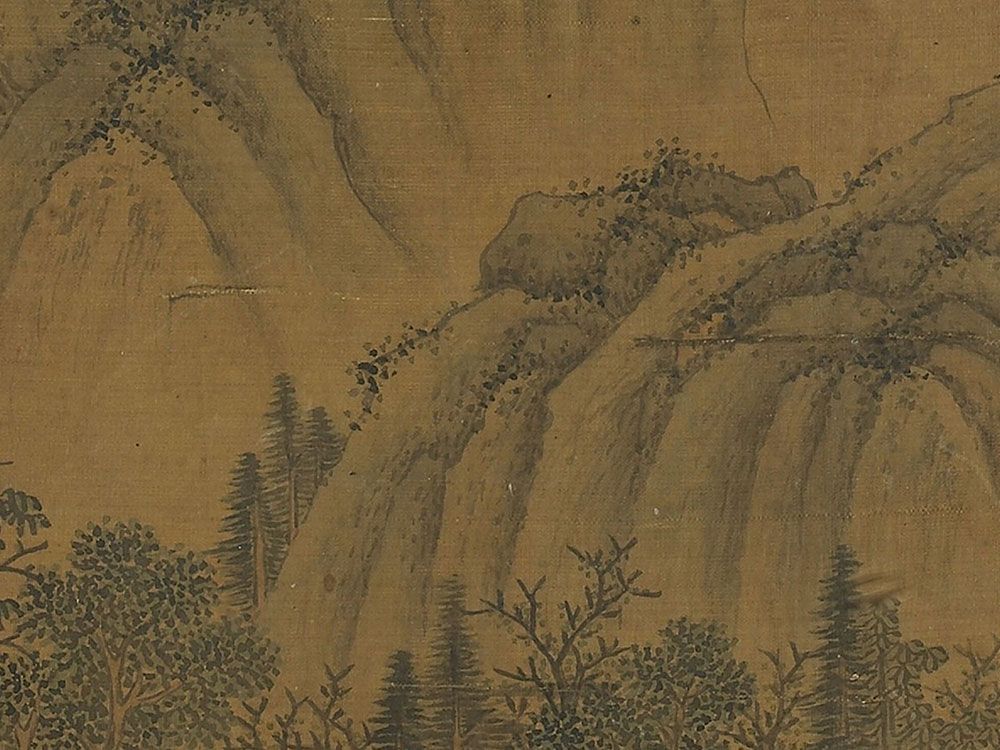
While its sibling work, "Travelers in the Spring Mountains," focuses on the blossoming vitality of the season, Travelers in the Pine Shade draws its power from the ancient, gnarled pine trees that dominate the foreground. In Chinese culture, the pine tree is a symbol of longevity, resilience, and the upright character of a gentleman. Li Zhaodao renders these trees with extraordinary detail, their twisting branches creating a protective shade for the weary travelers below. Beneath the canopy, we see a refined group of travelers—nobles on horseback accompanied by attendants. Their vivid robes provide a human contrast to the eternal, silent peaks. The "S-curve" path leads the eye from this intimate resting spot upward through misty valleys to the towering, azure-colored summits.
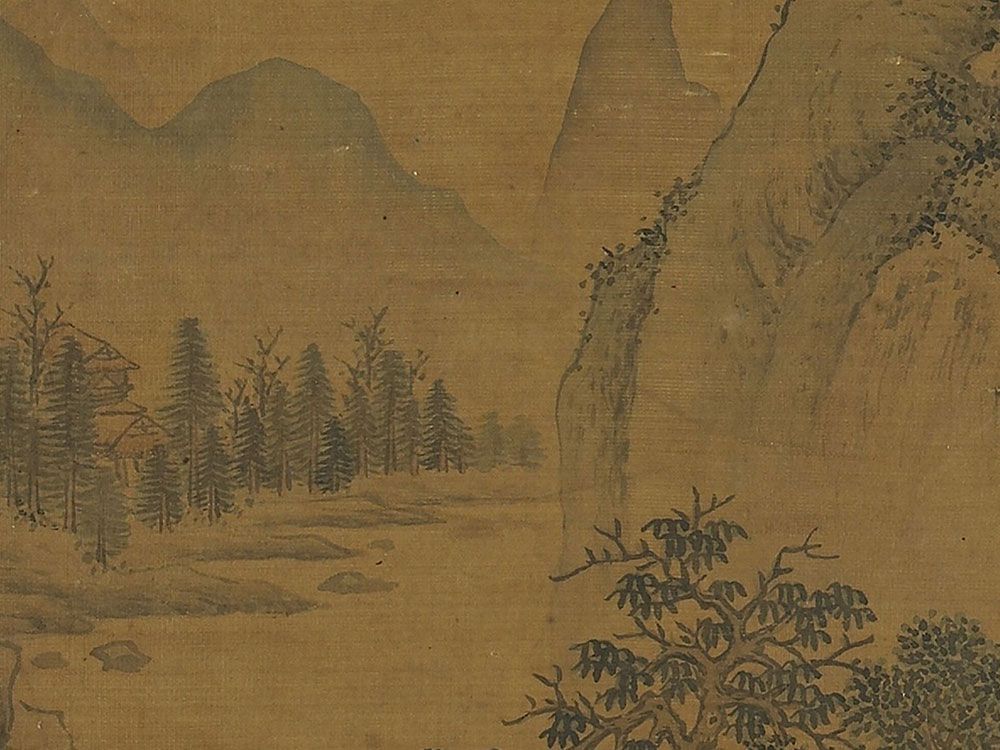
This masterpiece is a masterclass in the Blue-and-Green (Qinglü) technique. This style is characterized by the use of heavy layers of mineral pigments, specifically azurite for deep blues and malachite for vibrant greens. These mineral-based colors possess a jewel-like luster that does not fade, giving the painting a permanent, vibrant energy. To define the jagged cliffs and delicate pine needles, Li Zhaodao employed the "iron-wire" stroke—a firm, consistent line that provides structural clarity without the use of later ink-wash techniques. In its most luxurious variations, subtle highlights of gold were often added to the edges of clouds and rocks, reflecting the "High Tang" aesthetic of divine authority.
Although the original Tang scroll has been lost to time, its spirit survives in the magnificent version housed in the National Palace Museum in Taipei. Widely considered a faithful Song Dynasty copy, this version meticulously preserves Li Zhaodao’s spatial logic and color palette. It remains the most important reference for understanding how Tang Dynasty royalty viewed the relationship between the human world and the majestic wild.
For the modern collector, this imperial elegance is made accessible through the SinoInArt high-fidelity replica. Every detail is reproduced with museum-grade precision, capturing the vibrant mineral hues and fine brushwork of the original. Each piece is meticulously crafted using authentic Xuan paper from Anhui, a material legendary for its durability and its unique ability to hold the soul of Chinese ink and color. To complete the experience of authentic mastery, the scroll is professionally mounted using luxurious Anhui-crafted brocade (Yunjin), known for its intricate patterns and shimmering silk texture. This commitment to traditional materials ensures that the SinoInArt replica is not just a reproduction, but a true cultural artifact that brings the profound legacy of Li Zhaodao into your private collection.