
"Playing the Qin Under Trees" (林下鸣琴图, Linxia Mingqin Tu) is a quintessential masterpiece of the Yuan Dynasty landscape painting, created by the renowned literati artist Zhu Derun (朱德润). This work is not merely a visual representation of a musical performance but a profound manifestation of the literati (scholar-official) ideal of reclusion and spiritual harmony with nature.
Zhu Derun (1294–1365), courtesy name Zezhi (泽之) and pseudonym Suiyang Shanren (睢阳山人), was a prominent painter and poet who served as a high-ranking official during the Yuan Dynasty. Unlike many of his contemporaries who lived in total isolation, Zhu balanced his courtly duties with a deep devotion to classical aesthetics. His painting style was heavily influenced by the Li-Guo School (named after Li Cheng and Guo Xi), characterized by dramatic brushwork and ethereal atmospheric effects.
The painting depicts a scholar seated serenely beneath a cluster of ancient, gnarled trees, playing the Guqin (a seven-stringed zither).
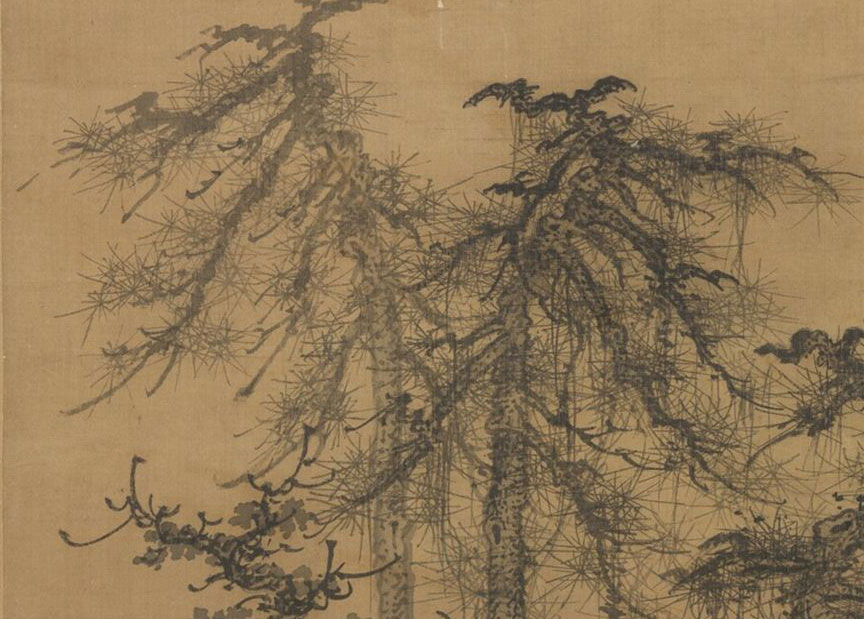
- Foreground: The focus is on the interaction between the human figure and the magnificent pine trees. The trees are depicted with "crab-claw" (蟹爪) branches, a hallmark of the Northern Song influence, symbolizing resilience and moral integrity.
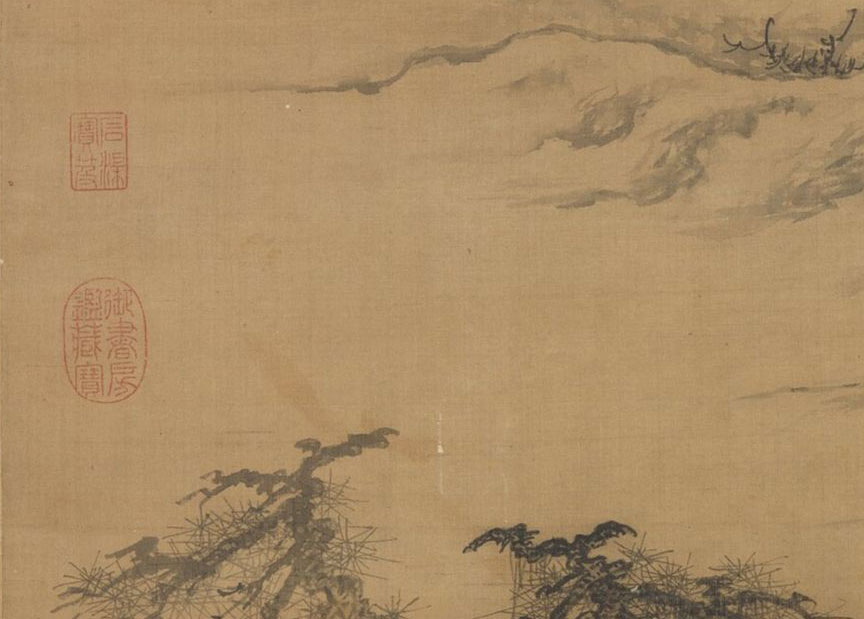
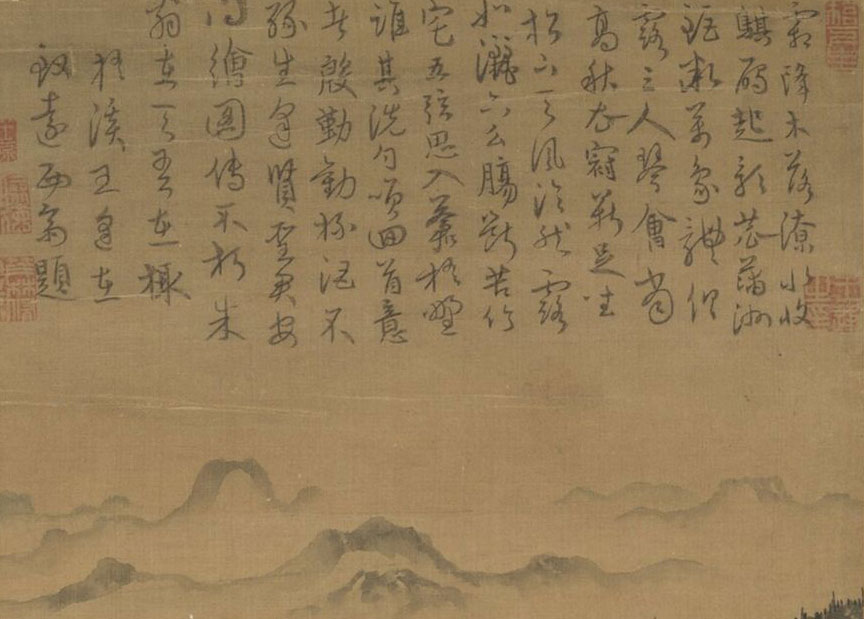
- Background: Distant mountains are shrouded in mist and vapor, created through subtle ink washes. This contrast between the solid, detailed foreground and the ethereal, void-like distance enhances the sense of vastness and tranquility.
- The Scholar: The protagonist is not just an entertainer but a symbol of intellectual cultivation. In the Yuan Dynasty, the Guqin was considered a tool for self-purification rather than public performance.
Zhu Derun’s technical prowess is evident in his mastery of ink tonality. He employs the "devil-face" stone (鬼面石) technique for the rocks, using sharp, jagged strokes and layered washes to create texture and volume.
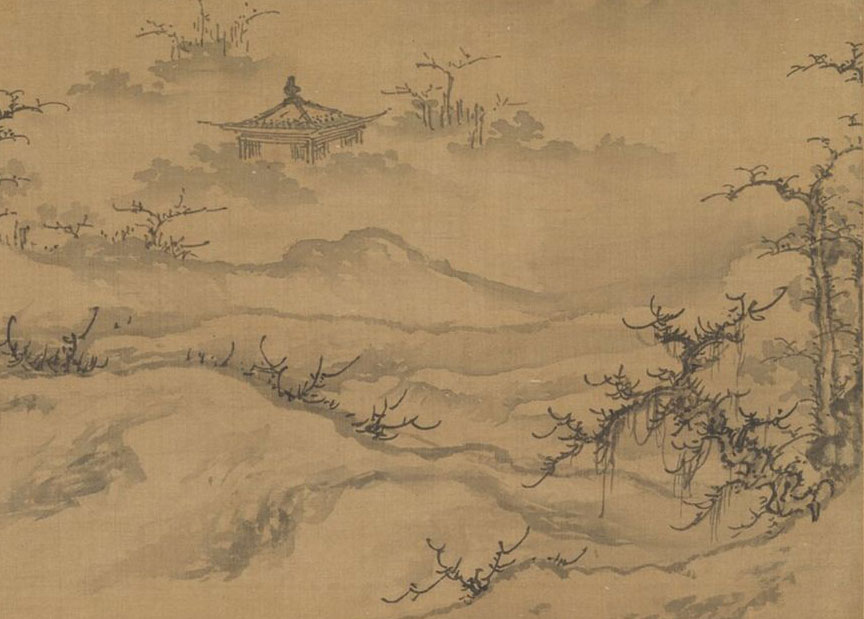
The brushwork is a sophisticated blend of the vigorous, rhythmic lines of Guo Xi and the more elegant, refined approach of Zhao Mengfu. The use of "dry brush" (干笔) techniques combined with moist washes creates a dynamic visual rhythm that mimics the flowing sounds of the Guqin itself.
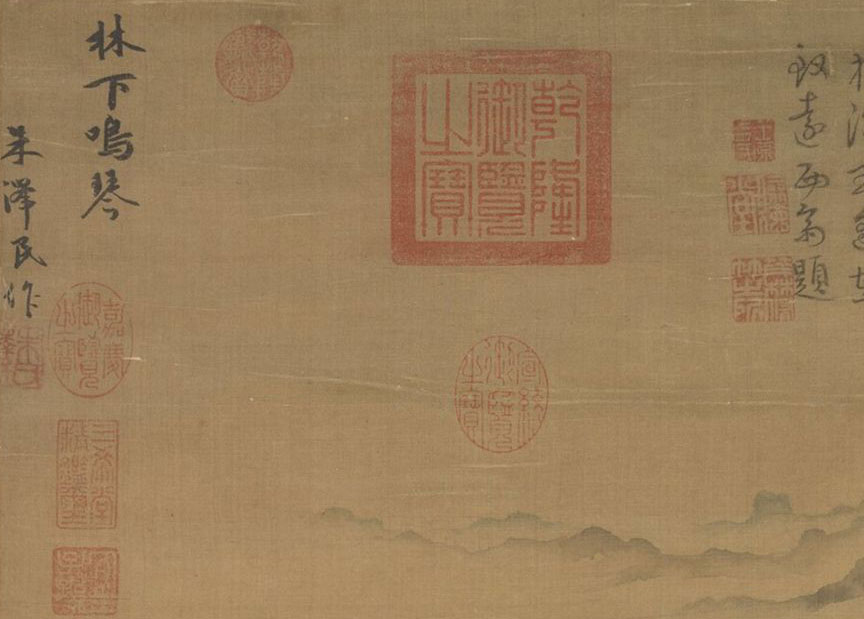
The core theme of the painting is "Reclusion in Nature" (隐逸). During the Yuan Dynasty, when China was under Mongol rule, many Han Chinese scholars felt alienated from the political center. Art became a sanctuary.
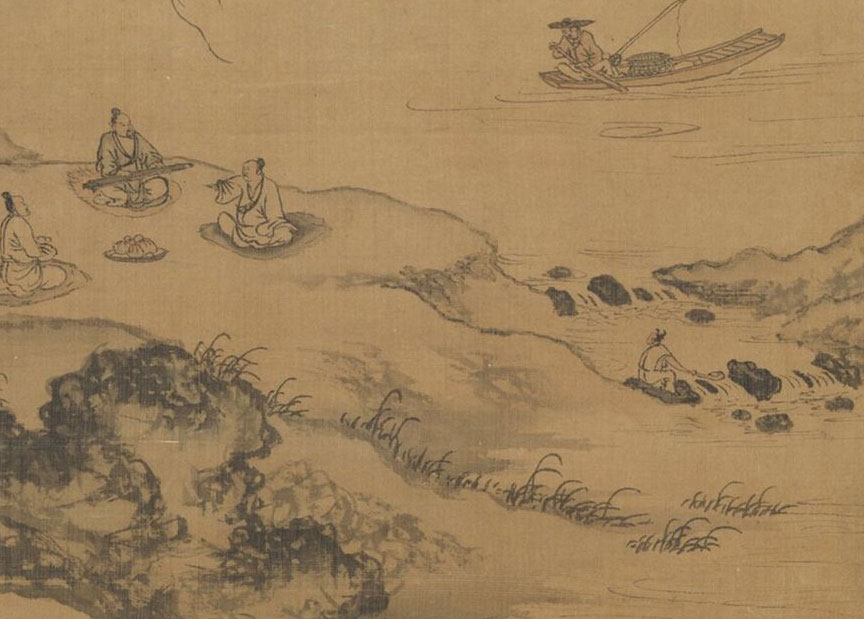
The act of "Playing the Qin Under Trees" represents the unity of heaven and man (天人合一). The sound of the instrument is meant to harmonize with the wind in the pines and the flow of distant water, suggesting that true music is the voice of nature.
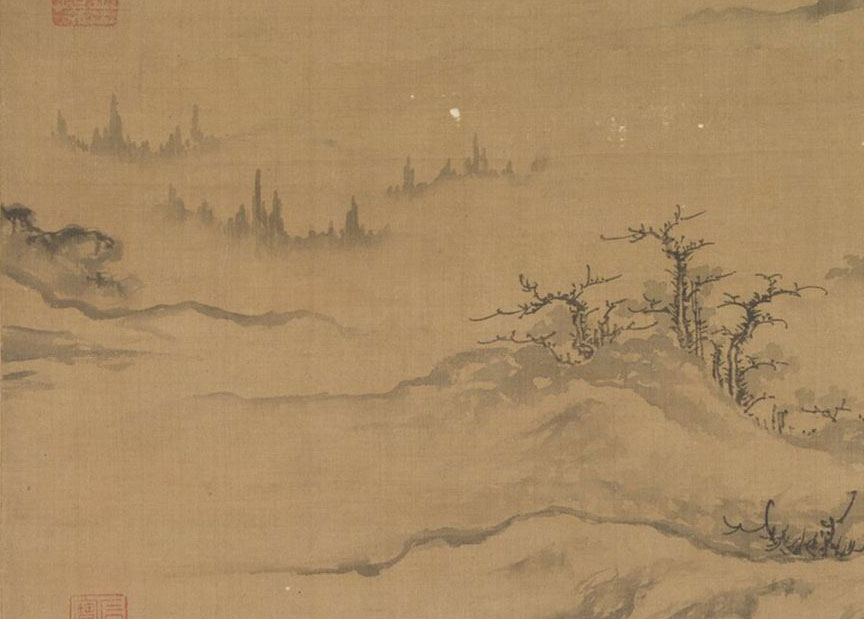
This work is a critical bridge between the Northern Song grand landscape style and the more personal, expressive literati painting of the late Yuan. It showcases how Zhu Derun transformed traditional techniques into a vehicle for individual emotion and philosophical reflection. Today, it stands as a testament to the enduring appeal of the scholar’s lifestyle and the timeless beauty of Chinese ink painting.