
In the grand tapestry of Chinese art history, the Tang Dynasty stands as an era of unparalleled confidence, wealth, and cultural flourishing. Among the most exquisite surviving visions of this golden age is "Riders by a Lakeside Pavilion" (Huting Youqi Tu), a masterpiece attributed to the legendary Li Zhaodao. Known as the "Junior General Li," his work captures the sophisticated leisure of the Tang aristocracy, blending architectural precision with the majestic sweep of the natural world.
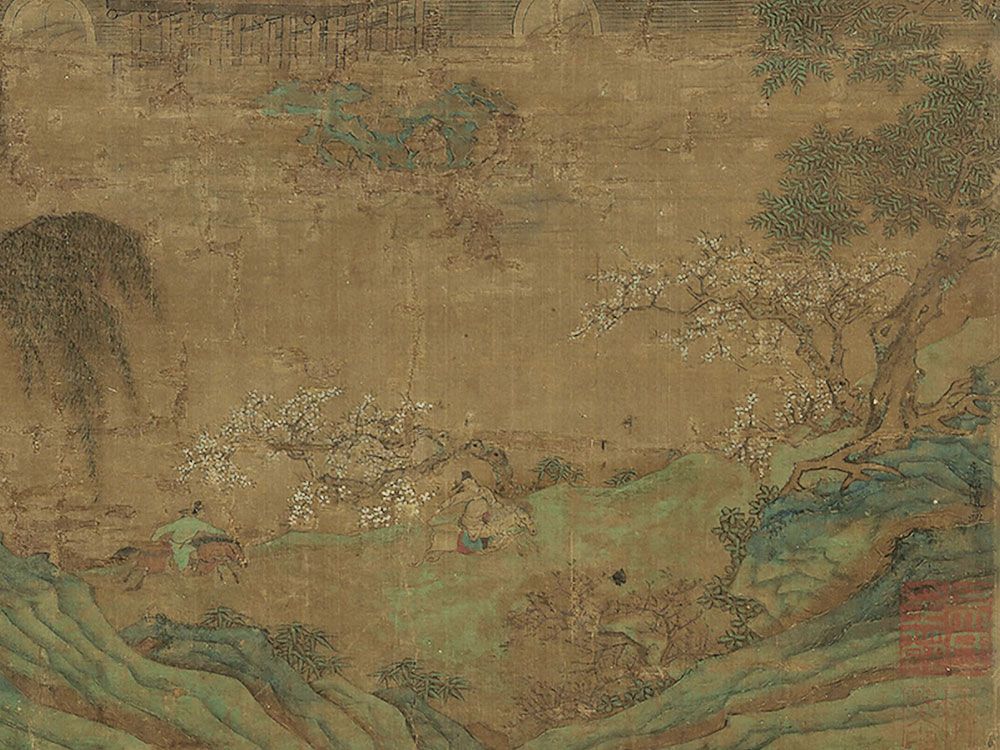
Li Zhaodao (c. 675–758 AD) was a member of the Tang royal family and a pivotal figure in the evolution of Chinese landscape painting. Alongside his father, Li Sixun, he is credited with perfecting the "Blue-and-Green" (Qinglü) style. As a court painter, Li Zhaodao’s perspective was inherently aristocratic; his works do not merely depict nature but elevate it into an imperial paradise. His style is characterized by a meticulous and ornate approach that became the hallmark of the Northern School, prioritizing structural clarity and vibrant color over the spontaneous ink-washes of later periods.
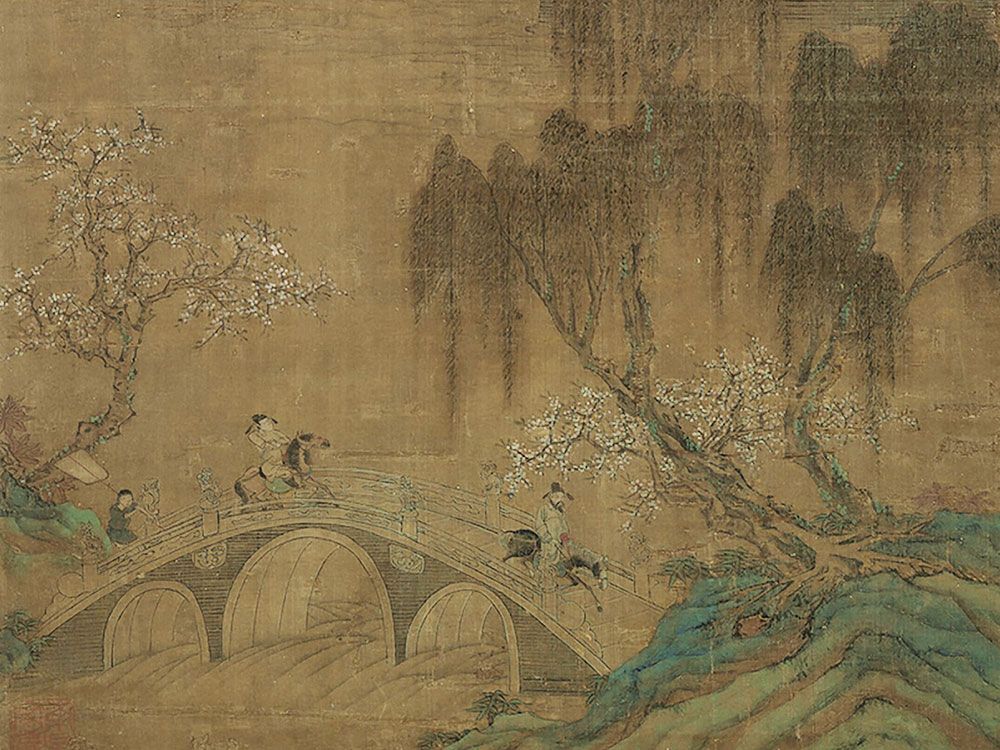
The painting presents a serene and opulent scene: a group of noble riders on an afternoon outing along a shimmering lakeshore. At the heart of the composition is the lakeside pavilion, rendered with the early "Jiehua" (boundary painting) technique. Every beam, pillar, and tile of the structure is drawn with mathematical precision, reflecting the architectural grandeur of Tang palaces. Surrounding the pavilion are the "riders"—vividly dressed figures on well-groomed horses, captured in various poses of conversation and contemplation. This narrative of "pleasure riding" serves as a rare window into the social life of the 8th-century elite, where nature provided the ultimate backdrop for refined recreation.
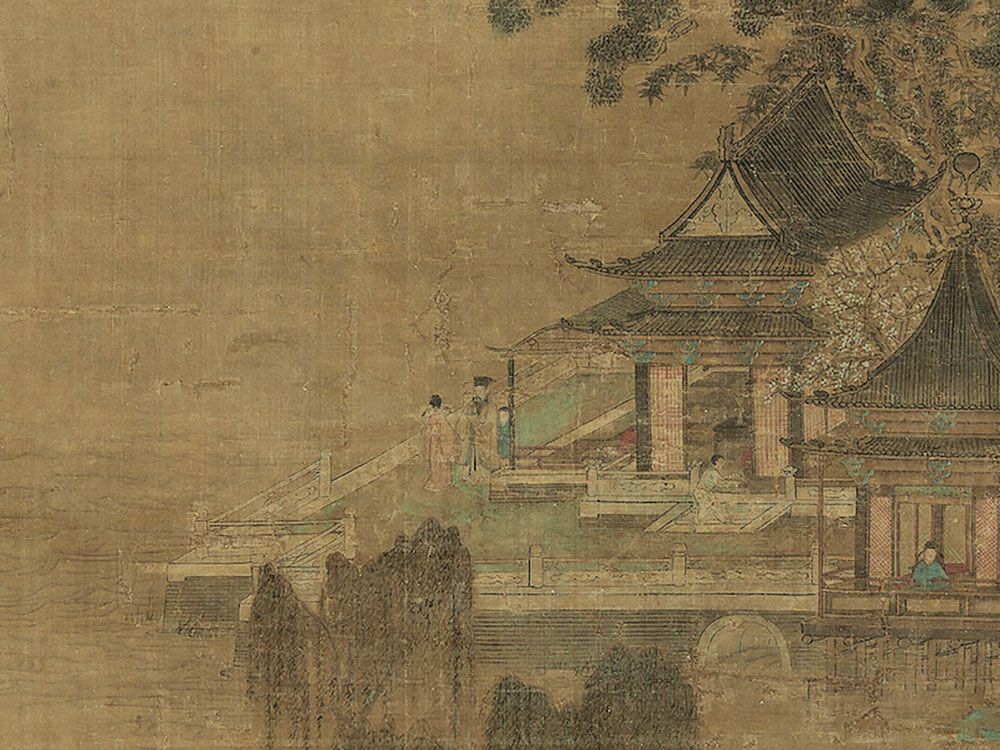
This masterpiece is a definitive example of the Gold-and-Green (Jinbi) landscape. The artist utilized precious mineral pigments—azurite for deep, celestial blues and malachite for rich, emerald greens. These colors are applied in heavy, opaque layers, creating a jewel-like surface that glows with an inner light. To define the forms, Li Zhaodao employed the "iron-wire" line (Tie Xian Miao), a brushstroke of consistent thickness and immense strength. This technique ensures that even the smallest detail, from the harness of a horse to the lattice of a window, remains sharp and legible, embodying the Tang pursuit of decorative perfection and formal order.
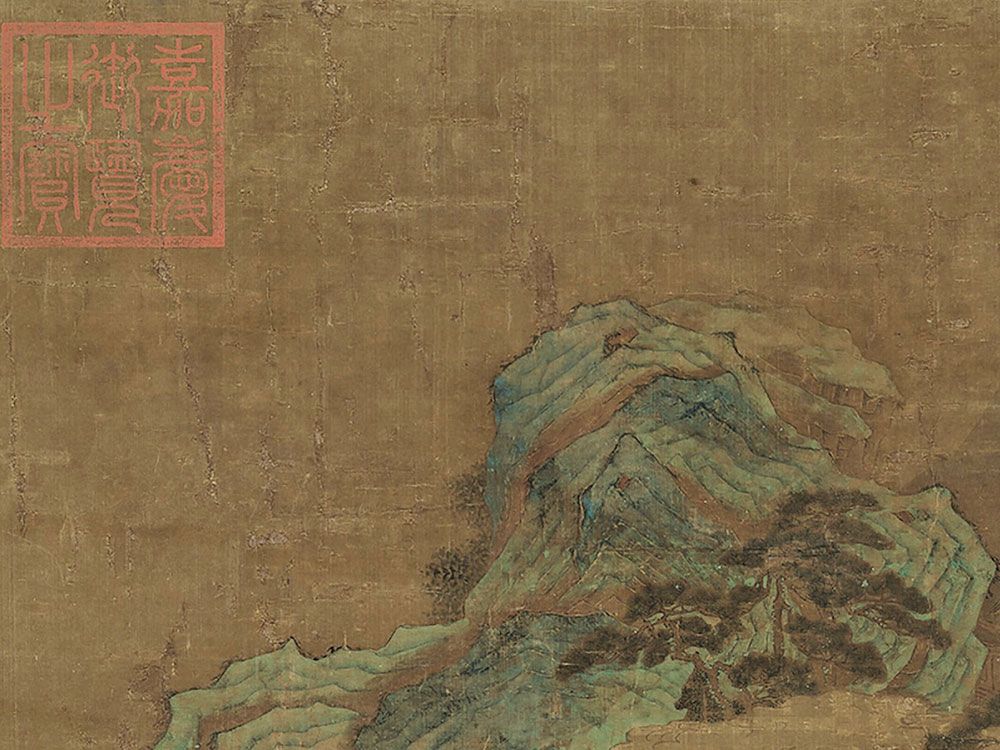
Historically, this work marks a crucial turning point: the moment landscape painting became a fully independent and respected genre. Before the Li family, mountains and trees often served merely as backdrops for Buddhist or historical figures. In Li Zhaodao’s hands, the lake, the craggy peaks, and the ancient pines become the primary subjects. The painting reflects the "High Tang" spirit—a belief in a harmonious world where human civilization and the wild beauty of nature exist in perfect, vibrant equilibrium. It is a depiction of "Heaven on Earth," a vision that has inspired Chinese artists for over a millennium.
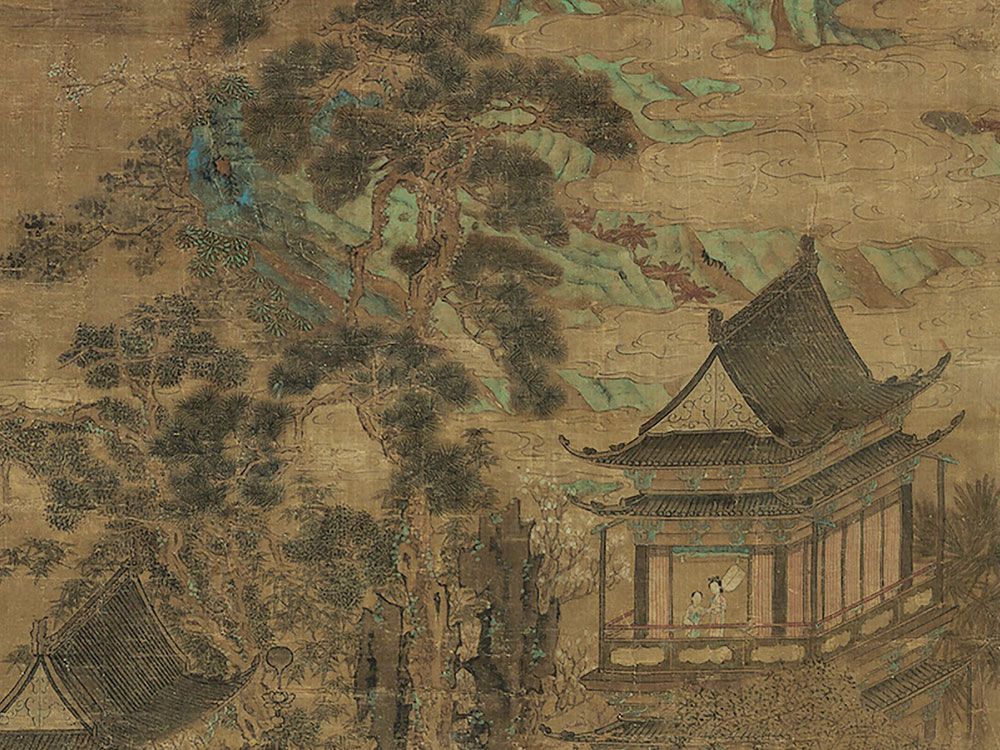
Today, this imperial vision is preserved for modern collectors through the SinoInArt high-fidelity replica. To honor the original's soul, SinoInArt utilizes authentic Anhui Xuan paper, legendary for its "thousand-year" durability and its unique ability to hold the intense mineral hues of azurite and malachite. The replica is then professionally mounted with luxurious Anhui-crafted cloud brocade (Yunjin). This silk mounting, featuring intricate traditional patterns, provides a frame of royal dignity, ensuring the scroll hangs with the weight and grace of a true museum treasure. A SinoInArt replica is more than a print; it is a meticulously crafted bridge to the most opulent chapter of China’s artistic heritage.