
Clams and Butterflies (蛤子蝴蝶图) is a fascinating and whimsical masterpiece of the Early Northern Song Dynasty, attributed to the renowned court painter Huang Jucai. Originally executed as a fan painting, it represents the pinnacle of the "Huang Style" of bird-and-flower painting, known for its aristocratic elegance and lifelike precision.
Huang Jucai was the son of the legendary Huang Quan and served as a leading figure in the Song Imperial Painting Academy. He was instrumental in establishing the academic standards for bird-and-flower painting in the Northern Song. His work is characterized by meticulous detail and a sense of "richness and nobility" (Huang Jia Fu Gui), reflecting the refined tastes of the imperial court.
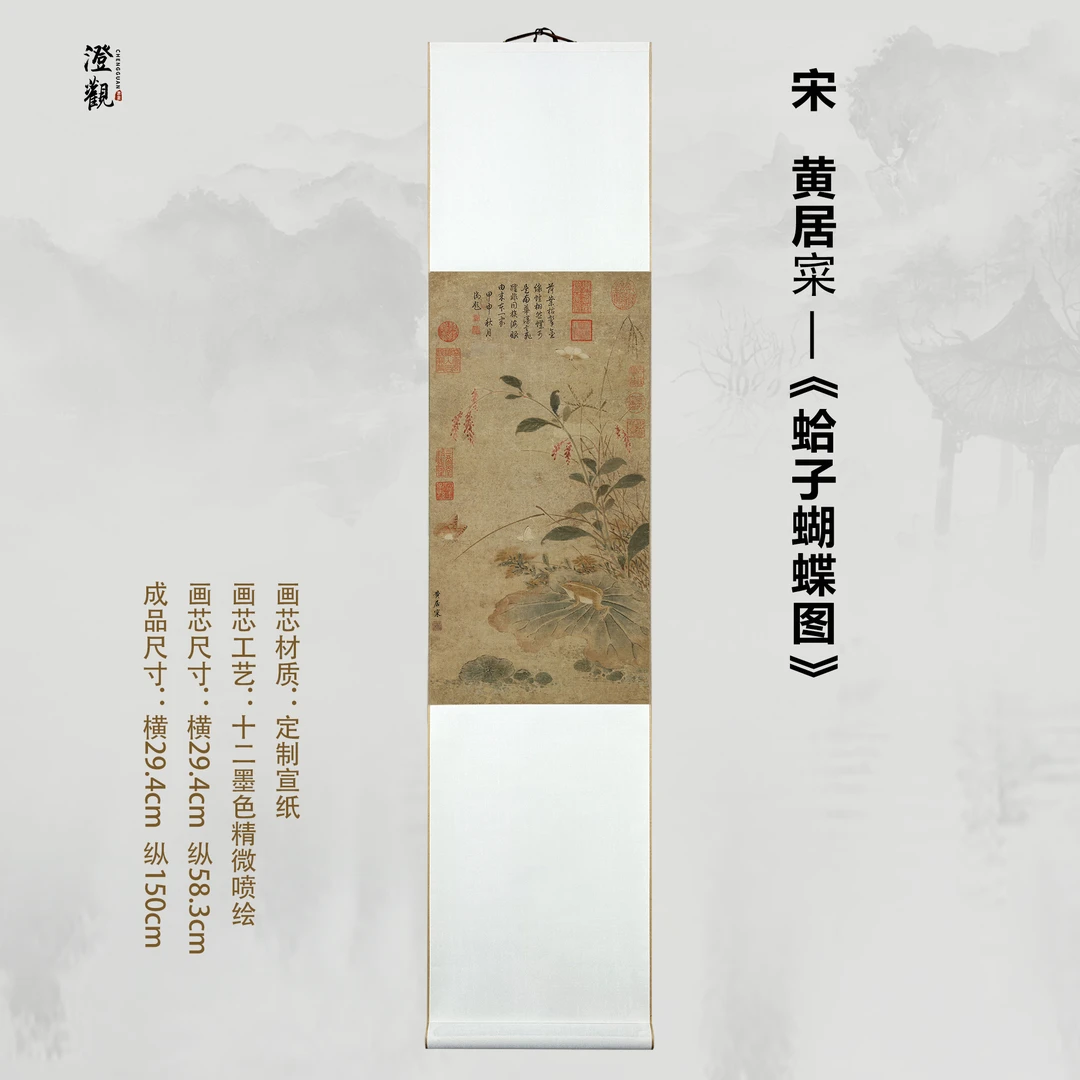
The painting features a large, realistic clam shell, partially opened to reveal the soft tissue within, contrasted with the delicate, fluttering presence of butterflies. This juxtaposition of the terrestrial/aquatic and the aerial creates a sense of dynamic balance. The composition is intimate and focused, a hallmark of the Song Dynasty fan painting tradition, which invited the viewer to contemplate nature on a microscopic scale.
Huang Jucai utilized the "Gongbi" (meticulous) technique to an extraordinary degree. Each scale on the butterflies' wings and the layered texture of the clam shell is defined by fine-line brushwork and subtle color washes. The use of mineral pigments provides the work with a luminous quality, while the delicate "boneless" shading on the interior of the shell demonstrates his mastery of ink and color gradation.
In Chinese culture, butterflies are symbols of longevity, joy, and transformation. The inclusion of the clam, an ancient symbol of the mysteries of the sea and hidden treasures, creates a poetic narrative about the interconnectedness of all life forms. Some scholars suggest the work also carries Zen (Chan) overtones, reflecting the "marvel of the mundane" and the profound beauty found in the smallest creatures.
This work is a crucial reference for studying the transition from the Five Dynasties to the Northern Song Academy style. It moved away from the more rugged naturalism of the past toward a polished, idealistic realism. Its preservation today allows us to appreciate the intellectual curiosity and aesthetic refinement of the Song elite, who saw the entire universe reflected in a single shell or a butterfly’s wing.