
In the storied tradition of the Qing Dynasty's Imperial Academy, Chen Mei is renowned for his ability to translate the fleeting beauty of the natural world into eternal silk masterpieces. His work, "Crabapple and Mountain Finch" (Haitang Shanque Tu), is a brilliant example of the Gongbi (meticulous) style, capturing a quintessential spring moment where the delicacy of flora meets the spirited vitality of fauna. This painting serves as a testament to the sophisticated aesthetic of the Qianlong era, where realism and poetic symbolism intertwined.
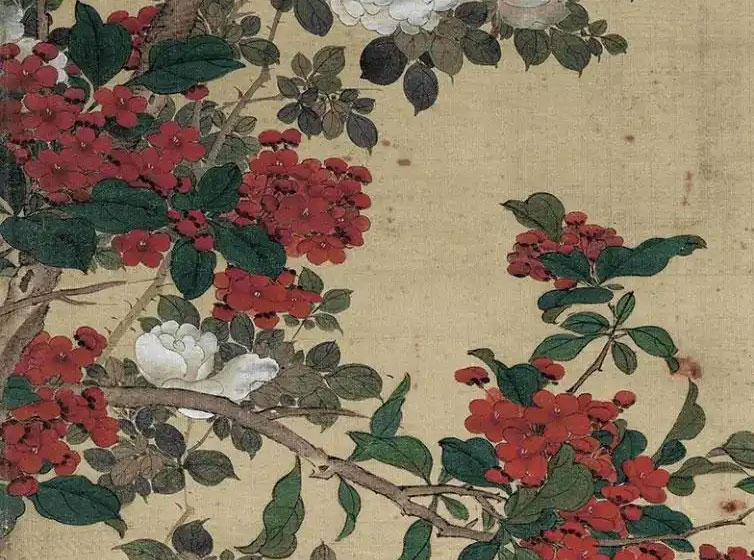
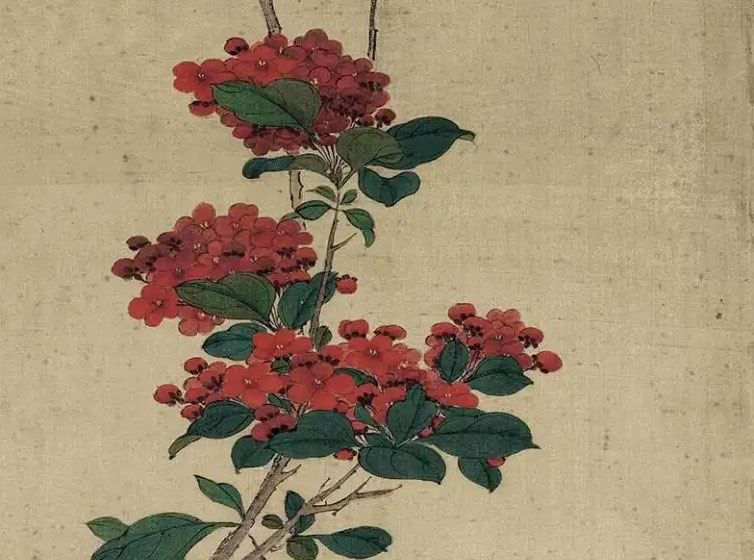
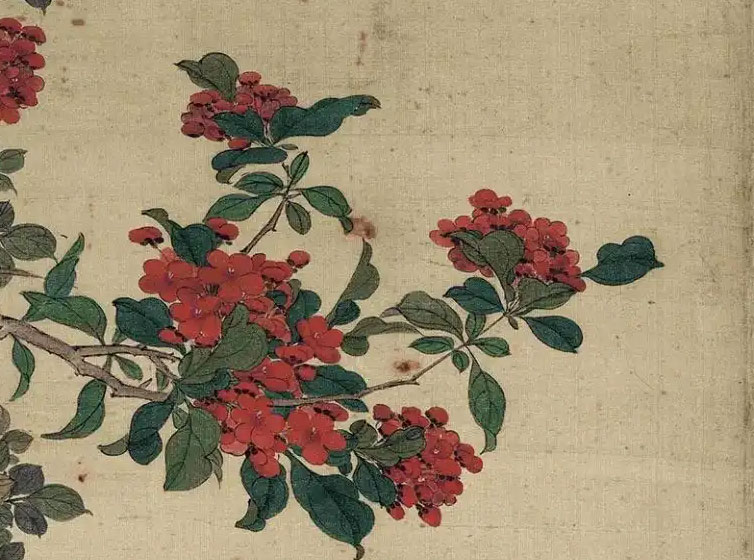
The centerpiece of this composition is the Crabapple (Haitang), a flower long celebrated in Chinese culture as the "Fairy among Flowers." Chen Mei employs a sophisticated layering technique, using varying shades of crimson and white mineral pigments to create a soft, gradient effect on each petal. The blossoms appear to have a translucent, dewy quality, achieved through Western-influenced shading that gives the floral clusters a palpable sense of volume. The interplay between the fully bloomed flowers and the tight, dark-red buds adds a layer of temporal depth, representing the full cycle of spring’s awakening.
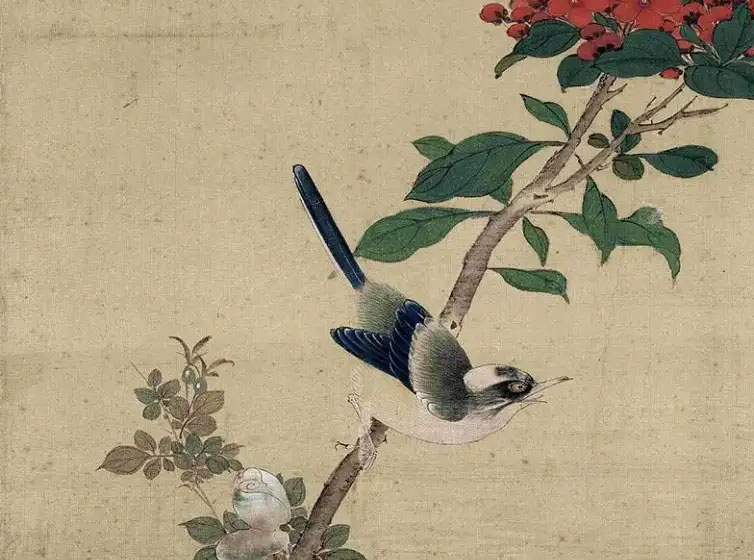
Perched gracefully upon a slender branch is a Mountain Finch (Shanque), rendered with staggering detail. Chen Mei utilizes the "silk-hair" technique, where microscopic brushstrokes create the soft, downy texture of the bird’s underbelly and the sleek, aerodynamic feathers of its wings. The bird’s posture—slightly tilted as if listening to a distant sound—gives the painting an "arrested moment" quality. Its bright, obsidian-like eye is finished with a tiny dot of white lead, a technique likely learned from Western court painters like Castiglione to provide a lifelike spark of consciousness.
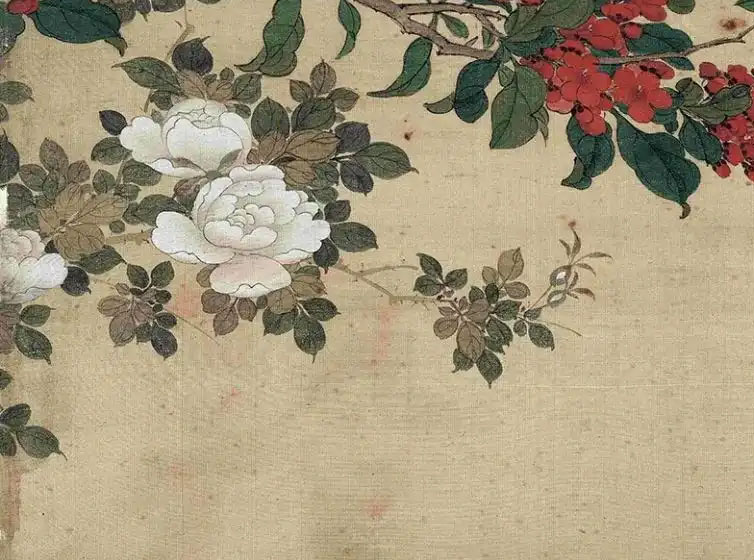
The painting adheres to the classical "broken branch" (zhezhi) composition, focusing the viewer’s attention on a specific, intimate corner of nature. The gnarled, dark wood of the crabapple tree provides a rugged contrast to the ethereal softness of the petals. Chen Mei expertly balances the visual weight; the heavy clusters of blossoms on the left are counterpoised by the lively presence of the finch on the right. This strategic use of negative space (the "void") allows the subjects to breathe, a hallmark of high-level Chinese aesthetic arrangement.
In the context of the Qing court, art was rarely purely decorative; it was laden with propitious symbolism. The Crabapple (Haitang) is a homophone for "hall" (Tang), often paired with other flowers to form the rebus "Yutang Fugui" (Wealth and Nobility in the Jade Hall). The mountain finch, as a harbinger of spring, represents joy and the renewal of life. Together, the imagery in "Crabapple and Mountain Finch" conveys a wish for a prosperous and harmonious household, reflecting the Emperor’s desire for peace and abundance throughout his reign.
Chen Mei’s "Crabapple and Mountain Finch" remains a captivating work because it transcends mere technical skill. It is a harmonious fusion of Eastern spiritual essence and Western observational precision. By capturing the fragile beauty of a crabapple branch and the alert charm of a small bird, Chen Mei invites the viewer into a world of quiet elegance. This masterpiece continues to be a vital reference for the study of 18th-century botanical and ornithological art, representing a high point in the history of global court painting.