
Guo Xi (c. 1020–1090), a preeminent court painter of the Northern Song Dynasty, transformed the landscape genre from mere description into a profound philosophical inquiry. His masterpiece, Wintry Forest (also known as Wintry Forest, Level Distance), stands as a definitive example of the monumental landscape style, capturing the bleak yet resilient spirit of nature during the coldest months.
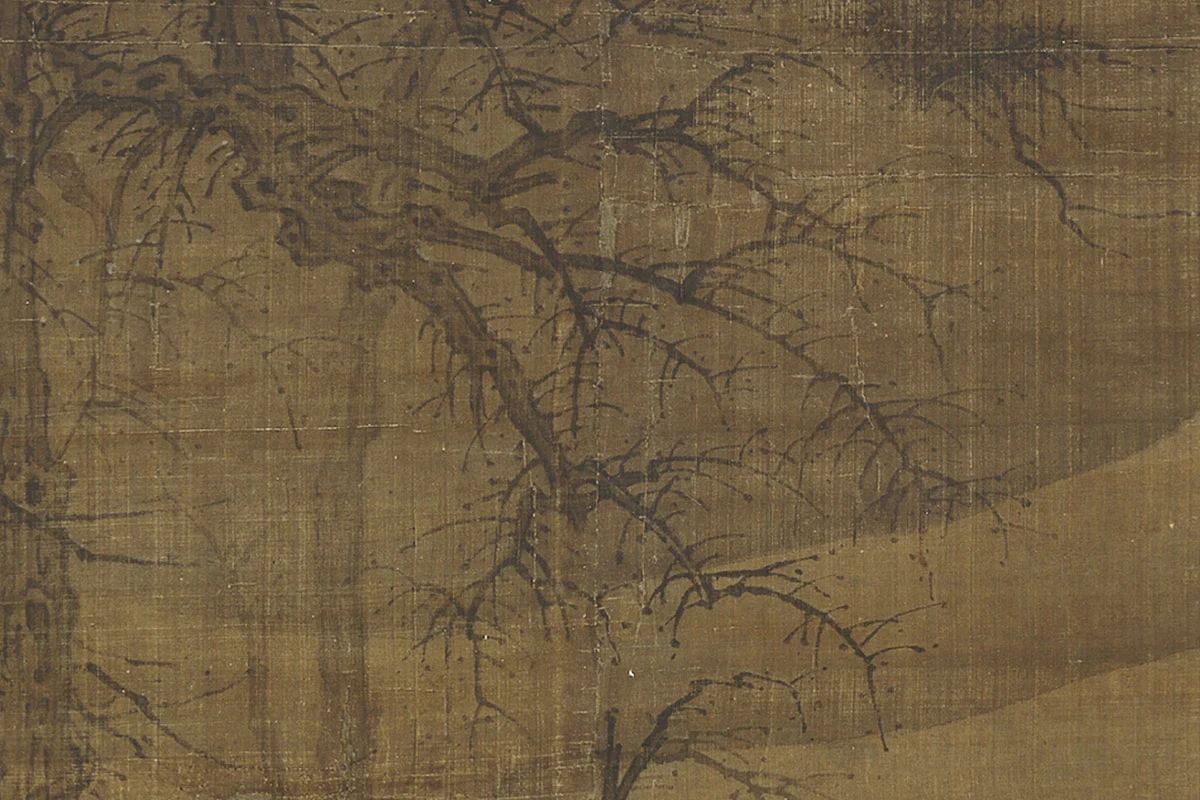
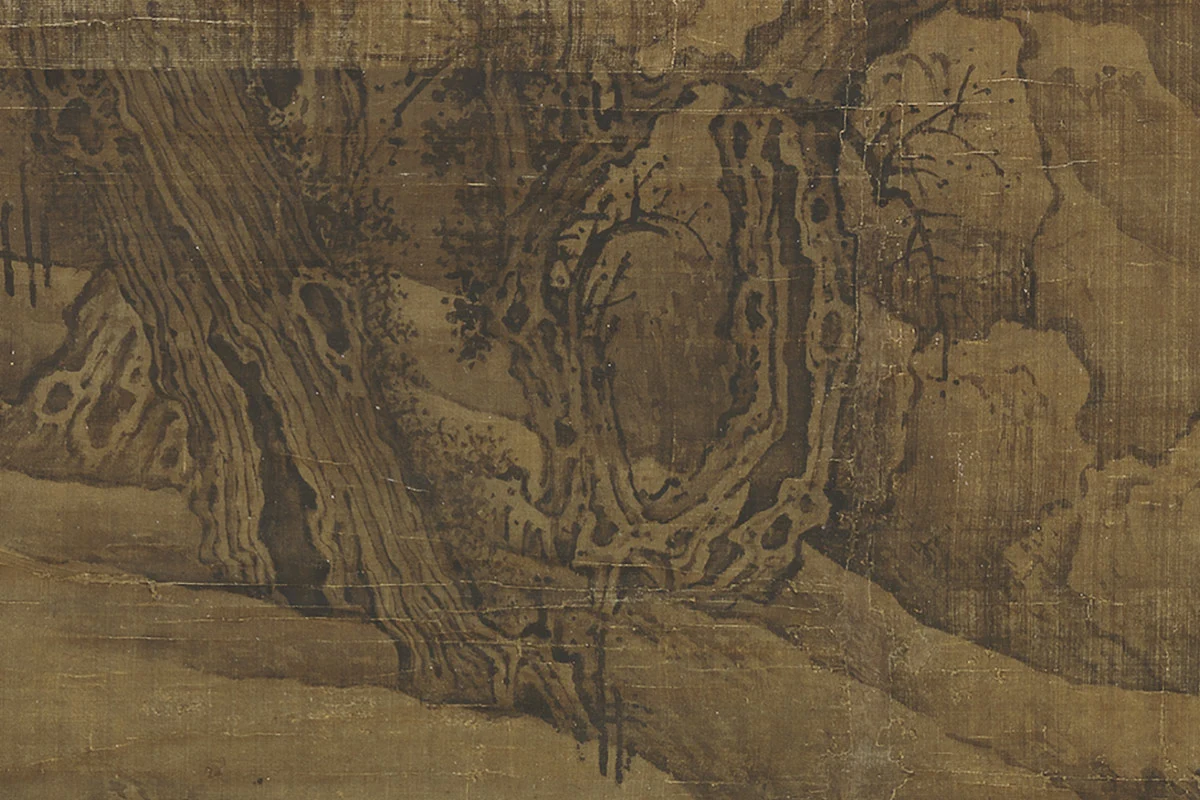
One of the most striking features of Wintry Forest is Guo Xi’s signature brushwork. He employed the "crab-claw" (xiezhua) technique to depict the gnarled, leafless branches of ancient trees. These sharp, curvilinear strokes create a sense of tension and life force within the decay. The rocks are rendered using "devil-face" (guimian) textures, involving layered ink washes and textured strokes that give the landscape a rugged, tactile quality. The mastery of tonal gradation allows the artist to evoke a misty, atmospheric depth, characteristic of the Northern Song aesthetic.
Guo Xi was not only a painter but also a theorist who authored The Lofty Message of Forests and Streams. In Wintry Forest, he applies his theory of "Three Distances" (Sanyuan), specifically focusing on "level distance" (pingyuan). This perspective invites the viewer to look from a nearby bank into the far horizon, creating a sense of vastness and tranquility. This spatial arrangement encourages meditative wandering, a core concept in Chinese literati culture where the painting serves as a mental retreat from the chaos of official life.
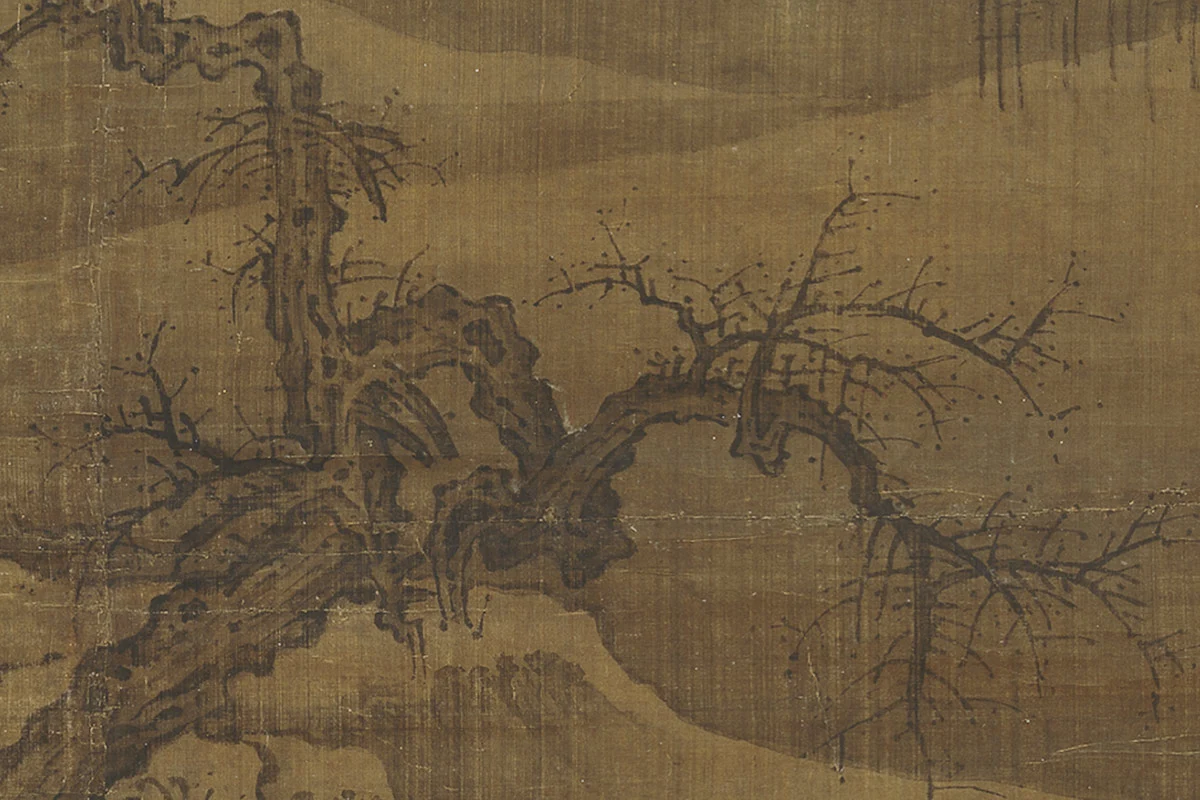
In the context of Confucian and Taoist thought, the wintry forest is a powerful metaphor. The bare trees, enduring the harsh frost, symbolize the integrity of the scholar-official who remains steadfast in difficult political or social climates. The "level distance" suggests a peaceful, detached state of mind. Unlike the lush landscapes of spring, Wintry Forest emphasizes the skeletal beauty of nature, stripping away the ephemeral to reveal the eternal structure of the universe.
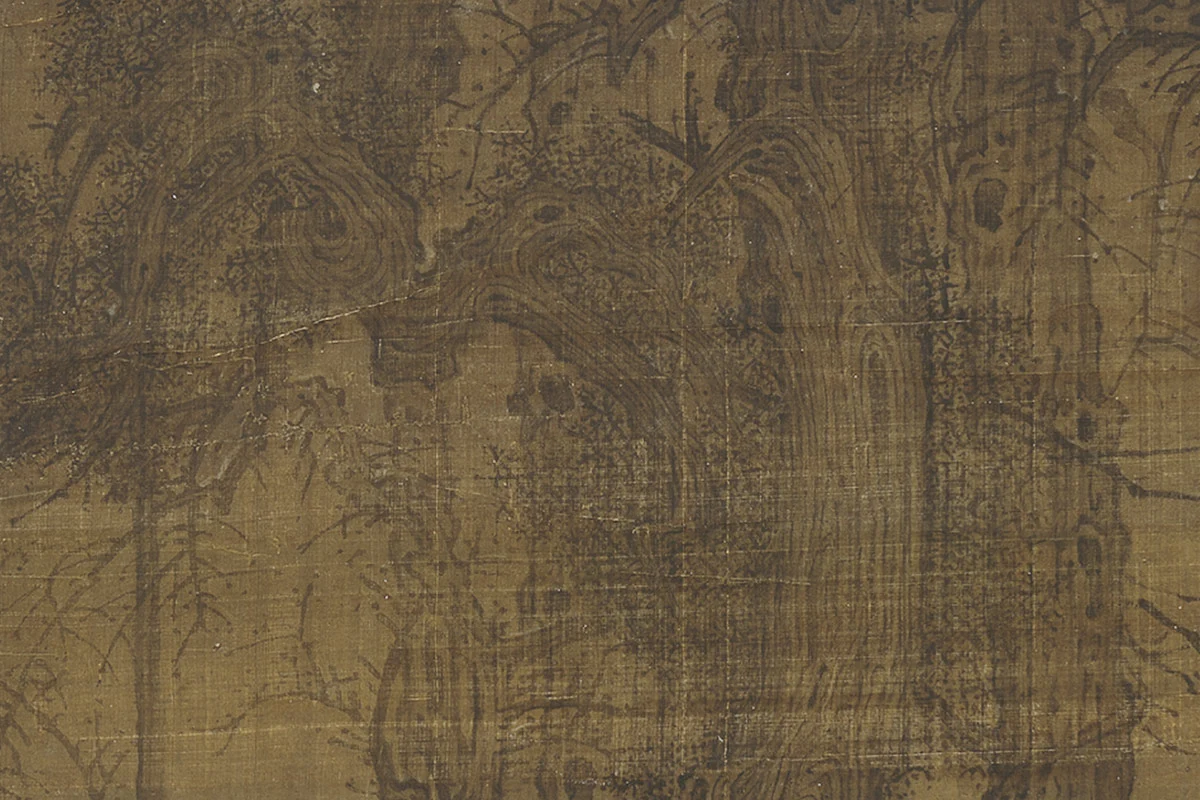
Guo Xi’s work represents the pinnacle of the Imperial Academy style. Wintry Forest influenced generations of later artists, from the Yuan Dynasty masters to modern ink painters. His ability to fuse realistic observation with poetic expression shifted the focus of Chinese painting toward subjectivity. Today, his surviving works are considered "national treasures," housed in prestigious institutions like the National Palace Museum and the Metropolitan Museum of Art, serving as a bridge to the spiritual world of the 11th-century Chinese elite.
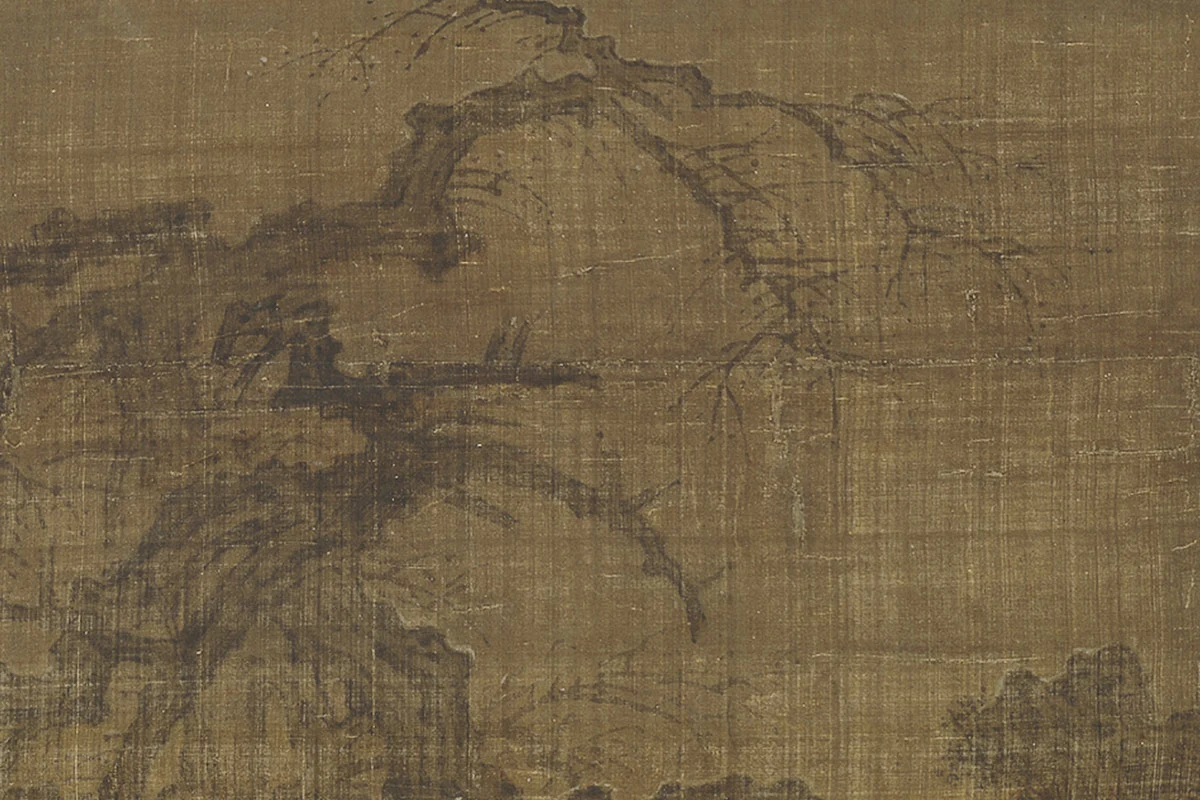
The composition of Wintry Forest is a masterclass in visual balance. The foreground features prominent, weathered trees that ground the viewer, while the middle and background dissolve into a misty void. This use of "negative space" or white space (liubai) is essential, as it represents the "breath" (qi) of the landscape, allowing the composition to breathe and the viewer’s imagination to fill the silence of the winter air.