
Zhou Wenju (周文矩), a prominent Hanlin Academician and court painter for the Southern Tang dynasty during the Five Dynasties and Ten Kingdoms period, is revered for his sophisticated figure paintings. His masterpiece, "The Literary Garden" (文苑图, Wenyuan Tu), currently housed in the Palace Museum in Beijing, stands as one of the most significant representations of the Chinese literati spirit and artistic refinement.
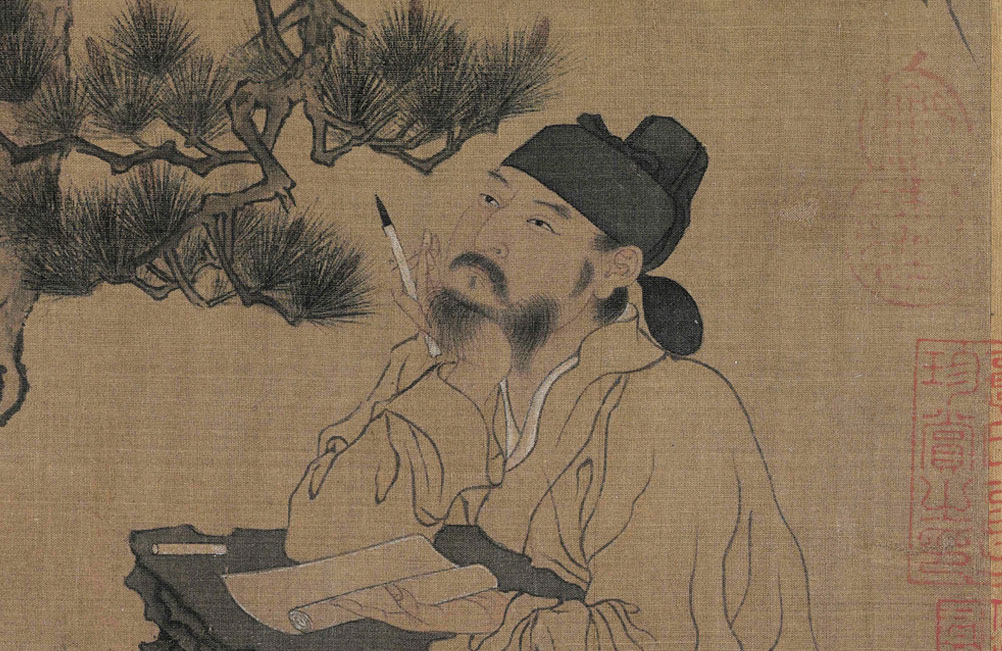
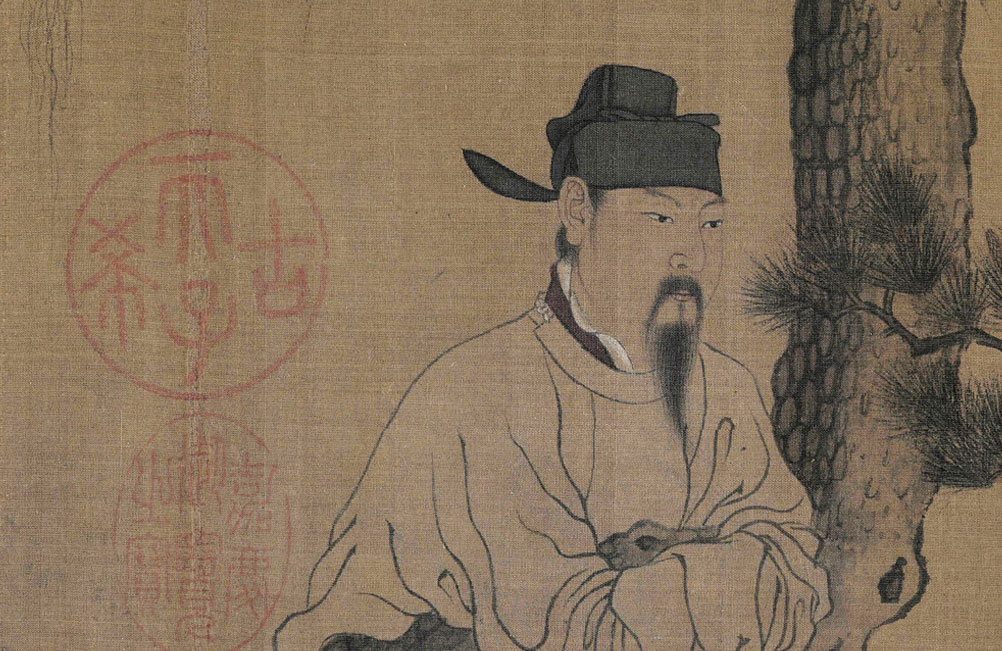
The painting portrays a tranquil gathering of four scholars (literati) in a garden setting, accompanied by a young boy attendant. Rather than depicting a lively social event, Zhou Wenju focuses on the act of creative inspiration. One scholar leans pensively against a gnarled pine tree, another sits on a decorative stone absorbed in thought, while a third prepares to write on a scroll. The scene captures the intellectual intensity and the quiet, solitary nature of poetic and philosophical pursuit, a theme central to the scholar-official class of ancient China.
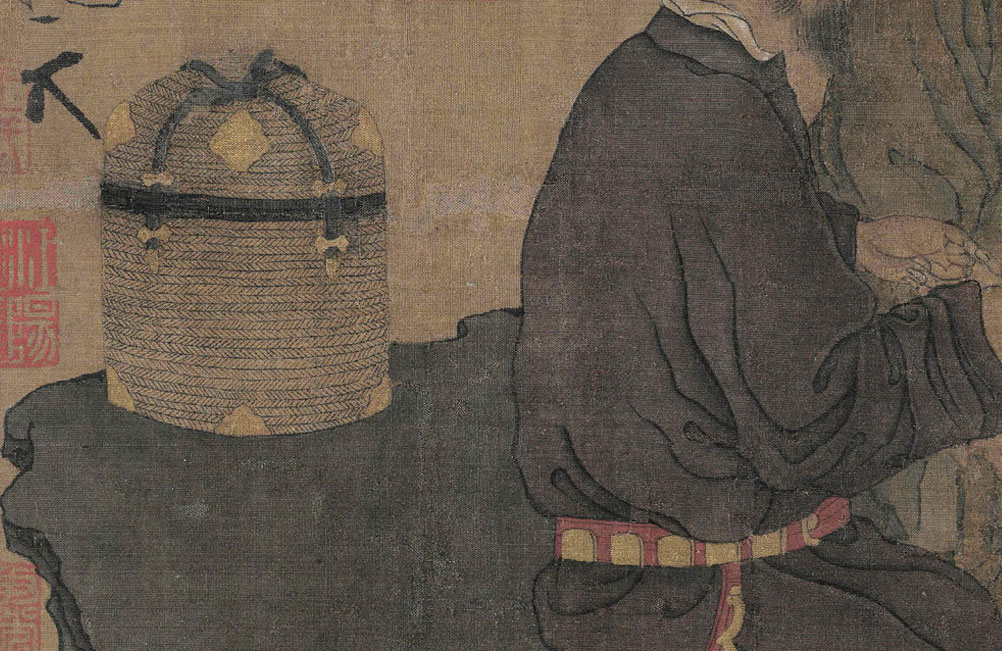
The most defining technical characteristic of The Literary Garden is Zhou Wenju's mastery of the "Zhanbi" (战笔) or "tremulous brushstroke." This technique involves a controlled, vibrating movement of the brush, resulting in lines that are jagged, undulating, and rhythmic. In this painting, the Zhanbi style is used to render the scholars' silk robes, providing a sense of textural weight and physical presence that contrasts with the smooth, flowing lines of earlier Tang masters. These "quivering" lines add a unique psychological tension and vitality to the figures.
Zhou Wenju was a pioneer in capturing the inner emotional world of his subjects. In The Literary Garden, the scholars are not mere archetypes; they possess individualized facial expressions that convey deep concentration, weariness, or flashes of insight. The psychological realism achieved through their subtle gazes and varied postures creates a "silent dialogue" between the figures and the viewer, elevating the work from a simple portrait to a profound study of the human mind at work.
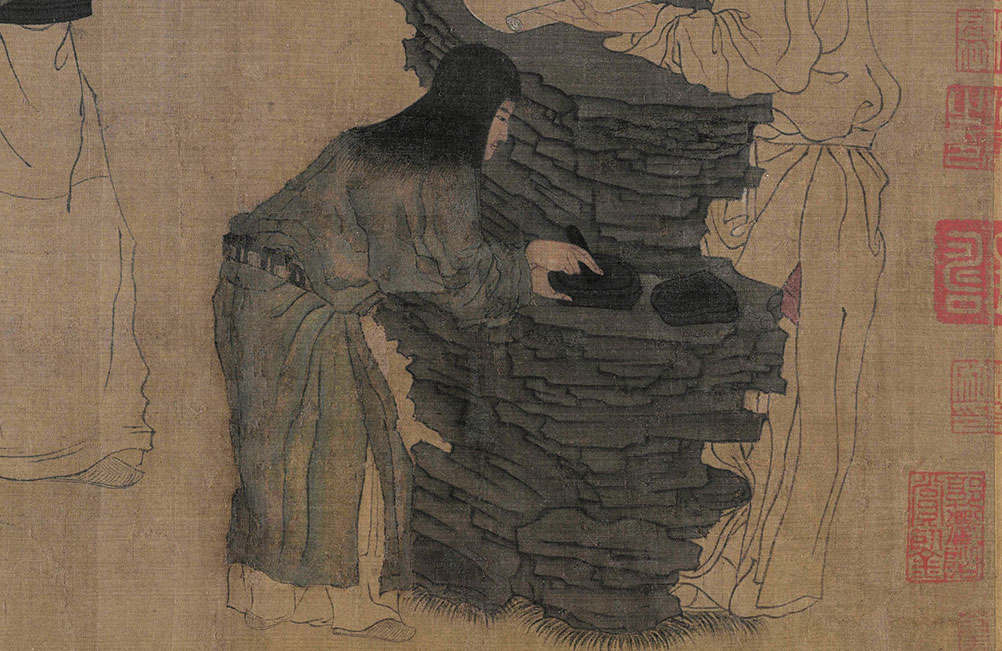
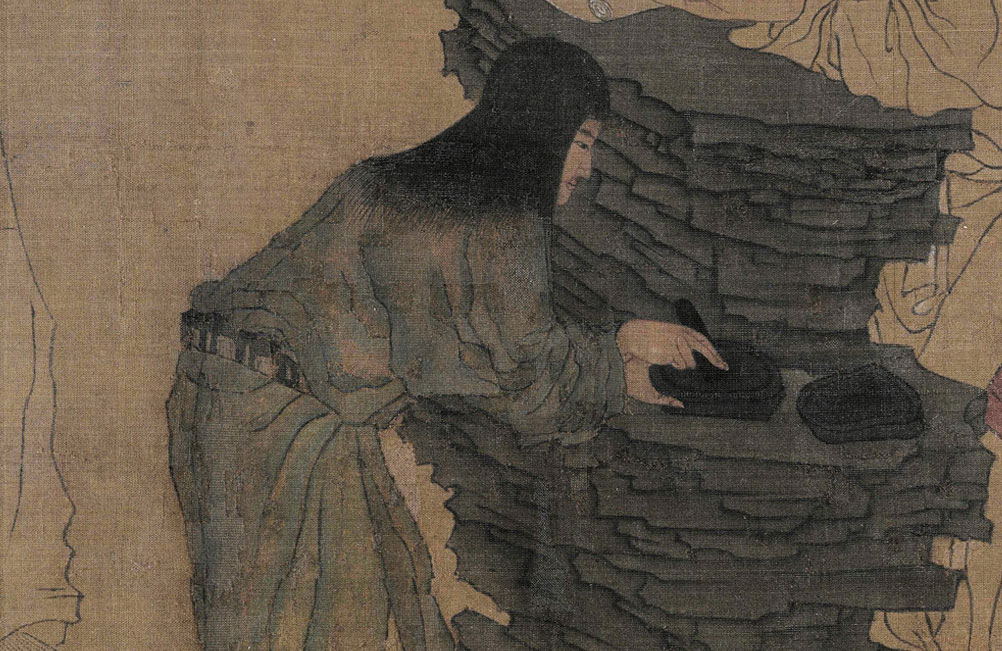
The composition is masterfully balanced, utilizing the diagonal of the leaning pine tree and the strategic placement of Taihu stones (ornamental garden rocks) to create spatial depth. The interaction between the scholars and their environment—the way they lean on the tree or sit on the rocks—emphasizes the harmony between man and nature, a core tenet of Chinese aesthetic philosophy. The presence of the boy attendant, who is busy preparing ink, adds a layer of narrative realism and highlights the social structure of the literati lifestyle.
As a court painter for the "Last Ruler" Li Yu, Zhou Wenju’s work reflects the high cultural zenith of the Southern Tang. While there has been historical debate regarding whether this piece is an original or a high-quality Song Dynasty copy (often compared to Han Huang's Literati Gathering), the artistic execution and the specific use of the Zhanbi technique are quintessentially Zhou Wenju. It remains a foundational work that bridged the realistic traditions of the Tang with the more expressive and poetic styles of the subsequent Song Dynasty.
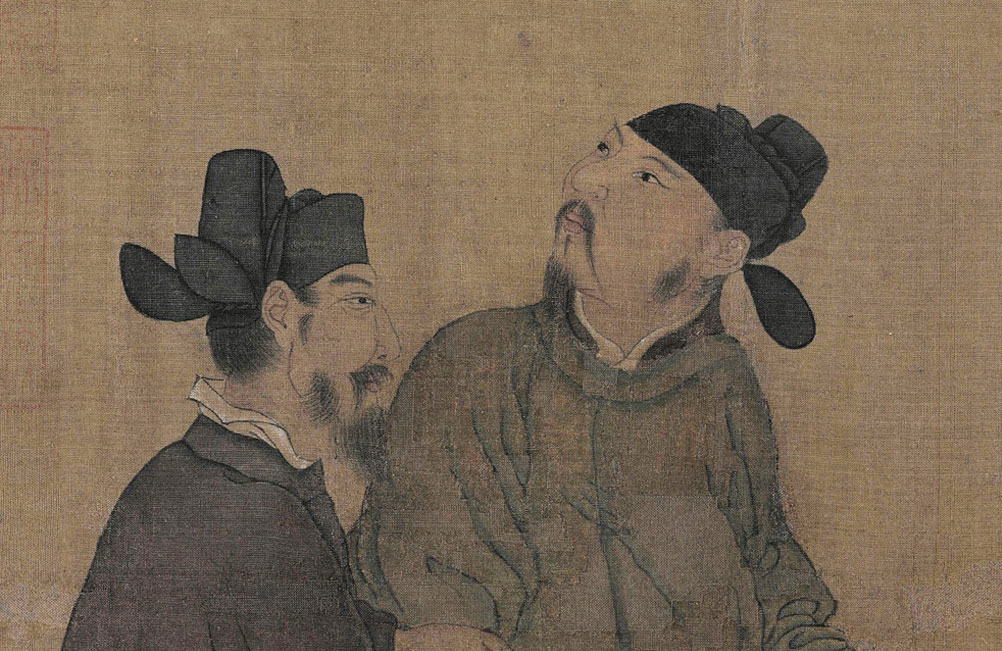
The Literary Garden is more than an art object; it is a cultural document that defines the elegant gathering (雅集, Yaji) genre. It solidified the image of the "thinking scholar" in the Chinese visual imagination and influenced centuries of literati painting. Its focus on subjective experience and technical innovation ensures its place as a cornerstone of Chinese classical art and a testament to the sophisticated culture of the Southern Tang court.