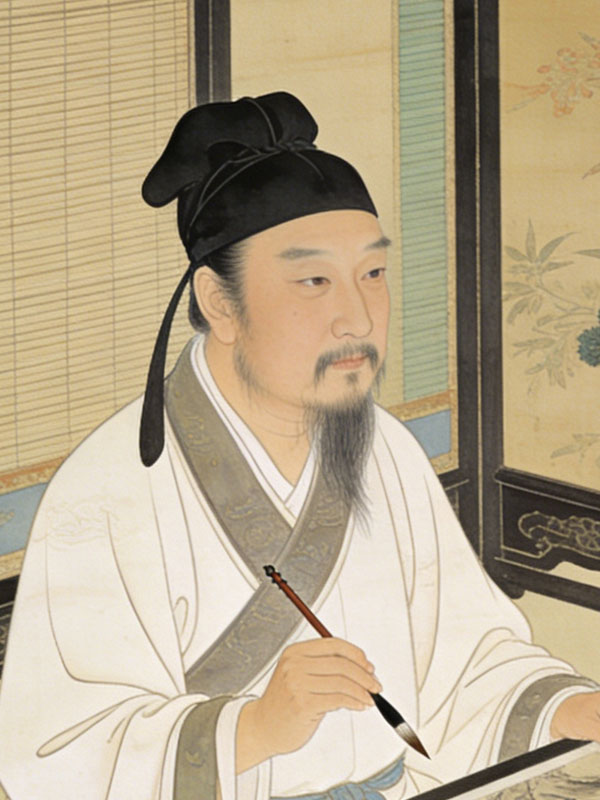
Zhou Wenju: The Visionary Chronicler of the Southern Tang Court
Zhou Wenju (active c. 940–975 AD) was a preeminent court painter during the Southern Tang Dynasty, serving under the last ruler, the poet-emperor Li Yu. Originally from Jurong (modern-day Jiangsu), his exceptional talent earned him a prestigious position in the Imperial Academy. He was deeply integrated into the sophisticated literary and artistic circles of the Southern Tang court, a period known for its intense cultural refinement despite its political instability.
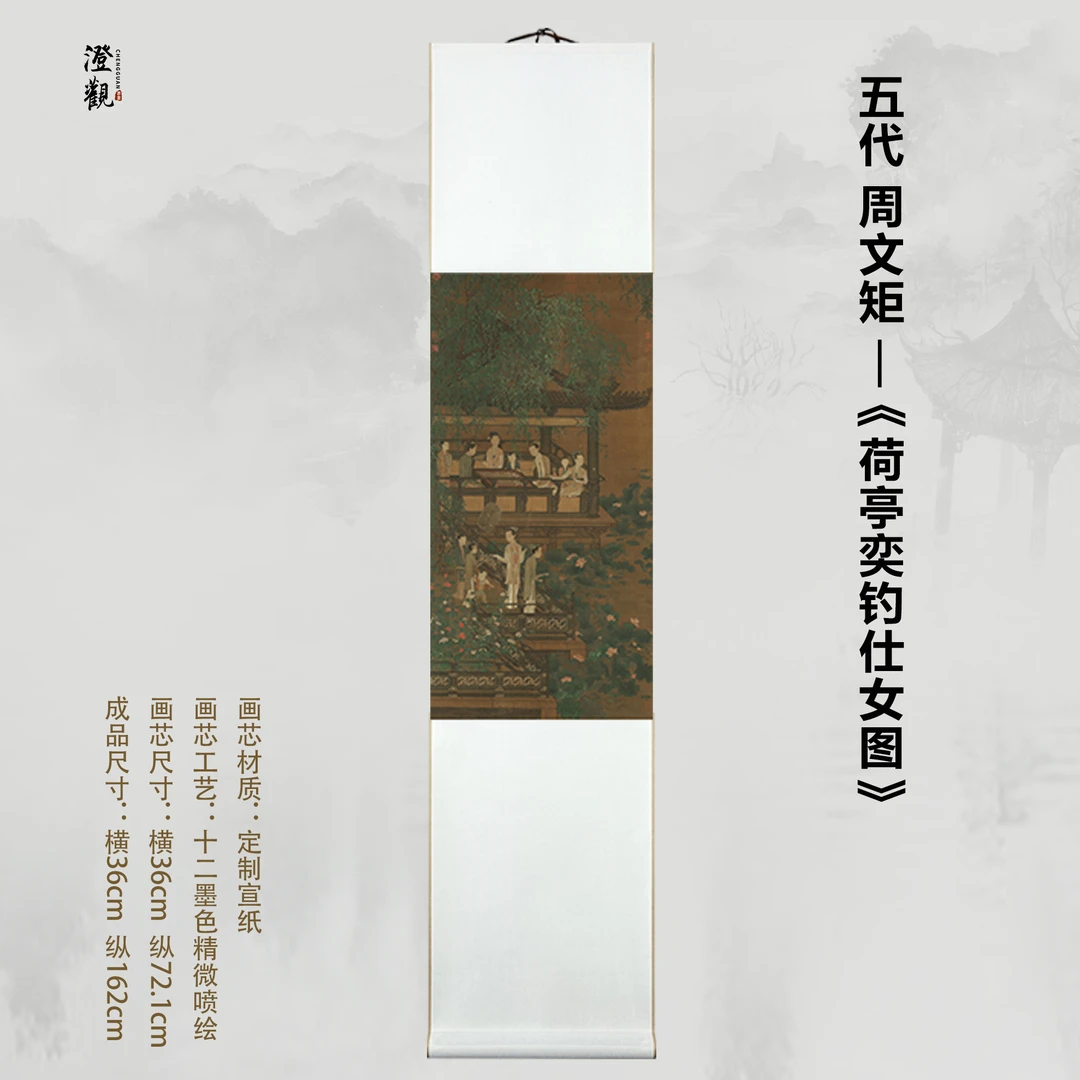
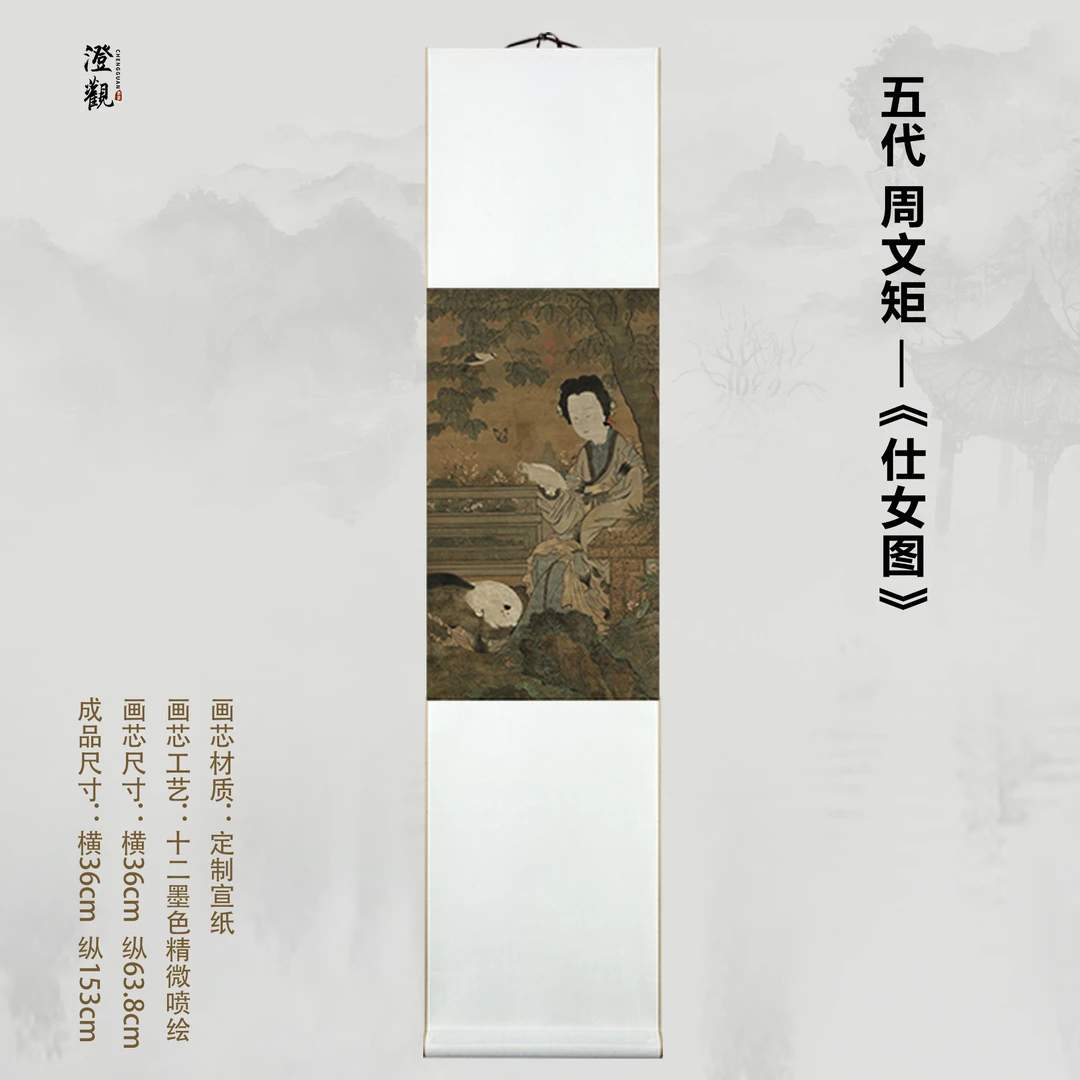
He is primarily celebrated as a master of figure painting and shinv tu (paintings of court ladies). While his style was initially rooted in the Tang tradition of Zhou Fang, Zhou Wenju developed a more slender and graceful aesthetic that departed from the "plump" beauty standards of the High Tang. His most significant technical innovation was the "tremulous line" (zhanbi), a unique brushstroke characterized by a shaky, rugged rhythm that added a sense of tactile texture and dynamic energy to the drapery of silk garments and architectural elements.
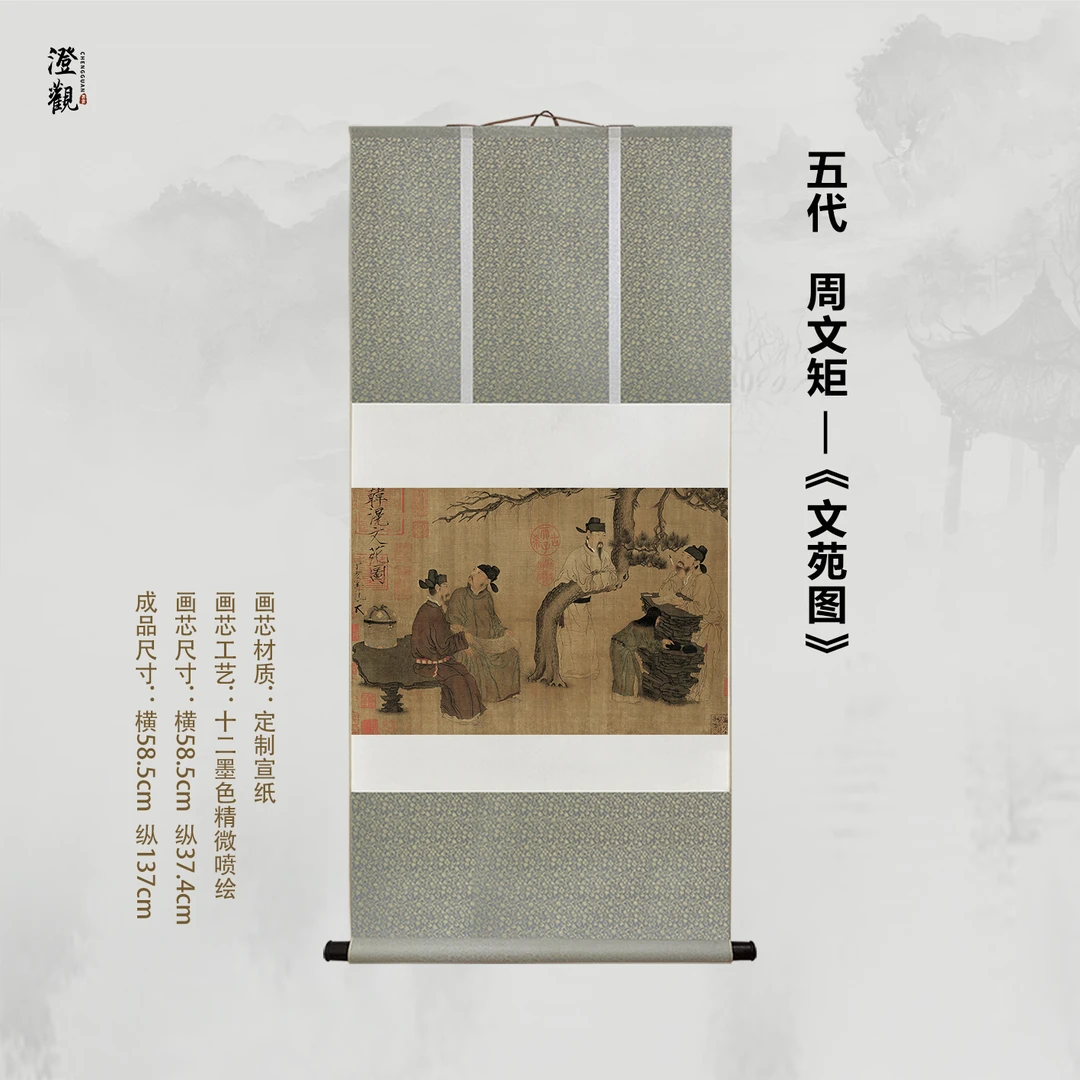
One of his most enduring legacies is his role in documenting the private lives of the nobility. His masterpiece, "The Night Revels of Han Xizai" (of which he painted a famous version contemporary to Gu Hongzhong), and works like "Court Ladies in the Palace" (宫中图) provide an intimate look at imperial banquets, musical performances, and the quiet moments of palace women. Unlike earlier artists who focused on idealized forms, Zhou Wenju was a master of psychological observation, capturing the subtle emotions and social hierarchies within the imperial household with exquisite precision.
In addition to his depictions of women, he was highly regarded for his literary and religious paintings. His work "Literary Gathering at the Liuli Hall" (琉璃堂人物图) is a masterpiece of group portraiture, depicting famous poets and scholars in a refined outdoor setting. He possessed a rare ability to arrange complex compositions where each figure maintains a distinct individual character and expression, harmonizing the human element with ornamental landscapes and elegant furniture.
Historical anecdotes often mention his favored status with Emperor Li Yu, who frequently commissioned him to paint scenes of palace festivities and historical themes. Zhou Wenju’s influence was profound, particularly on the Song Dynasty court painters who admired his meticulous detail and innovative brushwork. Today, his surviving works and high-quality early copies, housed in institutions like the Palace Museum in Beijing and the Cleveland Museum of Art, are considered national treasures and vital windows into the cultural zenith of the Southern Tang.
— ALL MASTERPIECES LOADED —