
During the zenith of the Qing Dynasty—the Yongzheng and Qianlong eras—the imperial court became a melting pot of global artistic influences. At the heart of this cultural synthesis was Chen Mei, a preeminent court painter whose work represents the "New Court Style." His masterpiece, "Peonies and a Pair of Swallows" (Mudan Shuangyan Tu), stands as a definitive example of this era, showcasing a breathtaking bridge between traditional Chinese ink traditions and the burgeoning influence of Western realism.
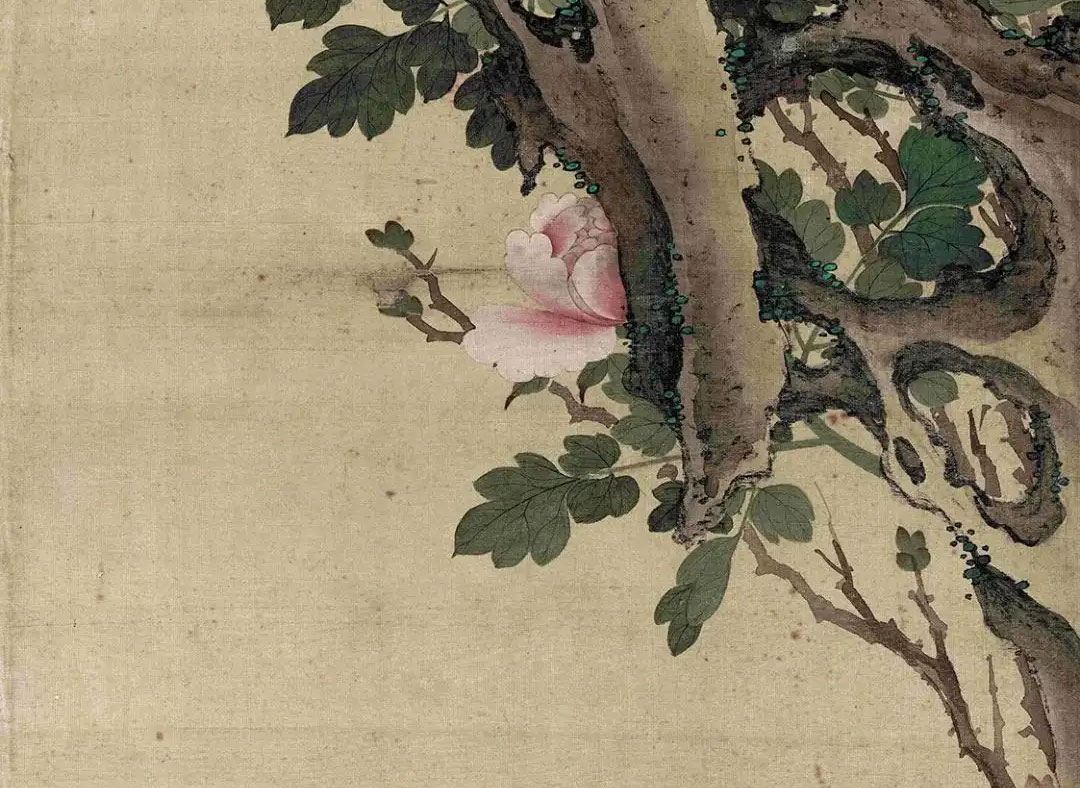
What distinguishes Chen Mei’s work from the minimalist literati paintings of previous eras is its profound embrace of Western techniques brought to the court by Jesuit missionaries like Giuseppe Castiglione (Lang Shining). In "Peonies and a Pair of Swallows," Chen Mei employs sophisticated shading and "chiaroscuro" to give the peony petals a sense of physical volume and three-dimensional depth. Unlike the flat washes of color typical of earlier Gongbi (meticulous) styles, Chen’s petals appear velvety and moist, as if they could be touched, demonstrating an early Chinese mastery of light and shadow.
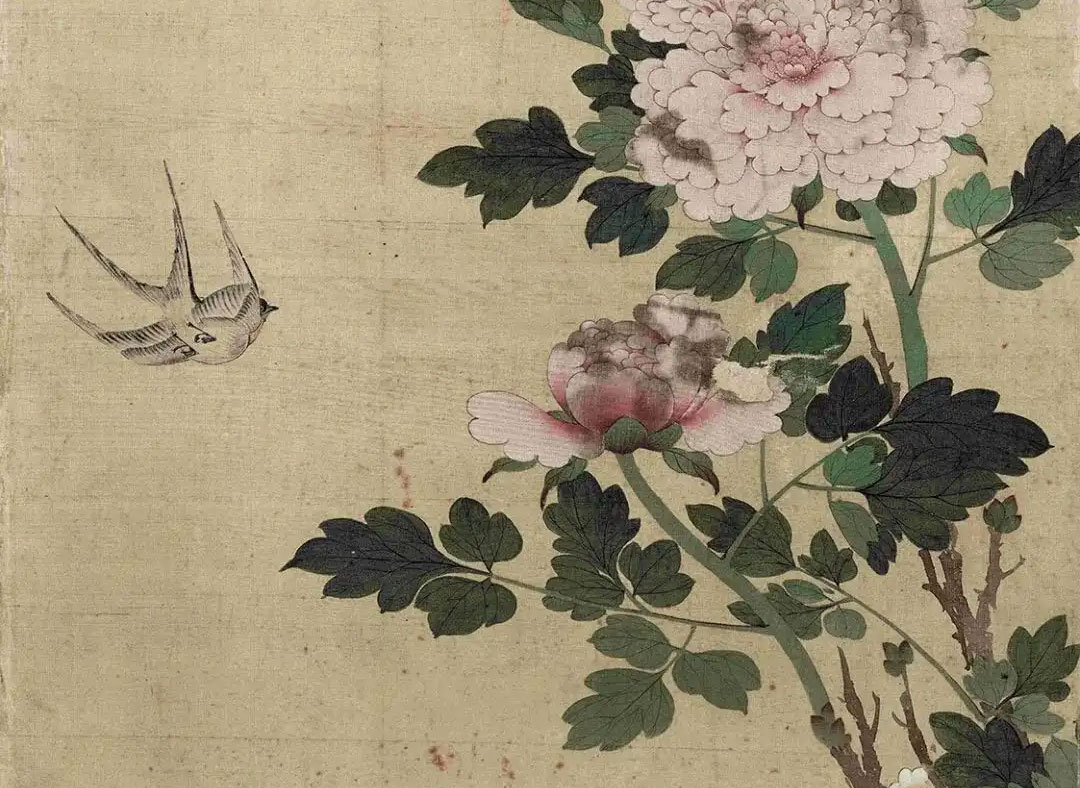
The technical execution of the painting is nothing short of extraordinary. Chen Mei utilizes the "Gongbi Zhongcai" (meticulous heavy color) technique, where fine, hair-like lines define the structure of the flowers while layers upon layers of mineral pigments create rich, vibrant tones. The swallows are rendered with a specialized "silk hair" technique, making their feathers appear soft and iridescent. This precision extends to the composition’s balance: the heavy, static beauty of the blooming peonies is perfectly offset by the light, rhythmic motion of the two swallows, creating a visual harmony that feels both royal and alive.
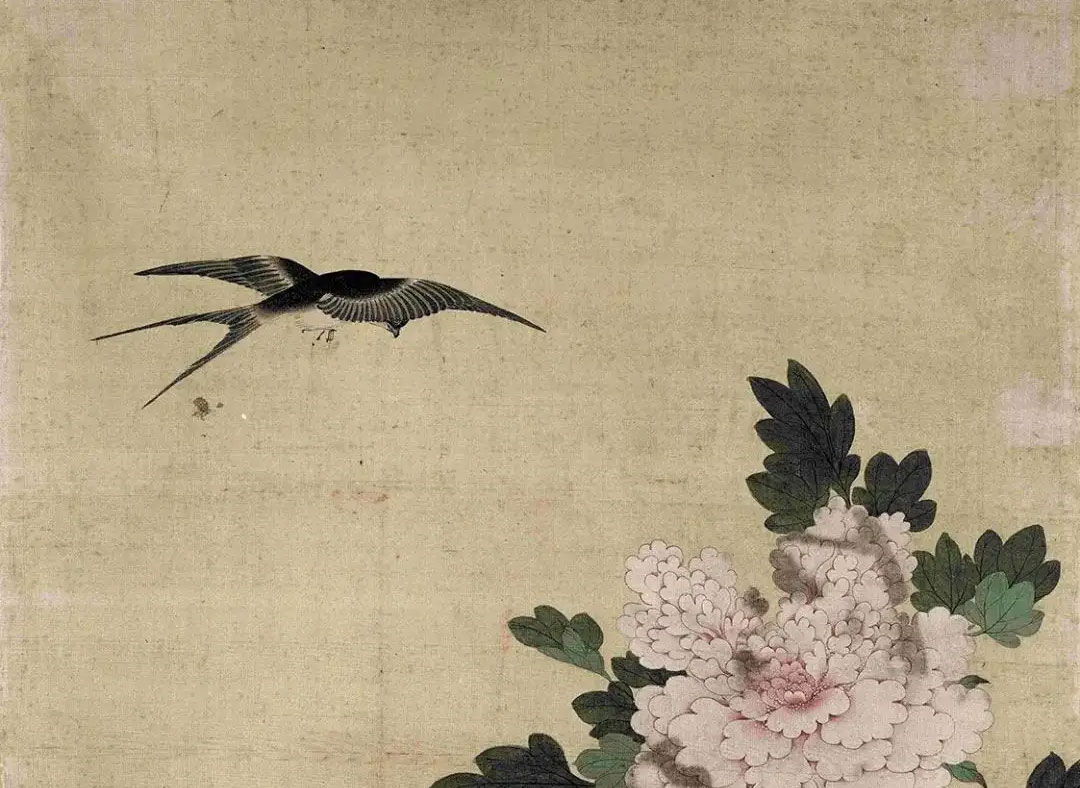
Beyond its technical brilliance, the painting is steeped in the auspicious symbolism favored by the Qing royalty. The Peony, long heralded as the "King of Flowers," serves as a potent symbol of wealth, honor, and national prosperity. The pair of swallows, arriving with the spring, signifies domestic harmony, renewal, and the "doubling" of blessings. Together, the imagery creates a visual "hymn" to the peace and flourishing state of the empire, making it a piece that was likely intended to adorn the private quarters of the imperial family as a talisman for a prosperous reign.
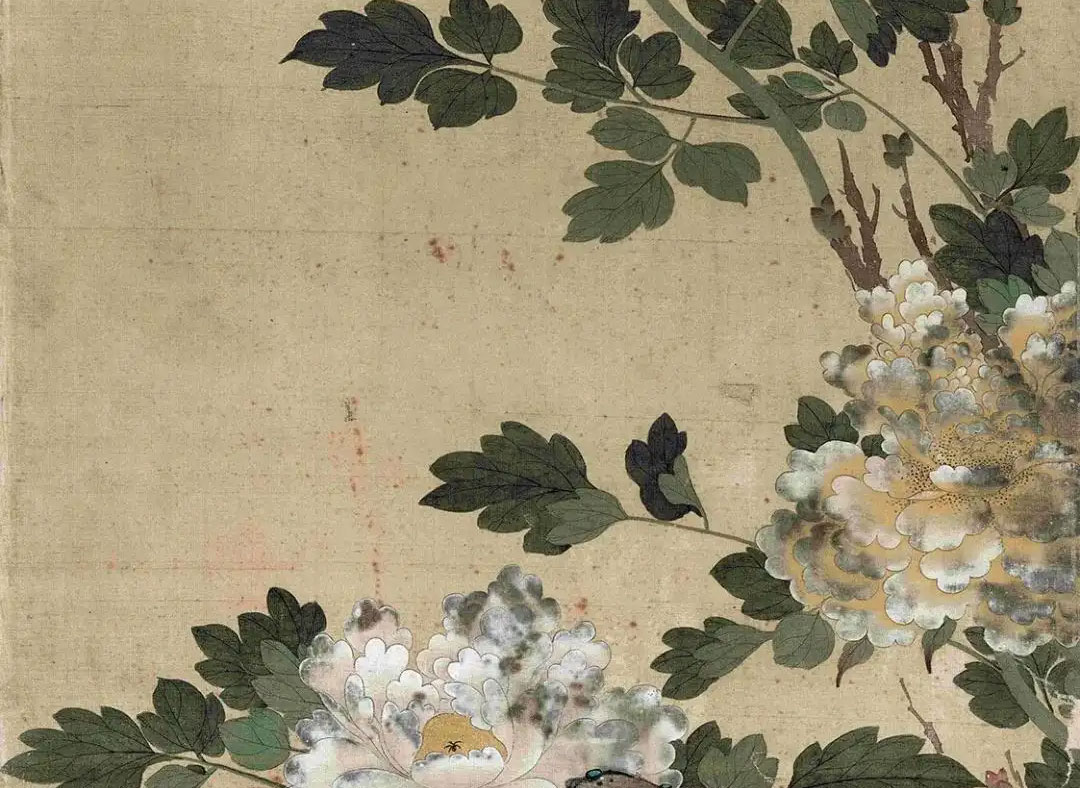
In conclusion, Chen Mei’s "Peonies and a Pair of Swallows" is more than just a decorative floral piece; it is a historical document of a globalizing world. It captures the moment when Chinese art began to experiment with international perspectives without losing its cultural soul. Today, it remains a vital reference for the study of the Qing Imperial Academy style, representing the peak of technical perfection and the grand aesthetic vision of one of China’s most powerful dynasties. It is a work where nature, politics, and cross-cultural innovation meet on a single silk scroll.