
The painting "Auspicious Roe Deer" (Ruipao Tu), executed in 1751, stands as a quintessential masterpiece by Giuseppe Castiglione (also known by his Chinese name Lang Shining). As a Jesuit missionary serving as the lead court painter for the Qing Dynasty, Castiglione played a pivotal role in bridging the aesthetic divide between the East and the West. This specific work was commissioned during the Qianlong Emperor’s reign to commemorate the 60th birthday of his mother, the Empress Dowager Chongqing, marking a significant moment of imperial celebration and filial piety.
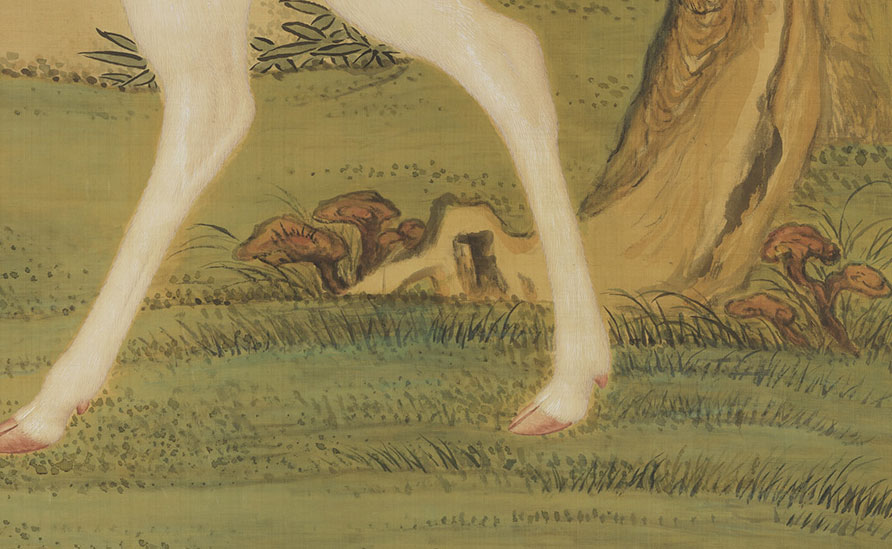
The historical narrative behind the artwork is as compelling as the imagery itself. The subject, a rare white roe deer, was presented as a tribute by Mongolian nobles to the Qing court. In traditional Chinese culture, the appearance of a white animal was interpreted as a "Heavily Auspicious Omen" (Xiangrui), signaling that the emperor’s rule was virtuous and endorsed by the Heavens. By documenting this rare creature, the Qianlong Emperor sought to legitimize his "Grand Prosperity" and showcase the harmonious relationship between the central government and the Mongolian tribes.
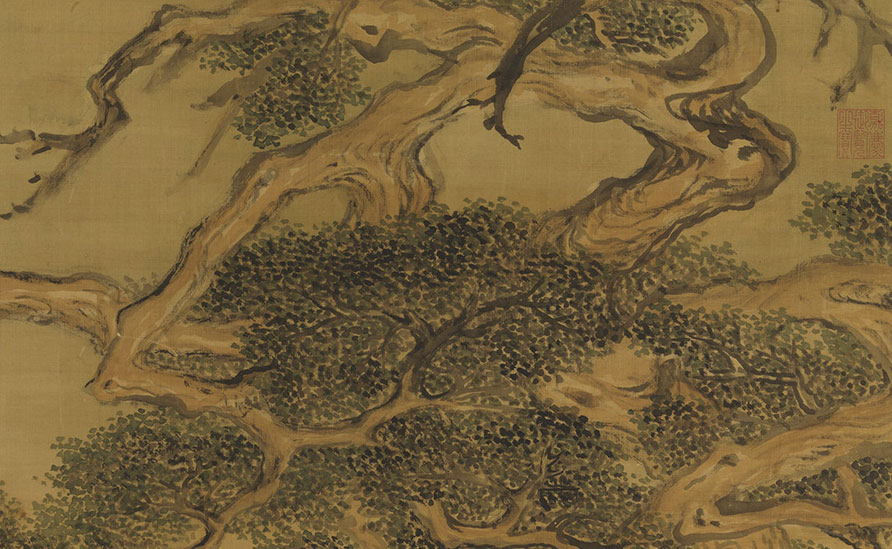
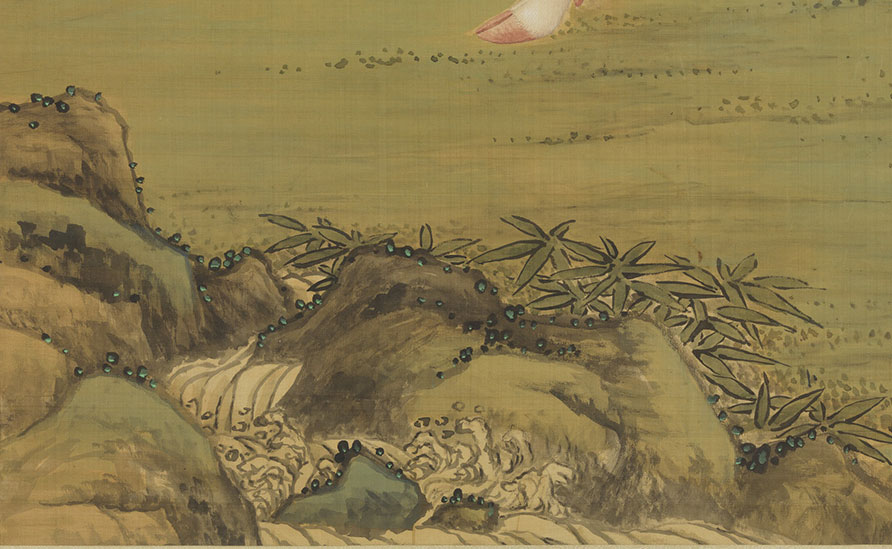
Artistically, "Auspicious Roe Deer" represents the height of the "New Court Style." Castiglione utilized European chiaroscuro and anatomical precision to render the deer, giving it a three-dimensional, lifelike quality that was revolutionary in 18th-century China. The texture of the white fur and the gentle glint in the deer’s eyes reflect a profound mastery of light and shadow. Conversely, the background—comprising rugged rocks, ancient pine trees, and lingzhi (reishi) mushrooms—employs traditional Chinese ink wash techniques, creating a poetic environment that frames the realistic subject within a classical scholar-official aesthetic.
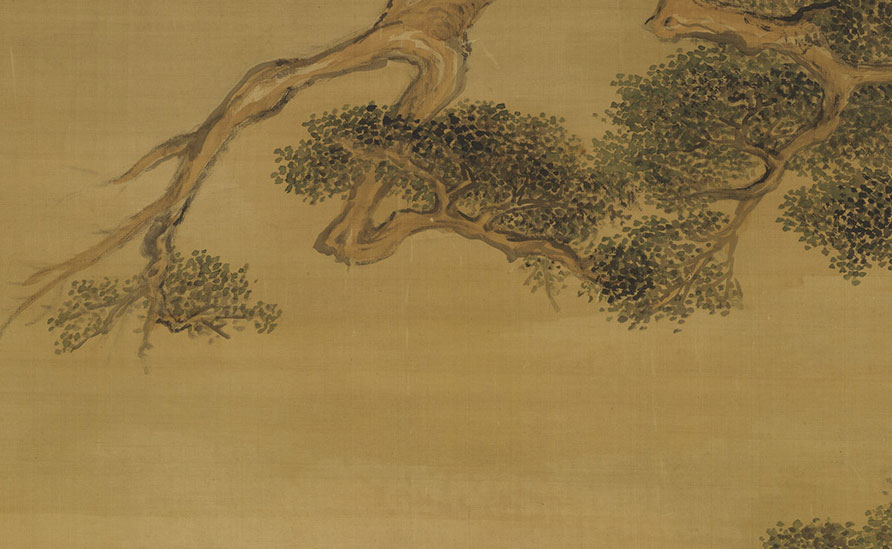
The iconography of the painting is saturated with wishes for longevity and peace. The pine tree, which remains green throughout the winter, and the lingzhi mushroom, known as the "immortal fungus," are both powerful symbols of long life. When paired with the white deer—a creature often associated with the God of Longevity (Shouxing)—the painting becomes a visual prayer for the Empress Dowager’s eternal health. Furthermore, the imperial inscription by the Qianlong Emperor at the top of the scroll adds a layer of historical documentation and literary value, blending poetry, calligraphy, and painting into a "Triple Excellence."
Today, "Auspicious Roe Deer" is preserved in the National Palace Museum in Taipei, serving as a vital record of cross-cultural exchange. It is more than just a biological record of a rare mutation; it is a sophisticated political tool and a testament to the artistic innovation that occurs when European Renaissance techniques meet Chinese imperial traditions. Castiglione’s legacy continues to fascinate scholars and art lovers alike, as his work remains a bridge between two worlds that once seemed irreconcilable.