
The Five Dynasties and Ten Kingdoms period (907–979 AD) was a transformative era in Chinese art history, serving as a vital bridge between the robust styles of the Tang and the refined naturalism of the Song. Among the most significant works from this period is "Eight Gentlemen on a Spring Outing" (Ba Da Chun You Tu, 八达春游图) by the artist Zhao Yan (赵嵒). Currently housed in the National Palace Museum in Taipei, this large-scale hanging scroll is a definitive example of 10th-century aristocratic figure painting and equestrian art.
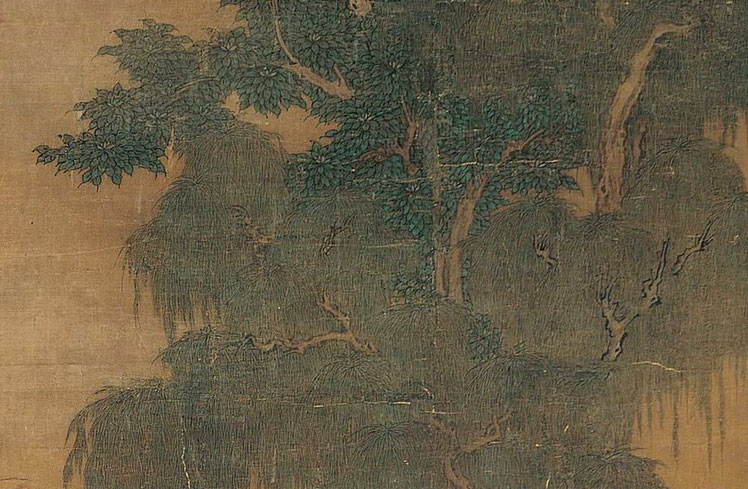
Unlike many professional court painters of his time, Zhao Yan was a high-ranking member of the nobility. As the son-in-law of Emperor Taizu of the Later Liang Dynasty, he lived a life of immense privilege. His social standing provided him with intimate knowledge of the leisurely pursuits of the elite, which he translated onto silk with a "noble and elegant" spirit. His works are characterized by a literati sensibility combined with the meticulous precision of the Gongbi (fine-line) tradition.
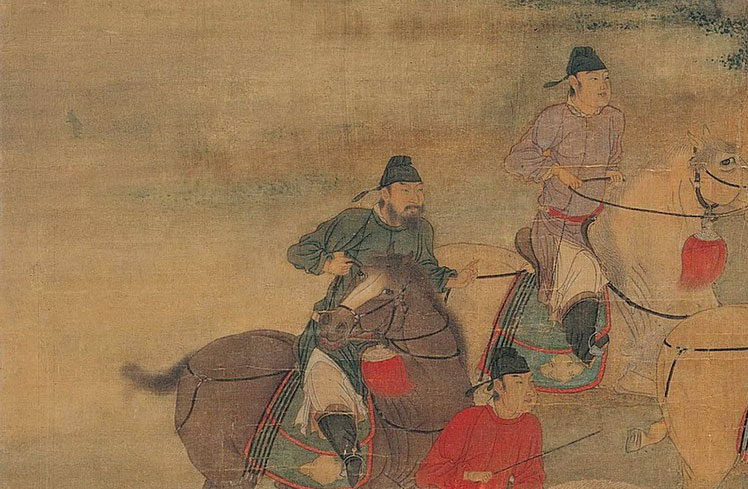
The painting depicts eight noble riders embarking on an excursion during the Spring season. In ancient Chinese culture, the "Spring Outing" was more than just a ride; it was a ritualistic display of social status and a celebration of nature’s renewal. The term "Ba Da" (Eight Gentlemen) refers to the eight individuals shown in the composition. The setting is clearly an Imperial Garden or a private manorial estate, signaled by the presence of a magnificent Taihu Stone (scholar’s rock) and an intricately carved marble balustrade in the foreground.
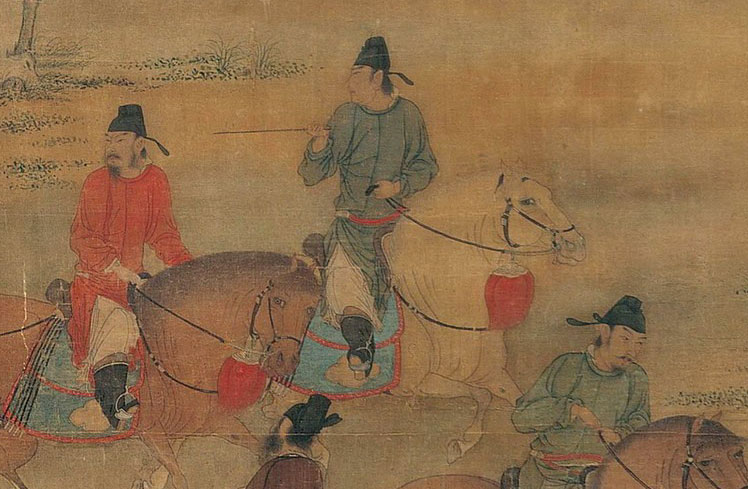
Zhao Yan was deeply influenced by the Tang Dynasty masters of horse painting, most notably Han Gan. The horses in this scroll are rendered with muscular realism and spirited vitality. Each animal is depicted in a different pose—some grazing, some moving forward, and some turning their heads—demonstrating the artist's profound understanding of equine anatomy. The bridles, saddles, and decorative trappings are painted with microscopic detail, reflecting the extreme opulence of the Later Liang court.
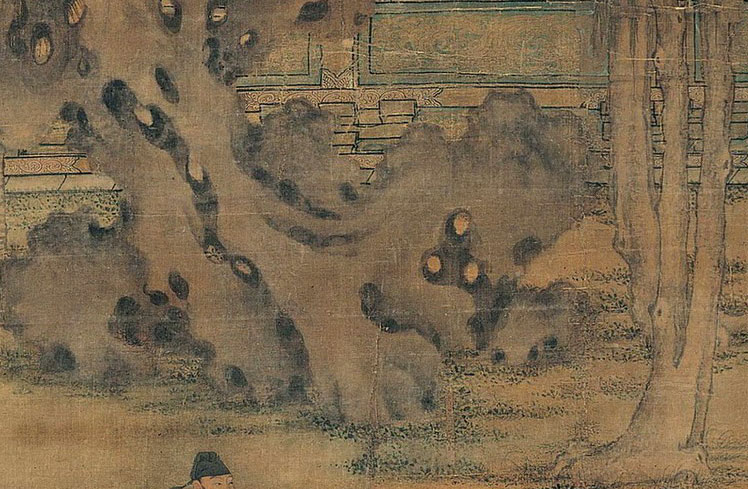
One of the most striking aspects of "Eight Gentlemen on a Spring Outing" is its vertical composition. The artist uses the massive perforated garden rock as a central anchor, around which the riders are positioned in a circular arrangement. This layout creates a sophisticated sense of three-dimensional space and depth. The overlapping of the horses and the varied heights of the riders draw the viewer’s eye through the scene, creating a narrative flow that suggests movement within a static frame.
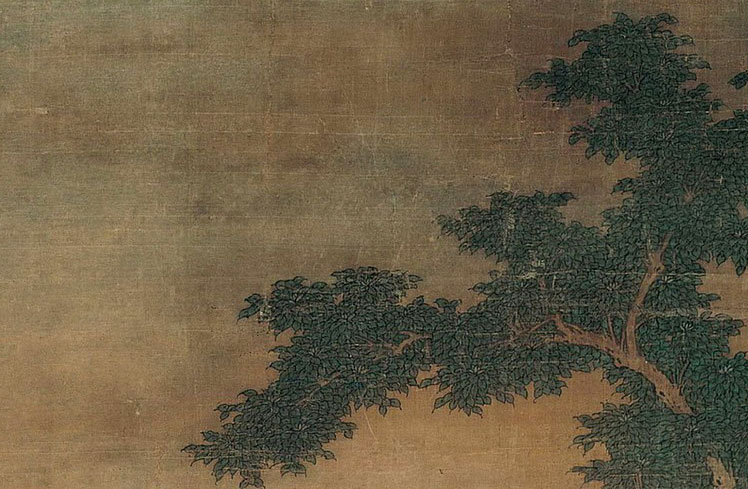
The painting utilizes the "Iron-wire" line technique (Tie-xian miao), where the lines are consistent in thickness and possess a tensile strength that defines the heavy silk robes of the gentlemen. The color palette is rich yet restrained, employing mineral pigments such as malachite green and cinnabar red. This combination of bold colors and firm outlines preserves the "Golden Age" aesthetic of the Tang while moving toward the meticulous realism that would later define the Northern Song Academy of painting.
Beyond its visual beauty, this masterpiece is a crucial cultural artifact. It documents the transition from religious art to secular art, focusing on the human experience and social order. In the context of the chaotic Five Dynasties, the painting represents a desire for cultural continuity and political stability. As a 1:1 reproduction or a studied masterpiece, it remains an essential reference for understanding the evolution of Chinese landscape and figure painting, offering a timeless glimpse into a world of refined elegance and artistic perfection.