
Zhu Jianshen (朱见深): The Artist Emperor of the Chenghua Era
Zhu Jianshen (1447–1487), known historically as the Chenghua Emperor (宪宗), was the eighth ruler of the Ming Dynasty. While his reign was marked by both political stability and internal court complexities, he is uniquely distinguished in art history as a highly gifted imperial painter. Along with the Xuande Emperor, Zhu Jianshen was one of the few Ming monarchs to achieve professional-level mastery in the visual arts, blending imperial authority with literati sensibility.
1. The Legacy of an Artist-Monarch
Zhu Jianshen grew up in an environment where the Imperial Painting Academy was highly valued. Unlike the professional painters of the Zhe School or the scholar-amateurs of the Wu School, as an emperor, he had unrestricted access to the palace collections of Tang and Song masterpieces. His work reflects a deep internalizing of classical traditions, yet it possesses a playful, relaxed quality that was rare for a figure of his absolute power.
2. The "One Unity" (Yi Tuan He Qi) and Philosophical Synthesis
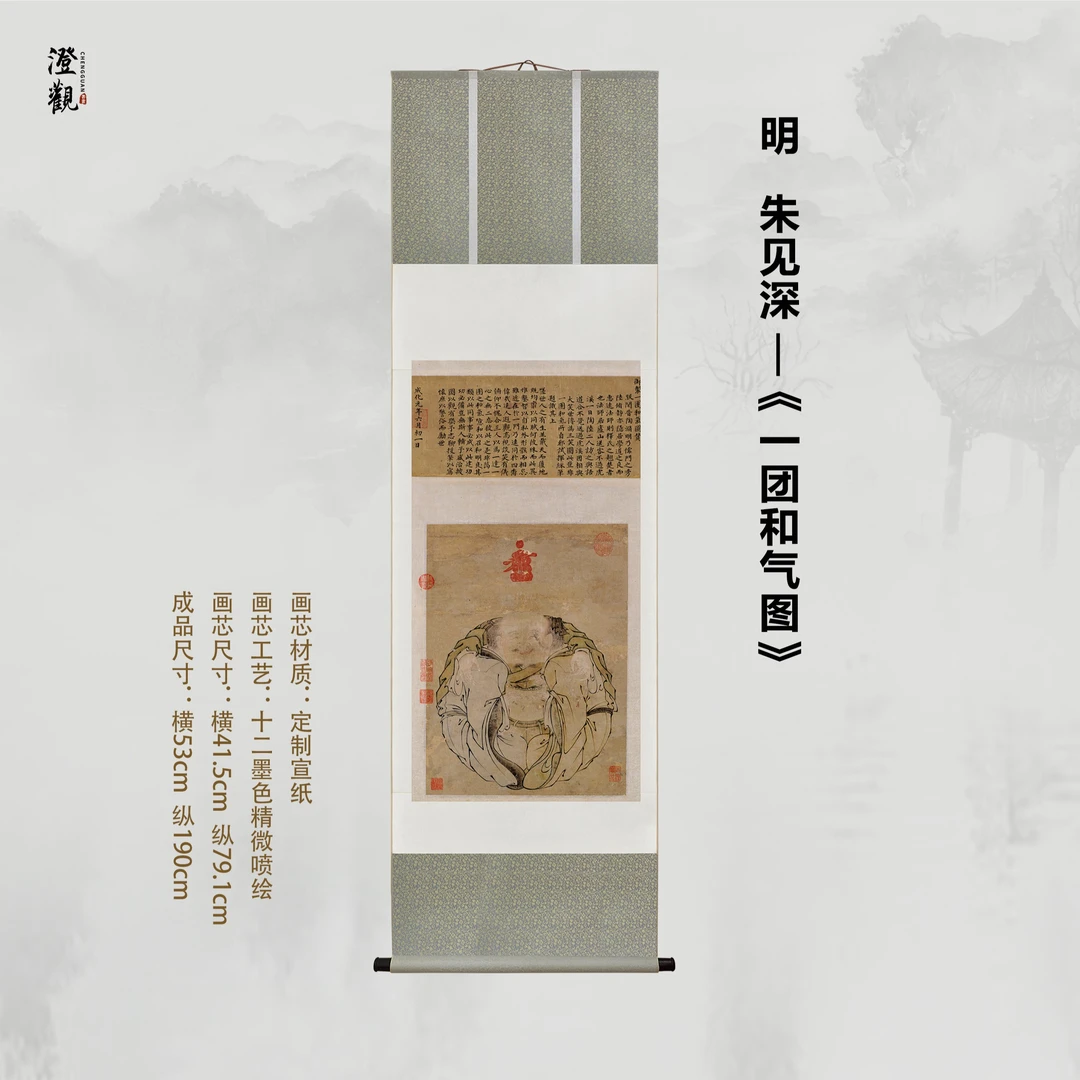
His most famous and iconic work is the "One Unity" (Yi Tuan He Qi Tu 一团和气图). This painting is a masterpiece of religious and political symbolism:
- Three-in-One Concept: At first glance, the painting looks like a single, smiling figure, but it actually depicts three people embracing: a Taoist priest, a Buddhist monk, and a Confucian scholar.
- National Harmony: The work was painted shortly after he took the throne to promote a message of social peace and ideological unity among the three great teachings of China.
- Compositional Genius: The use of a circular composition symbolizes perfection and eternity, showcasing his ability to use art as a tool for political philosophy.
3. Figurative Art and the "Demon Queller"
Zhu Jianshen was particularly fond of painting Zhong Kui, the legendary "Demon Queller." His depictions of Zhong Kui are noted for their expressive brushwork and humor.
- Style: He utilized the Southern Song Academy style, characterized by strong, rhythmic outlines and subtle ink washes.
- Folk Connection: By painting subjects like Zhong Kui and the God of Wealth, the Emperor bridged the gap between high court art and popular folk beliefs, using his brush to invoke auspicious blessings for his empire.
4. Connection to Chenghua Porcelain
The aesthetic of Zhu Jianshen’s painting is inextricably linked to the development of Chenghua Doucai (contrasting colors) porcelain. The refined, delicate, and elegant style of the era's ceramics—known for their soft colors and smooth lines—mirrors the Emperor's personal artistic taste. The famous Chicken Cups and floral motifs found on Chenghua porcelain often reflect the whimsical and gentle brushwork seen in his own scrolls.
5. Historical Significance and Museum Presence
Zhu Jianshen is often compared to the Song Emperor Huizong in terms of artistic talent, though he was more focused on auspicious themes and religious harmony. His works provide a rare glimpse into the private world of the Ming court and the personal character of a ruler who sought solace in the brush. Today, his surviving masterpieces are held in the highest regard at the Palace Museum in Beijing and the National Palace Museum in Taipei.
— ALL MASTERPIECES LOADED —