
Zhou Quan (周铨): The Elegant Landscape Master of the Mid-Qing
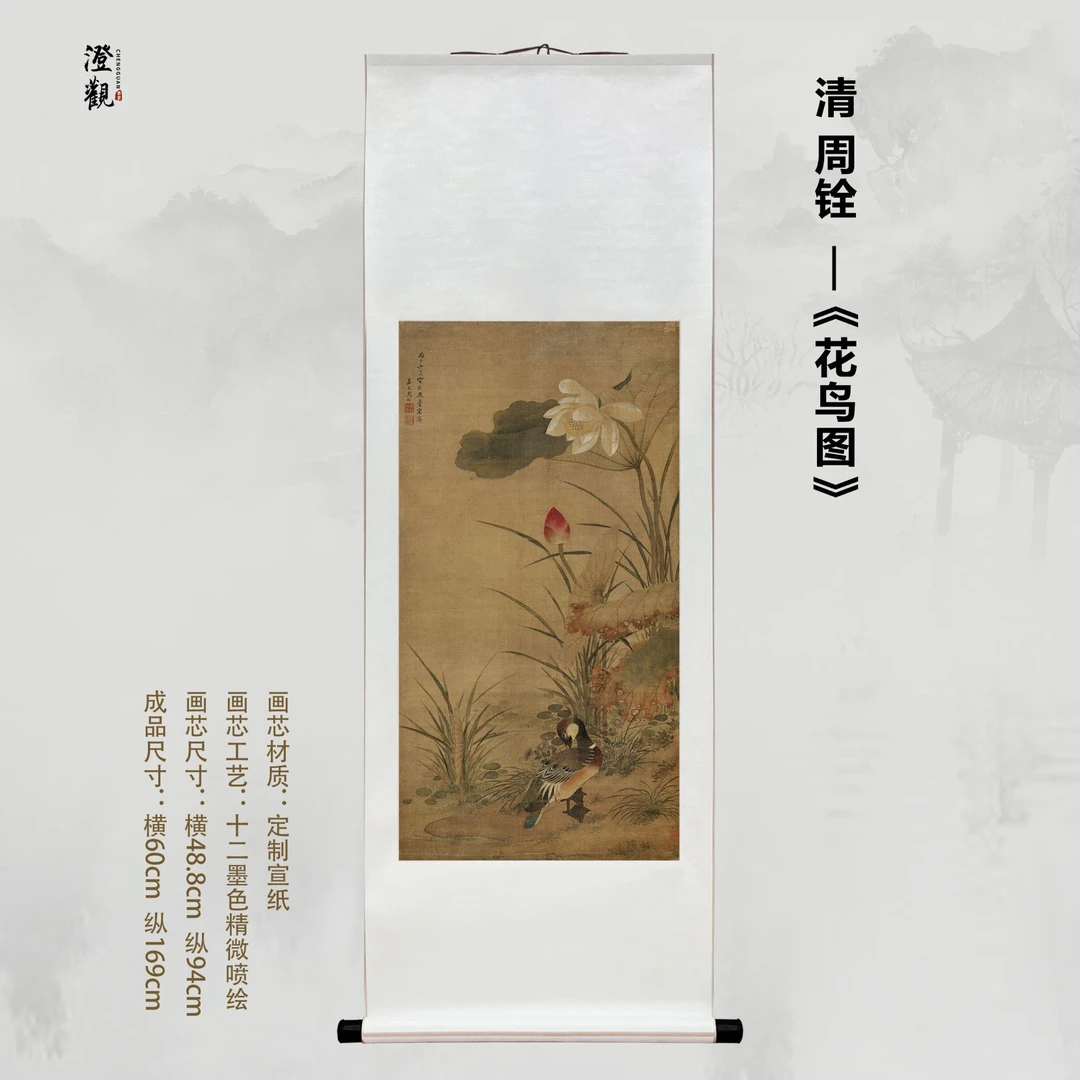
Zhou Quan (active late 17th – early 18th century), courtesy name Zhongheng (仲衡) and pseudonym Sicheng (思诚), was a distinguished landscape painter of the Qing Dynasty. A native of Suzhou (Wu County), he flourished during the prosperous Kangxi and Yongzheng eras, contributing to the continued refinement of the literati landscape tradition in the Jiangnan region.
1. Artistic Lineage and the Suzhou Connection
As a resident of Suzhou, the historic heart of the Wu School, Zhou Quan was immersed in a culture that prioritized scholarly elegance and classical study. He was a contemporary of the early Qing masters and operated within the intellectual circles of the Jiangnan elite. His work reflects the high standards of the scholar-official class, where painting was viewed as a form of "silent poetry" and a means of spiritual cultivation.
2. Stylistic Influence: The Orthodox School
Zhou Quan’s landscape style was heavily influenced by the Orthodox School (Zhengtong Pai), particularly the "Great Synthesizer" Wang Hui (Shigu).
- Fang (Imitation) Tradition: Like many artists of his time, Zhou Quan was a master of "Fang" (仿), the creative reconstruction of Song and Yuan masters. He sought to capture the "ancient flavor" (guyi) of historical masterpieces while adding his own rhythmic clarity.
- Synthesis of Styles: He successfully blended the monumental structures of the Northern Song with the calligraphic brushwork of the Yuan Four Masters, resulting in landscapes that were both structurally sound and texturally rich.
3. Technical Mastery: Ink and Wash
The brushwork of Zhou Quan is characterized by its refinement, balance, and clarity. His technical repertoire included:
- Texture Strokes (Cun): He utilized delicate "hemp-fiber" strokes (pima cun) and subtle "dotting" techniques to create the undulating surfaces of mountains and riverbanks.
- Graded Ink Washes: He was particularly adept at using moist ink washes to depict atmospheric effects, such as distant mists, morning fog, and the soft light of the Jiangnan water towns.
- Blue-and-Green Accents: While many of his works were pure ink-wash (Shuimo), he also worked in the "Light Reddish-Brown" (Qianjiang) style, adding subtle mineral tints to enhance the naturalism of his scenes.
4. Narrative and Philosophical Depth
In his paintings, Zhou Quan often emphasized the theme of reclusion and harmony. His landscapes frequently feature:
- Solitary Scholars: Small figures of hermits or travelers are often placed in expansive natural settings, symbolizing the human desire for spiritual freedom and detachment from the mundane world.
- Architectural Precision: Secluded pavilions, thatched huts, and bridges are rendered with meticulous detail, providing a grounded sense of place within his idealized vistas.
5. Historical Legacy and Museum Collections
While Zhou Quan is sometimes grouped among the "followers" of the Four Wangs, his individual technical precision and the poetic tranquility of his compositions earned him a respected place in the history of Qing art. His works serve as an important example of the Suzhou style during the transition to the high Qing period. Today, his paintings are preserved in major regional and national institutions, including:
- The Suzhou Museum
- The Palace Museum (Beijing)
- The Shanghai Museum
- The National Palace Museum (Taipei)
— ALL MASTERPIECES LOADED —