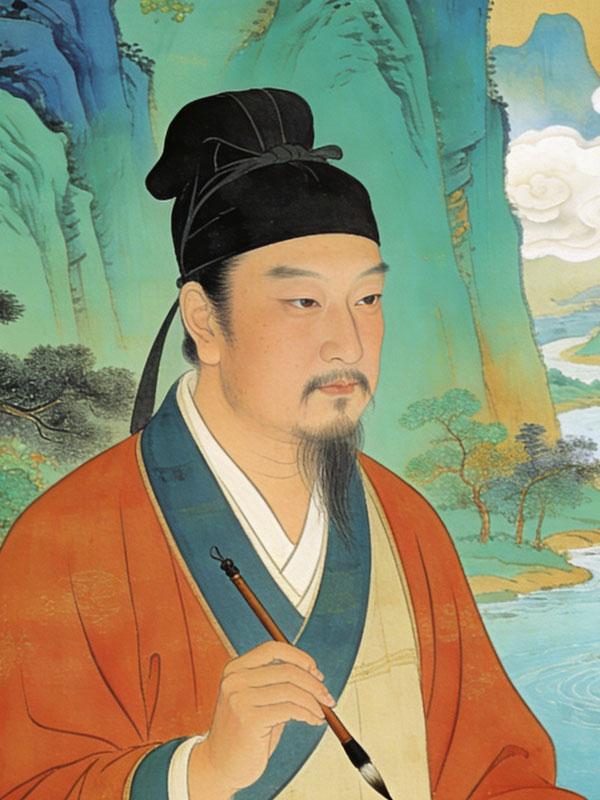
Zhou Fang: The Master of Courtly Elegance and Tang Beauty
Zhou Fang (active c. 730–800 AD), courtesy name Zhonglang, was one of the most celebrated figure painters of the mid-Tang Dynasty. Born into an aristocratic family in the capital of Chang'an, his high social standing allowed him to move freely within the imperial court and elite circles. This unique access provided him with firsthand observation of the luxurious lifestyle and inner world of the Tang nobility, which became the primary focus of his artistic career.
He is best remembered as the definitive master of Shinv Tu (paintings of court ladies). Zhou Fang’s work defined the aesthetic standards of his time, moving away from the slender figures of earlier dynasties toward the plump, dignified, and opulent forms that characterized the "high Tang" ideal. His brushwork is famous for the "Zhou Style" (Zhou Jia Yang), a technique that utilized delicate yet firm lines to depict the silk textures of robes and the intricate details of hairstyles and jewelry.
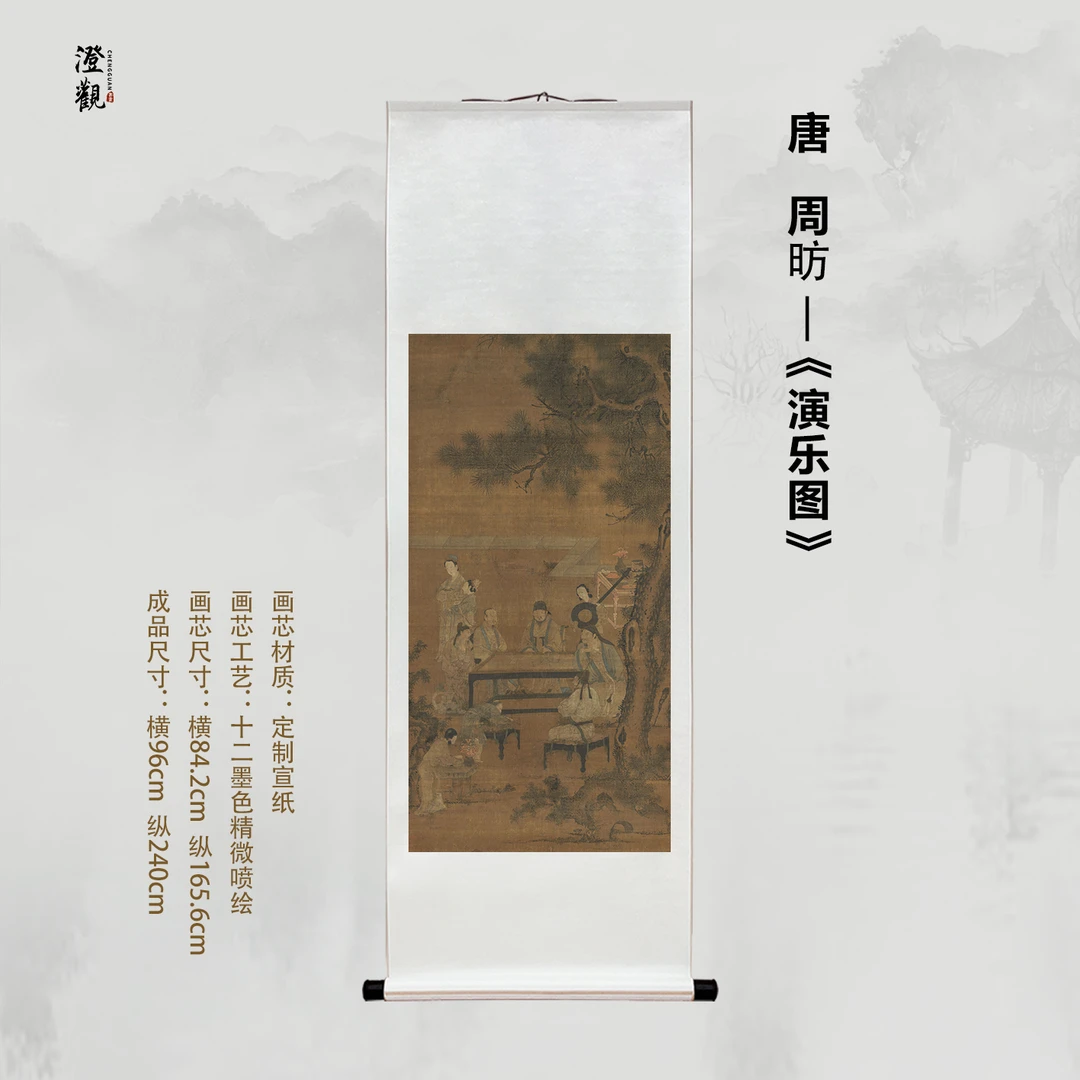
Beyond mere physical beauty, Zhou Fang was a pioneer in capturing psychological depth. His paintings of court ladies, such as the famous "Court Ladies Wearing Flowers" (簪花仕女图) and "Court Ladies Tuning the Lute" (调琴啜茗图), often convey a sense of melancholy and boredom. Despite their magnificent surroundings, the women are depicted in moments of quiet contemplation or leisure, revealing the hidden loneliness of life within the imperial palace. This ability to portray the inner soul rather than just the outer appearance made him a peerless portraitist.
In the realm of Buddhist art, Zhou Fang left an indelible mark by creating the iconographic form of the "Water-Moon Guanyin" (Shuiyue Guanyin). This depiction, showing the Bodhisattva seated in a relaxed pose gazing at the reflection of the moon in water, became a standard archetype in East Asian religious art. His religious paintings were so influential that they were said to "transform the secular into the sacred," blending human grace with divine serenity.
A famous historical anecdote highlights his extraordinary skill in portraiture. It is said that Zhou Fang once competed with the painter Zhao Yan to paint a portrait of an official named Han Gan. When the official's wife was asked to judge, she praised Zhao Yan’s work for its physical resemblance, but declared Zhou Fang’s painting superior because it captured her husband's "expression and speech" (the essence of his character). This story solidifies his reputation as a painter who could render the spirit through ink and color.
The legacy of Zhou Fang extended far beyond his lifetime, influencing the literati painters of the Song Dynasty and even the early Ukiyo-e artists of Japan. His works are now regarded as national treasures, with major pieces housed in the Liaoning Provincial Museum and the Palace Museum. He remains the primary visual chronicler of the Tang Dynasty’s cultural peak, immortalizing the elegance, fashion, and sophisticated atmosphere of 8th-century China.
— ALL MASTERPIECES LOADED —