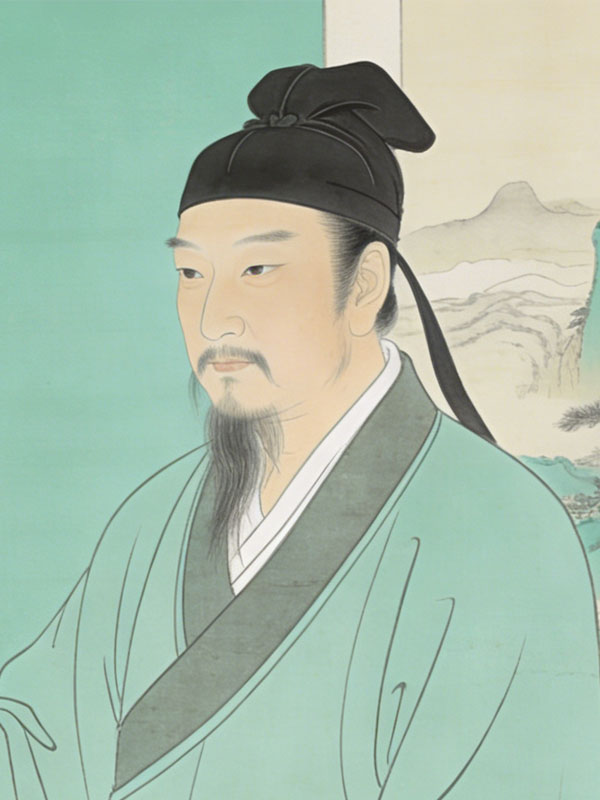
Zhao Gan: The Master of Wintry Rivers and Southern Realism
Zhao Gan (active mid-10th century AD) was a preeminent landscape painter of the Southern Tang Dynasty during the Five Dynasties and Ten Kingdoms period. A native of Jiangning (modern-day Nanjing), he served as a student in the Imperial Art Academy under the patronage of the last ruler, the poet-emperor Li Yu. While many of his contemporaries sought to depict the grand, towering peaks of the north, Zhao Gan became the definitive voice of the watery landscapes of the Jiangnan region, immortalizing the misty, river-woven terrain of southern China.
His most celebrated and only surviving authentic work is the handscroll "Along the River During Winter's First Snow" (江行初雪图), which is considered one of the most important pieces in Chinese art history. This masterpiece is famous for its vivid realism and its unflinching depiction of the hardships of common folk. Unlike the idealized, scholarly landscapes of later periods, Zhao Gan’s work captures the chilly, damp atmosphere of early winter, focusing on the shivering fishermen as they struggle with their nets and boats against the biting wind and freezing spray of the river.
The technical innovations found in his work are extraordinary for the 10th century. To recreate the effect of falling snow, Zhao Gan pioneered a technique of flicking white pigment (lead white) onto the silk surface, creating a delicate, misty texture that feels organic and atmospheric. His brushwork is characterized by fine, rhythmic lines used to define the rippling water and the withered, swaying reeds along the banks. This attention to textural detail (Cun) and the use of ink wash to create depth in the grey, wintry sky set a new standard for naturalistic observation in landscape painting.
A unique historical feature of his surviving scroll is the imperial inscription written by Emperor Li Yu himself, located at the very beginning of the painting. This rare calligraphic evidence explicitly attributes the work to "Student Zhao Gan," providing a direct link to the Southern Tang court and confirming the high regard in which he was held by the imperial family. The emperor’s personal touch highlights the cultural sophistication of the Nanjing court, where poetic sentiment and technical mastery were deeply intertwined.
Zhao Gan’s legacy lies in his role as a pioneer of genre-landscape painting, where the human element is perfectly integrated into the natural environment. His ability to evoke the sensory experience of cold and moisture influenced generations of Song Dynasty masters and laid the groundwork for the literati style. Today, "Along the River During Winter's First Snow" is a "National Treasure" housed in the National Palace Museum in Taipei, remaining a vital window into the spiritual and physical landscape of 10th-century China.
— ALL MASTERPIECES LOADED —