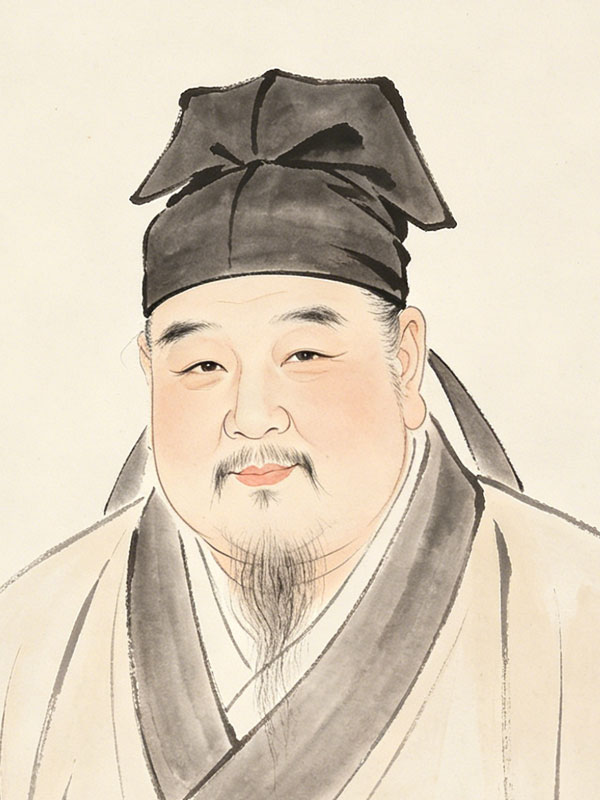
Xu Daoning: The Master of Vertical Peaks and Rushing Streams
Xu Daoning (c. 970–1052 AD) was a prominent landscape painter of the early Northern Song Dynasty. Originally from Hejian (modern-day Hebei), he represents a stylistic bridge between the foundational masters of the Five Dynasties and the peak of the monumental landscape tradition. Unlike many of his aristocratic contemporaries, Xu Daoning began his career in a unique way: he was a humble medicine seller in the markets of Chang'an. To attract customers to his stall, he would paint landscapes on the spot, a practice that eventually brought his extraordinary talent to the attention of the high nobility and court officials.
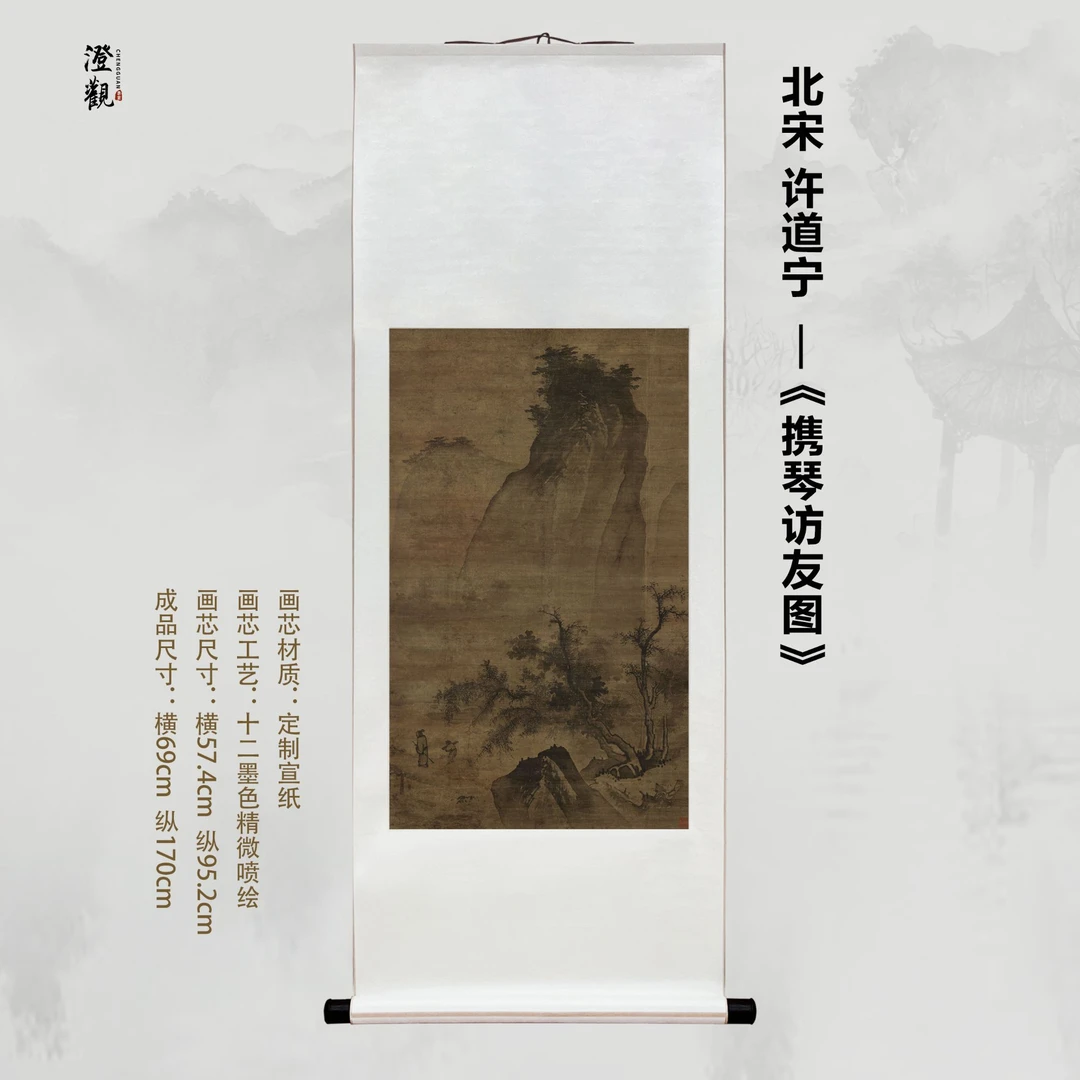
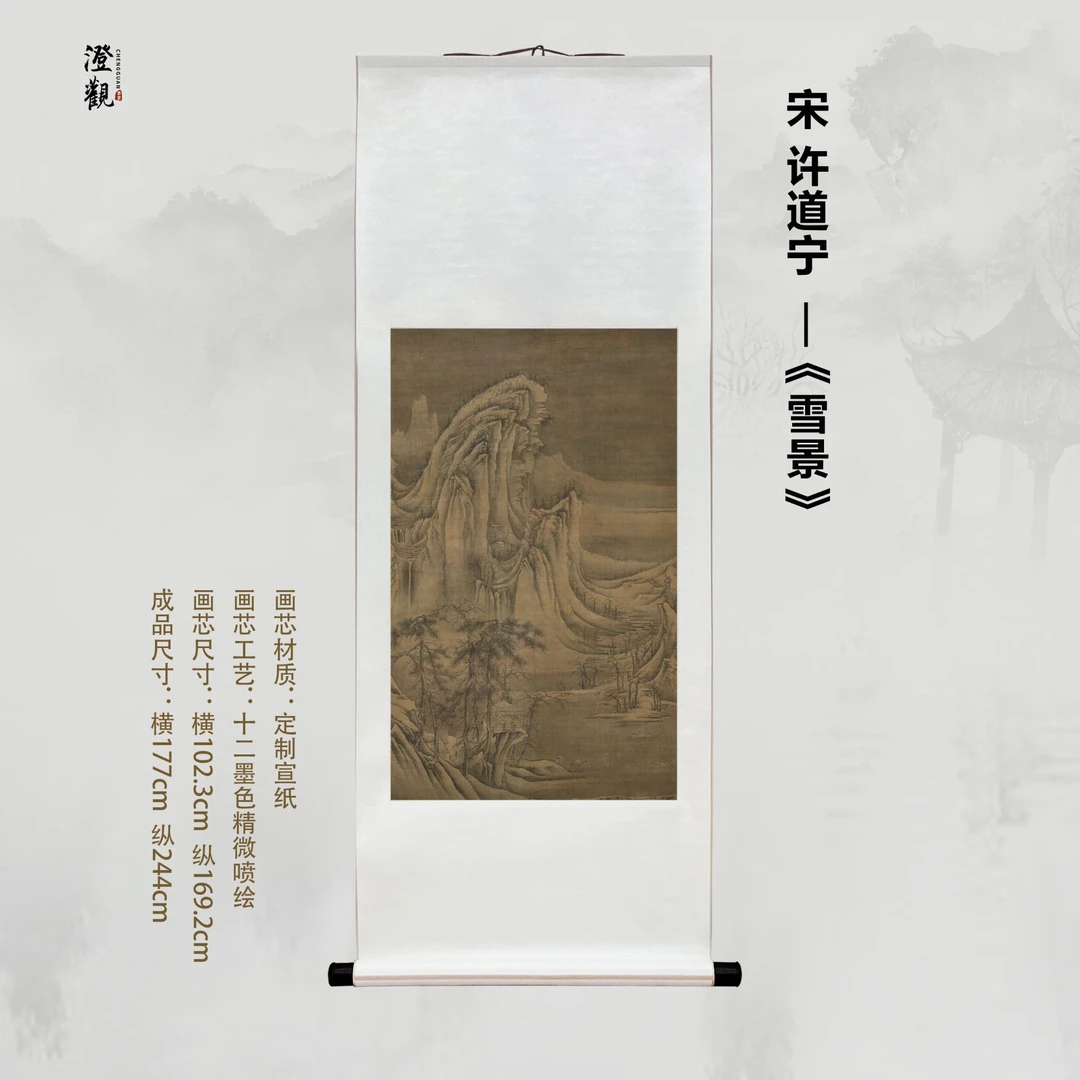
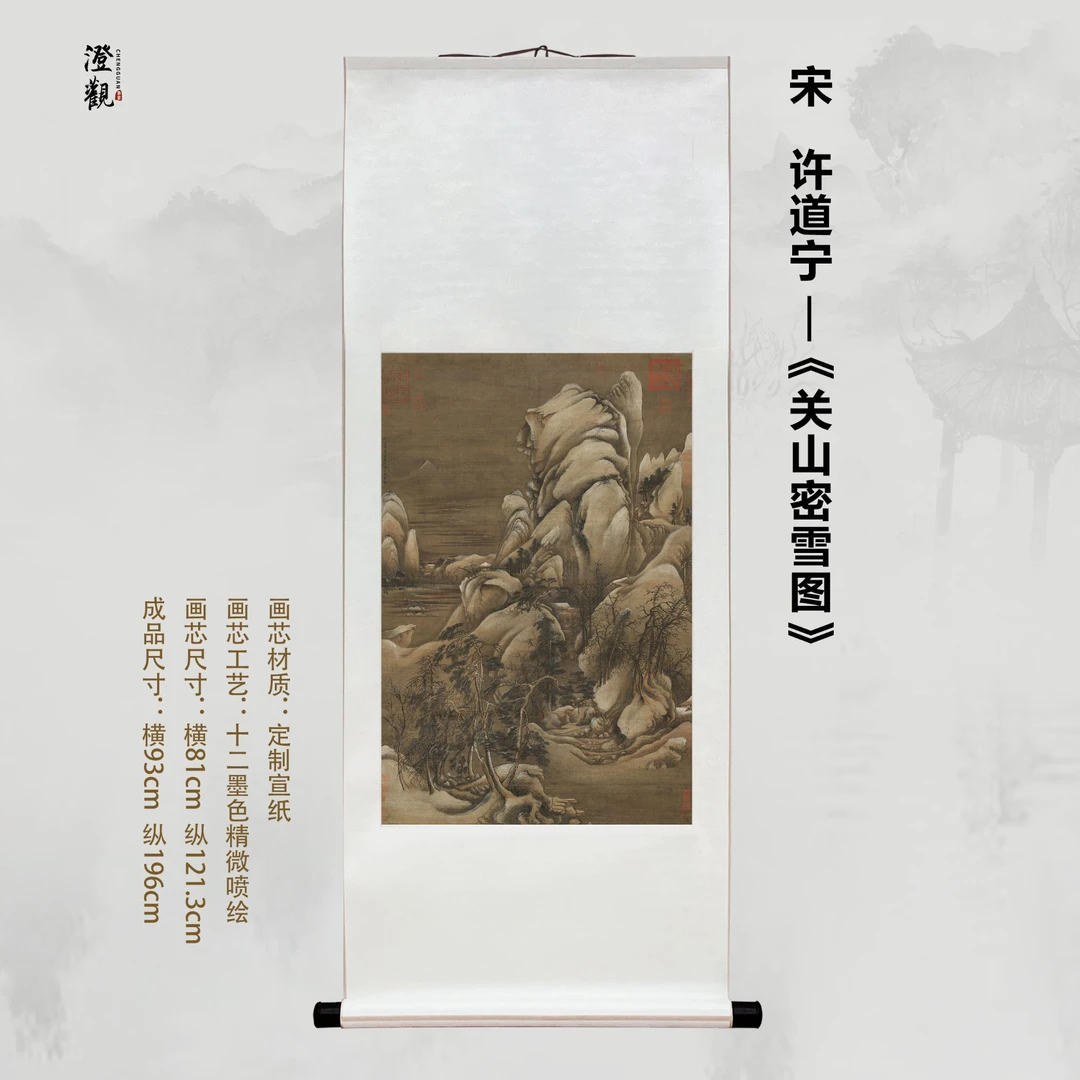
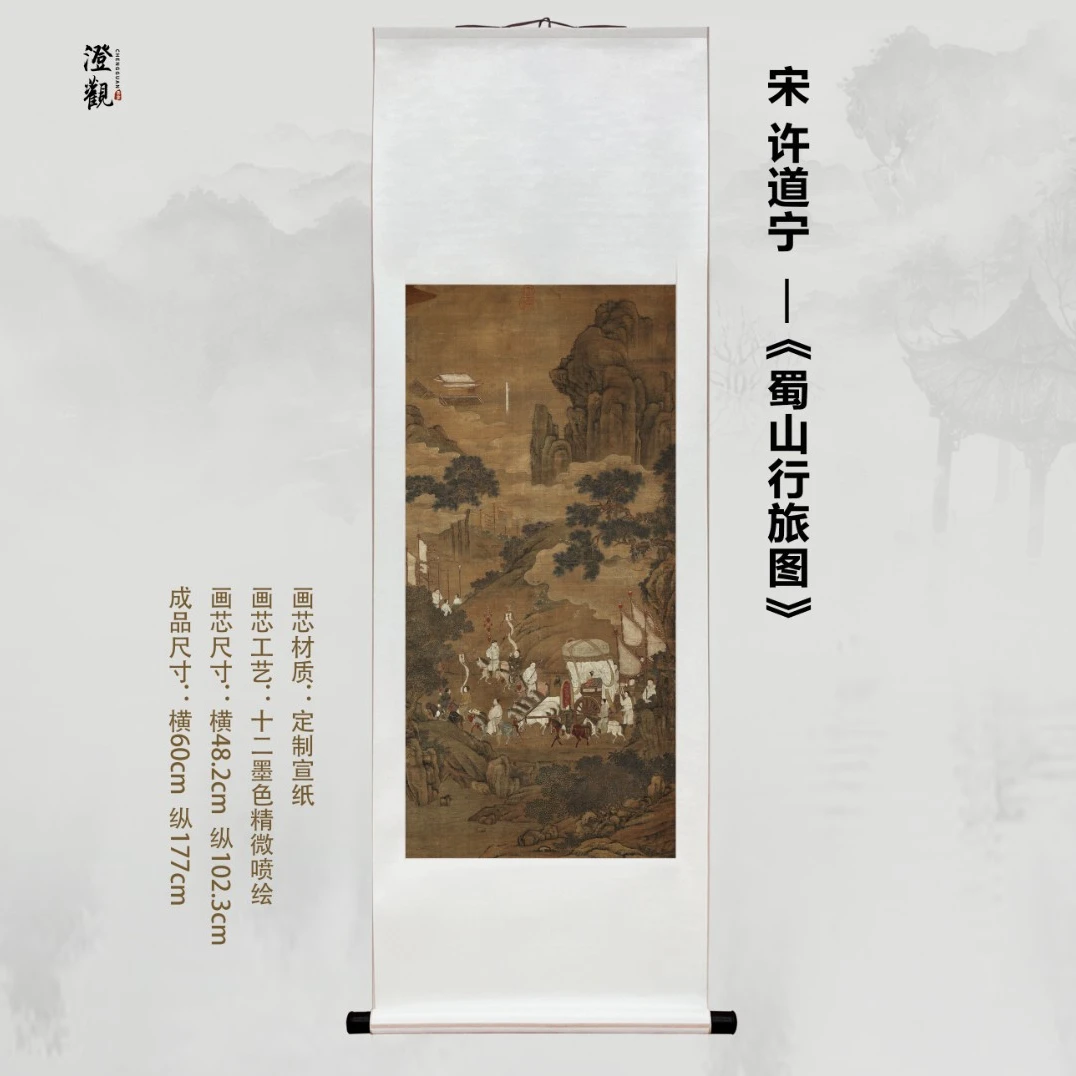
He was a devoted follower of the Li Cheng school, but he eventually transformed that influence into a bolder and more rugged personal style. While Li Cheng was known for his scholarly elegance and misty horizons, Xu Daoning was celebrated for his "hard-edged" brushwork and his ability to depict towering, vertical peaks. His landscapes are characterized by sharp, rapid lines and a sense of dramatic movement. He moved away from the delicate, "crab-claw" branches of his predecessor toward long, straight strokes that emphasized the skeletal strength of the earth and the stark resilience of wintry trees.
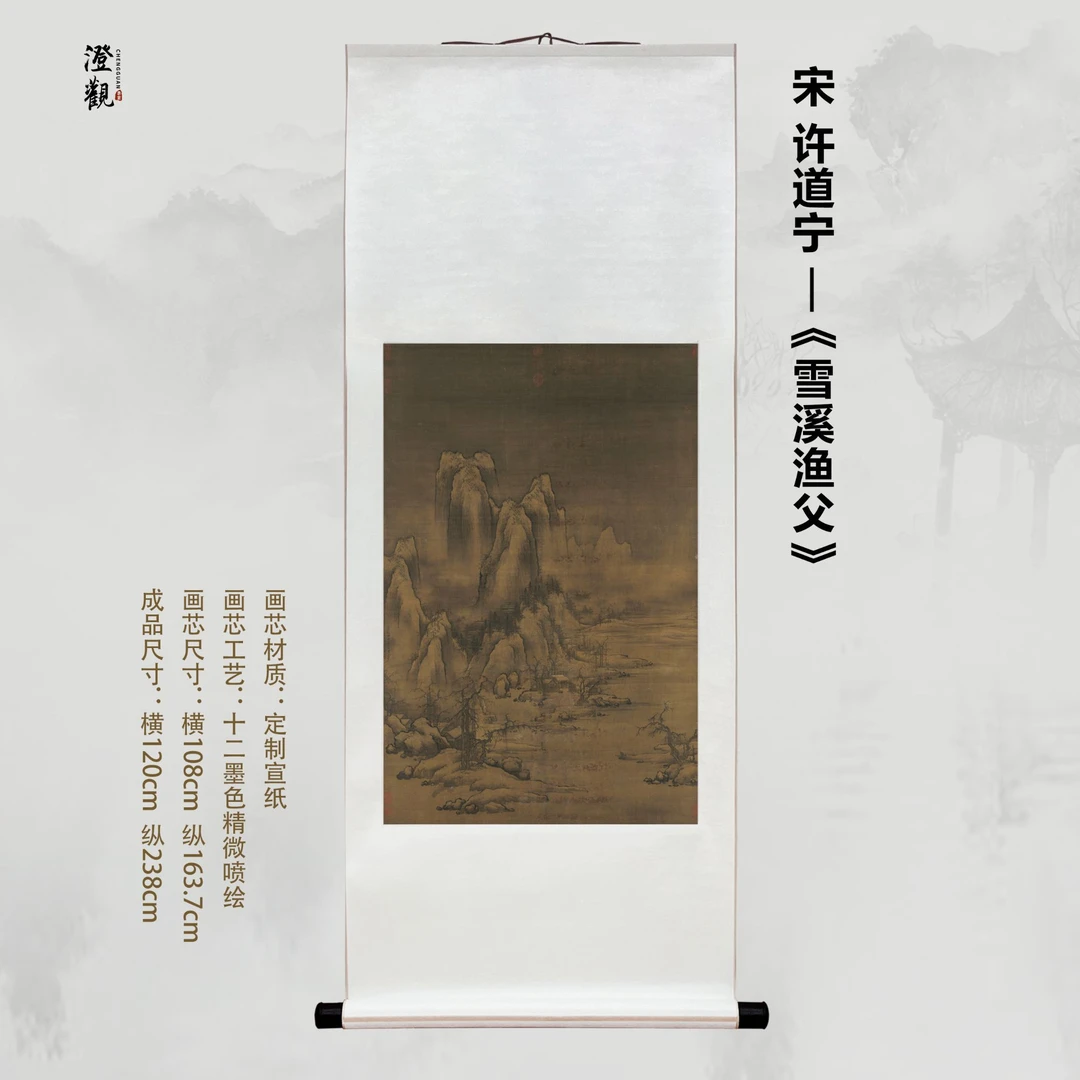
His most famous surviving masterpiece, "Fishermen's Evening Song" (also known as Fishermen in a Mountain Stream), currently housed in the Nelson-Atkins Museum of Art, is a pinnacle of Northern Song realism. This horizontal handscroll utilizes a masterful "Level Distance" (Ping Yuan) perspective, leading the viewer’s eye across a vast expanse of water toward colossal mountain massifs. The painting is renowned for its grandeur and loneliness, featuring tiny fishing boats that serve to emphasize the overwhelming scale of the natural world. His use of deep ink washes and jagged, abrupt peaks creates a rhythmic, almost musical quality that captures the melancholy beauty of a cold, autumn twilight.
Historical critics often remarked on the speed and confidence of his execution. It was said that Xu Daoning painted with a wild, unrestrained energy, often completing large-scale murals on palace walls with unrivaled efficiency. This spontaneity was highly valued in the early Song court, as it suggested a direct connection between the artist’s spirit and the cosmic forces of nature. Despite his professional success and high-ranking patrons, he maintained a straightforward character, often returning to the common folk and the rugged wilderness for his inspiration.
The legacy of Xu Daoning lies in his contribution to the Li-Guo school, specifically his influence on the later master Guo Xi. By introducing a more vigorous and muscular brushwork into the scholarly tradition of Li Cheng, he helped define the monumental aesthetic of the Northern Song. Today, his work is studied as a masterclass in composition and ink control, representing a moment in Chinese art history when landscape painting reached a perfect balance between technical discipline and poetic expression.
— ALL MASTERPIECES LOADED —