Wu Zhen (吴镇): The Master of Wet Ink and Reclusive Spirit
Wu Zhen (1280–1354), courtesy name Zhonggui (仲圭) and art name Mei Daoren (梅道人, "The Plum Blossom Taoist"), was a giant of the Yuan Dynasty. He is celebrated as one of the Four Masters of the Yuan Dynasty. Unlike his contemporaries who often traveled or held social status, Wu Zhen was the quintessential hermit-scholar, living a quiet life of reclusion and supporting himself through divination and painting.
1. A Life of Proud Isolation
Wu Zhen was born in Jiaxing, Zhejiang province. He was known for his stubbornly independent character, rarely associating with the wealthy or powerful. While other artists of his time engaged in the bustling social life of the literati, Wu Zhen remained aloof, often refusing to sell his paintings to those he did not respect. His art name, "Plum Blossom Taoist," reflects his admiration for the plum blossom, a symbol of moral integrity and resilience in the face of winter’s cold.
2. Artistic Style: The Power of "Wet Ink"
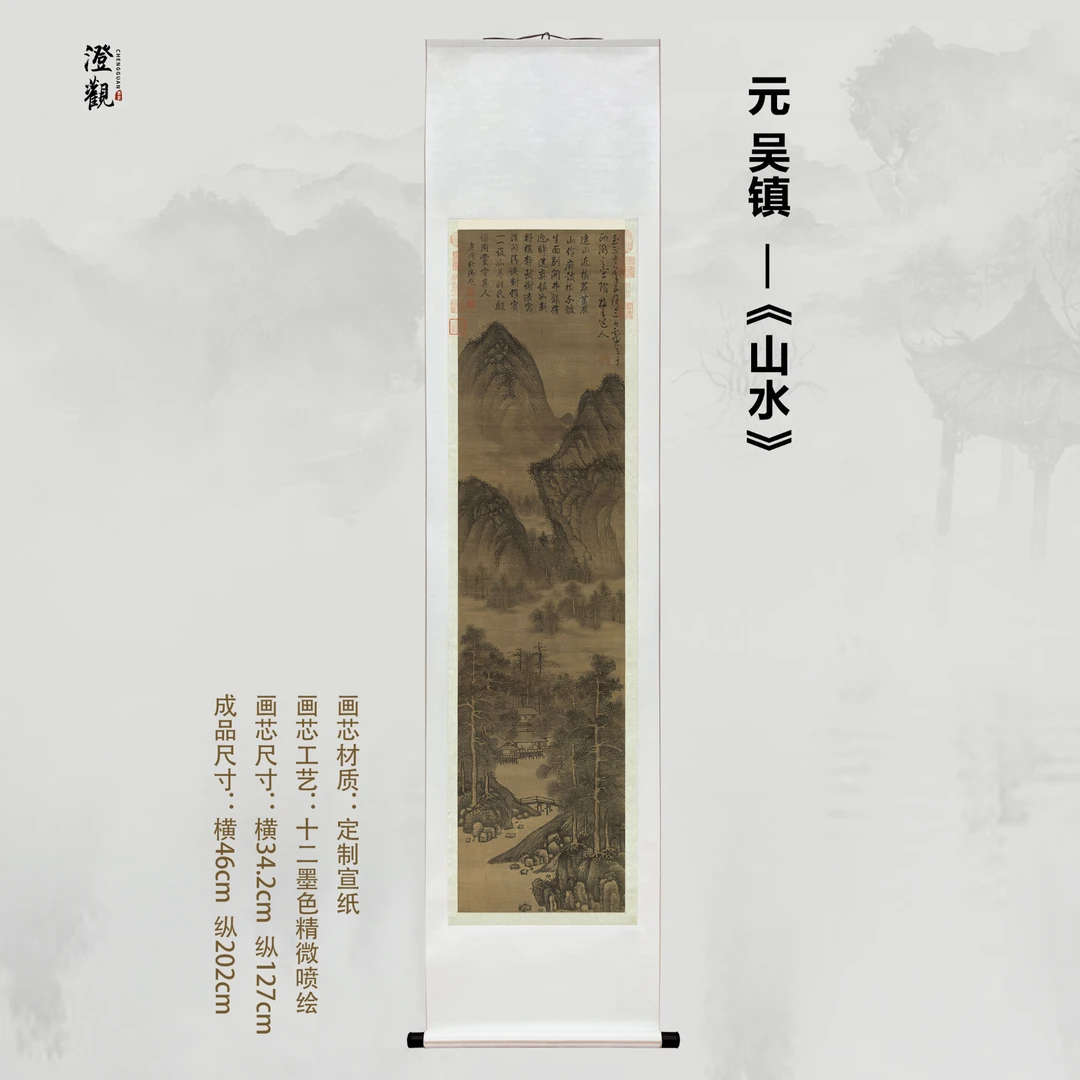
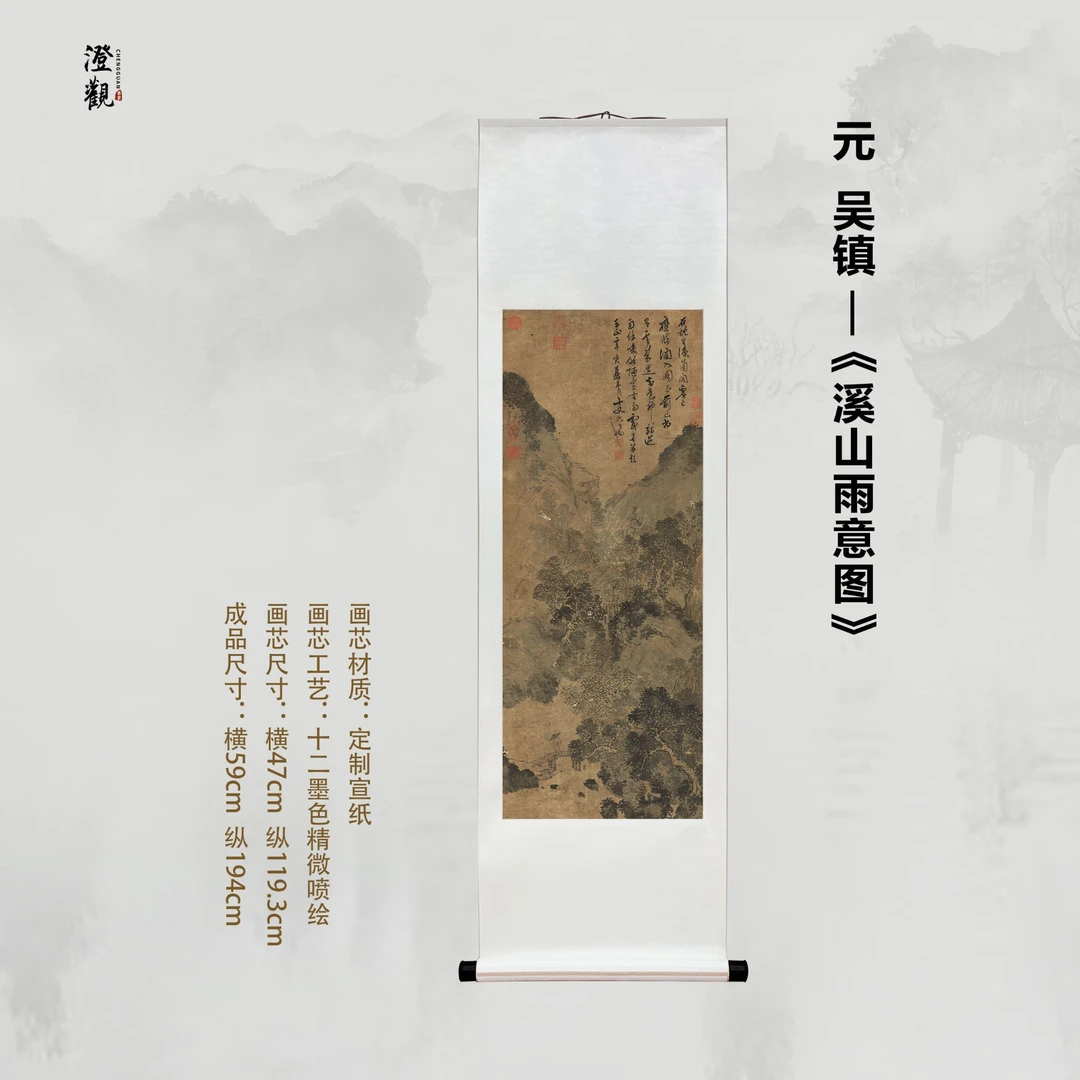
Among the Four Masters, Wu Zhen is best known for his mastery of ink wash (shuimo). His style is a stark contrast to the "dry brush" technique of Ni Zan.
- Moist Brushwork: He utilized a "wet ink" technique, creating deep, rich, and saturated tones that give his landscapes a lush, atmospheric quality.
- Centered Tip (Zhongfeng): His brushwork was characterized by a strong, rounded, and steady stroke, influenced by the 10th-century masters Dong Yuan and Ju Ran.
- Calligraphic Strength: He was a master of cursive calligraphy, and his paintings often possess a rhythmic energy that bridges the gap between writing and drawing.
3. Iconic Themes: The Fisherman and Bamboo
Wu Zhen’s work frequently focused on two major subjects that carried deep symbolic meaning:
- The Fisherman (Yufu): This was his most famous motif. In Wu Zhen’s eyes, the fisherman was not a laborer but a symbol of freedom—a sage who lives in harmony with nature, far away from the corruption of the political world. His "Fisherman" scrolls are masterpieces of compositional balance and tranquility.
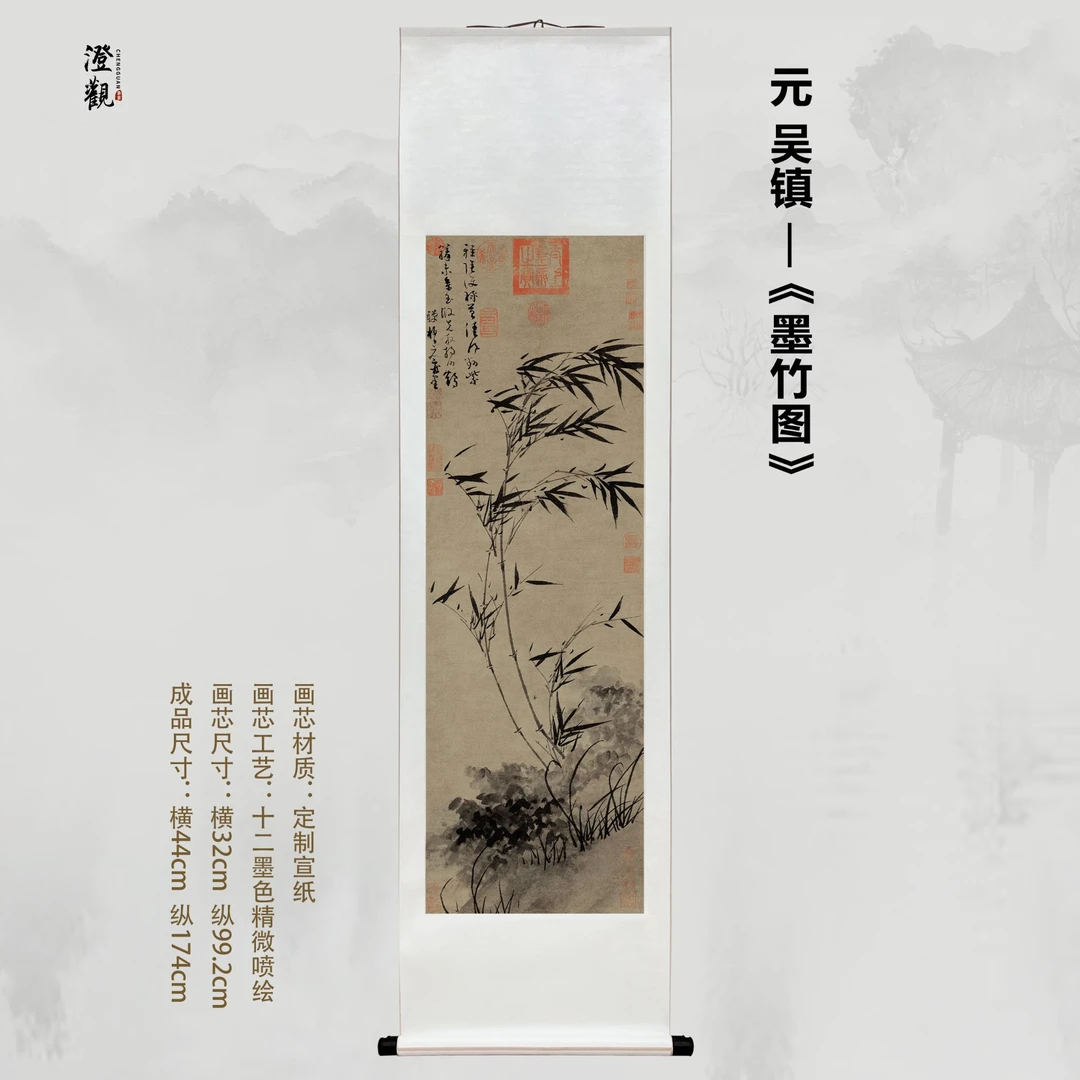
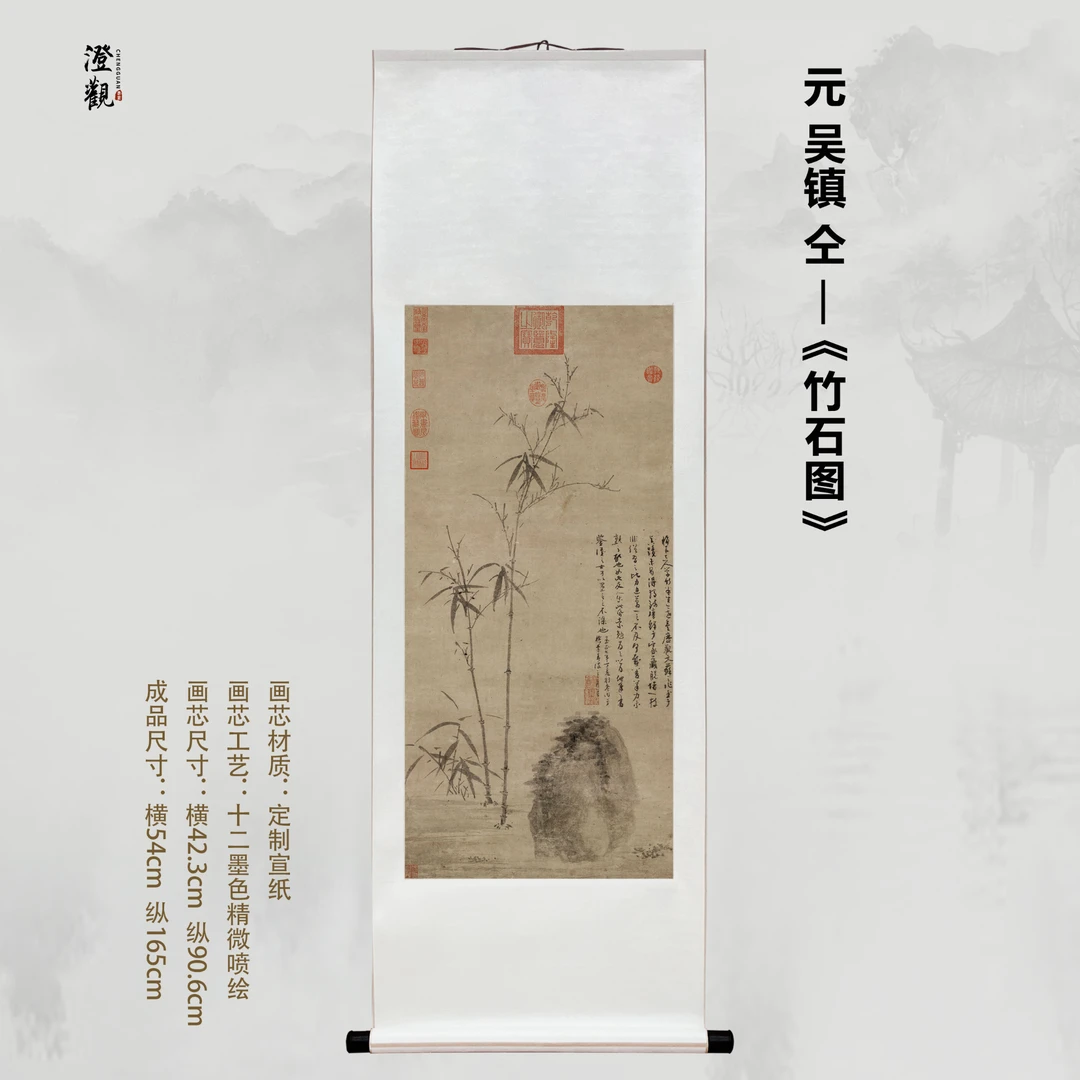
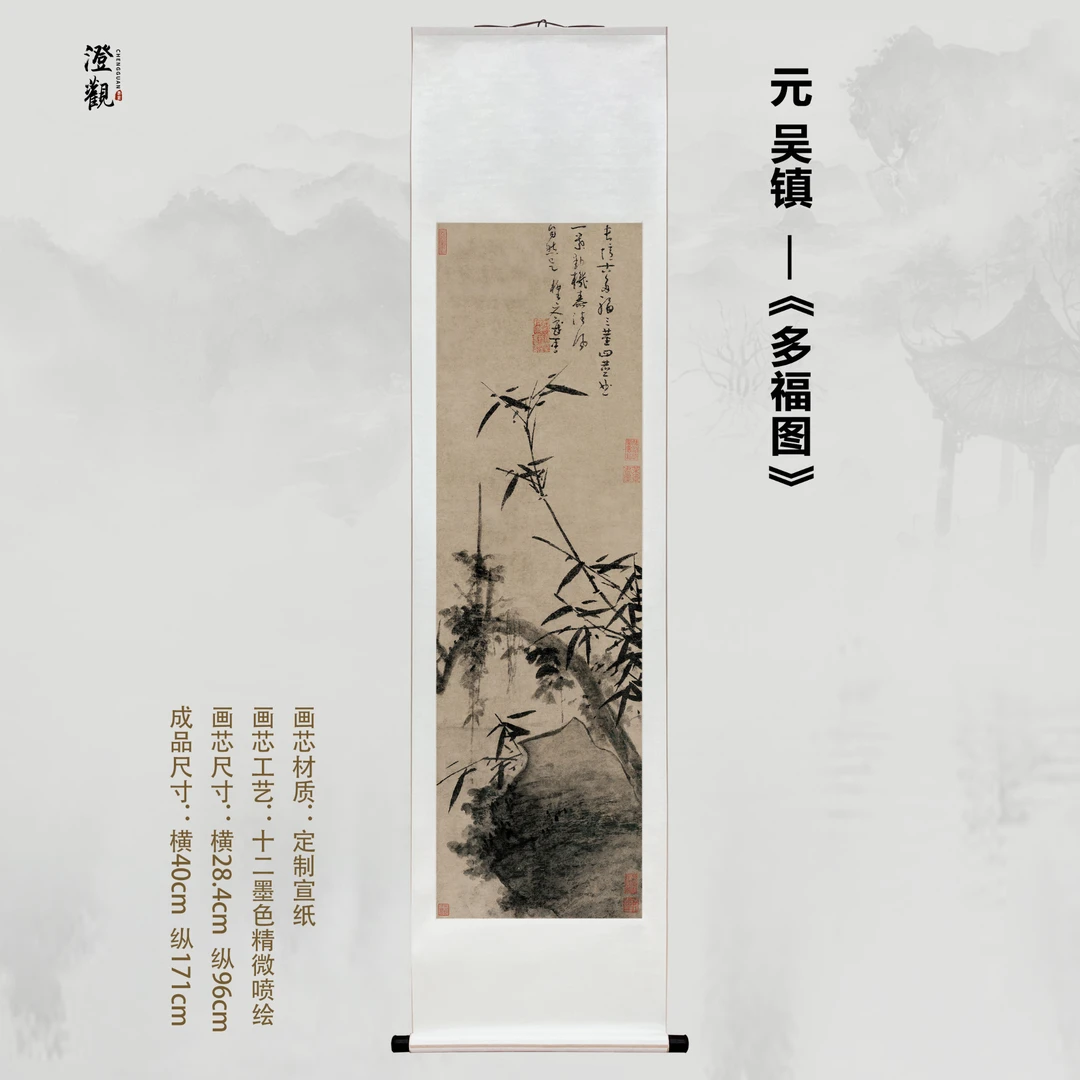
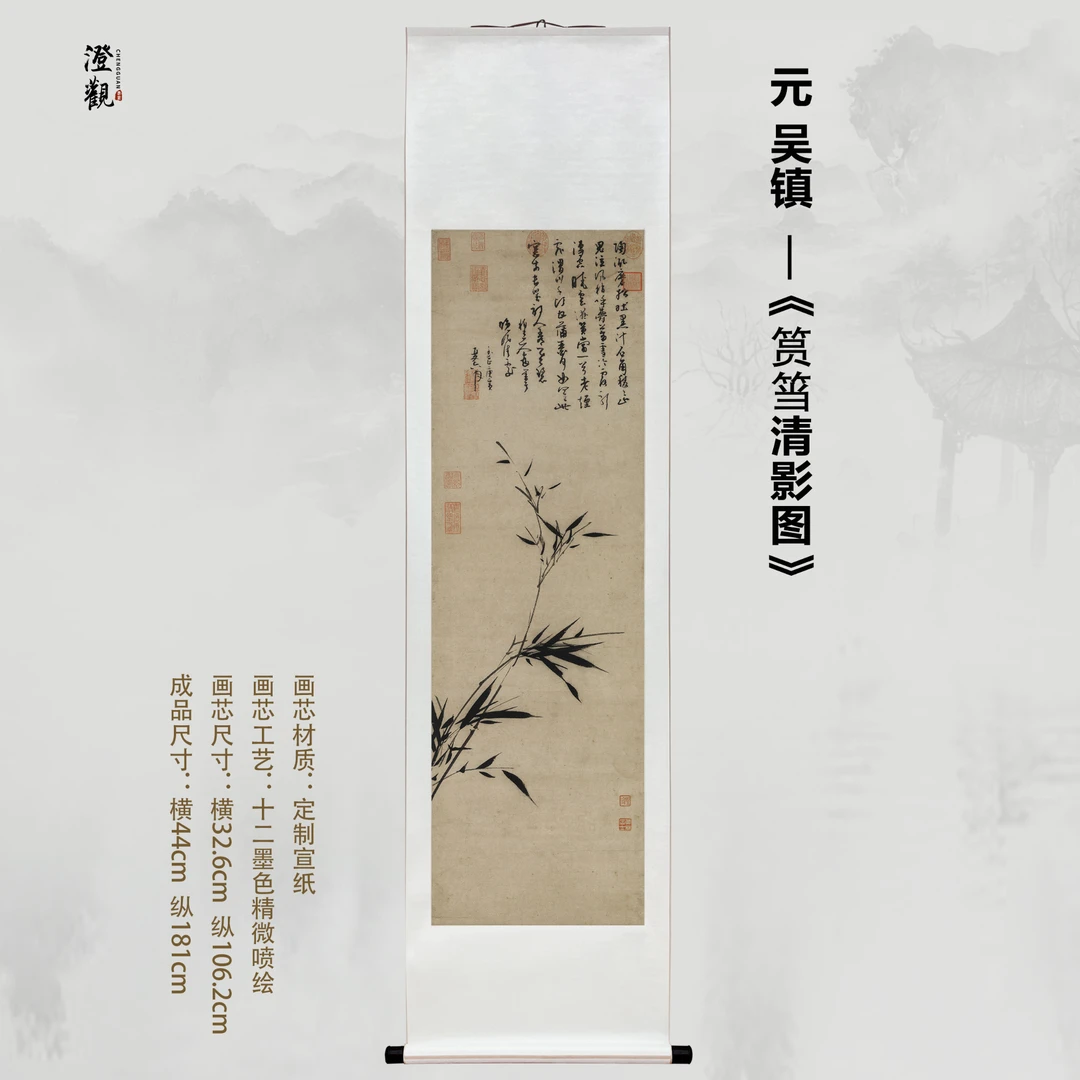
- Ink Bamboo: He is considered one of the greatest bamboo painters in Chinese history. He approached bamboo as a form of "ink play" (moxi), using bold, decisive strokes to capture the unbending spirit of the plant.
4. Masterpiece: "The Central Mountain"
His most renowned landscape work, "The Central Mountain" (嘉禾八景图 / 中山图), showcases his ability to create monumental scale through simple forms. The painting utilizes broad ink washes and rounded "alum-head" rocks to depict the stillness of the terrain. His use of negative space and subtle gradations of gray ink creates a sense of timelessness and solitude.
5. Historical Legacy
During his own lifetime, Wu Zhen was less famous than his contemporary Huang Gongwang. However, his reputation soared during the Ming Dynasty. The artists of the Wu School, particularly Shen Zhou, rediscovered Wu Zhen’s "wet" style and viewed him as the ultimate model of literati amateurism—an artist who painted solely for self-cultivation and personal expression. Today, he is studied for his unique ability to combine technical power with spiritual gentlevess.