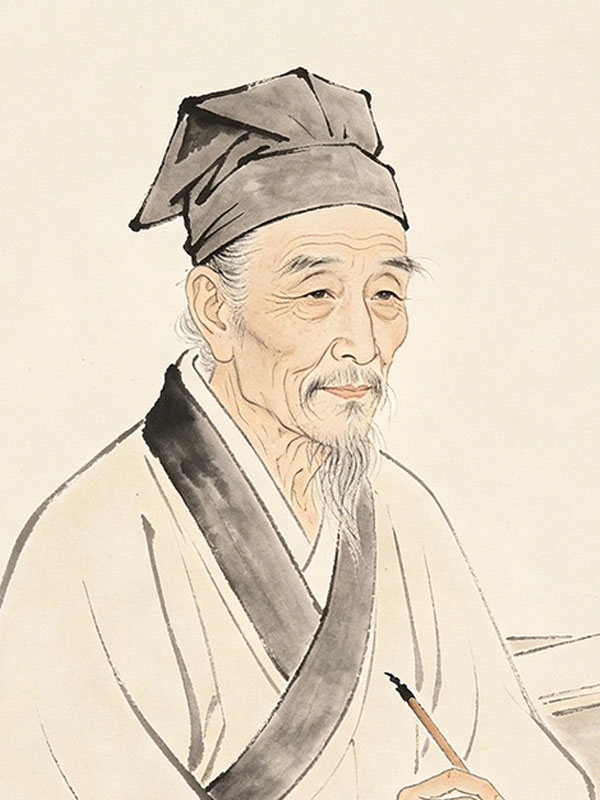
Wang Yansou: The Scholar-Official and Pioneer of the Ink Plum
Wang Yansou (c. 1043–1093 AD), courtesy name Yanzhao, was a distinguished scholar-official, calligrapher, and painter of the Northern Song Dynasty. Although he lived just after the Five Dynasties, his artistic philosophy was deeply rooted in the literati transition of the late 10th century. A native of Qinghe (modern-day Hebei), he was renowned for his unyielding integrity in the imperial court, serving as a high-ranking advisor who famously stood his ground against the controversial New Policies of Wang Anshi. His art was not a professional pursuit but a spiritual extension of his moral character.
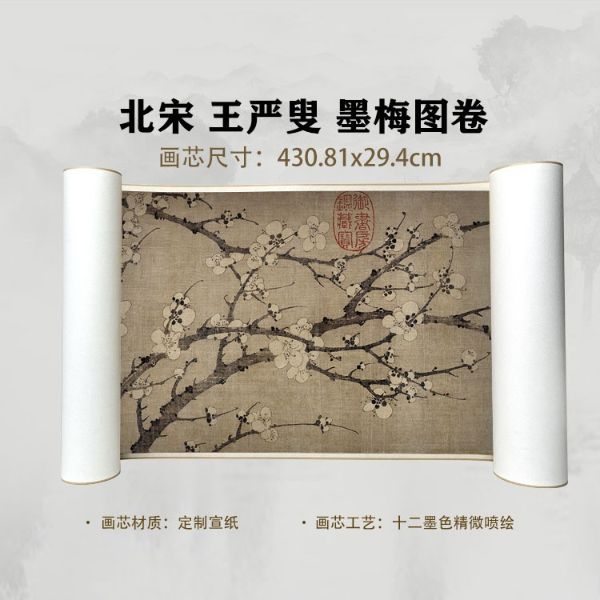
He is historically celebrated as one of the earliest and most influential practitioners of Ink Plum Blossom painting (Momei). During a time when most flower-and-bird artists followed the opulent, colorful traditions of the Five Dynasties courts, Wang Yansou moved toward monochromatic minimalism. He used pure ink to capture the "inner spirit" of the plum blossom rather than its superficial beauty. His style emphasized the sparse and elegant (Shuqi) qualities of the branches, using forceful brushwork to represent the resilience of the plum tree in the face of winter—a direct metaphor for the righteous scholar surviving political adversity.
Technically, Wang Yansou’s brushwork was characterized by a calligraphic strength inherited from his mastery of the Regular and Running scripts. He treated the painting of branches as if he were writing formal characters, focusing on the rhythmic flow and the structural integrity of the ink. His plum blossoms were often depicted with minimalist dots and thin, vigorous lines, avoiding the "vulgarity" of bright colors. This lofty and cold (Qinggong) aesthetic set the standard for the literati art movement, influencing later masters such as Yang Wujiu and the grand tradition of the "Four Gentlemen" in Chinese art.
His philosophical approach to art was documented in historical records like the Xuanhe Catalogue of Paintings, which praised him for his "nobility of mind." He believed that painting should be a vehicle for self-expression and moral cultivation. Because he was a high-ranking official first and an artist second, his surviving works were treated as rare scholarly treasures. His ability to evoke a sense of transcendental purity through a few strokes of ink made his work a primary model for the Song Dynasty elite, who sought to distance themselves from the decorative styles of professional academy painters.
The legacy of Wang Yansou lies in his role as a cultural bridge between the realistic traditions of the Five Dynasties and the expressive idealism of the Northern Song. He helped transform the humble plum blossom into a national symbol of Chinese perseverance and intellectual purity. Today, he is remembered not only as a fearless statesman who challenged imperial authority for the sake of the people, but as the artist-philosopher who immortalized the soul of the plum in the medium of ink and silk.
— ALL MASTERPIECES LOADED —