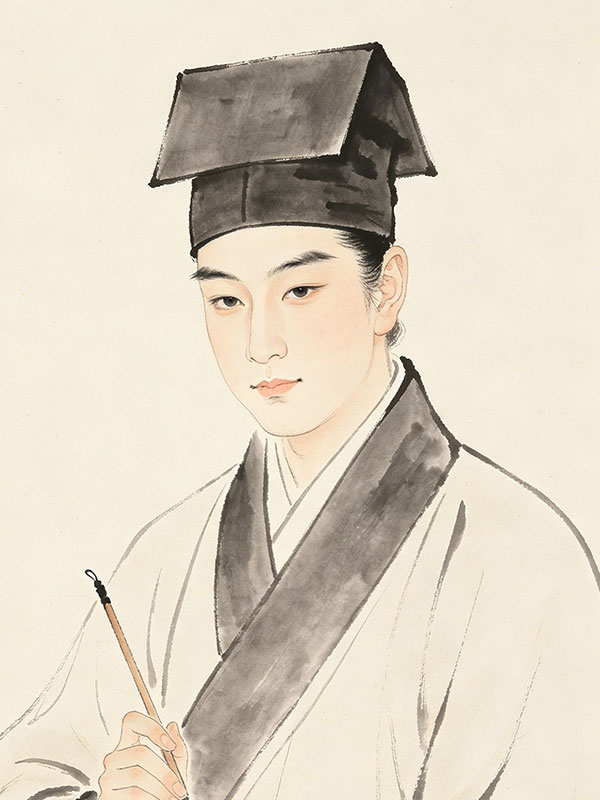
Wang Mian (王冕): The Poet-Painter of the Resilient Plum Blossom
Wang Mian (1287–1359), courtesy name Yuanzhang (元章) and art names Zhushi Shannong (煮石山农) and Meihua Wuzhu (梅花屋主), was a legendary figure of the late Yuan Dynasty. Unlike many of his contemporaries who were born into elite families, Wang Mian was a self-taught scholar and a defiant hermit. He is universally recognized as the greatest master of ink plum blossom (momei) painting in Chinese history.
1. The Legendary "Buffalo Boy" Scholar
Wang Mian’s life is the stuff of folklore. Born into a poor peasant family in Zhuji, Zhejiang, he reportedly spent his childhood tending water buffaloes. Legend has it that he would sit on the back of his buffalo outside village schools, listening to lessons and memorizing classics. This image of the impoverished but brilliant scholar was later immortalized in the famous Qing Dynasty novel "The Scholars" (Rulin Waishi). Despite his immense talent, he failed the civil service examinations and chose a life of reclusion, refusing to serve the Mongol-led Yuan government.
2. The Symbolism of the Plum Blossom
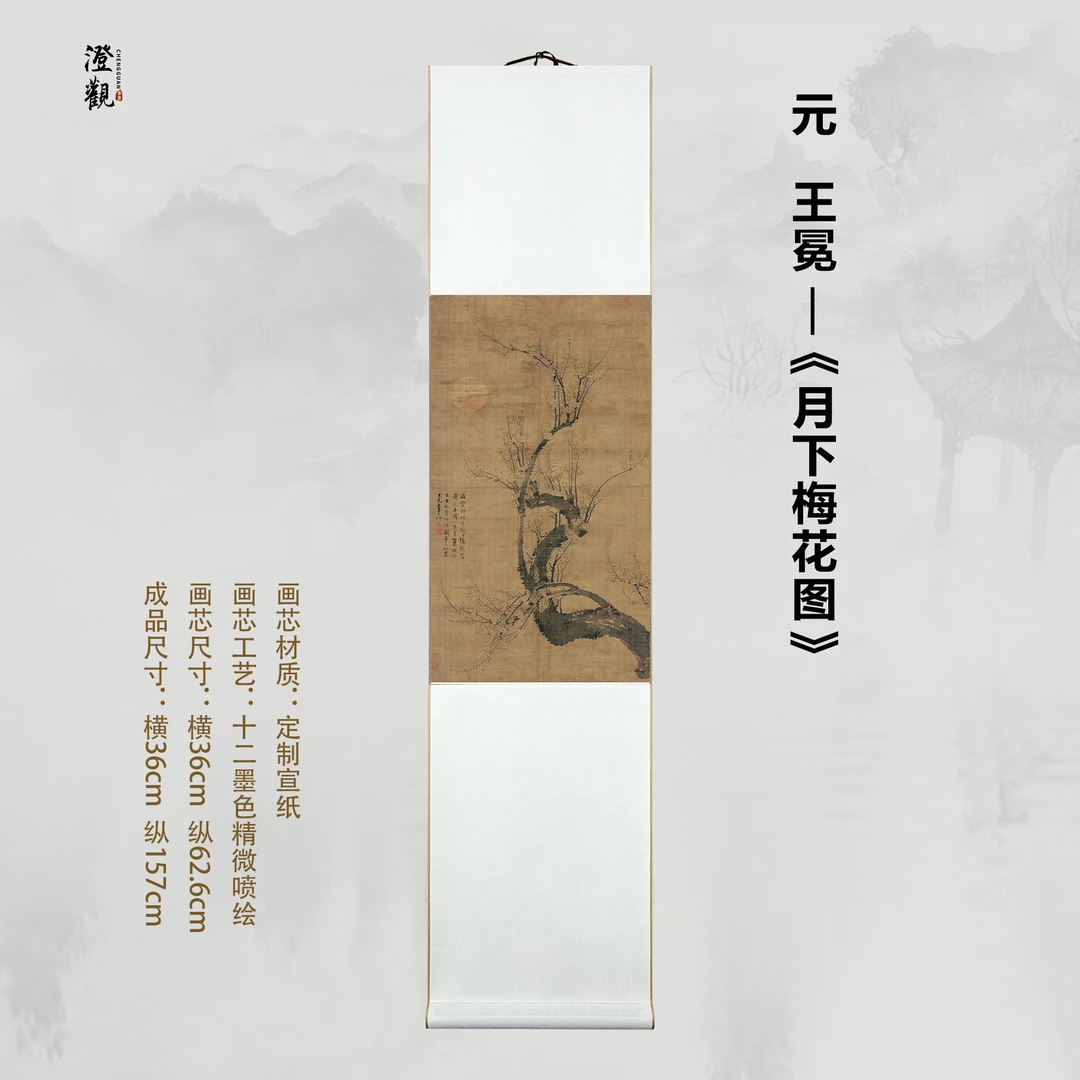
While other artists focused on vast landscapes, Wang Mian dedicated his life almost exclusively to the plum blossom (meihua). In Chinese culture, the plum blossom is a symbol of moral integrity, purity, and resilience because it blooms in the dead of winter. For Wang Mian, the plum was a political metaphor: it represented the unyielding spirit of the Chinese scholar under foreign Mongol rule. He famously lived in a retreat he called the "Plum Blossom Island" (Meihua Wu) at Mount Jiuli, where he planted thousands of plum trees.
3. Artistic Style: From Sparse to Dense
Wang Mian revolutionized the flower-and-bird genre with his unique ink wash (shuimo) technique. His style can be categorized into two distinct approaches:
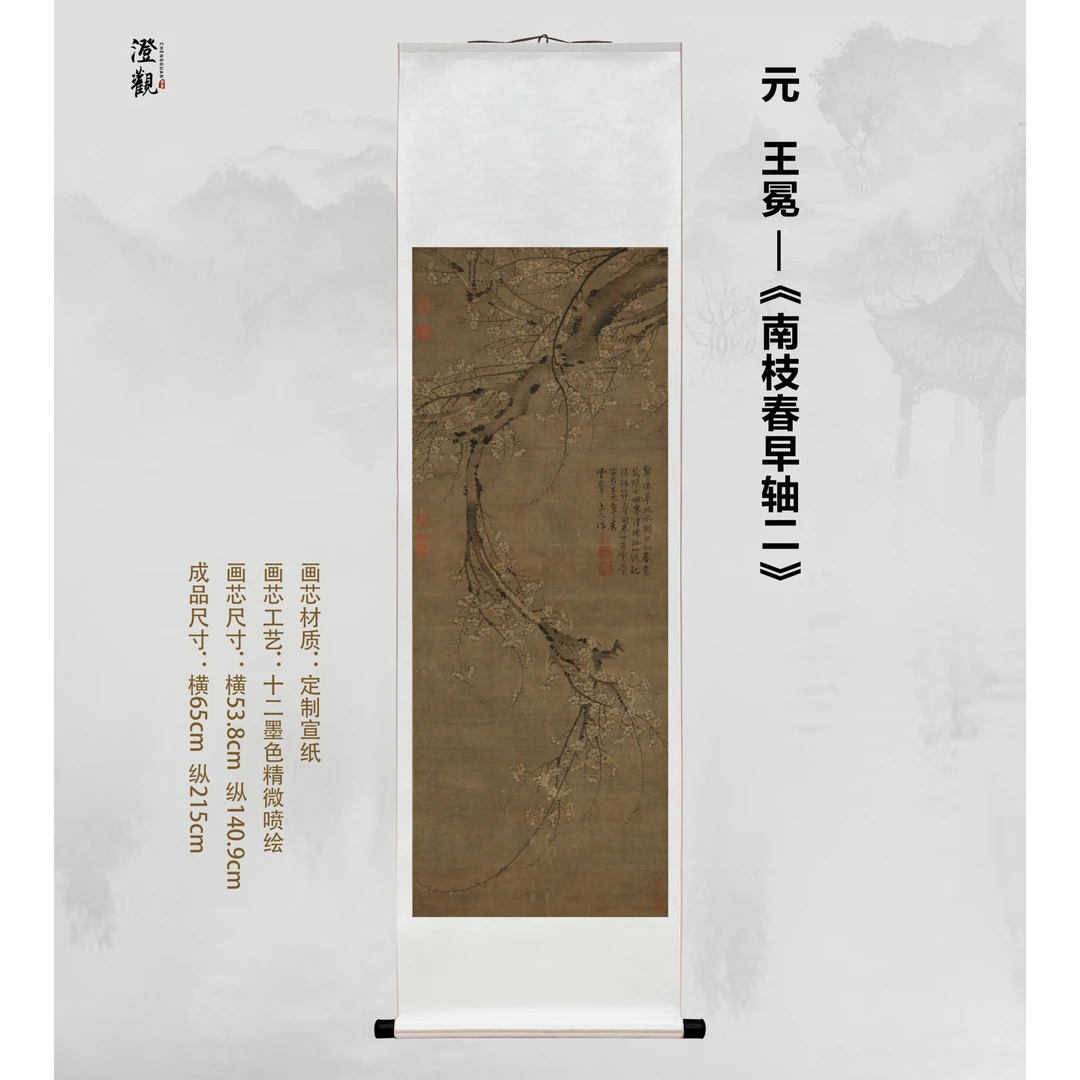
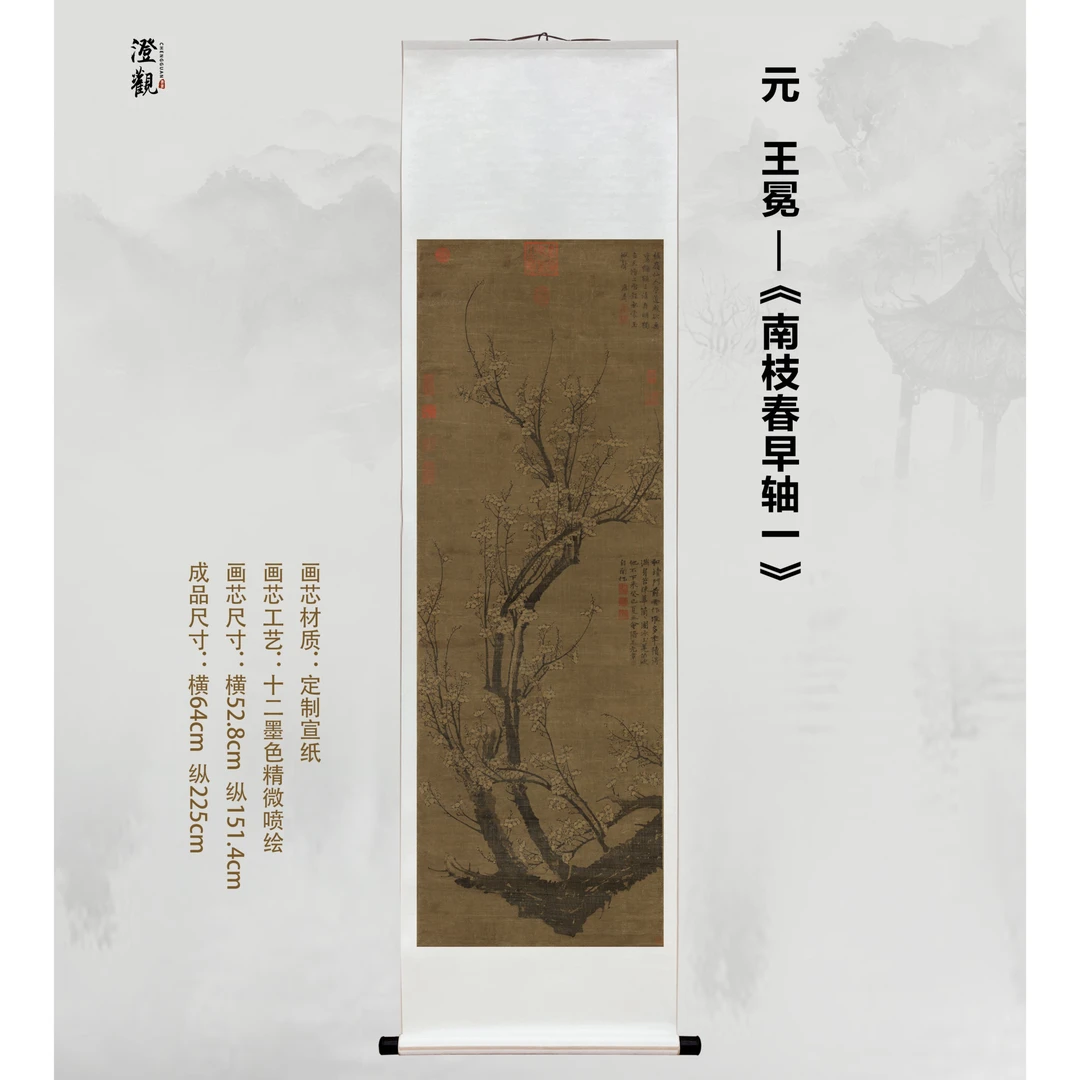
- Vigorous and Dense: Unlike earlier Song painters who preferred a few sparse branches, Wang Mian often filled the scroll with a profusion of blossoms, using thousands of small circles to represent flowers in full bloom. This created a sense of wild, untamed vitality.
- Calligraphic Lines: He used vigorous, iron-like brushstrokes for the branches, applying the "centered tip" (zhongfeng) technique to give the wood a sense of ancient strength and skeletal structure.
- Luminous Ink: He mastered the use of varying ink tones—from deep charcoal to pale silver—to give the blossoms a shimmering, translucent quality as if they were glowing under moonlight.
4. Masterpiece and Poetry: "Ink Plum"
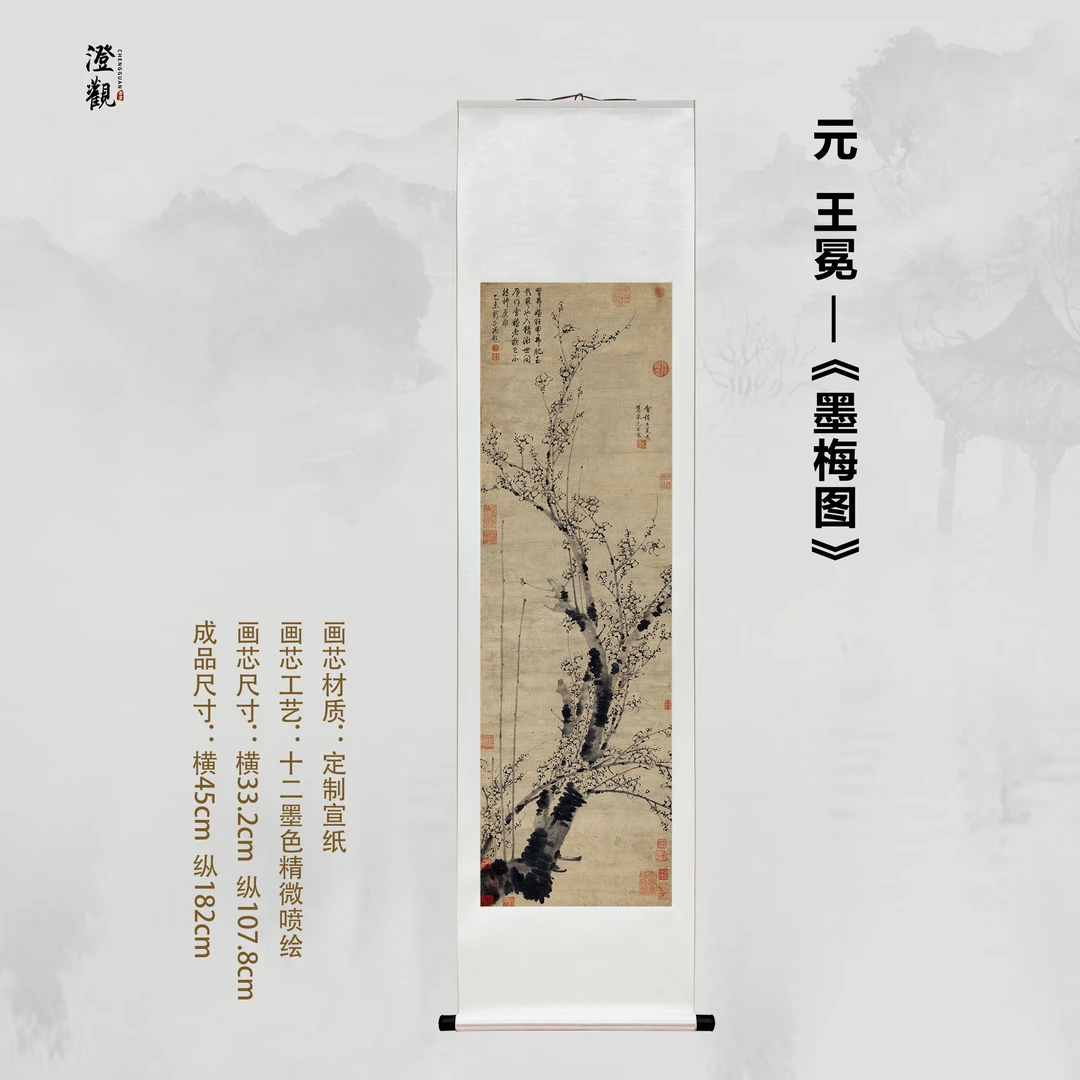
His most famous work, "Ink Plum" (墨梅图), currently held in the Palace Museum, is a masterpiece of Literati art. What makes the painting truly iconic is the inscribed poem Wang Mian wrote on it. The most famous lines read: "I do not want people to praise its beautiful colors; I only wish its pure fragrance to fill the space between heaven and earth." This poem transformed the painting from a botanical study into a declaration of character and spiritual independence.
5. Historical Significance and Legacy
Wang Mian’s influence on later ink wash painting was profound. He elevated the plum blossom to the status of a "high literati" subject, equal in depth to landscape painting. During the Ming and Qing Dynasties, his "dense" style and his philosophy of "painting the spirit rather than the form" inspired countless artists, including the Yangzhou Eccentrics and modern masters like Qi Baishi. He remains the ultimate symbol of the uncrowned scholar—the artist who finds absolute freedom in nature and ink.
— ALL MASTERPIECES LOADED —