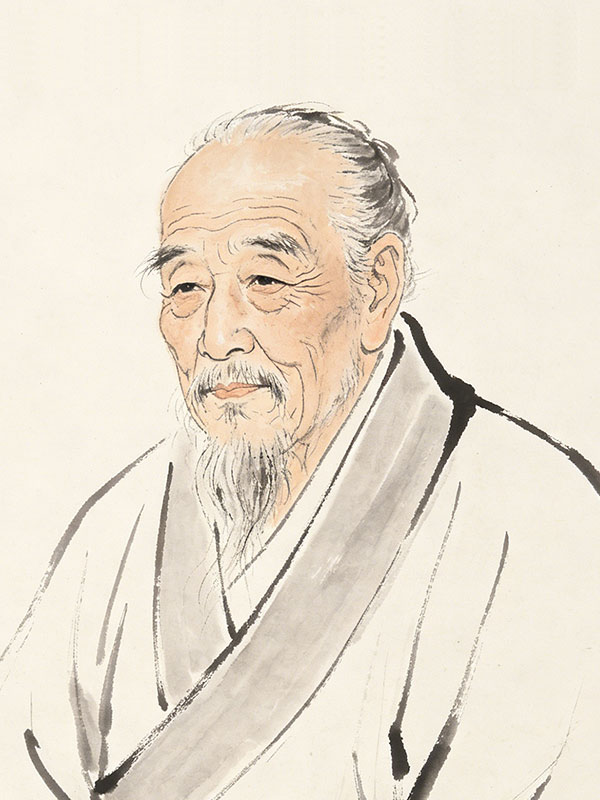
Sheng Mou (盛懋): The Professional Master of the Yuan Landscape
Sheng Mou (active mid-14th century), courtesy name Zizhao (子昭), was a highly accomplished and popular painter of the Yuan Dynasty. Based in Jiaxing, Zhejiang, he was a contemporary of the famous hermit-artist Wu Zhen. While history often highlights the "Four Masters" as the peak of the era, Sheng Mou represented the height of professional painting, blending meticulous technique with the evolving literati aesthetic of his time.
1. A Heritage of Professional Excellence
Unlike many of the amateur scholar-painters of the Yuan, Sheng Mou came from a lineage of professional artists. He learned the craft from his father, Sheng Hong, and initially studied the styles of the Southern Song academy. However, he eventually shifted his focus toward the more intellectual Dong-Ju tradition (Dong Yuan and Ju Ran) and the "Archaic" style promoted by Zhao Mengfu. This transition allowed him to bridge the gap between technical precision and poetic expression.
2. Artistic Style: Precision Meets Poetry
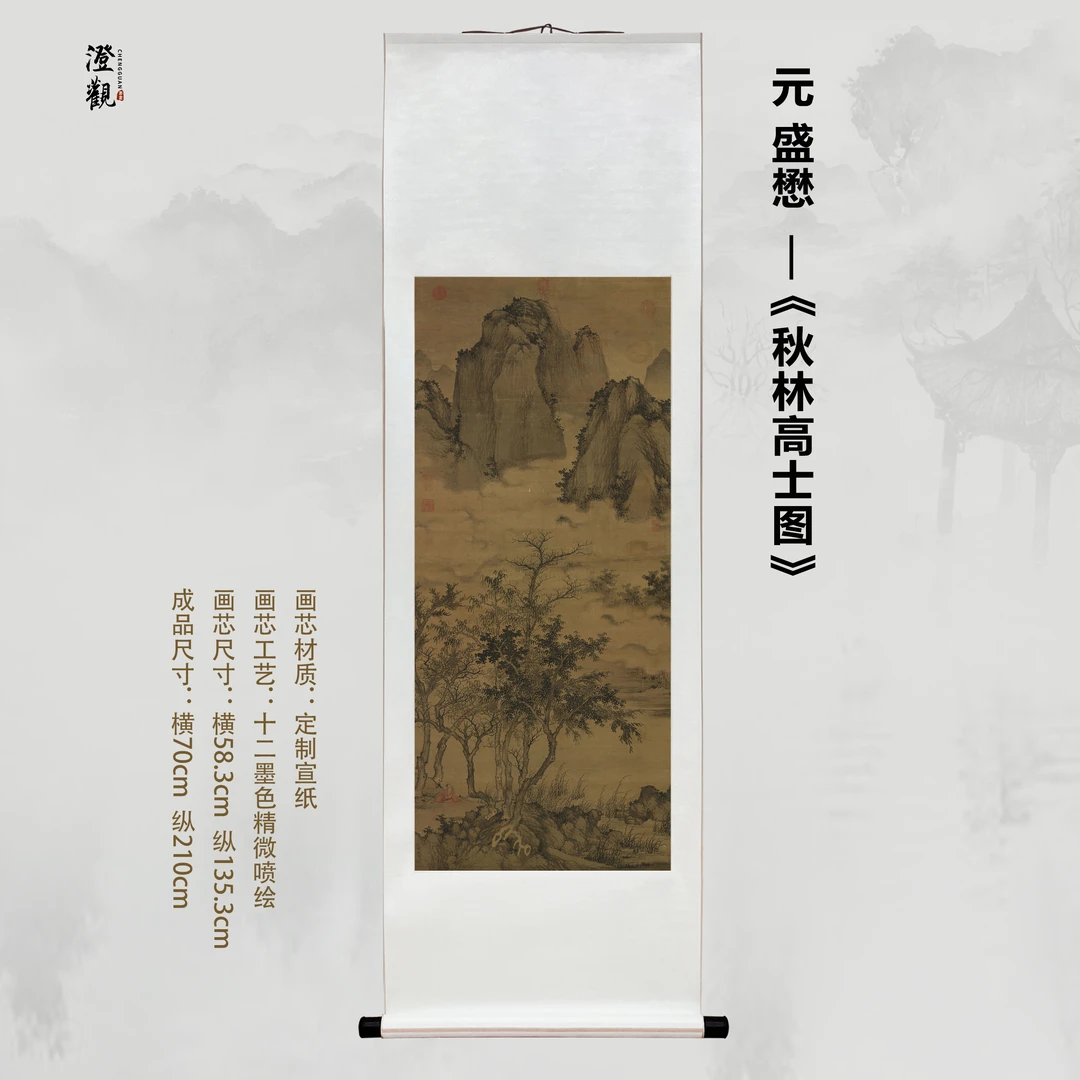
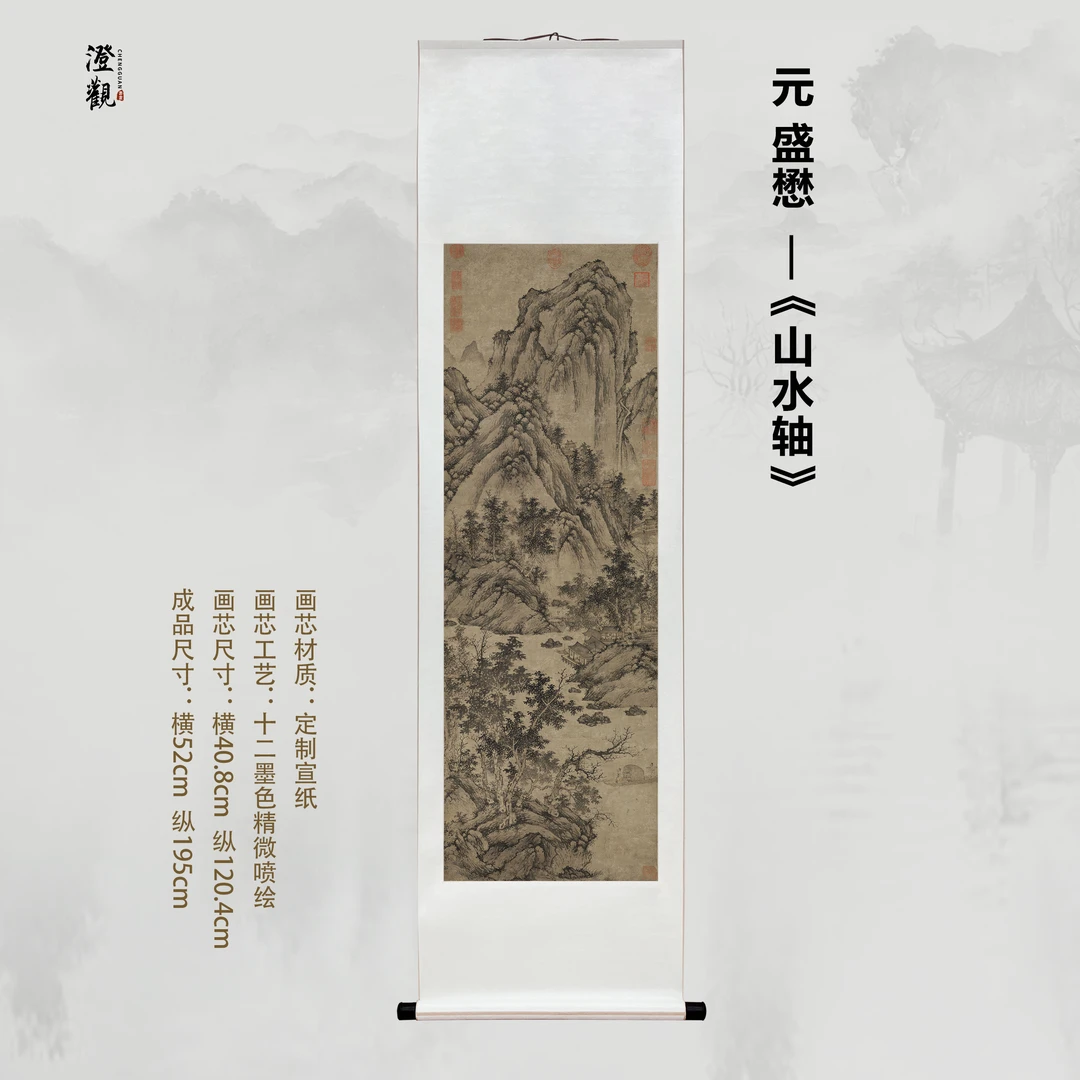
Sheng Mou’s work is often contrasted with the "sparse" or "dry" styles of his literati contemporaries. His landscapes are known for being rich, decorative, and meticulously detailed.
- Lush Compositions: His paintings are characterized by dense foliage, intricate rock formations, and a sense of spatial depth that feels more "reachable" than the lofty peaks of earlier eras.
- Mastery of Color: While many Yuan masters stuck to monochrome ink, Sheng Mou was a master of light colors and blue-and-green landscapes (qinglü shanshui), using pigments to add a sense of vitality and charm to his scenes.
- Refined Brushwork: He employed refined texture strokes (cunfa) that were more polished and "professional" than the deliberate "clumsiness" sought by some scholar-painters.
- Architectural and Figure Accuracy: His training as a professional meant he was excellent at architectural drawing (jiehua) and placing realistic figures within his landscapes, making his scenes feel inhabited and lively.
3. The Famous Anecdote: Sheng Mou vs. Wu Zhen
There is a famous historical anecdote regarding Sheng Mou and his neighbor, Wu Zhen. It was said that during their lifetimes, Sheng Mou was extremely popular; his doorstep was crowded with people offering money and gifts for his paintings. Meanwhile, Wu Zhen, who practiced a more eccentric and "unrefined" literati style, lived in relative obscurity. When Wu Zhen’s wife complained about their poverty compared to the wealthy Sheng family, Wu Zhen reportedly replied that "in twenty years, it will be different." While Wu Zhen did eventually achieve greater historical fame, the story highlights how Sheng Mou was the preferred master for the elite of his own generation.
4. Masterpiece: "Waiting for the Ferry in Autumn"
His most celebrated work, "Waiting for the Ferry in Autumn" (秋江待渡图), currently housed in the Palace Museum in Beijing, is a quintessential example of his style. The painting features vibrant autumn trees, a wide, tranquil river, and a traveler waiting on the bank. The composition is perfectly balanced, showing his ability to evoke a sense of serene, scholarly reclusion while maintaining a high level of visual beauty and clarity.
5. Historical Legacy
Sheng Mou was a pivotal figure who proved that professionalism and high art were not mutually exclusive. His "refined" landscape style had a profound influence on the Ming Dynasty professional painters, particularly those associated with the Zhe School. He is remembered as an artist who could satisfy both the aesthetic demands of the market and the intellectual standards of the scholar-official class, making him one of the most versatile masters of the 14th century.
— ALL MASTERPIECES LOADED —