Ni Zan (倪瓒): The Minimalist Hermit and Master of the Yuan Dynasty
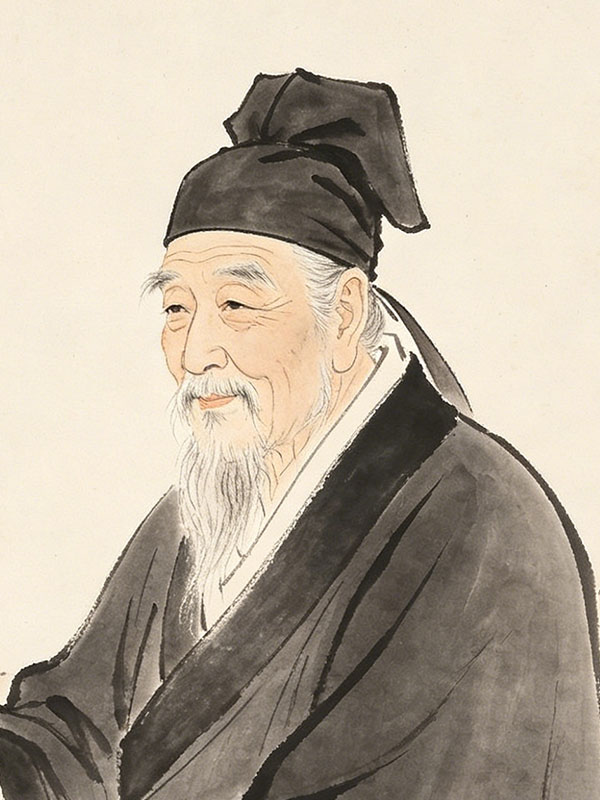
Ni Zan (1301–1374), courtesy name Yuanzhen (元镇) and art names Yunlin (云林) and Julan Daoren (九龙道人), was a transformative figure in Chinese art history. As one of the Four Masters of the Yuan Dynasty (元四家), he is celebrated for his radically minimalist aesthetic and his pursuit of spiritual purity through landscape painting.
1. A Life of Reclusion and Obsessive Purity
Born into a wealthy family in Wuxi, Ni Zan spent his early years surrounded by books and antiquities. However, facing the collapse of the Yuan Dynasty and heavy taxation, he distributed his wealth to friends and relatives. He spent the last 20 years of his life as a landless hermit, wandering the lakes and rivers of southeastern China on a small boat. He was famously known for his obsession with cleanliness (hygienic mania), often washing his hands and even his trees repeatedly—a trait that mirrored the austere purity of his art.
2. The "Sparse" Aesthetic: "One River, Two Banks"
Ni Zan’s style is the antithesis of the crowded compositions of his contemporary Wang Meng. He developed a signature minimalist composition known as "One river, two banks" (一河两岸). Features of his style include:
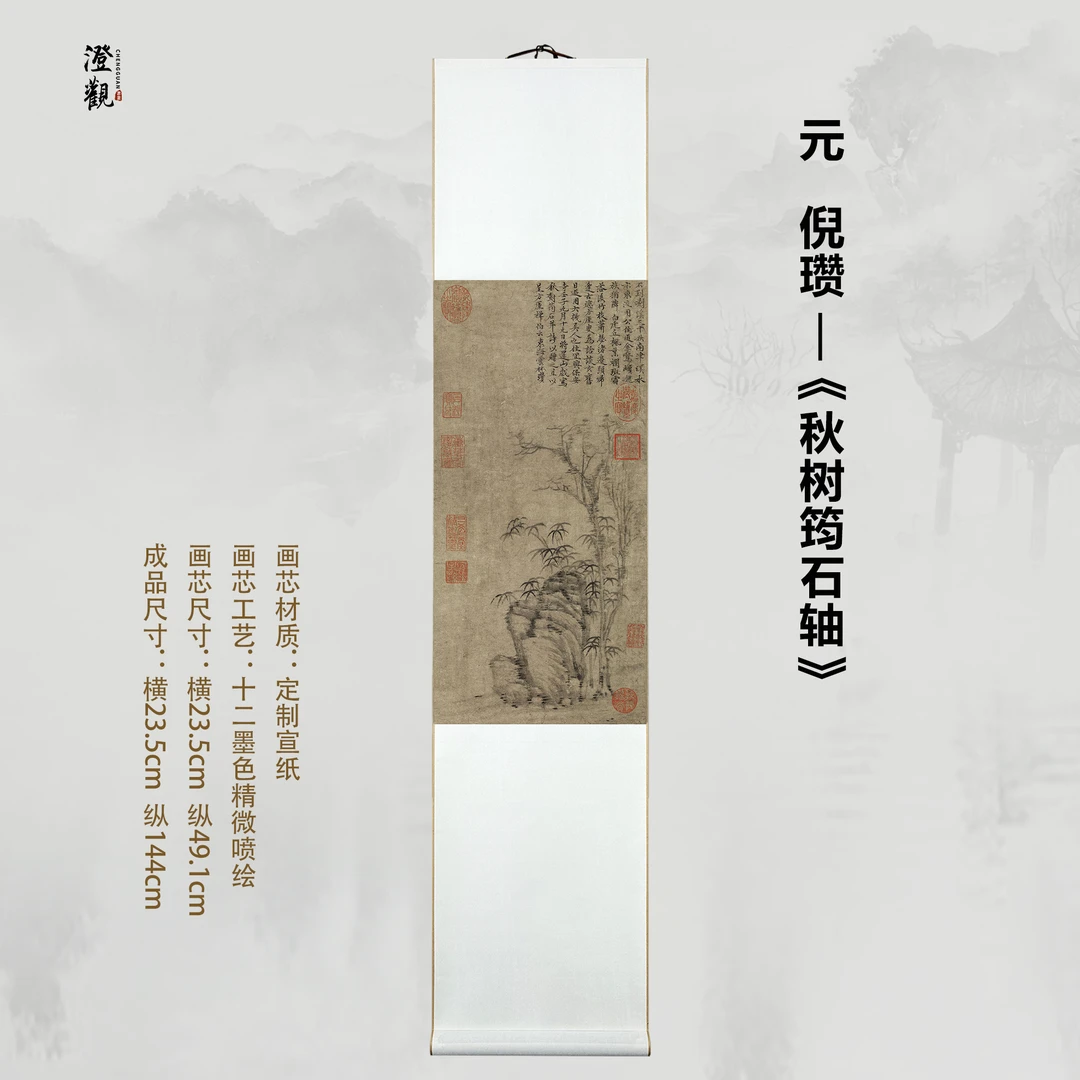
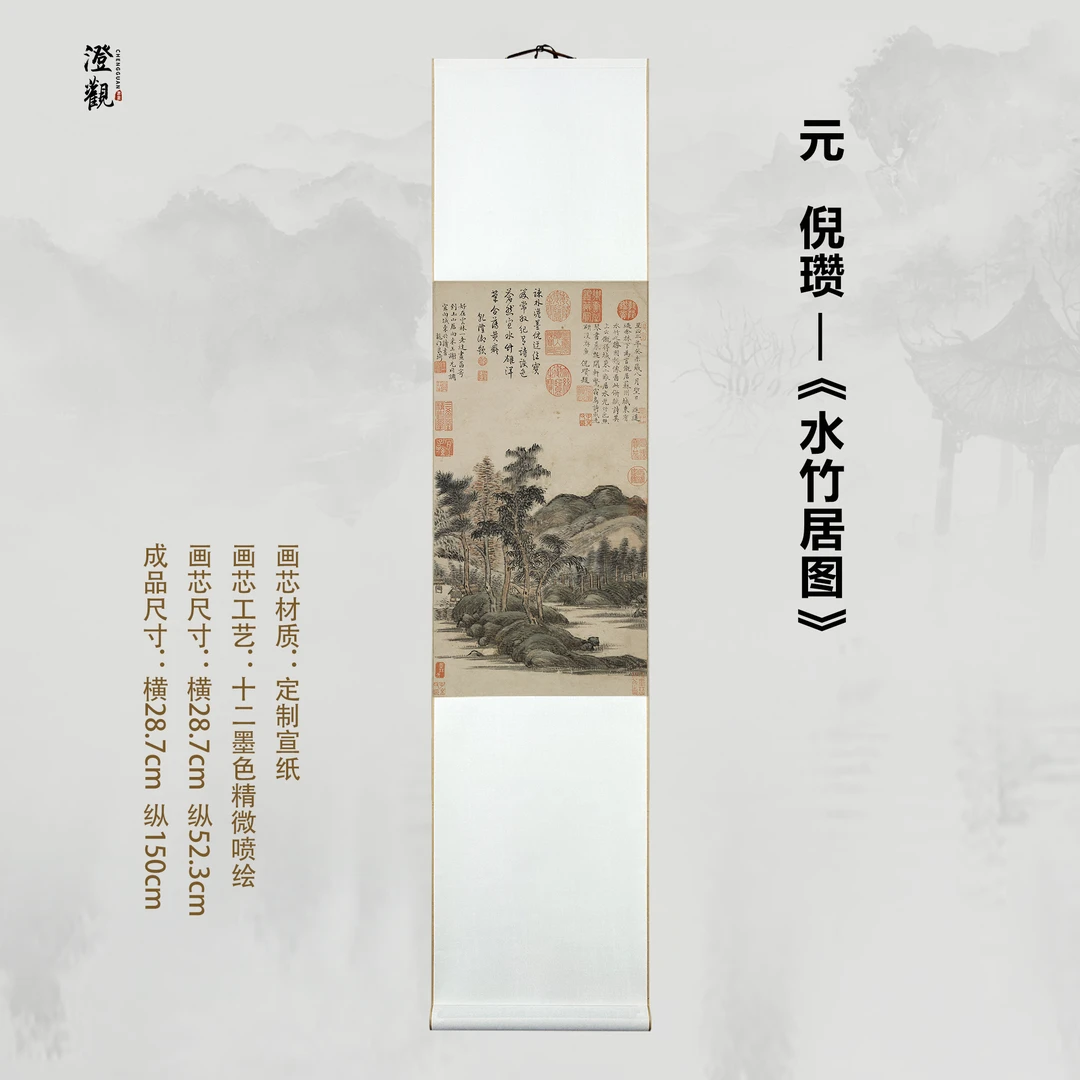
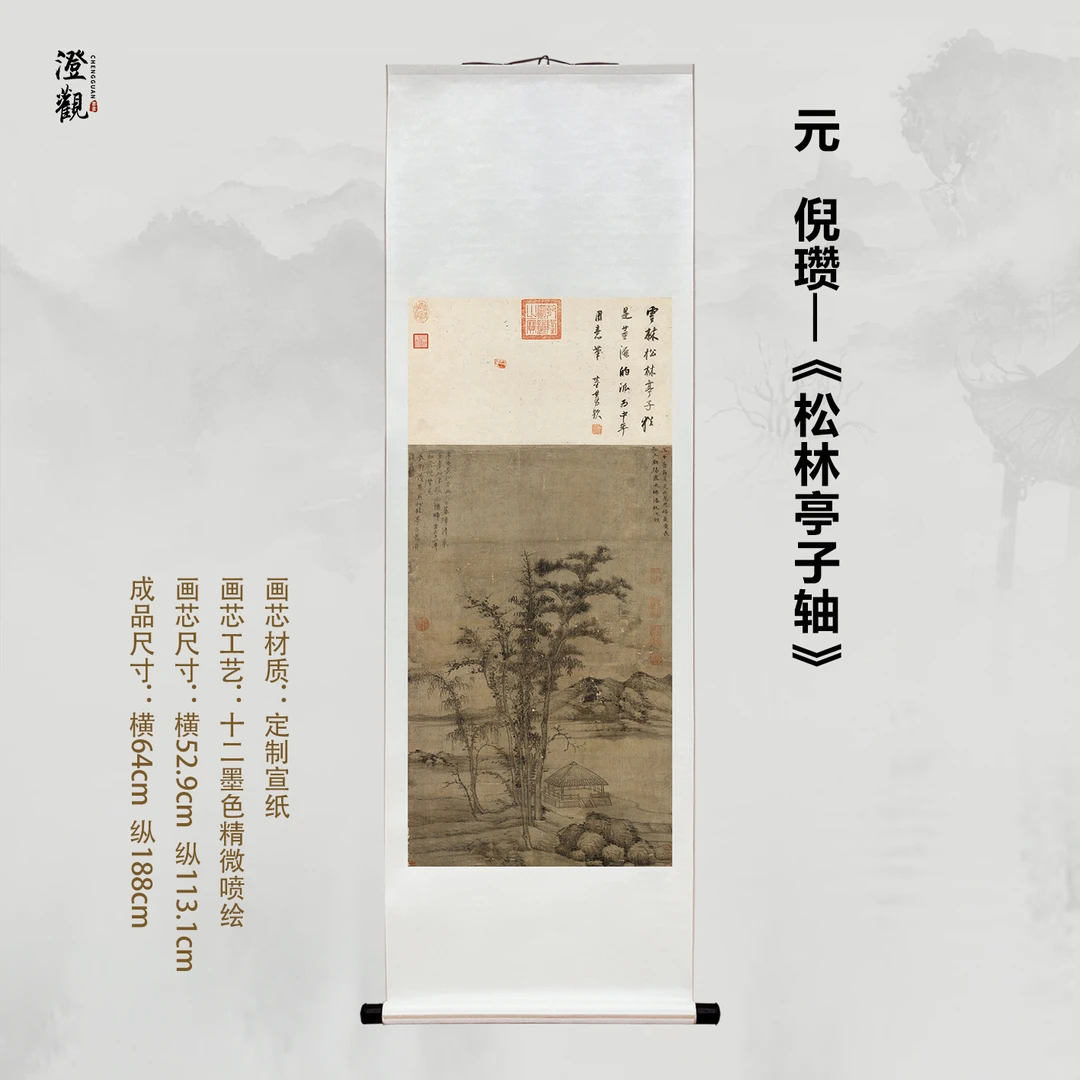
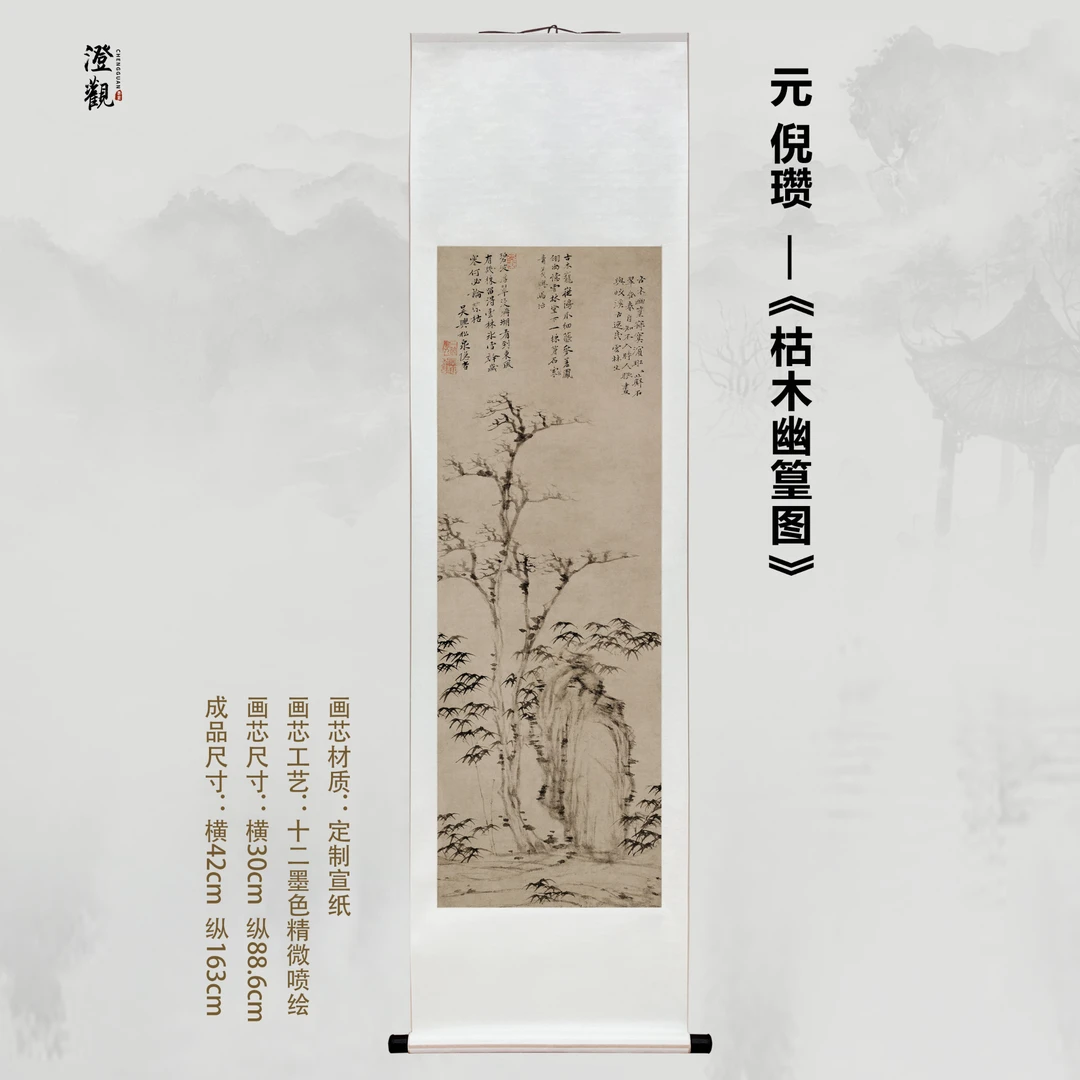
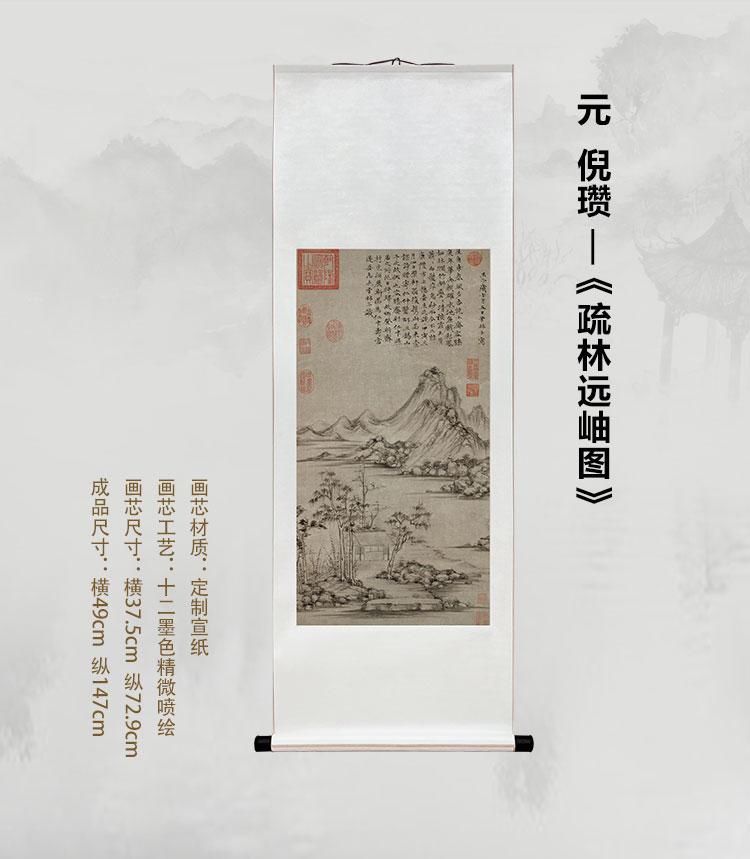
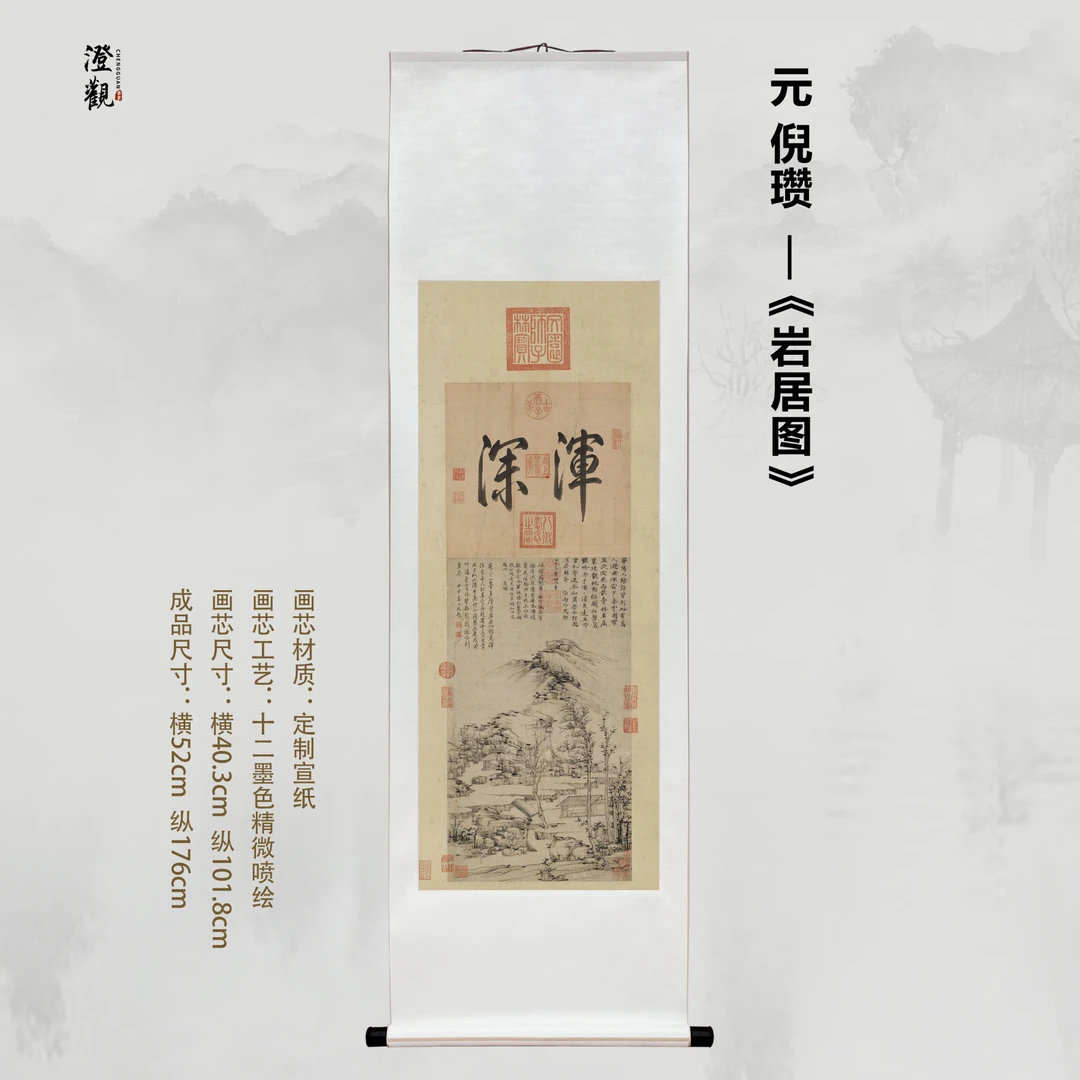
- Sparse Composition: His paintings typically feature a foreground with a few desolate trees on a rocky shore, a vast expanse of empty water in the middle, and distant, low-lying mountains.
- Dry Ink Technique: He mastered the "Dry brush" (ke bi) technique, using very little water to create a skeletal, ethereal quality that conveys a sense of detachment and stillness.
- Absence of Figures: Unlike most landscape painters, Ni Zan almost never painted human figures, claiming that there were no people worth painting in such a chaotic world. This reinforces the solitude and silence of his work.
3. Philosophical Foundation: "Self-Amusement"
Ni Zan was a pioneer of the Literati painting (wenrenhua) philosophy. He famously stated that his painting was not intended to achieve formal likeness but was merely a way to "sketch the untrammeled feelings in my breast" (聊写胸中逸气). This shift from objective representation to subjective expression became a cornerstone of later Chinese art theory.
4. Masterpiece: "The Rongxi Studio"
His most iconic work, "The Rongxi Studio" (容膝斋图, 1372), epitomizes his late style. The painting is characterized by its vertical format, delicate use of slanting brushstrokes (pipi cun), and a profound sense of transcendence. The empty pavilion in the foreground serves as a symbol of the artist’s own spiritual reclusion and his rejection of worldly ambitions.
5. Enduring Influence on the Southern School
Ni Zan’s influence on the Ming and Qing Dynasties was unparalleled. He was regarded as the ultimate model of "Yipin" (the untrammeled class) of painters. Artists of the Wu School, such as Shen Zhou and Wen Zhengming, as well as the Orthodox School led by Dong Qichang, looked to Ni Zan’s "thinness" and "emptiness" as the highest expression of scholarly noble character.