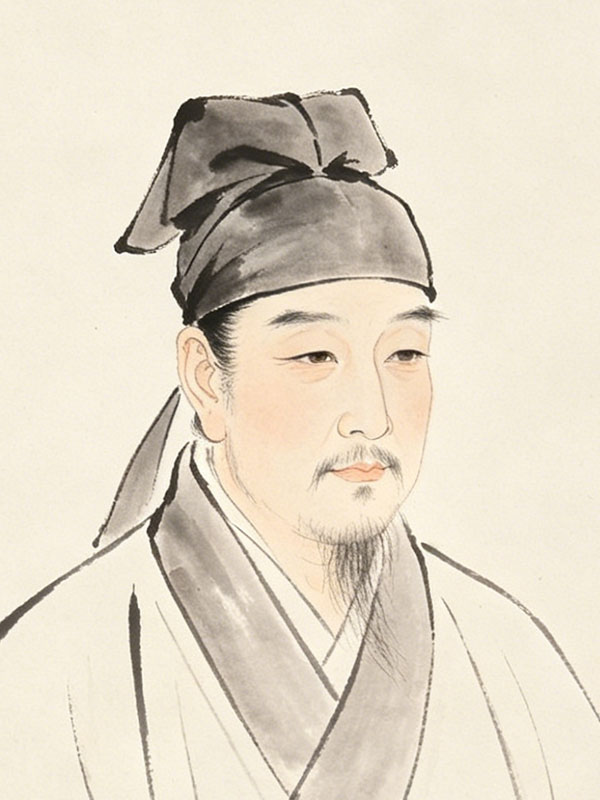
Ma Wan (马琬): The Ethereal Landscapes of a Late Yuan Scholar
Ma Wan (active mid-to-late 14th century), courtesy name Wenbi (文璧) and pseudonyms Lulun Sheng (鲁钝生) and Guanyin (灌园), was a prominent painter, poet, and calligrapher during the transition from the Yuan Dynasty to the early Ming Dynasty. He is celebrated as a quintessential literati painter who flourished in the cultural circles of Suzhou and Songjiang.
1. Artistic Lineage and the Influence of Huang Gongwang
Ma Wan was a devoted follower and student of the legendary Huang Gongwang, the eldest of the "Four Masters of the Yuan." From Huang, Ma Wan inherited the secrets of compositional layering and the use of the "hemp-fiber" stroke (pima cun). His work is often seen as a bridge that carried the high-literati style of the late Yuan into the early Ming imperial era, preserving the spirit of reclusion even as he entered government service.
2. Stylistic Characteristics: Mist and Distance
Ma Wan’s landscape paintings are renowned for their atmospheric depth and delicate elegance. Key elements of his style include:
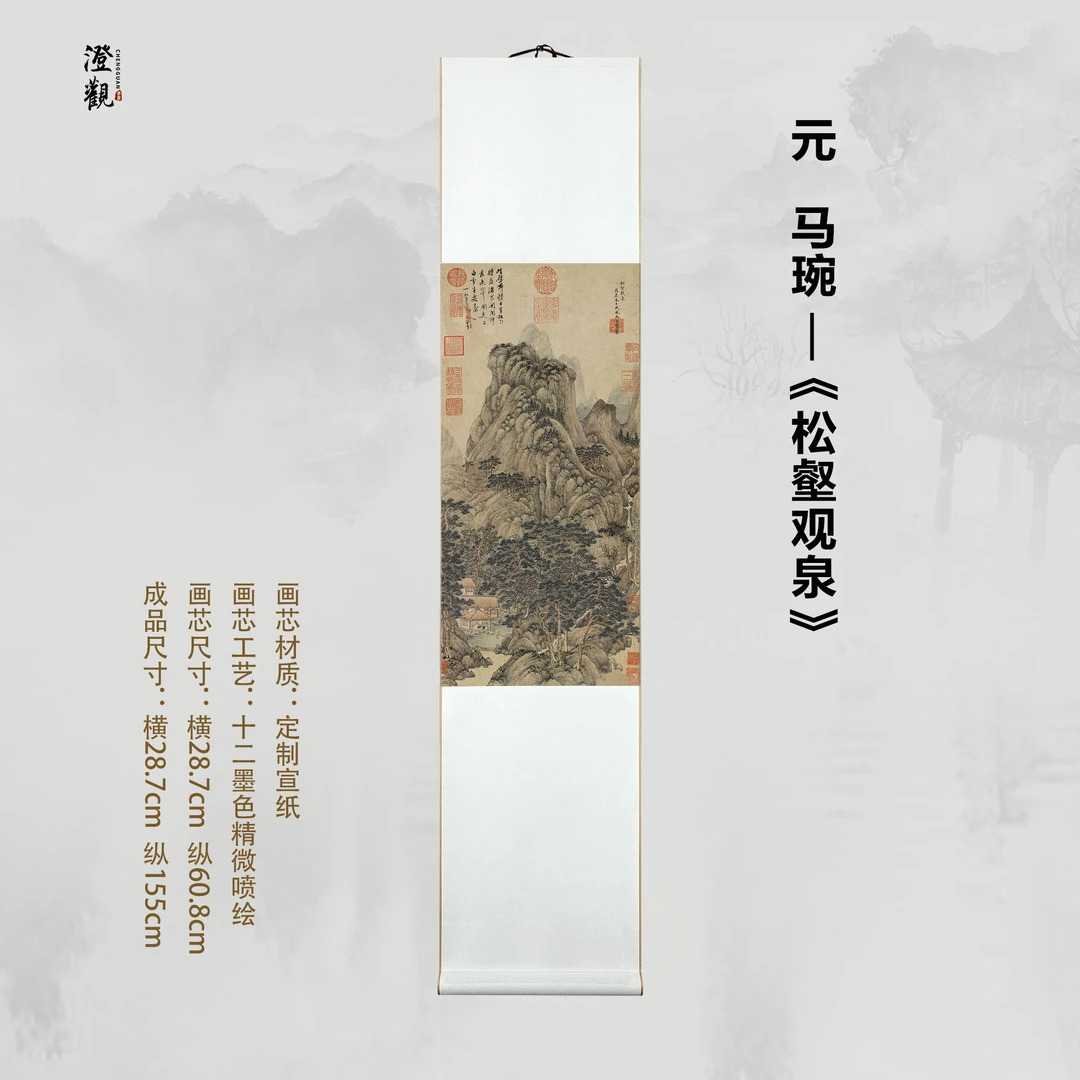
- Vast Perspectives: He frequently utilized the "level-distance" (pingyuan) and "high-distance" (gaoyuan) techniques to create expansive, misty vistas that evoke a sense of infinite space.
- Refined Brushwork: Compared to the ruggedness of some of his contemporaries, Ma Wan’s brushwork was fluid, light, and graceful. He used subtle ink washes to depict towering peaks emerging from dense clouds.
- Idealized Nature: His landscapes rarely depicted specific geographical locations, instead representing the idealized mountains where a scholar might find spiritual peace and intellectual clarity.
3. The "Three Perfections" (Sanjue)
Like the most esteemed scholars of his day, Ma Wan was a master of the "Three Perfections": painting, poetry, and calligraphy. His poetic inscriptions were not merely decorative but were essential to the meaning of the artwork. His poems often touched upon themes of solitude, the beauty of the seasons, and the transience of life, harmonizing perfectly with the visual imagery of his scrolls.
4. Career as a Scholar-Official
In the early Ming Dynasty, Ma Wan transitioned from a private scholar to a public servant. Because of his vast erudition and administrative talent, he was appointed as the Governor of Suzhou (Suzhou Zhifu) during the Hongwu reign. His status as a scholar-official (shi dafu) gave his paintings a certain "orthodox" prestige, and he was highly respected by the early Ming elite for maintaining the Yuan-style purity in a new political era.
5. Historical Legacy and Notable Works
Ma Wan’s influence extended to the later Wu School, providing a model for artists like Shen Zhou. Several of his masterpieces are preserved in world-class institutions, such as:
- "Spring Mountains after Rain" (Chunshan Qingyu): A classic example of his ability to capture moist, verdant atmospheres.
- "Snowy Mountains" (Xueshan Tu): Demonstrating his mastery of negative space and the use of white paper to represent blankets of snow.
Today, his works in the National Palace Museum and the Shanghai Museum stand as vital records of the 14th-century literati spirit.
— ALL MASTERPIECES LOADED —