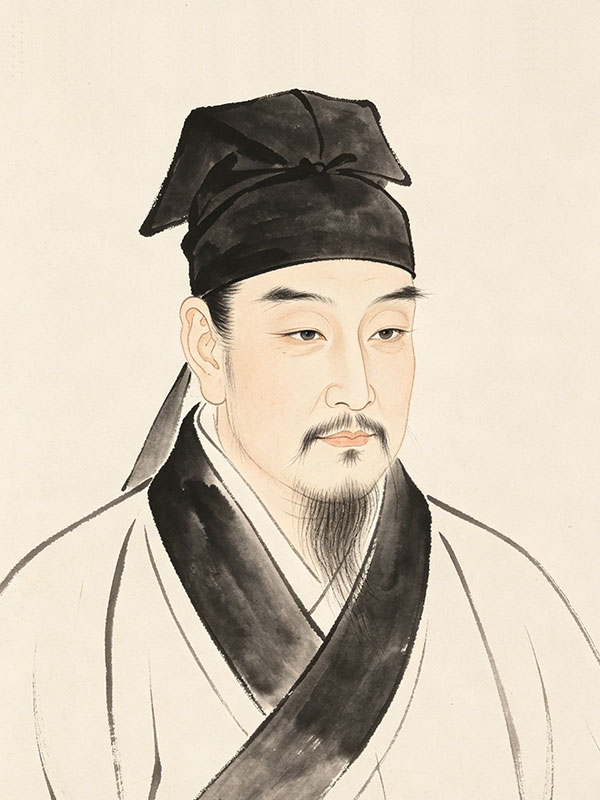
Ma Lin: The Lyrical Successor of the Ma Family Tradition
Ma Lin (active mid-13th century AD) was a preeminent court painter of the Southern Song Dynasty and the son of the legendary master Ma Yuan. As the fifth generation of a family that served the Imperial Painting Academy for over a century, he reached the peak of his career during the reigns of Emperor Ningzong and Emperor Lizong. While he inherited the structural foundations of the Ma-Xia School, Ma Lin is celebrated for transforming his father’s powerful, jagged style into a more delicate, lyrical, and sentimental aesthetic that reflected the refined tastes of the late Southern Song court.
In the history of Chinese art, Ma Lin is often remembered for his extraordinary technical versatility. He mastered landscapes, figures, and flower-and-bird painting, but he moved away from the bold "One-Corner" compositions of his father toward a more intimate and atmospheric focus. His brushwork was characterized by extreme refinement and a subtle use of ink wash to create a sense of luminous depth. He was a master of capturing fleeting moments in nature, such as the fading light of a sunset or the fragile beauty of a single blossom, infusing his works with a profound sense of poetic melancholy.
His masterpiece in the flower-and-bird genre, "Layer on Layer of Icy Petals" (层叠冰绡图), currently held in the Beijing Palace Museum, is a definitive example of late Song Gongbi realism. The painting depicts plum blossoms with such crystalline clarity and subtle shading that they appear almost translucent, like carved jade or ice. This work was famously inscribed by Empress Yang (Yang Meizi), a powerful patron of the arts who frequently collaborated with Ma Lin, using his paintings as visual companions to her imperial poetry. Their collaboration highlights the sophisticated synergy between painting, calligraphy, and literature during this era.
In his landscapes, such as the famous "Sunset Glow" (夕阳秋色图), Ma Lin utilized vibrant yet restrained colors to depict the tranquil beauty of a river at dusk. Unlike the massive peaks of the Northern tradition, his mountains are often softened by mist and distance, leading the eye toward a limitless horizon. His work "Quiet Listening to the Pines" (静听松风图) showcases his skill in figure painting, depicting a scholar-official in a state of meditative contemplation under a gnarled pine tree. The painting is widely considered a spiritual portrait of the Southern Song intellectual ideal—cultivated, reclusive, and deeply attuned to the natural world.
The legacy of Ma Lin is defined by his role as the final great master of the Ma family lineage. While critics of later dynasties sometimes compared him to his father, modern art historians recognize Ma Lin for his innovative naturalism and his ability to evoke emotion through space and light. His works provided a stylistic bridge toward the more expressive and decorative trends of the Ming Dynasty. Today, his surviving album leaves and fans, housed in the National Palace Museum and other global institutions, are regarded as priceless treasures that represent the ultimate elegance and sophisticated soul of the Southern Song academic tradition.
— ALL MASTERPIECES LOADED —