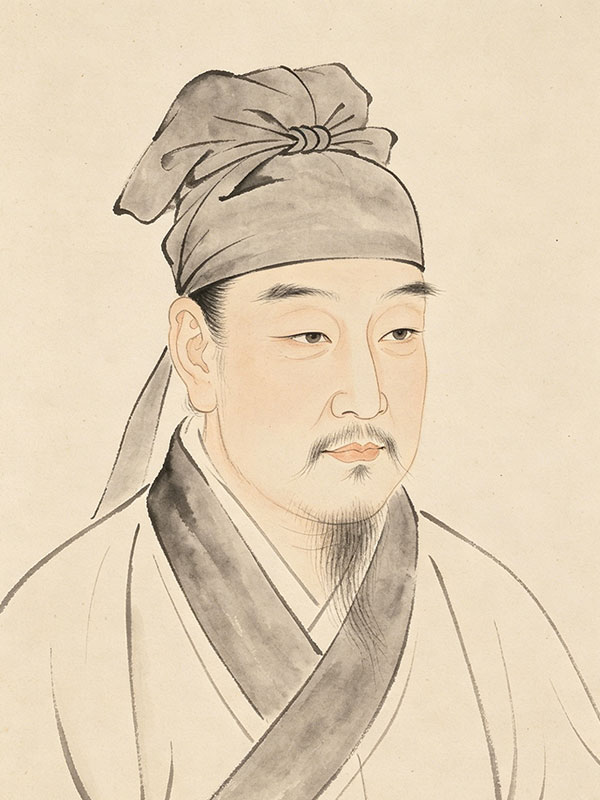
Liang Kai: The "Madman" of the Brush and Pioneer of Zen Realism
Liang Kai (active early 13th century AD) was a revolutionary painter of the Southern Song Dynasty whose life and work represented a dramatic departure from the rigid conventions of his time. Originally a master in the Imperial Painting Academy under Emperor Ningzong, he was awarded the prestigious Golden Belt, the highest honor for a court artist. However, in a legendary act of spiritual independence, he famously hung the belt on the academy wall and left the court to live as a reclusive wanderer at the **Liutong Temple**. Known by his contemporaries as "Madman Liang" (Liang Fengzi), his life mirrored the spontaneity and iconoclasm of the Chan (Zen) Buddhism he embraced.
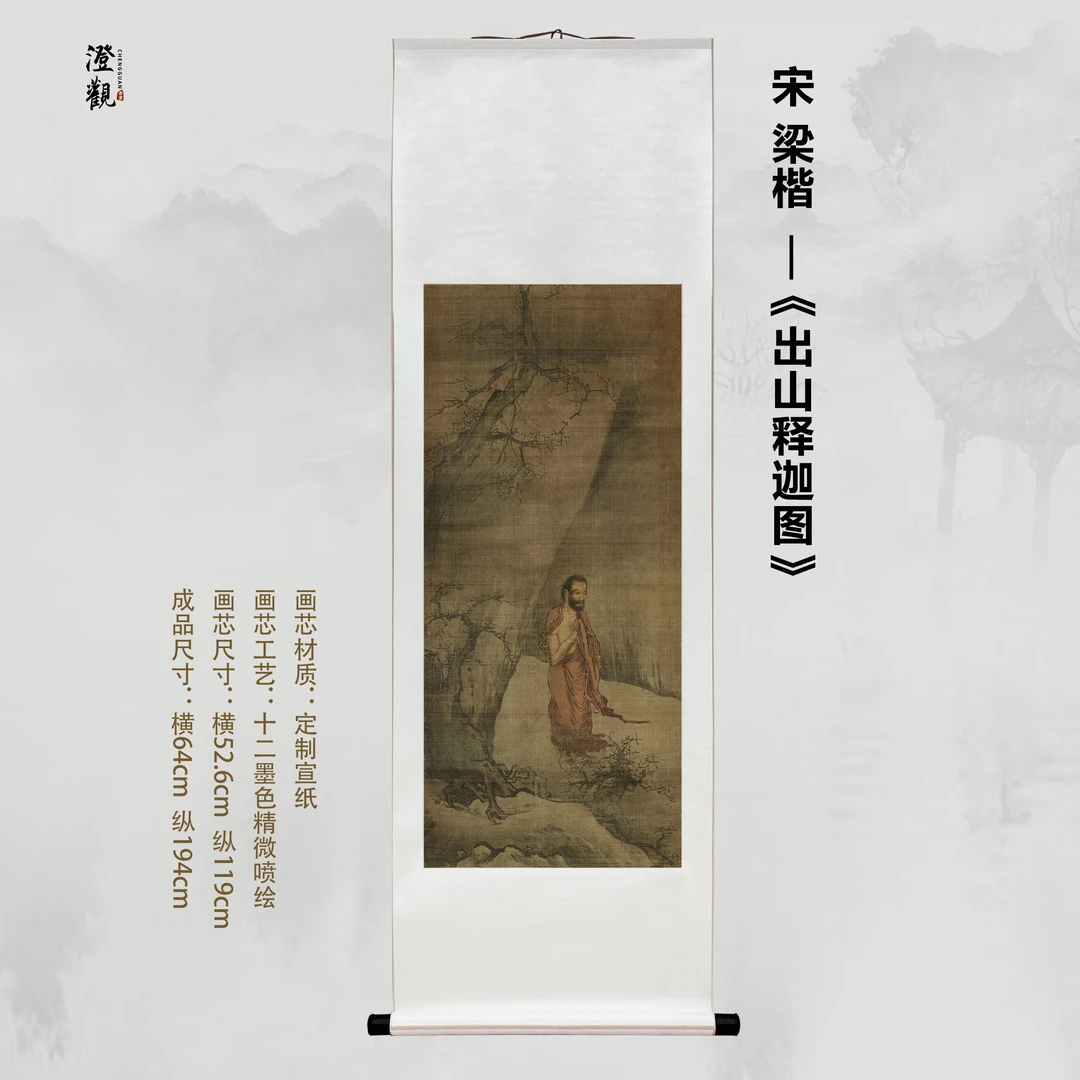
He was a rare virtuoso who mastered two polar opposite styles. In his early years, he excelled in the refined and meticulous academic style, as seen in his masterpiece "Shakyamuni Emerging from the Mountains" (出山释迦图). This work is characterized by precise lines and psychological realism, capturing the physical exhaustion and spiritual resolve of the Buddha. However, he is most famous for pioneering the "abbreviated brushwork" (Jianbi) and "splashed ink" (Pomo) techniques. This radical shift was a visual manifestation of Chan philosophy, where enlightenment is found in sudden intuition and the rejection of formal ornamentation.
His most iconic work, "Immortal in Splashed Ink" (泼墨仙人图), currently held in the National Palace Museum, is a milestone in Chinese art history. The painting utilizes broad, wet washes of ink to define the figure's body with almost no outlines, creating a humorous and transcendental depiction of a Daoist immortal. Another significant work, "The Sixth Patriarch Chopping Bamboo" (六祖伐竹图), uses sharp, rapid strokes to portray the Chan master Huineng. The jagged, energetic lines represent the raw vitality of enlightenment found in everyday labor, a stark contrast to the static, decorative religious art of previous eras.
Technically, Liang Kai’s contribution was the liberation of the brush. He proved that a few minimalist strokes could convey more emotional power and spiritual truth than the most detailed academic study. His ink-wash gradients and expressive distortions paved the way for the literati painting movement and the "Xieyi" (freehand) style. He treated the act of painting as a form of meditation, where the movement of the brush matched the rhythmic flow of the mind, a concept that fundamentally changed the aesthetic values of East Asian art.
The legacy of Liang Kai is perhaps most visible in the development of Zen art in Japan (Sumi-e). His works were highly prized by Japanese monks and shoguns, serving as the primary model for masters like Sesshu Toyo. In China, he is remembered as the artist who bridged the gap between the imperial academy and the spiritual wilderness. Today, his surviving masterpieces are considered national treasures, representing a pinnacle of individualistic expression and the transcendental beauty of the "mad" and the "simple."
— ALL MASTERPIECES LOADED —