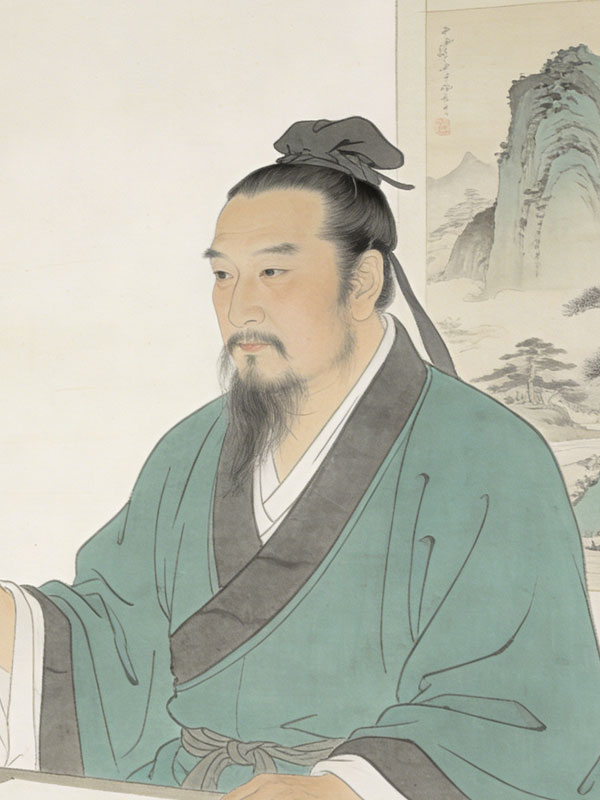
Li Tang: The Architect of the Axe-Cut Stroke and the Southern Song Transition
Li Tang (c. 1066–1150 AD), courtesy name Xigu, was a legendary painter whose extraordinary career spanned the traumatic transition from the Northern Song to the Southern Song Dynasty. Originally a high-ranking member of the Imperial Painting Academy under Emperor Huizong, he survived the Jurchen invasion and the fall of the capital at Kaifeng. Despite being nearly eighty years old when he fled to the south, his artistic vitality remained undiminished. He eventually became the influential director of the reorganized Southern Song Academy in Hangzhou, setting the aesthetic course for the next 150 years of Chinese art.
He is most famous for inventing and perfecting the "Axe-cut stroke" (Fupi Cun), a revolutionary technique using broad, sweeping, and angular brushstrokes to depict the sharp, jagged textures of rocks and mountain faces. This represented a dramatic departure from the softer "hemp-fiber" strokes of the southern tradition or the "raindrop" strokes of the north. His brushwork was characterized by a robust, masculine energy and a sense of solid, sculptural form, which provided the structural foundation for what would later be known as the "Northern School" of landscape painting.
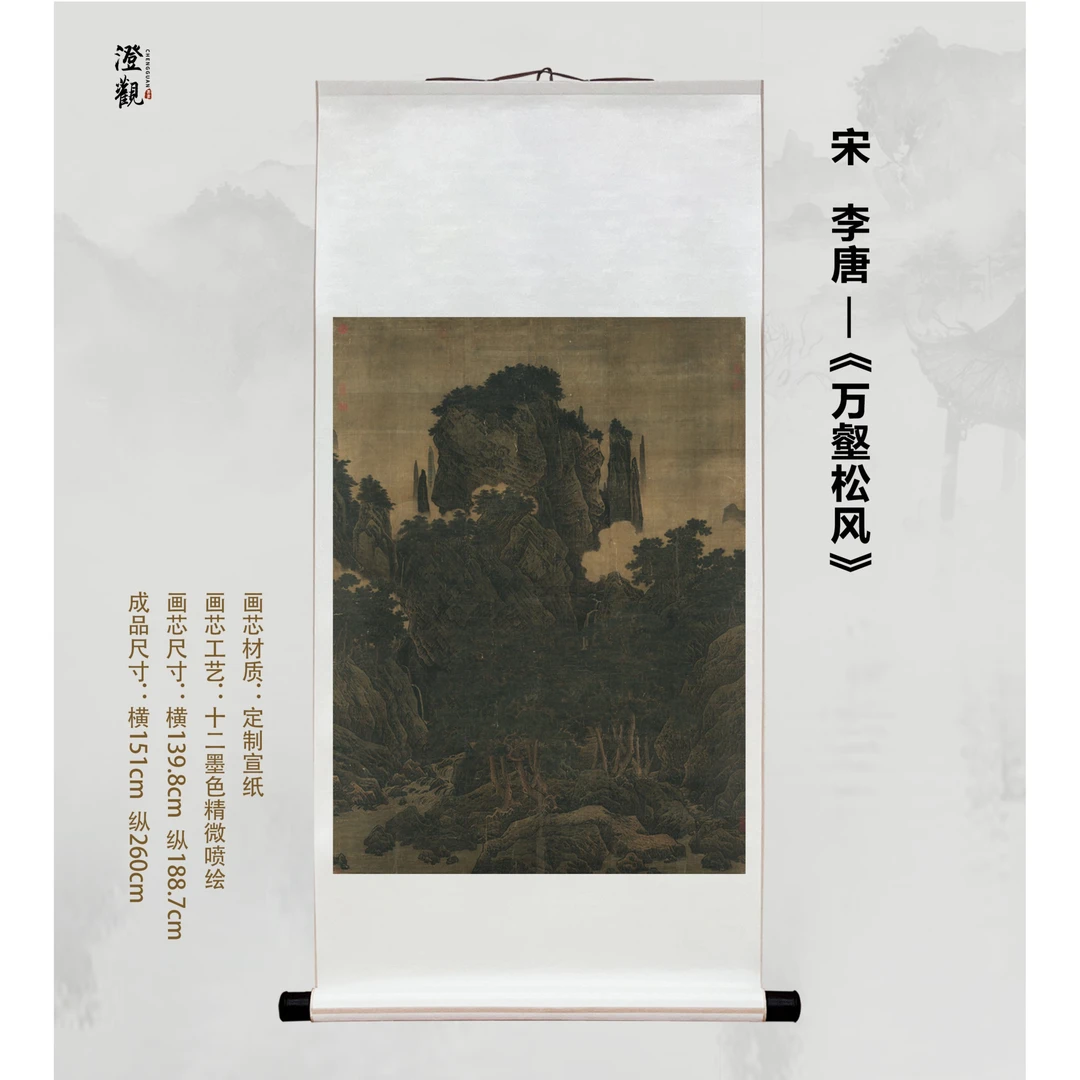
His undisputed masterpiece, "Wind in the Pines Among a Myriad Valleys" (万壑松风图), is a "National Treasure" currently held in the National Palace Museum. Dated 1124, it stands as the final monument to the "monumental landscape" tradition of the Northern Song. The painting features a massive central peak, swirling mists, and wind-swept pine trees, rendered with such technical precision that one can almost hear the roar of the wind through the valleys. This work perfectly balances the grandeur of the past with an increasing focus on atmospheric depth and localized detail.
Beyond landscapes, Li Tang was a versatile master of figure and genre painting. His work "The Village Doctor" is a famous example of his observational realism, depicting a rustic surgical scene with raw, emotional intensity. He often used these subjects to subtly comment on the resilience of the common people during times of national crisis. His ability to blend high-court elegance with earthy, everyday life made him a uniquely relatable figure whose work captured both the glory of the empire and the struggles of humanity.
The legacy of Li Tang is defined by his role as the patriarch of the "Four Masters of the Southern Song" (alongside Liu Songnian, Ma Yuan, and Xia Gui). By introducing the "truncated landscape" and the axe-cut technique, he paved the way for the poetic, "one-corner" compositions that would define the Southern Song aesthetic. His influence was so profound that even centuries later, artists sought to recapture the structural integrity and dramatic contrast of his brush. Today, he is remembered as the artist who saved the soul of Song painting during its darkest hour, ensuring its survival and evolution in a new land.
— ALL MASTERPIECES LOADED —