Li Anzhong: The Virtuoso of Avian Realism and Imperial Precision
Li Anzhong (active c. 1119–1162 AD) was a preeminent court painter of the Song Dynasty, whose career uniquely bridged the Northern Song and Southern Song periods. Originally a member of the Imperial Painting Academy in Kaifeng under the artist-emperor Huizong, he later fled south during the Jurchen invasion to continue his prestigious service in Hangzhou. His exceptional talent was recognized with the Golden Belt, an honor reserved for the most elite artists of the imperial court, marking him as a definitive voice of the academic tradition.
He is historically celebrated as a master of flower-and-bird painting, with a particular specialization in depicting birds of prey such as hawks, eagles, and shrikes, as well as smaller birds like quails. Unlike many of his contemporaries who focused solely on the gentle beauty of garden flora, Li Anzhong was renowned for capturing the ferocious spirit and predatory nature of his subjects. His work is characterized by extraordinary realism and a deep commitment to Xiesheng (sketching from life), a philosophy that demanded scientific accuracy in the depiction of every feather, claw, and beak.
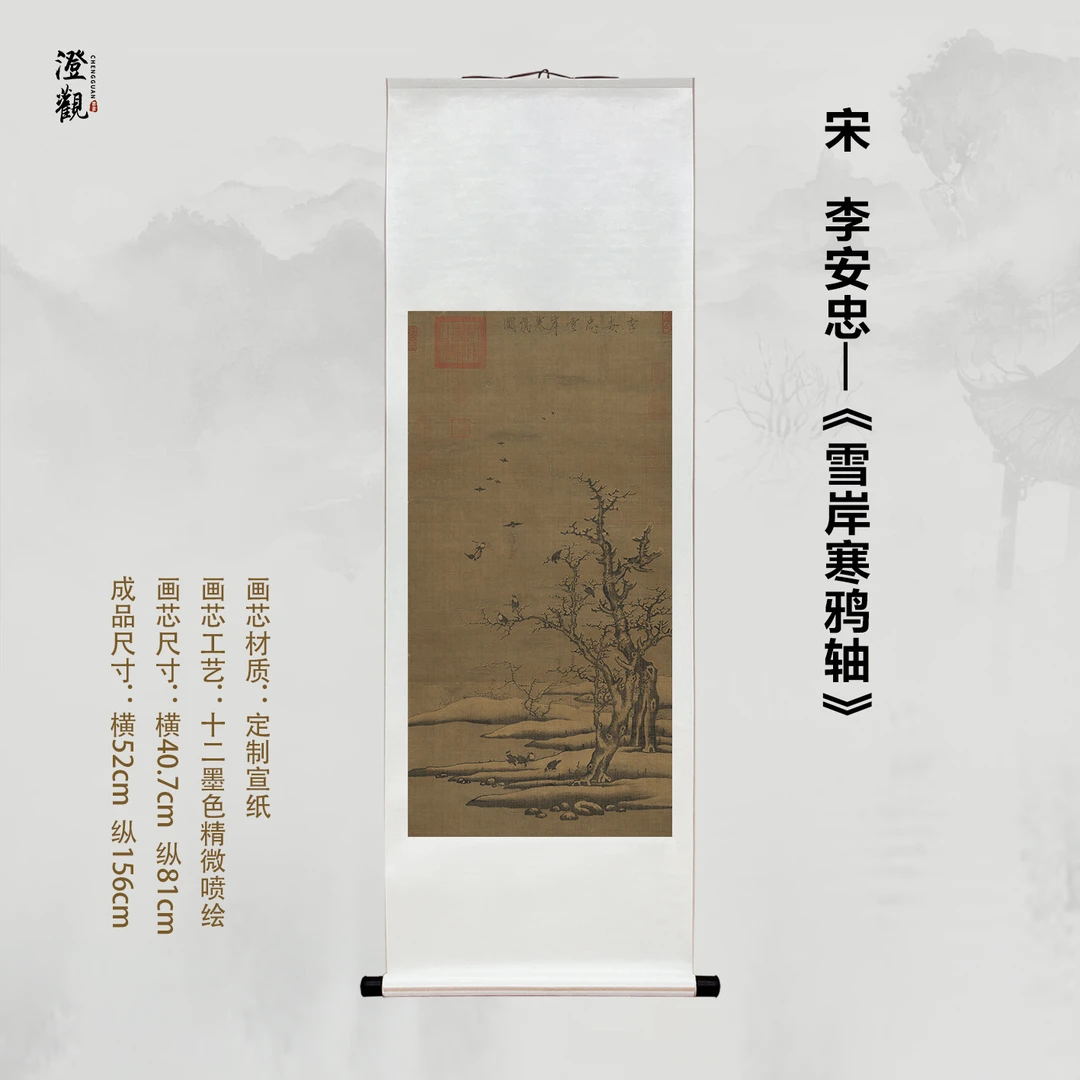
Technically, Li Anzhong was a virtuoso of the Gongbi (meticulous) style. He utilized extremely fine brushlines and layered mineral pigments to create a sense of tactile texture in avian plumage, making the feathers appear soft yet structurally sound. His ability to render the glint in a bird's eye and the tension in its muscles provided his paintings with a lifelike intensity that few could match. He often placed his subjects against wintry backgrounds or thorny branches, using the stark environment to heighten the dramatic narrative of the predator-prey relationship.
His most famous surviving masterpiece is the album leaf "Shrike on a Thorny Branch" (棘雀图), currently held in the National Palace Museum in Taipei. This work is a perfect distillation of his precise observation, showing a small bird perched amidst autumn foliage with every detail of its anatomy and markings rendered with surgical precision. Another significant theme in his oeuvre was the quail, which he often depicted in pairs or among wild chrysanthemums, blending technical brilliance with the symbolic themes of peace and resilience during a time of national upheaval.
The legacy of Li Anzhong lies in his role as a preserver of the academic standard. By successfully bringing the high-realism traditions of the Northern Song to the new capital in the south, he ensured that the artistic height of the Huizong era survived and evolved. His influence can be traced through the works of later Southern Song academy painters and into the Ming Dynasty court style. Today, his works are considered national treasures, representing the pinnacle of avian realism and the sophisticated connoisseurship of the Chinese imperial elite.
— ALL MASTERPIECES LOADED —