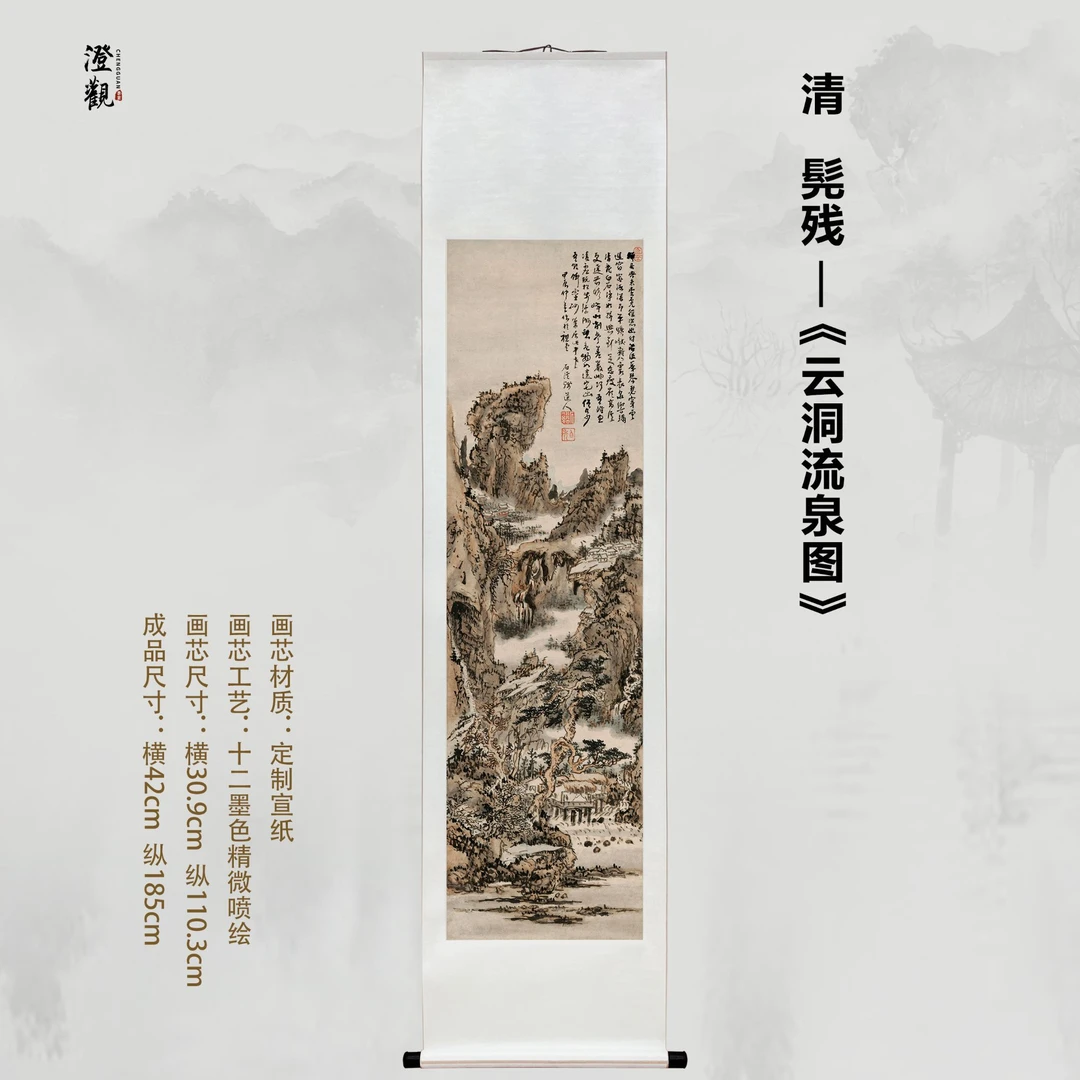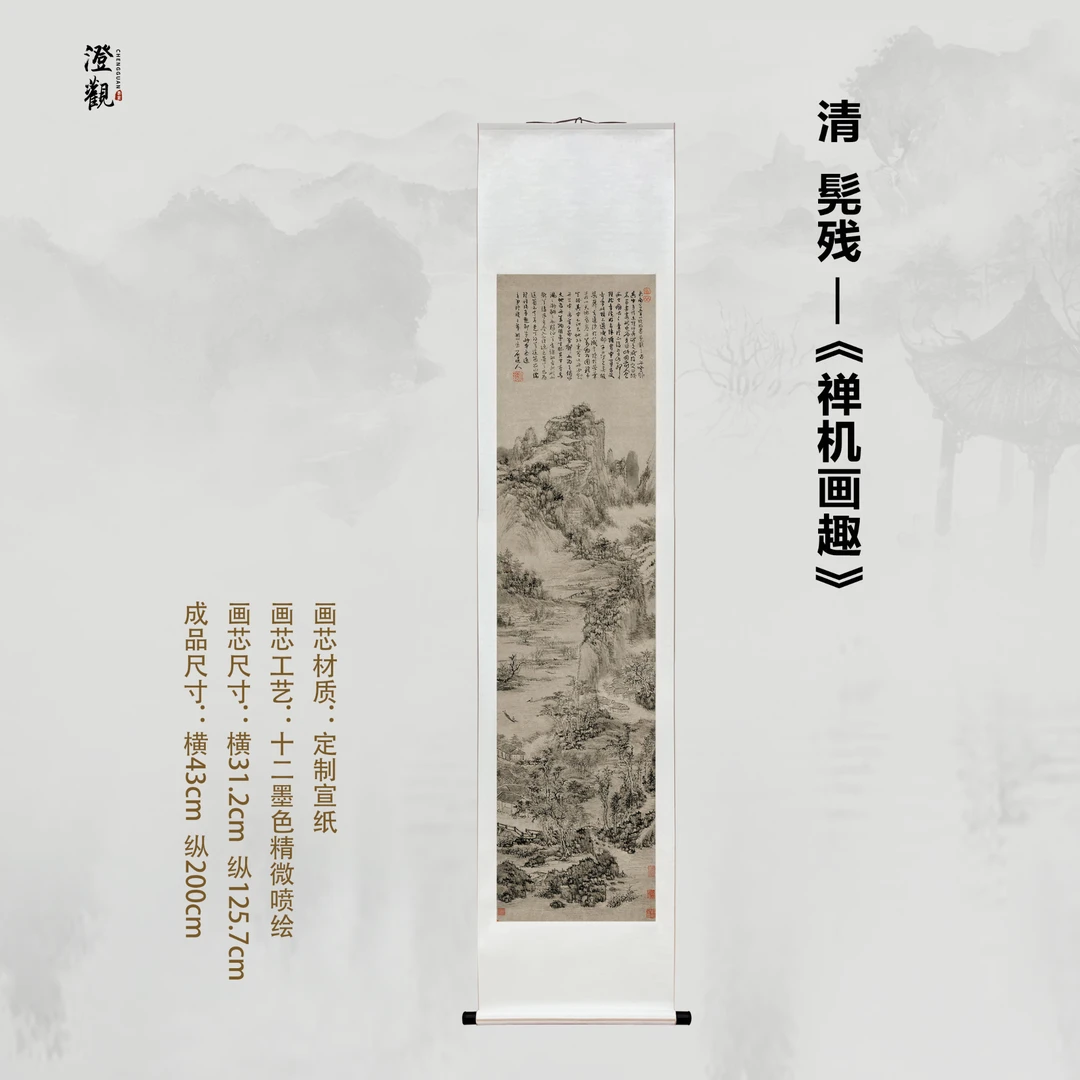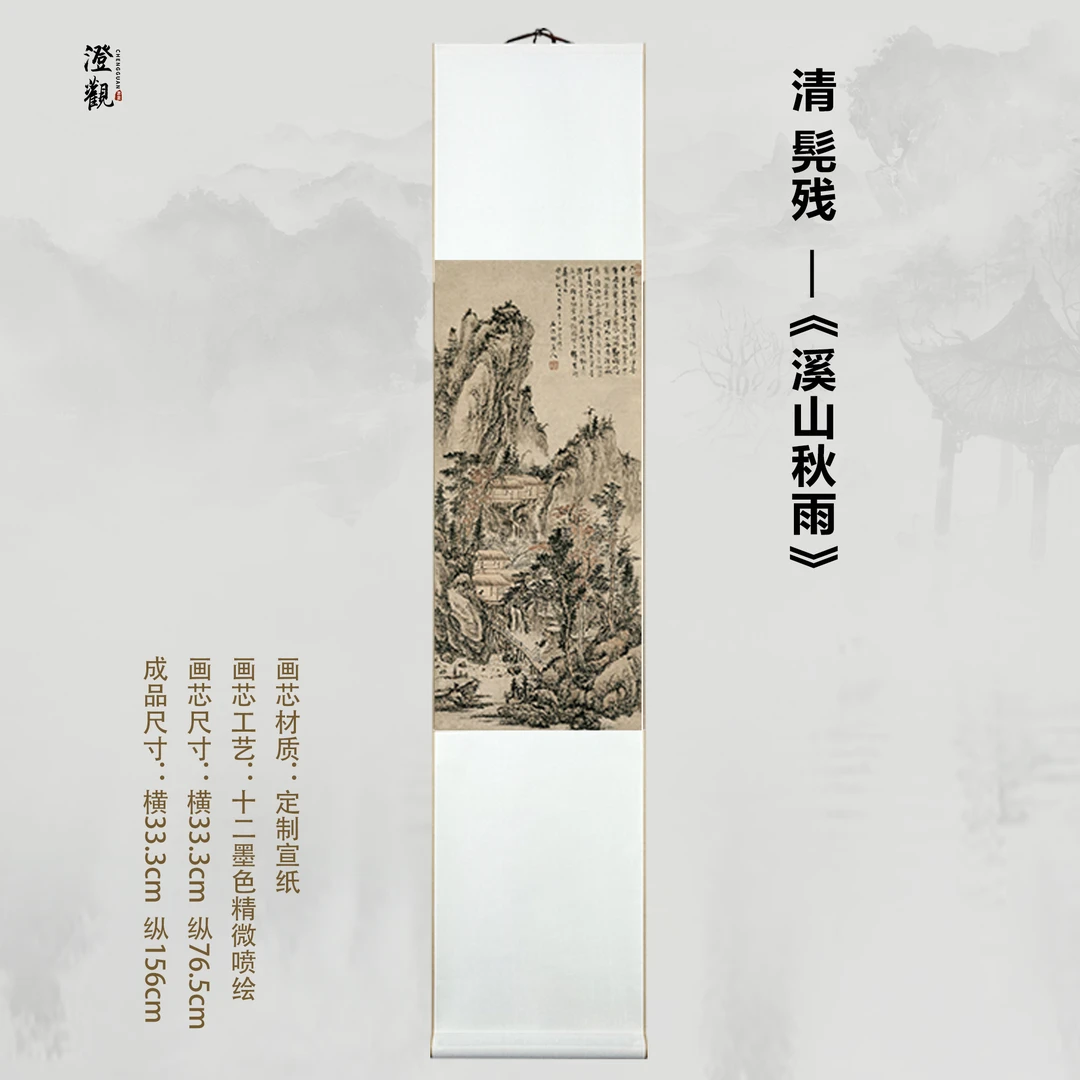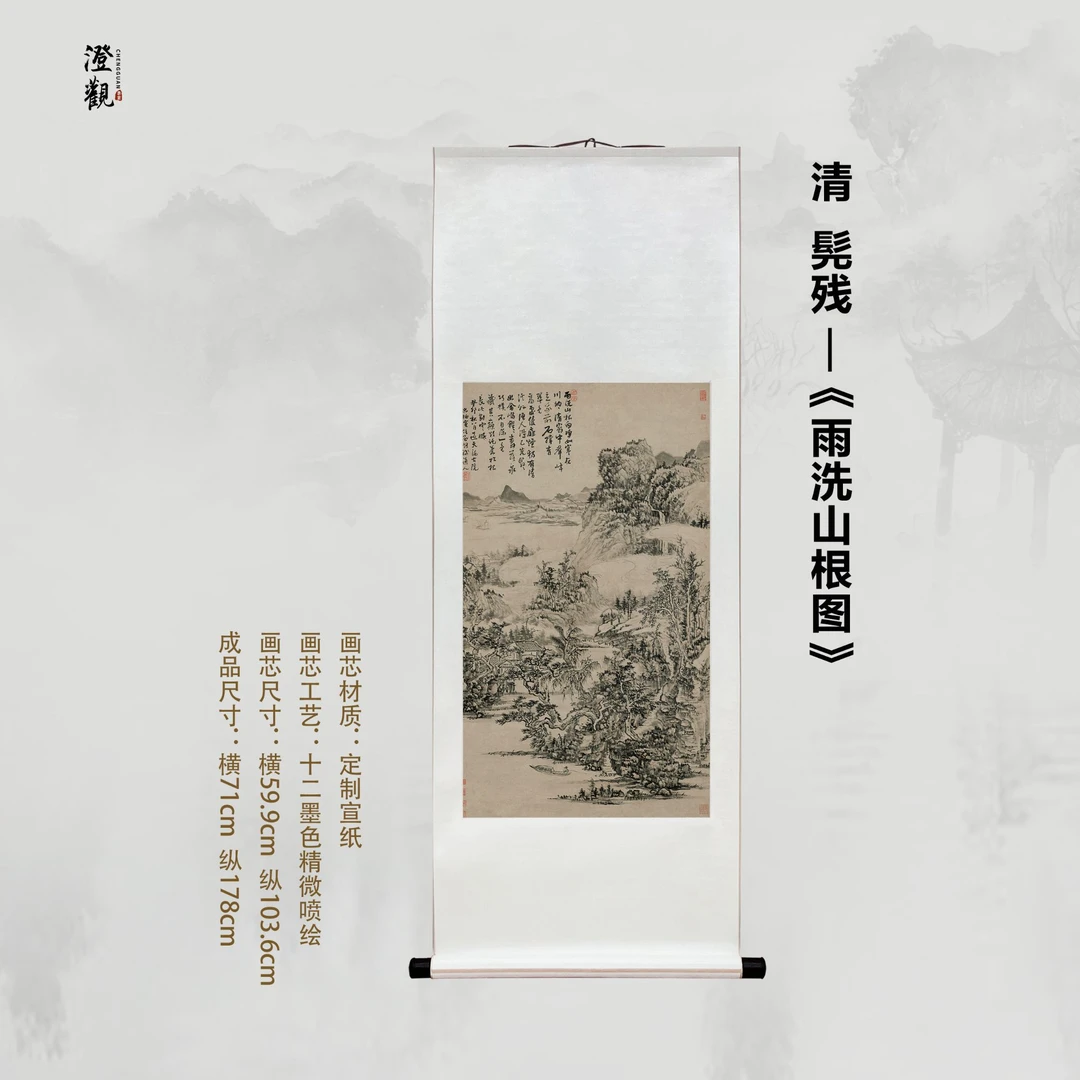
Kuncan (髡残): The Spiritual Hermit and Master of Dense Landscapes
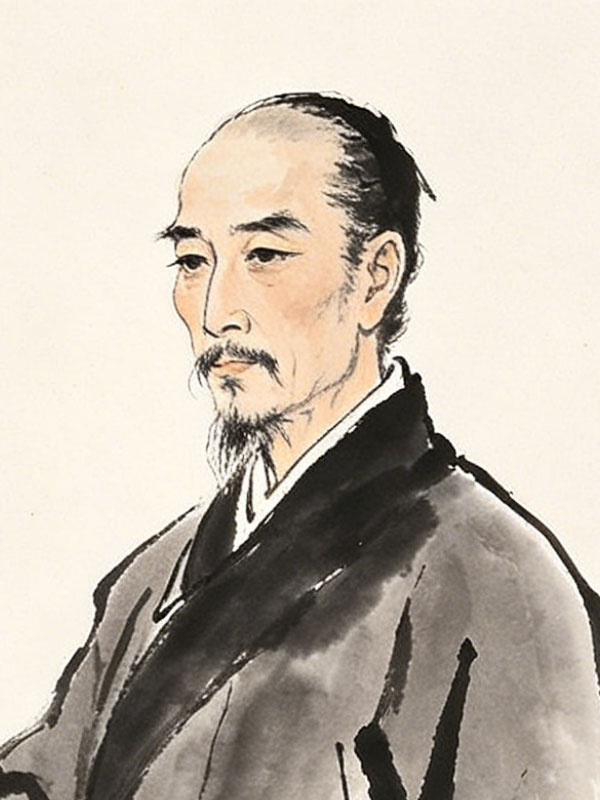
Kuncan (1612–1673), courtesy name Shiqi (石溪) and pseudonyms Jieqiu (介丘) and Baitu (白兔), was a profound landscape painter of the early Qing Dynasty. A devout Chan (Zen) Buddhist monk and a passionate Ming loyalist, he is immortalized as one of the "Four Monk Masters" (Si Seng)—alongside Shitao, Bada Shanren, and Hongren—who rebelled against the rigid "Orthodox" style of the era.
1. The Recluse of Mount Niushou
Following the fall of the Ming Dynasty, Kuncan, deeply pained by the conquest, sought refuge in the Buddhist priesthood. He spent much of his later life in Nanjing, eventually becoming the abbot of the Zuixian Monastery on Mount Niushou. Unlike the more socially active Shitao, Kuncan was a true solitary recluse. His life was defined by asceticism and deep meditation, and he often claimed that his paintings were merely a byproduct of his spiritual practice and his "burning desire to commune with nature."
2. Artistic Style: The "Dense and Dry" Aesthetic
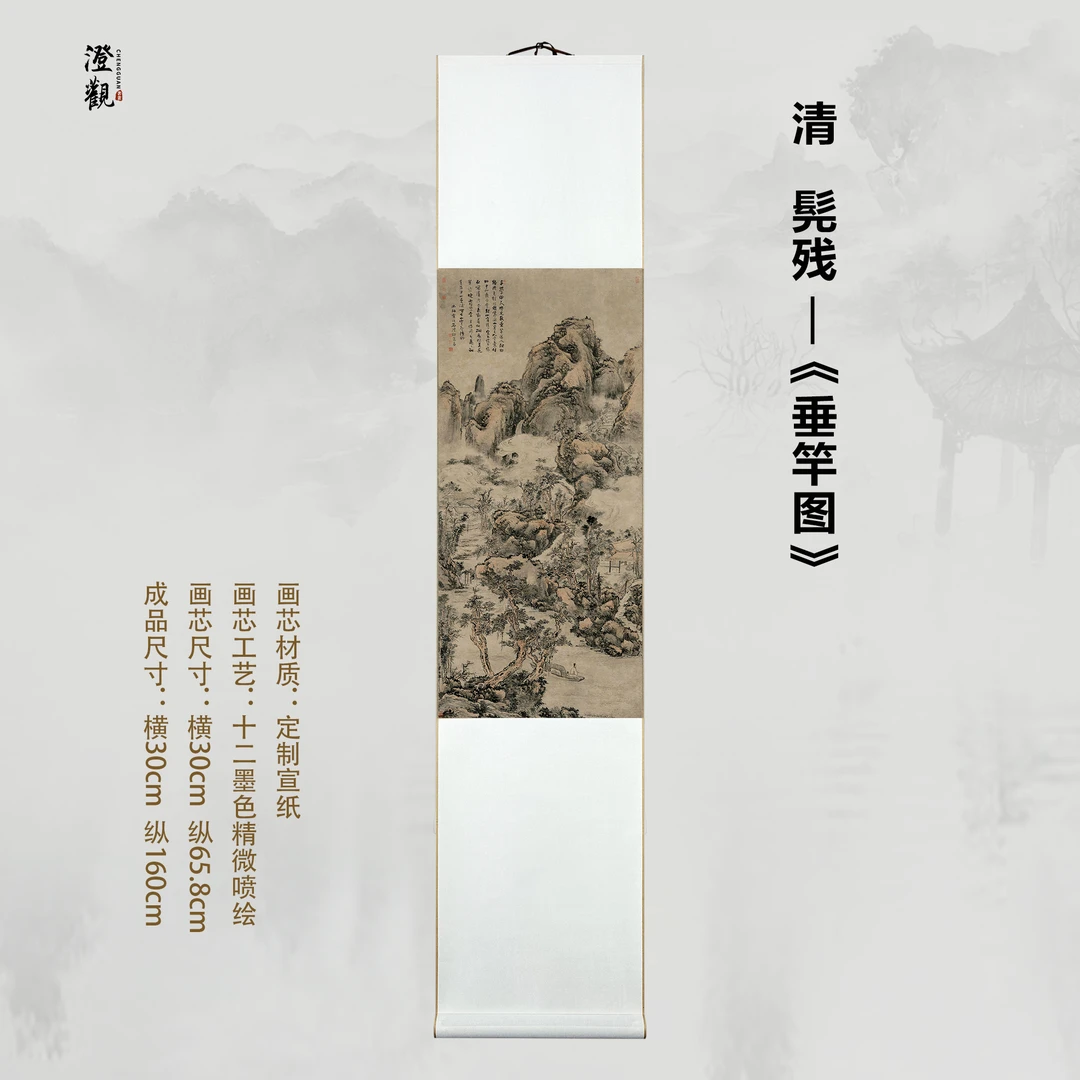
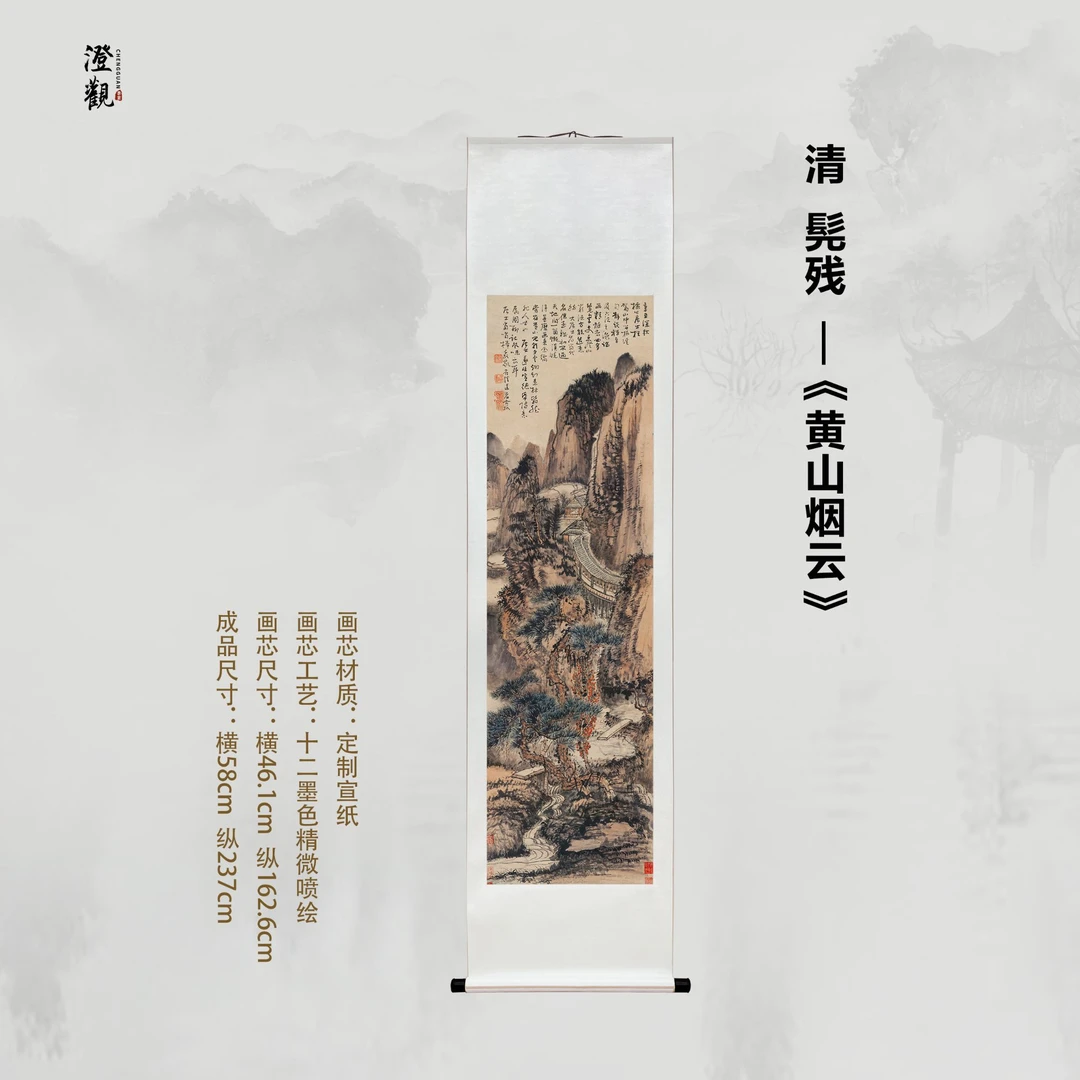
Kuncan’s style is vastly different from the sparse minimalism of Bada Shanren or the fluid lines of Shitao. He is famous for his textural density and complex compositions.
- Dry Brush Technique (Kubi): He utilized a dry, "chapped" brush to create layered, rugged textures that gave his mountains a sense of ancient geological weight.
- Layered Ink (Jimo): He was a master of layering ink and color, often returning to a painting multiple times to build up a rich, "thick" (hou) atmosphere.
- Influence of Wang Meng: His dense, vertical compositions were deeply influenced by the Yuan master Wang Meng, but Kuncan added a layer of raw, emotional intensity that was uniquely his own.
3. "Shiqi and Shitao": The Two Stones (Er Shi)
In the history of Chinese art, Kuncan and Shitao are often referred to as the "Two Stones" (Er Shi)—Shiqi (Kuncan) and Shitao. While both were monk-painters who prioritized individual expression over traditional imitation, their temperaments were distinct. While Shitao was innovative and "extraordinary," Kuncan’s work was noted for its sincerity, depth, and "clumsy" power (zhuo). He avoided flashy techniques, preferring a "plain and heavy" style that reflected his honest, uncompromising character.
4. Observation of Real Scenery
Unlike the "Four Wangs," who often painted from memory or other paintings, Kuncan was a proponent of painting from nature. His landscapes were frequently inspired by the hills around Nanjing and the Yellow Mountains. He had a remarkable ability to capture the turbulent energy of clouds, the rustling of autumn leaves, and the moist atmosphere of the Jiangnan region, making his works feel alive and breath-takingly real.
5. Historical Legacy and Modern Influence
Kuncan’s legacy is that of the "painter's painter." His focus on tactile brushwork and structural complexity had a profound influence on later artists, most notably the modern master Huang Binhong, who saw Kuncan as a primary inspiration for his own "black, dense, and thick" style. Today, Kuncan’s works are extremely rare and highly prized, housed in prestigious institutions such as the Palace Museum (Beijing), the Shanghai Museum, and the Metropolitan Museum of Art (New York).