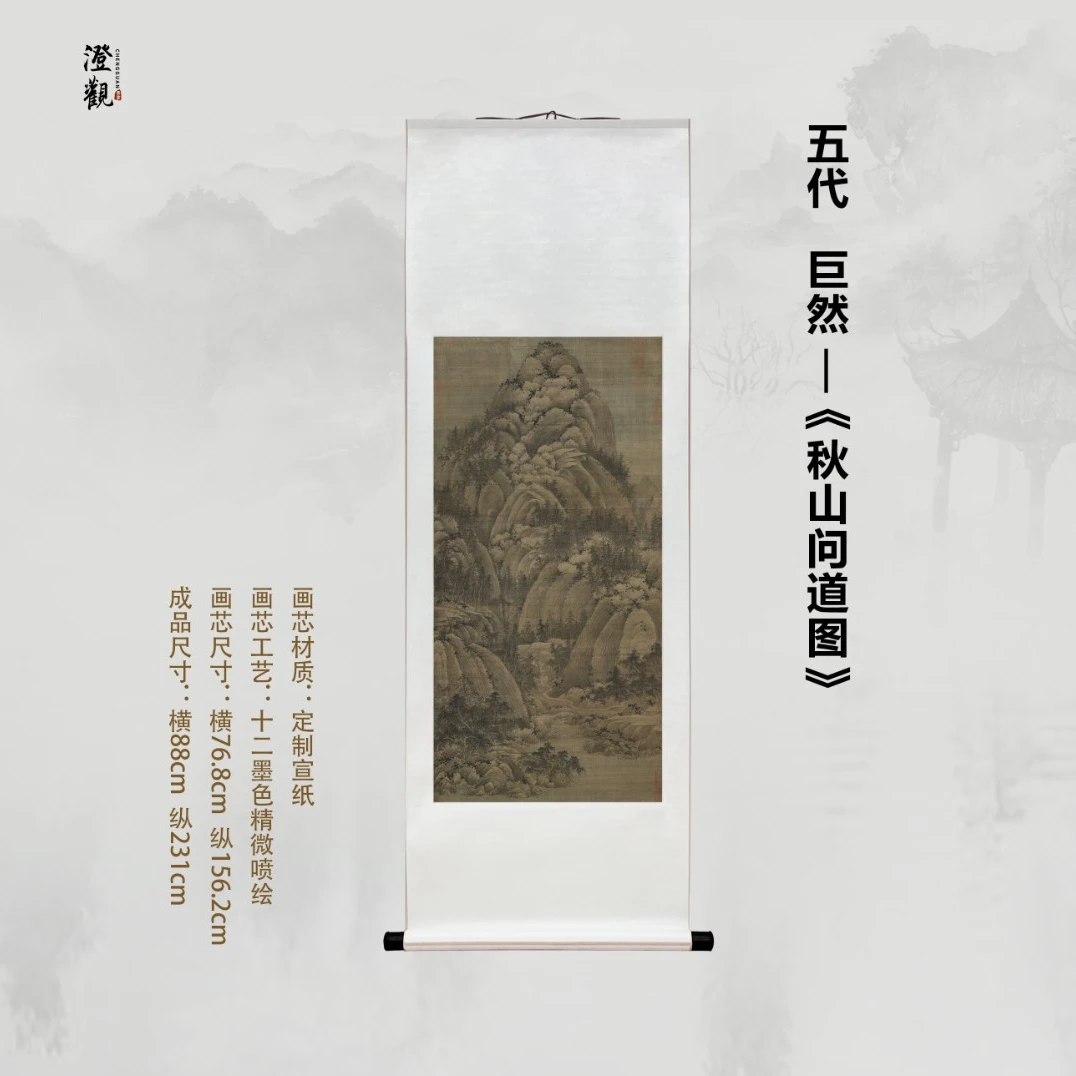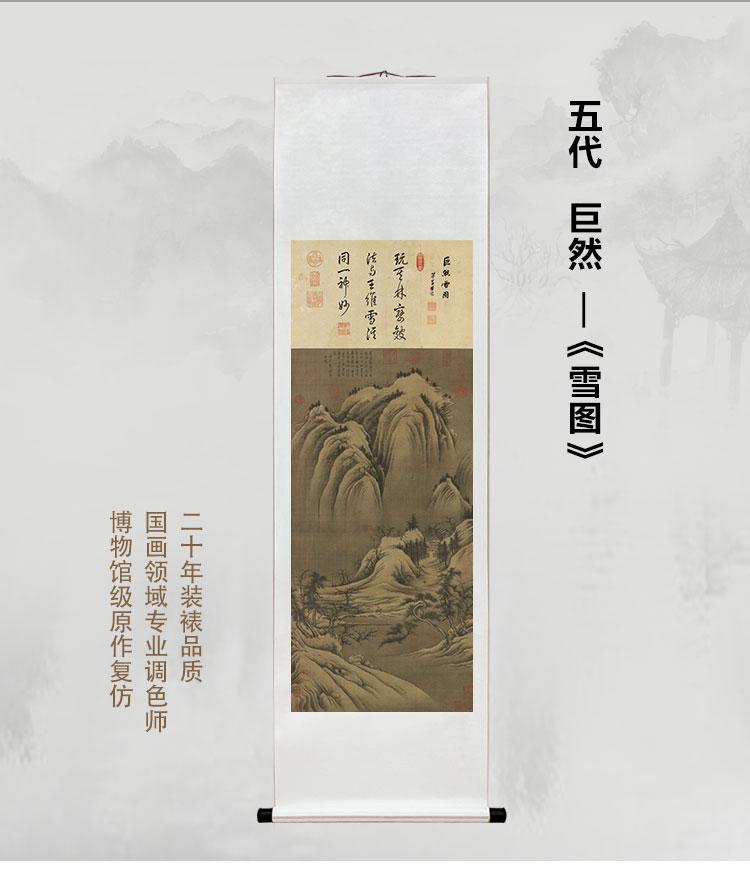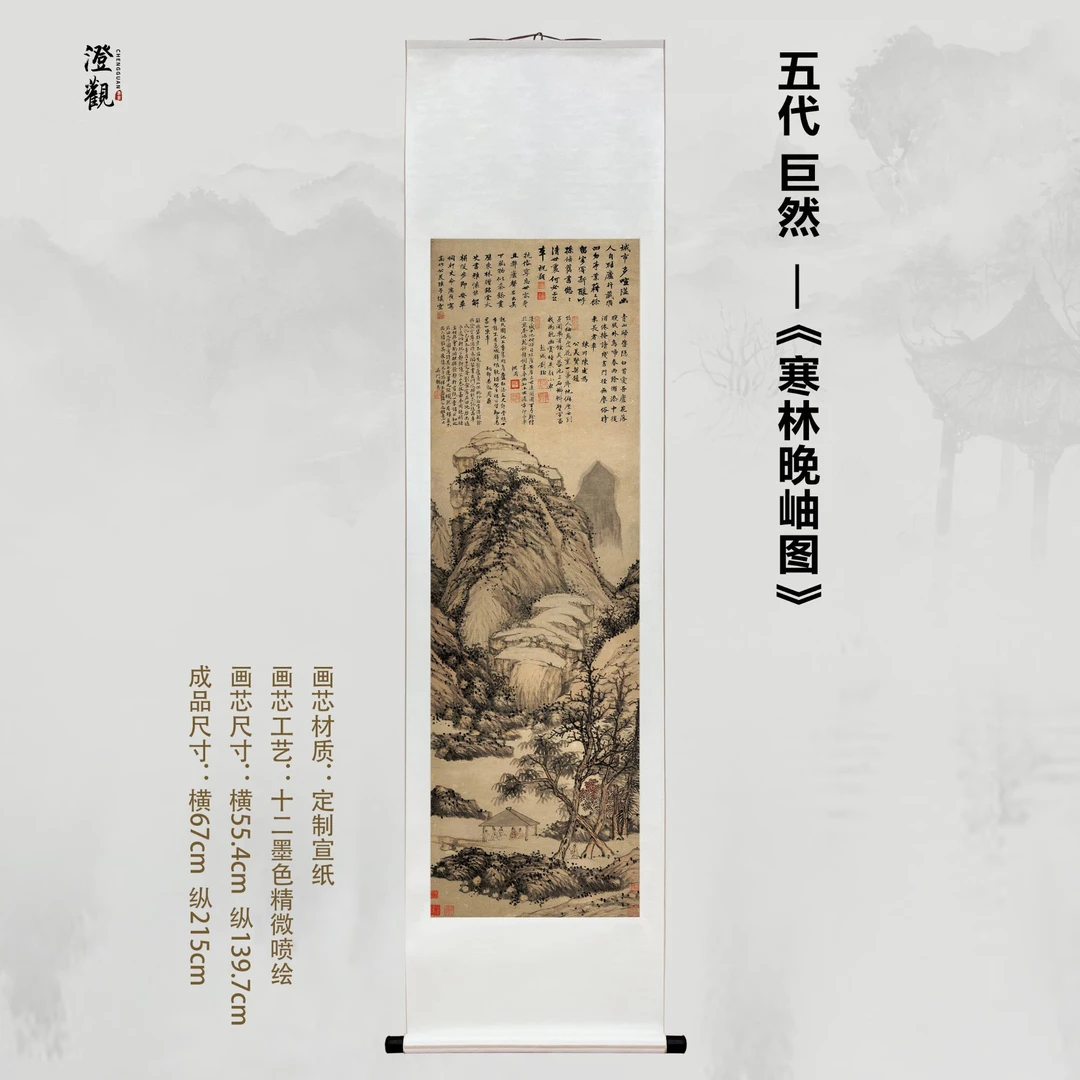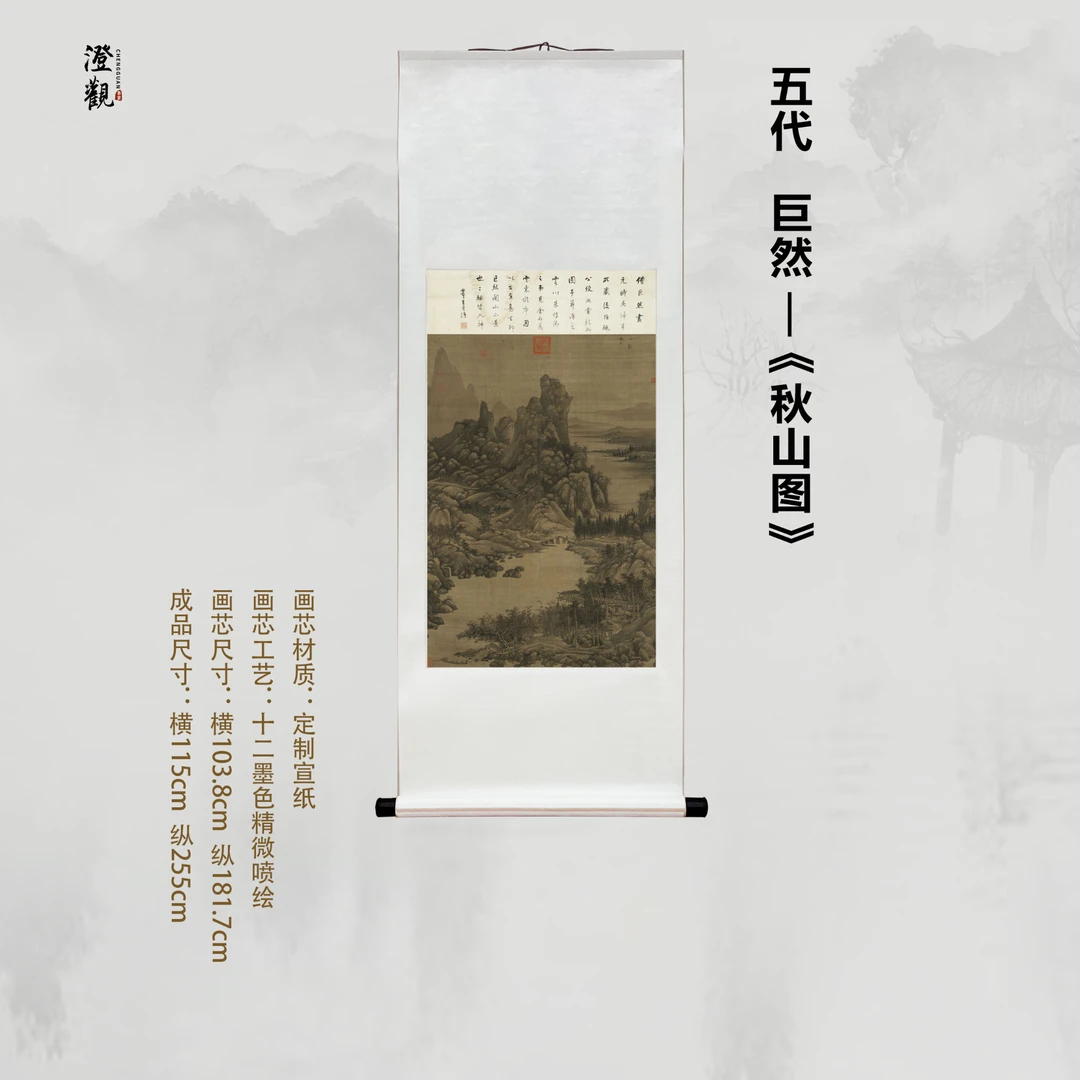
Juran: The Monk-Painter of Spiritual Mist and Rolling Hills
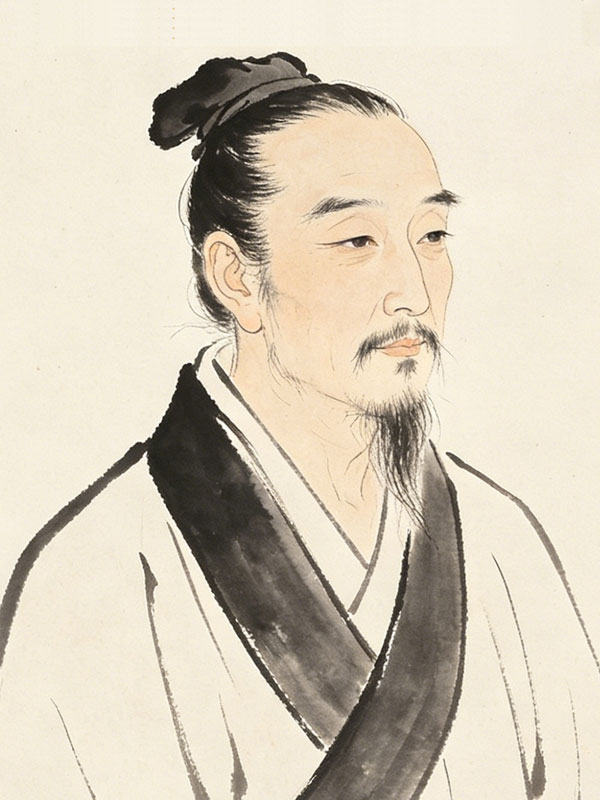
Juran (active c. 960–985 AD) was a towering Buddhist monk-painter who lived during the transition from the Southern Tang (Five Dynasties) to the early Northern Song Dynasty. Originally a monk at the Kaiyuan Temple in Jiangning (modern-day Nanjing), he followed the last ruler of the Southern Tang, the poet-emperor Li Yu, to the new capital of Kaifeng after the dynasty’s fall. This relocation allowed him to bring the elegant southern aesthetic to the northern court, where he became a central figure in the Imperial Painting Academy.
He is historically revered as the most direct disciple of Dong Yuan, and together they are known as the patriarchs of the "Dong-Ju School." This lineage is considered the primary source of the Southern Landscape School (Nan Zong). Unlike the jagged, aggressive peaks of the northern masters, Juran’s landscapes focused on the soft, rolling hills and humid atmosphere of the Jiangnan region. His work emphasized "plainness and naturalness" (Pingdan Tianzhen), a quality that prioritized inner spiritual peace over dramatic visual spectacle.
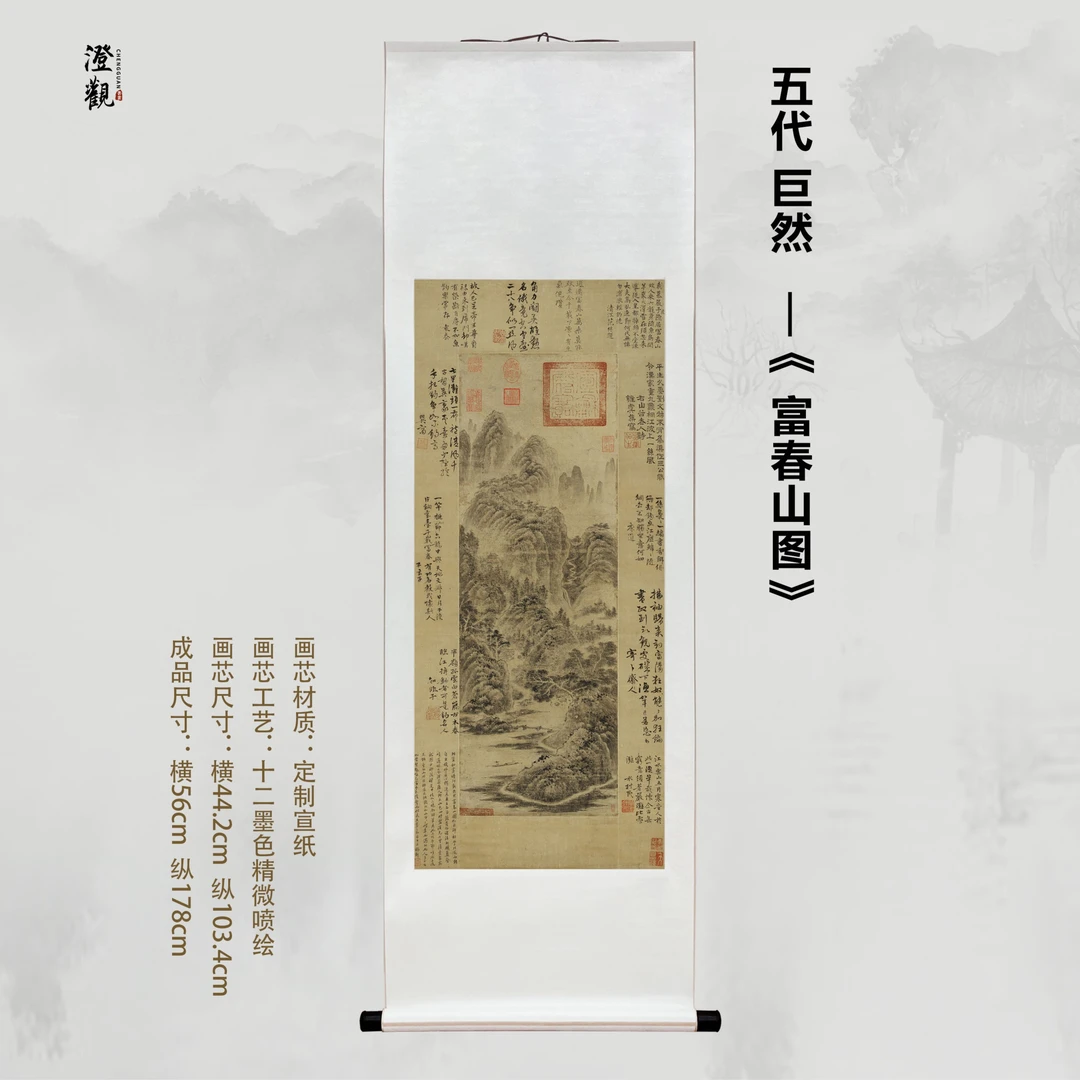
Technically, Juran perfected and expanded upon the "hemp-fiber stroke" (Pima Cun) developed by his teacher. He used long, fluid, and undulating lines to describe the rounded forms of earthen mountains, layering them to create a sense of rhythmic density. Another signature of his style was the "alum lumps" (Fantou)—small, rounded rocks placed at the summits of mountains to suggest erosion and lush vegetation. His brushwork was characterized by a moist, ink-rich quality, utilizing subtle washes to capture the shimmering mist and the quiet solitude of the deep woods.
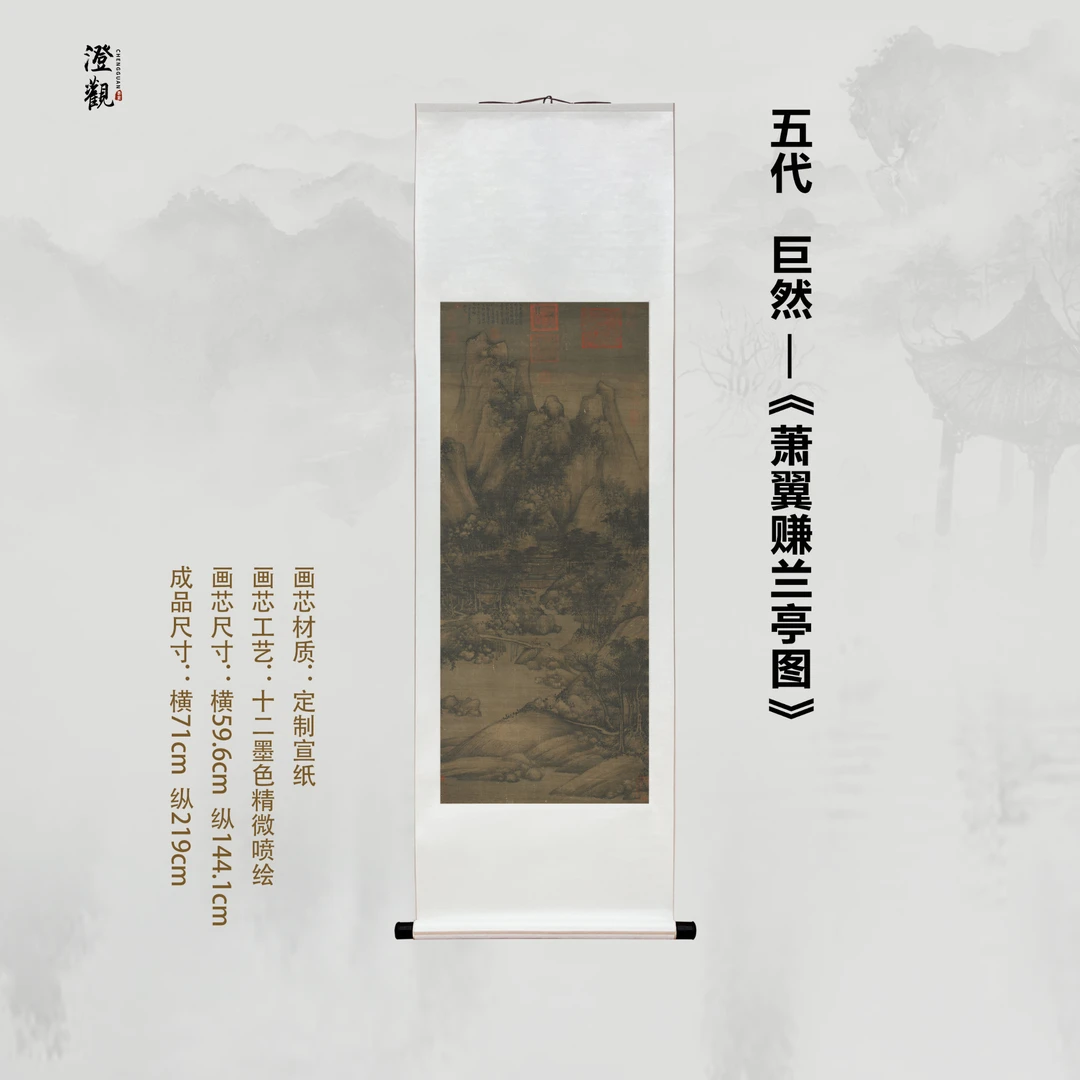
His masterpieces, such as "Buddhist Retreat in Streams and Mountains" (溪山兰若图) and "Winding Path among Mountains and Forests" (层岩丛树图), are quintessential examples of his monumental vertical compositions. These works often feature a winding path leading toward a secluded temple or monastery tucked away in a high valley, reflecting his own monastic identity. The sense of verticality in his work was a unique hybrid, combining the monumental structure of the north with the textural softness and misty soul of the south.
The legacy of Juran is foundational to the development of literati painting in China. During the Yuan Dynasty, the "Four Masters of the Yuan" looked to Juran as their ultimate model for expressive ink-wash painting. The influential Ming critic Dong Qichang later deified him as a "divine" artist within the Southern School orthodoxy. Today, Juran is remembered as the painter who infused landscape with Chan (Zen) Buddhism, teaching future generations that a painting of a mountain is not just a view of nature, but a pathway to enlightenment.