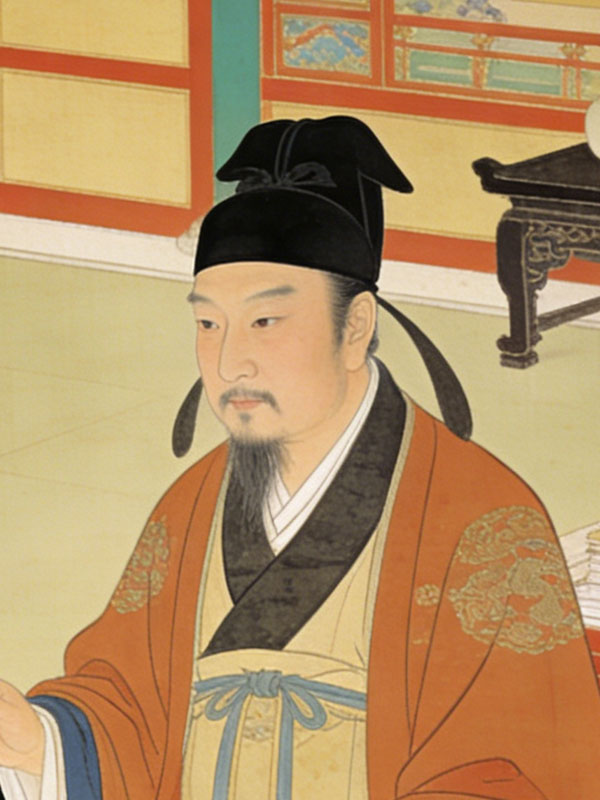
Huang Quan: The Architect of Imperial Opulence in Flower-and-Bird Painting
Huang Quan (c. 903–965 AD), courtesy name Shushu, was a legendary court painter of the Later Shu kingdom during the Five Dynasties and Ten Kingdoms period. A child prodigy who began his career at the age of 13, he rose to become the director of the Imperial Academy of Painting in Chengdu. His long and prestigious tenure allowed him to define the aesthetic standards of the royal court, creating a style that combined extraordinary realism with a sense of aristocratic grandeur.
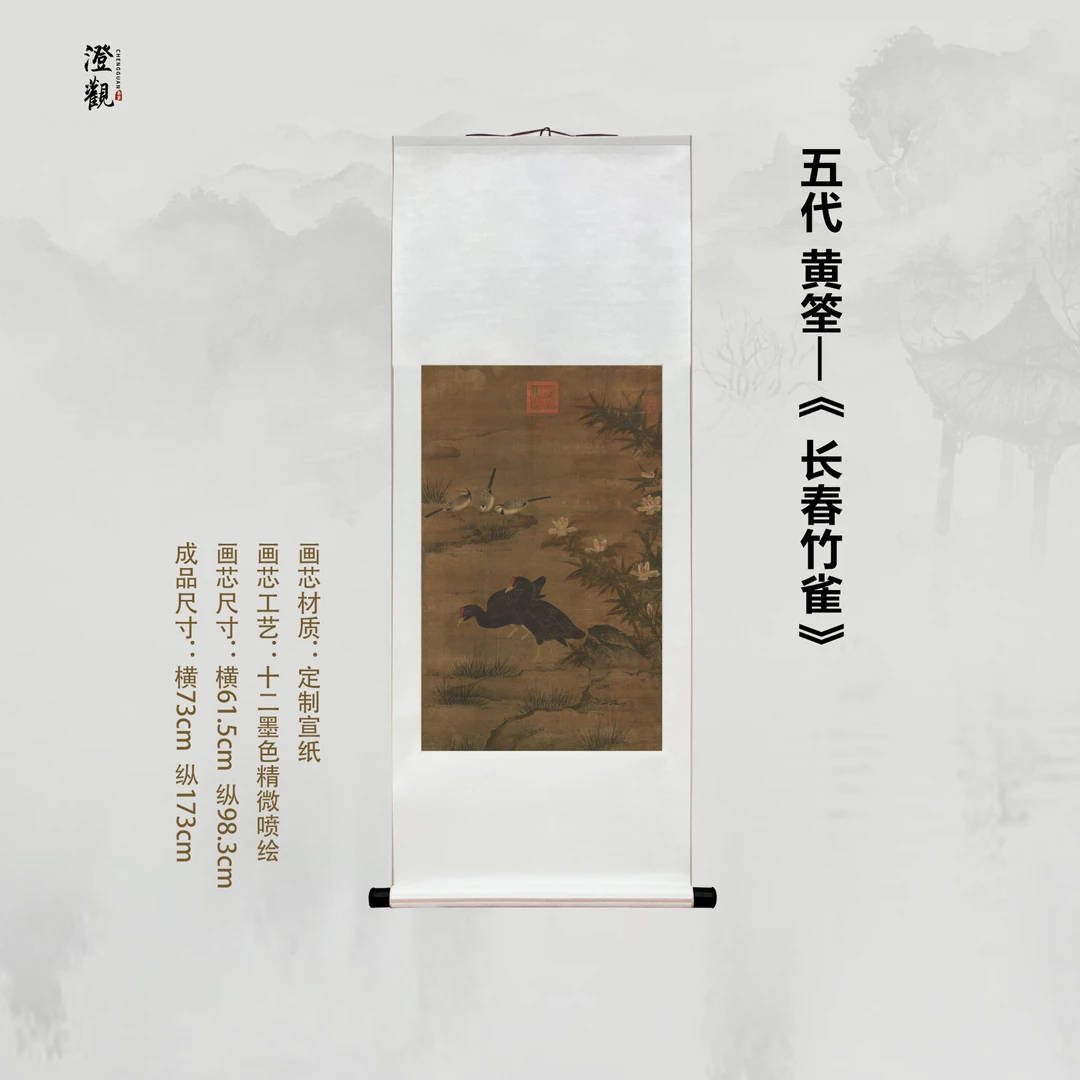
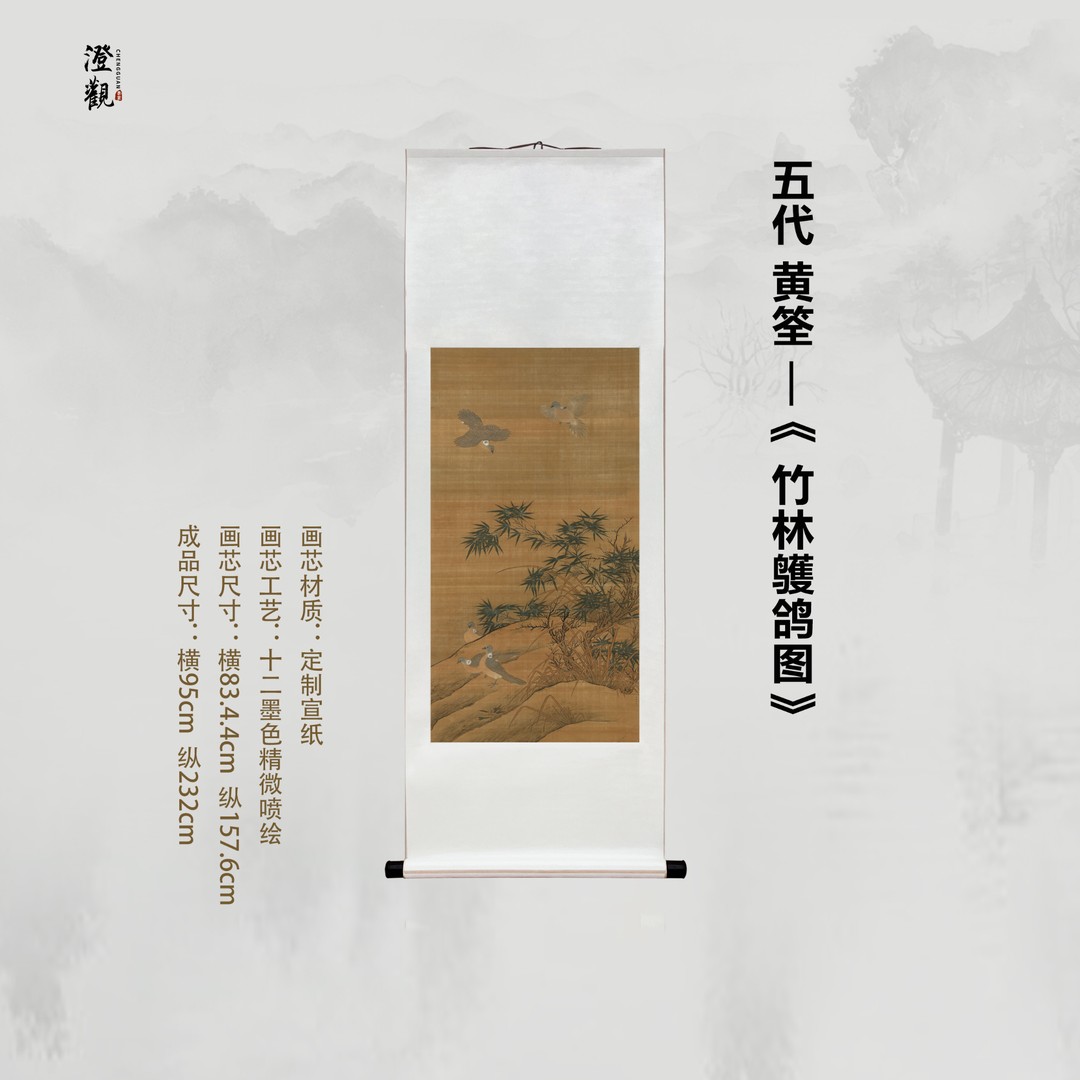
He is historically immortalized through the definitive phrase "Huang’s wealth, Xu’s wildness" (Huang Jia Fu Gui, Xu Xi Ye Yi). This comparison highlights Huang Quan’s opulent style, which was perfectly suited for the palatial halls of the emperor. Because he lived and worked within the imperial gardens, his subjects were typically exotic birds, rare flowers, and precious stones. His work exuded a sense of formality and elegance, characterized by vibrant colors and a high degree of technical finish that symbolized the stability and prosperity of the court.
Technically, Huang Quan perfected the "outline-and-fill" method (Goule Tiancai). He used extremely fine ink lines to define the contours of his subjects before applying multiple layers of mineral pigments to achieve a three-dimensional effect. His brushwork was so precise that even the individual filaments of feathers and the delicate veins of leaves were rendered with scientific accuracy. This meticulous "sketching from life" (Xiesheng) approach allowed him to capture the vitality of nature while maintaining a polished, jewel-like quality.
His most famous surviving masterpiece, "Sketches of Rare Birds" (写生珍禽图), currently housed in the Palace Museum in Beijing, is a landmark in Chinese art history. Originally intended as a teaching tool for his son, Huang Jucai, the handscroll features dozens of meticulously detailed insects, birds, and turtles scattered across the silk. Each creature is depicted with breathtaking realism, showcasing his ability to observe the slightest movements and textures of the natural world. This work remains the gold standard for the academic style of flower-and-bird painting.
The legacy of Huang Quan was so profound that his style became the official orthodoxy for the Northern Song Painting Academy during its first century. His sons carried on his traditions, ensuring that the "Huang Style" dominated the artistic landscape for generations. Today, he is remembered as the founding patriarch of the Imperial Academic Style, a master whose work represents the highest peak of decorative and realistic traditional Chinese painting.
— ALL MASTERPIECES LOADED —