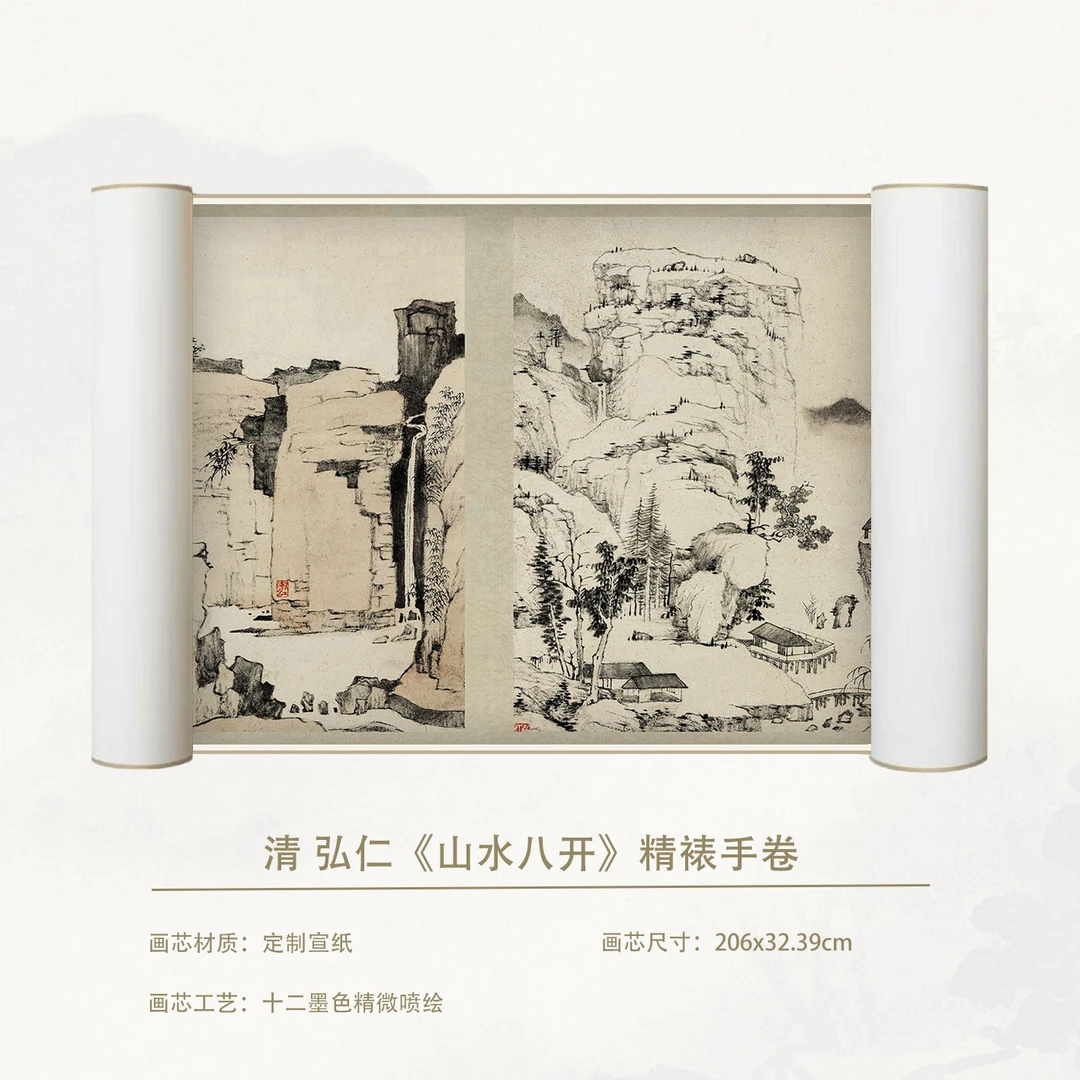
Hongren (弘仁): The Ethereal Master of the Xin'an School
Hongren (1610–1664), born Jiang Tao (江韬) and later known by his monastic name Hongren and pseudonym Jianjiang (渐江), was a preeminent landscape painter of the early Qing Dynasty. He is celebrated as the leading figure of the Xin'an School (新安画派), also known as the Anhui School, and is one of the "Four Monk Masters" (Si Seng)—alongside Shitao, Bada Shanren, and Kuncan—who transformed Chinese art during the Ming-Qing transition.
1. The Path of a Ming Loyalist and Zen Monk
Hongren’s life was deeply marked by the fall of the Ming Dynasty. A scholar by training, he participated in the resistance against the Manchu conquest. After the final collapse of the Ming cause, he chose to enter the Zen Buddhist priesthood rather than serve the new Qing rulers. His reclusion was not merely a spiritual choice but an act of political defiance and a search for a "pure land" amidst the chaos of a changing empire.
2. The Apostle of Mount Huang (Huangshan)
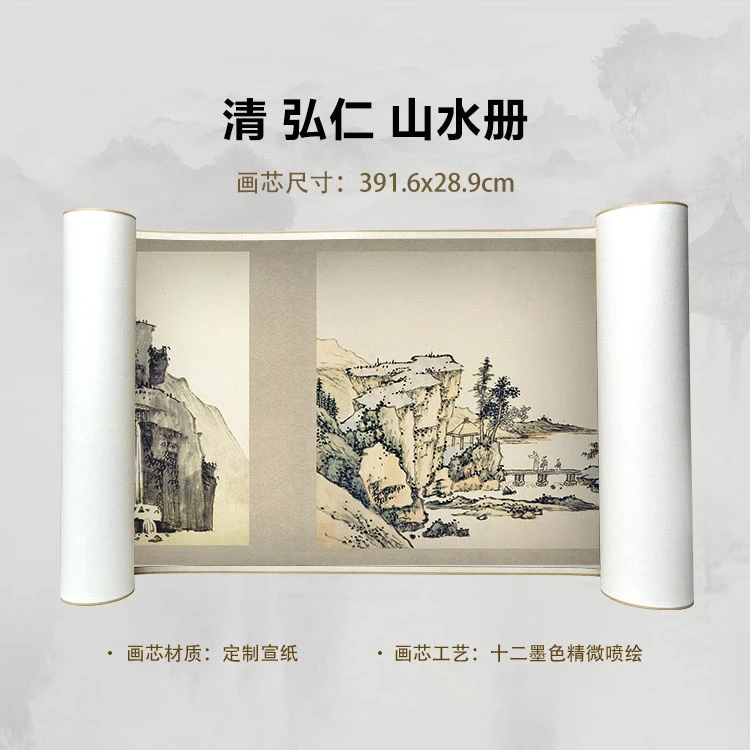
Hongren is perhaps the most famous painter of Mount Huang. He spent years wandering its granite peaks and ancient pines, translating the mountain's crystalline structures into a unique visual language. Unlike other artists who focused on the mist and clouds of Huangshan, Hongren focused on its skeletal strength. His works are often described as having a "chilly" and "remote" atmosphere, capturing the primordial silence of the high peaks.
3. Stylistic Roots: A Modern Ni Zan
While Hongren studied many ancient masters, his primary spiritual and stylistic ancestor was the Yuan master Ni Zan. However, he moved beyond Ni Zan’s minimalism to create something even more geometric and linear:
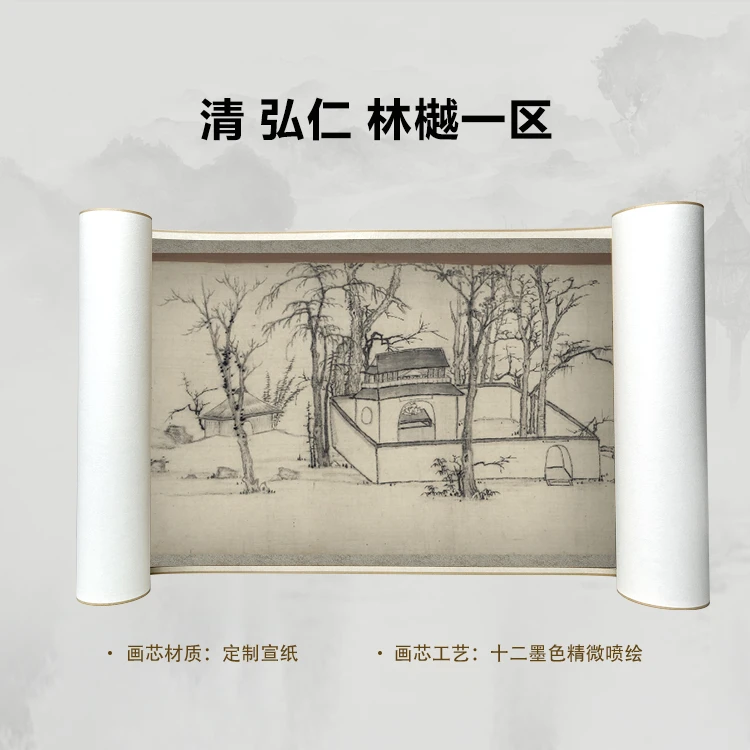
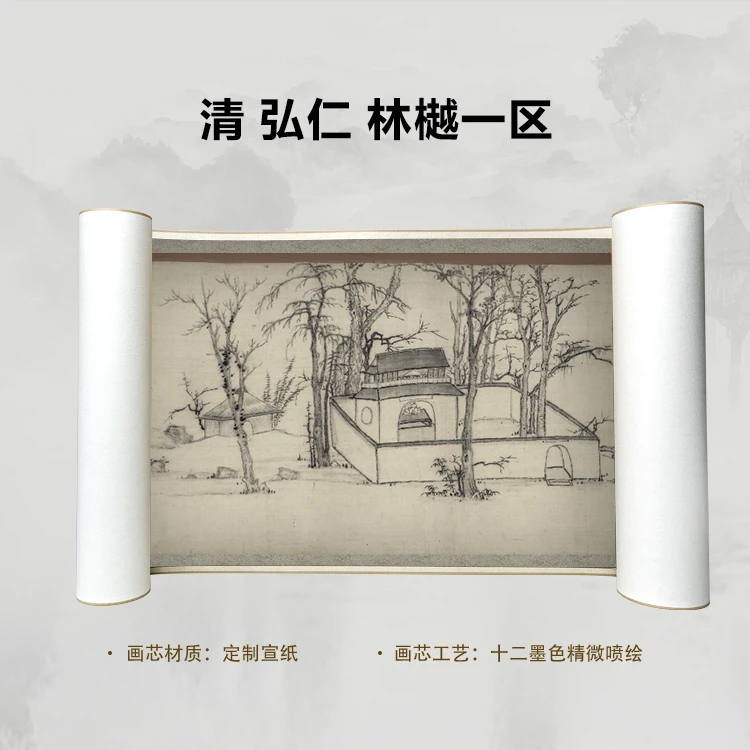
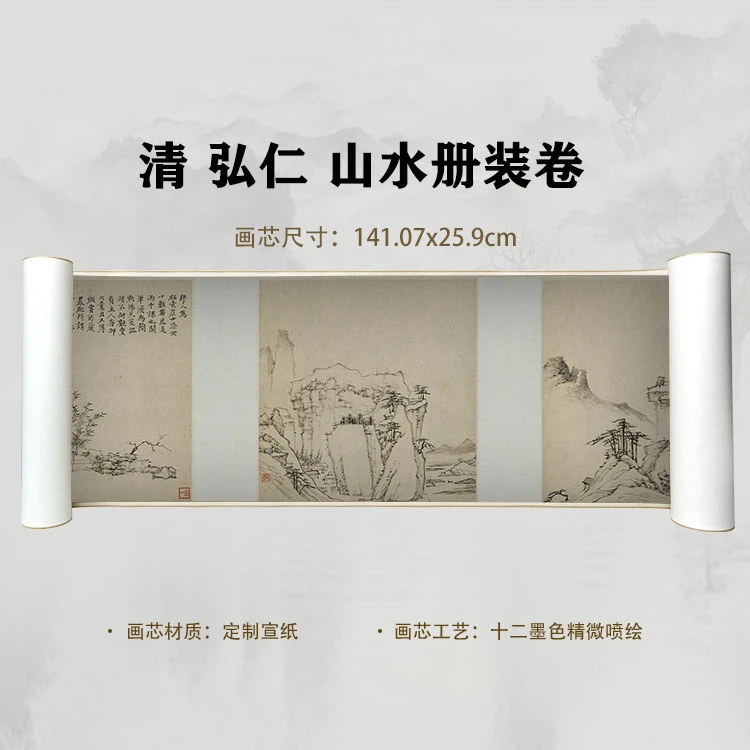
- Sparse and Lean Style: His paintings are characterized by clean, sharp lines and a lack of heavy ink washes. He stripped the landscape to its bare essentials.
- Dry Brushwork: He utilized a dry brush (kabi) with extraordinary precision, creating textures that feel like cold, hard stone.
- Geometric Abstraction: His mountains are often rendered as interlocking geometric planes, a technique that looks surprisingly modern and gives his work a sense of architectural stability and purity.
4. The Aesthetics of "Pureness and Coldness"
The term Qing-leng (清冷)—meaning "pure and cold"—is frequently used to describe Hongren’s aesthetic. His landscapes are devoid of human figures or signs of mundane life, representing a transcendental realm. This "coldness" was a reflection of his own inner discipline and Zen practice. By removing the "dust" of the world from his scrolls, he created a space for contemplation and clarity.
5. Historical Legacy and the Xin'an School
As the founder of the Xin'an School, Hongren influenced generations of Anhui artists who favored linear clarity over decorative color. His influence extended far into the 20th century, notably impacting the great master Huang Binhong, who admired Hongren's ability to find "inner strength" within the brushline. Today, his works are rare treasures preserved in the Palace Museum (Beijing), the Anhui Museum, and the Metropolitan Museum of Art (New York).