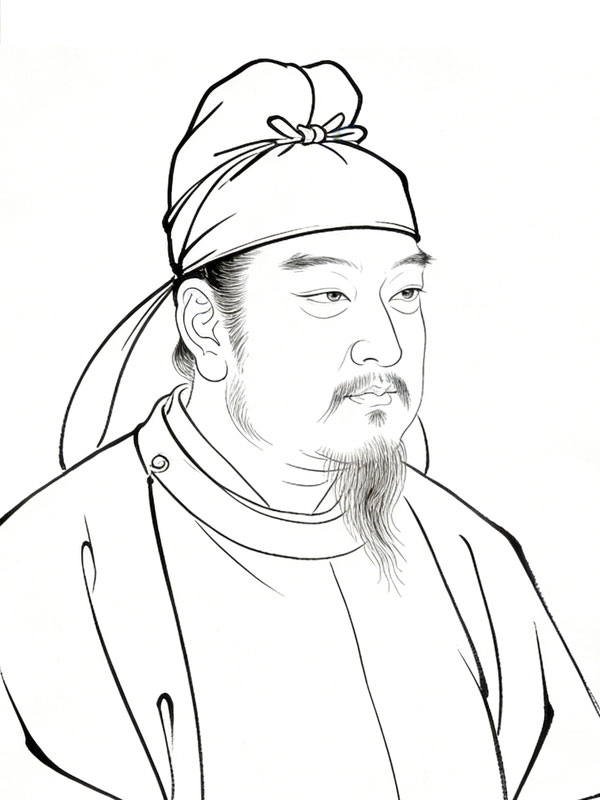
Han Huang: The Master of Tang Dynasty Realism
Han Huang (723–787 AD), courtesy name Taichong, was a distinguished statesman and an exceptionally influential painter during the mid-Tang Dynasty. Unlike many artists who were purely literati, Han Huang held high political offices, eventually serving as a Chancellor (Prime Minister) under Emperor Dezong. He is famously known for bridging the gap between high-level governance and pastoral art, bringing a unique perspective to the Chinese artistic tradition.
In the annals of Chinese history, Han Huang is remembered as much for his administrative integrity as for his artistic genius. He was known for his frugality, strict governance, and his success in managing the grain transport system, which was vital for the Tang Empire's stability after the An Lushan Rebellion. His art was a reflection of his pragmatic worldview and his deep connection to the agrarian roots of Chinese society, showing a respect for labor that was rare among the elite.
Despite his immense power, Han Huang was legendary for his ascetic lifestyle. It is said he lived in a modest house and wore simple clothes, avoiding the luxury typical of Tang officials. This down-to-earth nature allowed him to empathize with the peasantry and the animals they raised. Legend has it that while traveling on official duties, Han Huang would often stop his carriage for hours just to watch oxen grazing or farmers plowing. Historical records describe him as an extremely strict disciplinarian whose subordinates feared his stern lectures, yet he channeled this same meticulous energy into the fine details of his brushwork.
Han Huang is celebrated as a master of animal painting and genre painting. While his contemporaries often focused on courtly beauties or Buddhist themes, Han turned his brush toward rural life. His work is characterized by vigorous brushwork that captures the physical power and musculature of animals, and a naturalistic depiction that portrays the inner spirit of livestock. His paintings elevated the status of agricultural subjects, turning the humble ox into a symbol of national strength and the virtue of diligence.
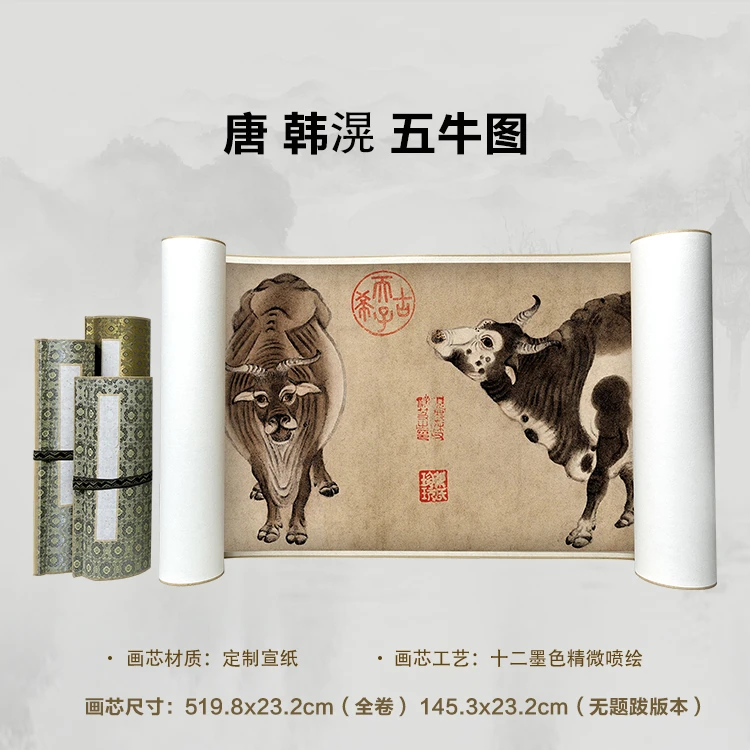
His most iconic work, "Five Oxen" (五牛图), is a milestone in Chinese art history and is recognized as the oldest surviving paper painting in China. The handscroll depicts five oxen in various poses—grazing, standing, and turning—each with a distinct facial expression and personality. The painting is not merely a study of animals but a symbolic representation of the importance of agriculture to the nation's prosperity. This masterpiece has been carefully preserved through the centuries, carrying the colophons of many famous emperors and scholars.
Han Huang's influence extended far beyond the Tang Dynasty, earning him a top-tier ranking in the "Xuanhe Catalogue of Paintings". Today, his works are considered "national treasures," with the Five Oxen being a centerpiece of the Palace Museum collection in Beijing. His legacy continues to represent the pinnacle of Tang realism, blending the responsibilities of a pillar of the state with the vision of a pioneer of the brush.
— ALL MASTERPIECES LOADED —