
Gong Xian (龚贤): The Master of Layered Ink and the Nanjing School
Gong Xian (1618–1689), courtesy name Banqian (半千) and pseudonyms Yeyi (野遗) and Chai-zhang-ren (柴丈人), was the preeminent leader of the Eight Masters of Nanjing (Jinling Bajia) during the early Qing Dynasty. A profound individualist and Ming loyalist (Yimin), he created a revolutionary landscape style characterized by extraordinary tonal depth and atmospheric density, making him one of the most original voices in 17th-century Chinese art.
1. A Life of Reclusion and Loyalty
Gong Xian’s life was deeply shaped by the fall of the Ming Dynasty in 1644. Having witnessed the violent transition and the fall of Nanjing, he spent much of his middle age wandering to escape political persecution. He eventually returned to Nanjing and lived as a scholar-recluse at his modest estate, "Half-Agricultural Garden" (Banmu Yuan). His refusal to serve the Qing court and his choice of a secluded, intellectual life were fundamental to his identity as a loyalist artist, seeking solace in the "eternal" mountains rather than the shifting world of politics.
2. The Revolutionary "Layered Ink" (Jimo) Technique
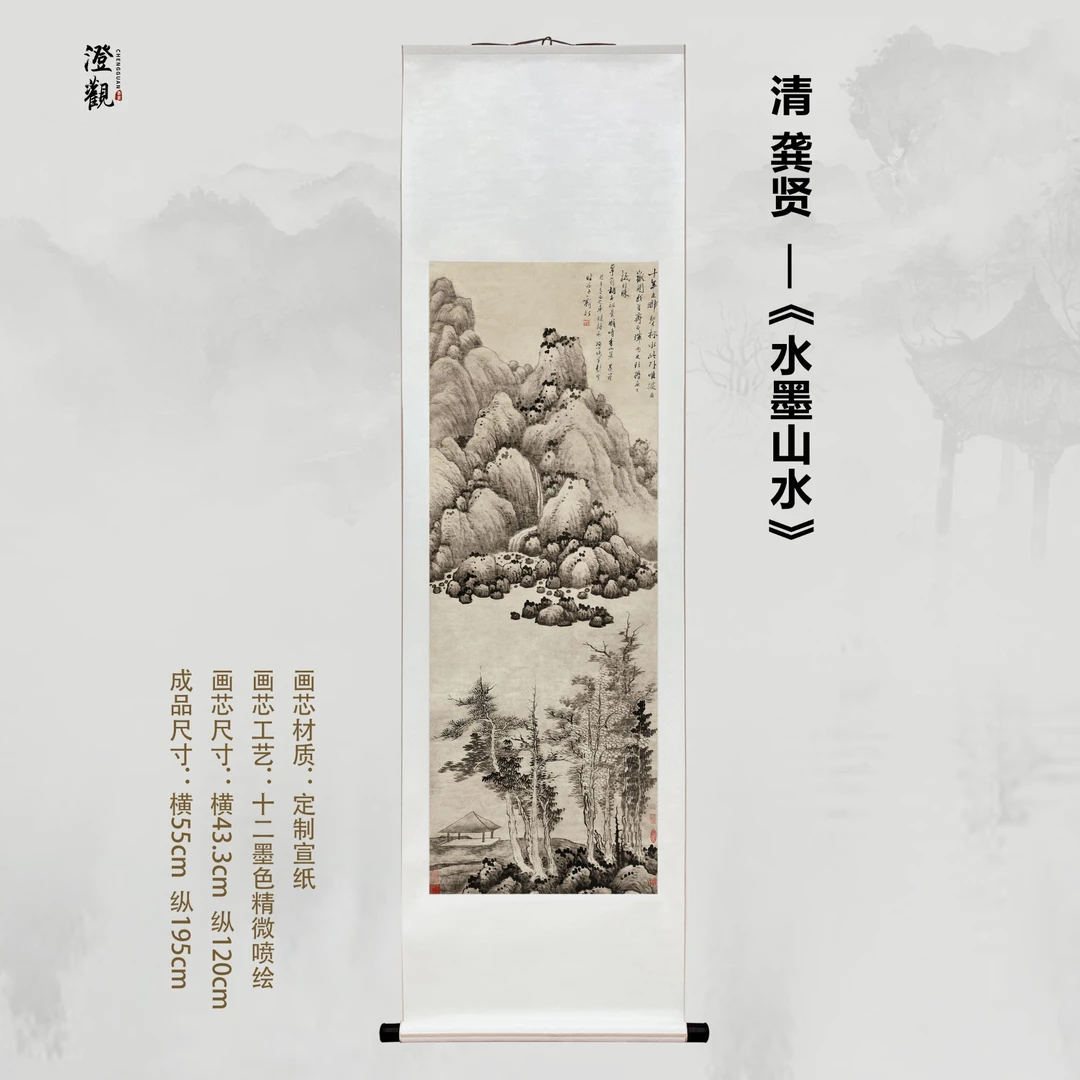
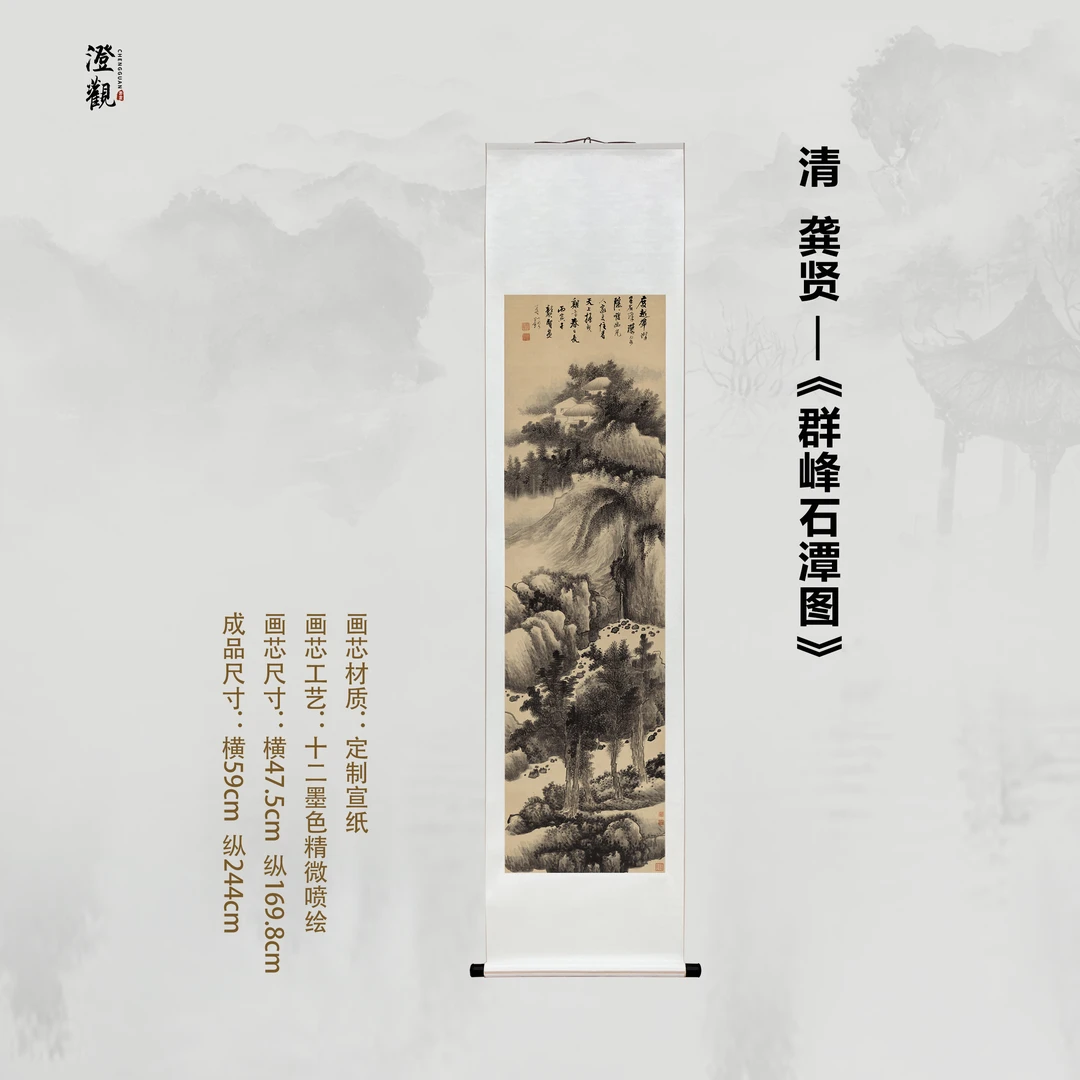
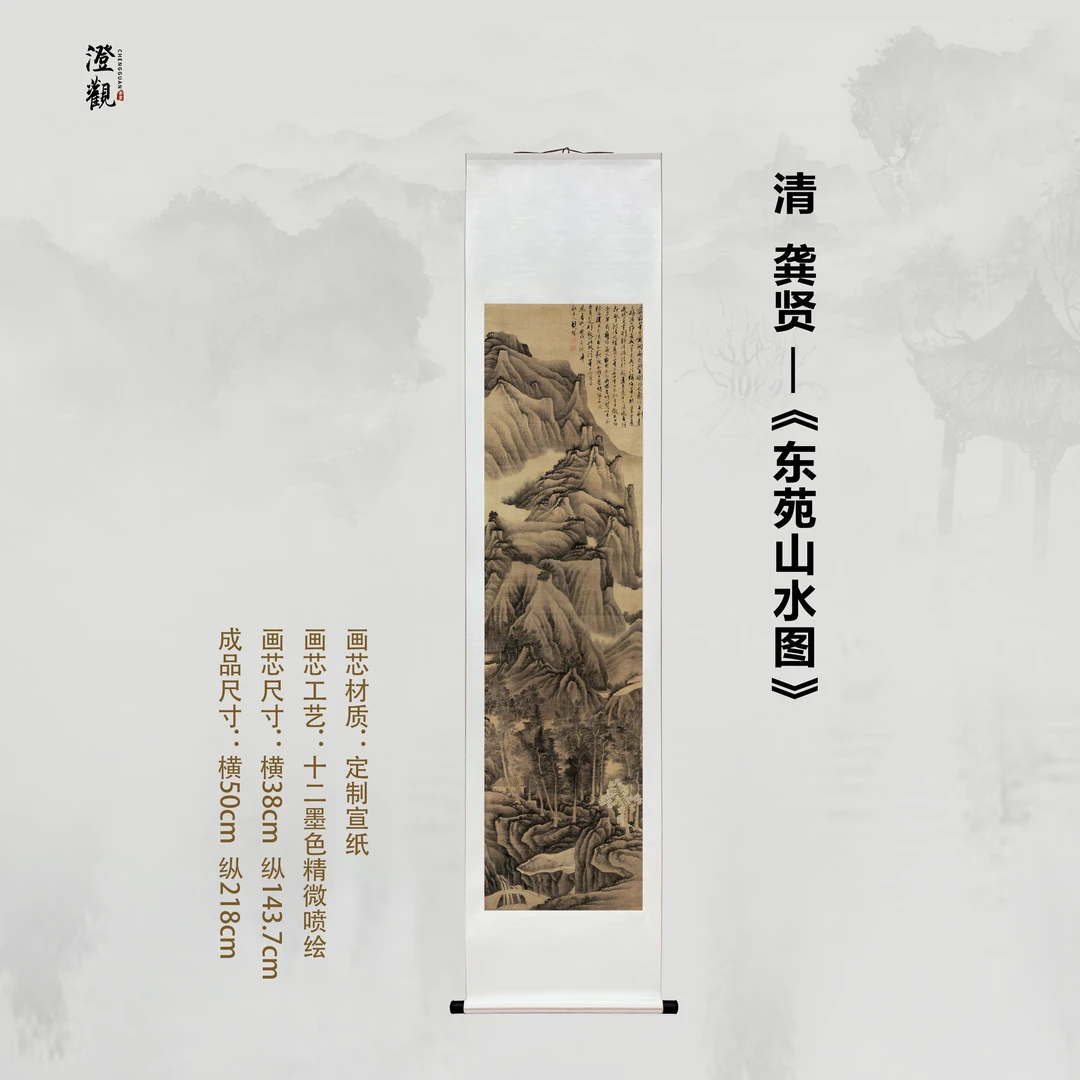
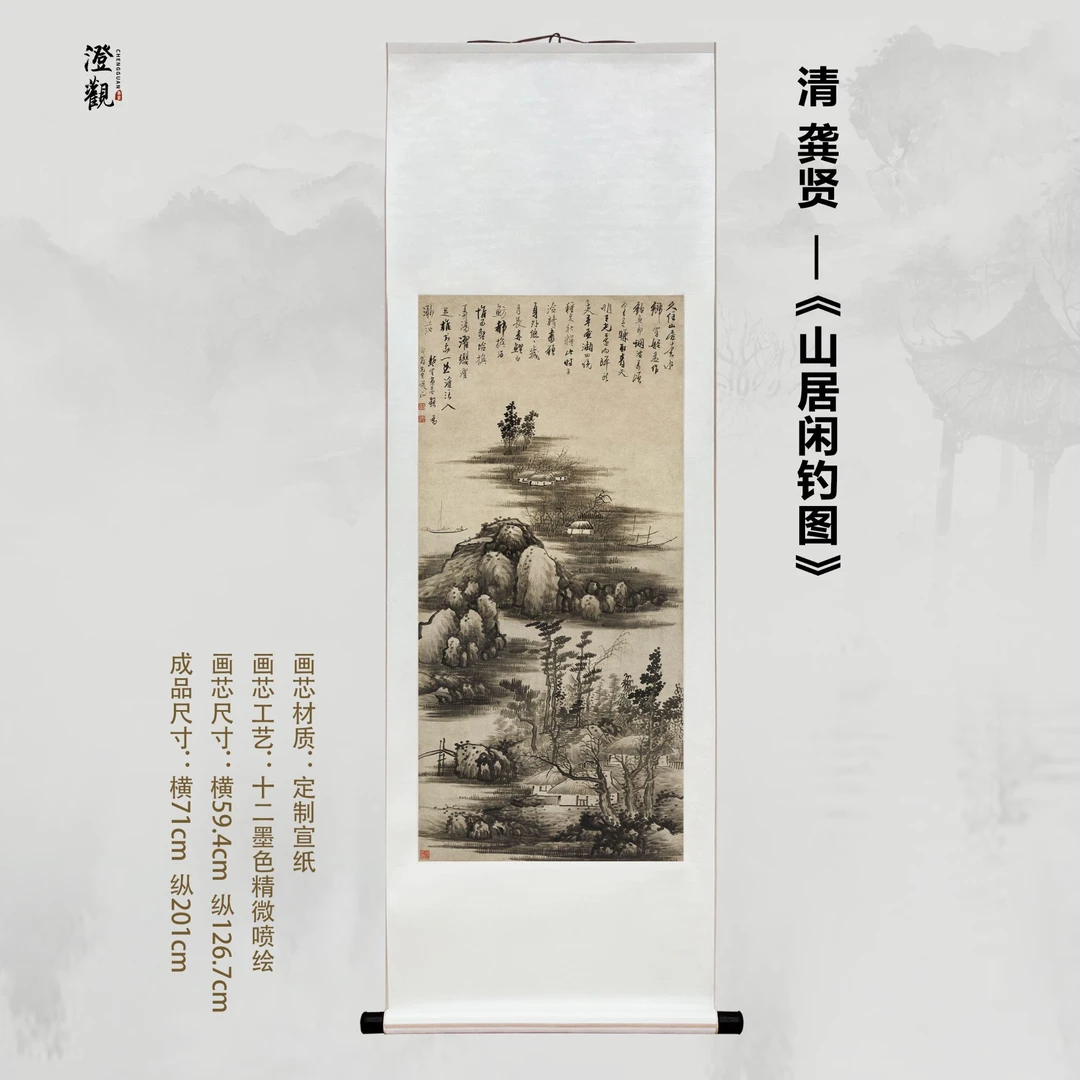
Gong Xian is most famous for his innovative use of Jimo (积墨), or "layered ink." While traditional painters often emphasized the clarity of a single stroke, Gong Xian would layer ink seven or eight times to build up volume and texture.
- "Black Gong" Style: His mature works are known for their intense darkness and moist, heavy atmosphere. He used countless tiny dots and short strokes to create a sense of lush vegetation and glistening rocks after rain.
- Chiaroscuro-like Effects: Uniquely among his contemporaries, Gong Xian explored light and shadow. By leaving areas of the paper white amidst dense ink, he created a shimmering, silvery light that gave his landscapes a three-dimensional, almost eerie realism.
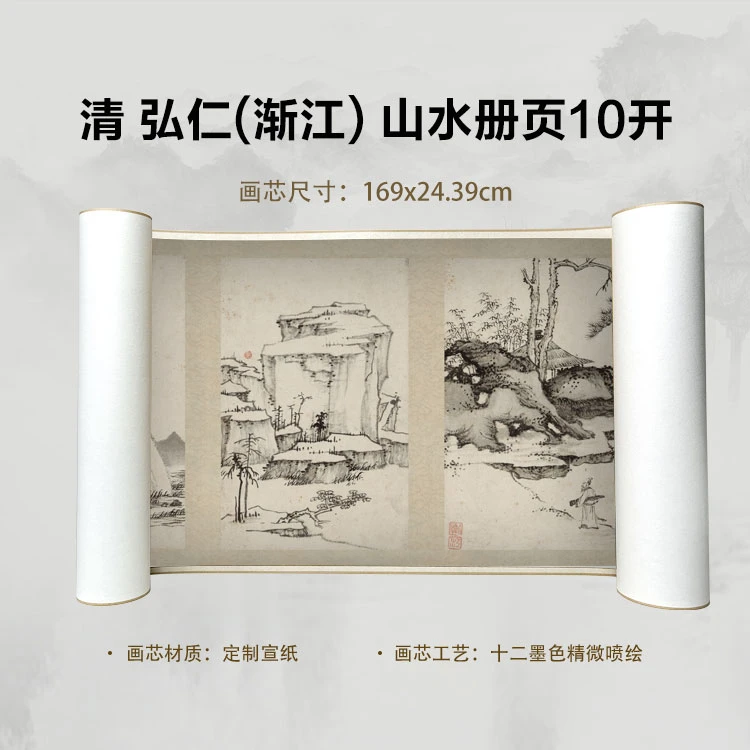
- "White Gong" Style: In contrast to his dark works, he also practiced a sparse, linear style characterized by dry brushwork and skeletal forms, though his "Black" style remains his most influential contribution.
3. Leader of the Eight Masters of Nanjing
As the central figure of the Eight Masters of Nanjing, Gong Xian helped establish the Jinling School as a major alternative to the "Orthodox" Four Wangs. Unlike the Orthodox school’s focus on imitating ancient masters, Gong Xian emphasized observation of nature. He spent his time sketching the hills and rivers around Nanjing, such as the Qingliang Mountain, translating the specific moist climate and rugged terrain of the region into his distinctive visual language.
4. Artistic Theory: The Pursuit of "Spirit Resonance"
Gong Xian was an accomplished art theorist and poet. In his writings, such as "Drawing Manual for the Enlightened" (Hua Jue), he emphasized that painting should achieve a balance between "An" (safety/structure) and "Wei" (danger/eccentricity). He believed that the ultimate goal was Qiyun (Spirit Resonance), but he insisted that this could only be reached through technical rigor and a rejection of "vulgar" commercial styles. His work is often described as "cold and remote," reflecting his inner spiritual solitude.
5. Historical Legacy and Influence
Gong Xian’s influence on the history of Chinese landscape painting was slow to manifest but eventually became monumental. His individualist spirit and dense ink techniques were a major inspiration for the 20th-century master Huang Binhong, who further developed the "black, dense, and thick" aesthetic. Today, Gong Xian is recognized globally as a pioneer of expressionist landscape. His masterpieces are prized in major institutions, including:
- The Palace Museum (Beijing)
- The Shanghai Museum
- The Metropolitan Museum of Art (New York)
- The Museum of Fine Arts (Boston)

— ALL MASTERPIECES LOADED —