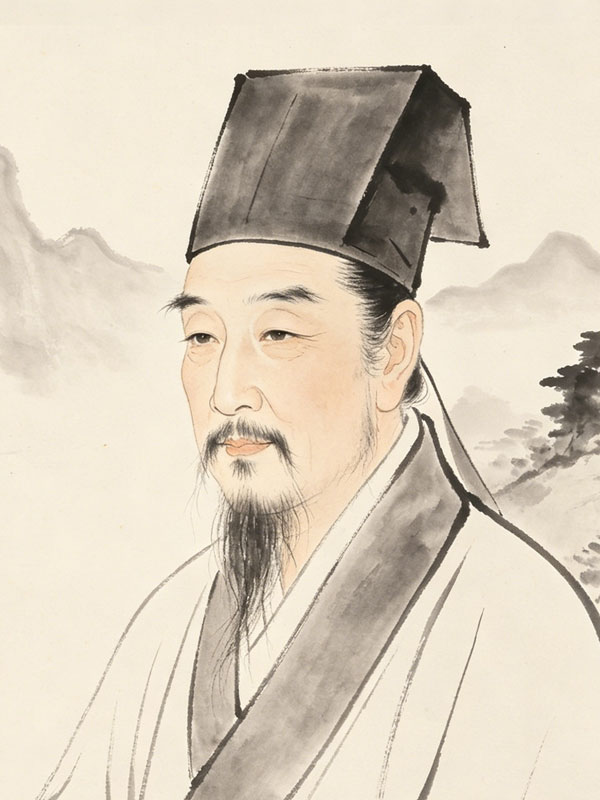
Cao Zhibai (曹知白): The Master of the Yunxi Scholarly Style
Cao Zhibai (1272–1355), courtesy name Youxuan (又玄) and pseudonym Yunxi (云西), was a preeminent scholar-painter and bibliophile of the late Yuan Dynasty. A native of Huating (modern-day Shanghai), he was a quintessential literati painter whose work bridged the gap between the monumental landscapes of the Northern Song and the expressive simplicity of the late Yuan masters.
1. A Life of Wealth and Intellectual Leisure
Unlike many of his contemporaries who lived in nomadic poverty, Cao Zhibai hailed from a wealthy and influential family. Although he briefly held a minor government post as a technical official in the Xuanwen Academy, he spent most of his life in retired seclusion. His estate in Huating became a famous cultural hub where he hosted legendary artists like Huang Gongwang and Ni Zan, fostering an environment that defined the literati (Wenren) aesthetic of the period.
2. Artistic Style: Reviving the Li-Guo Tradition
Cao Zhibai is best known for his modern interpretation of the Li Cheng and Guo Xi tradition. While most Yuan painters followed the Dong Yuan/Juran lineage, Cao looked back to the Northern Song for inspiration. His style is characterized by:
- Level-Distance Landscapes (Pingyuan): He mastered the "level-distance" perspective, creating vast, horizontal spaces that evoke a sense of tranquility and infinity.
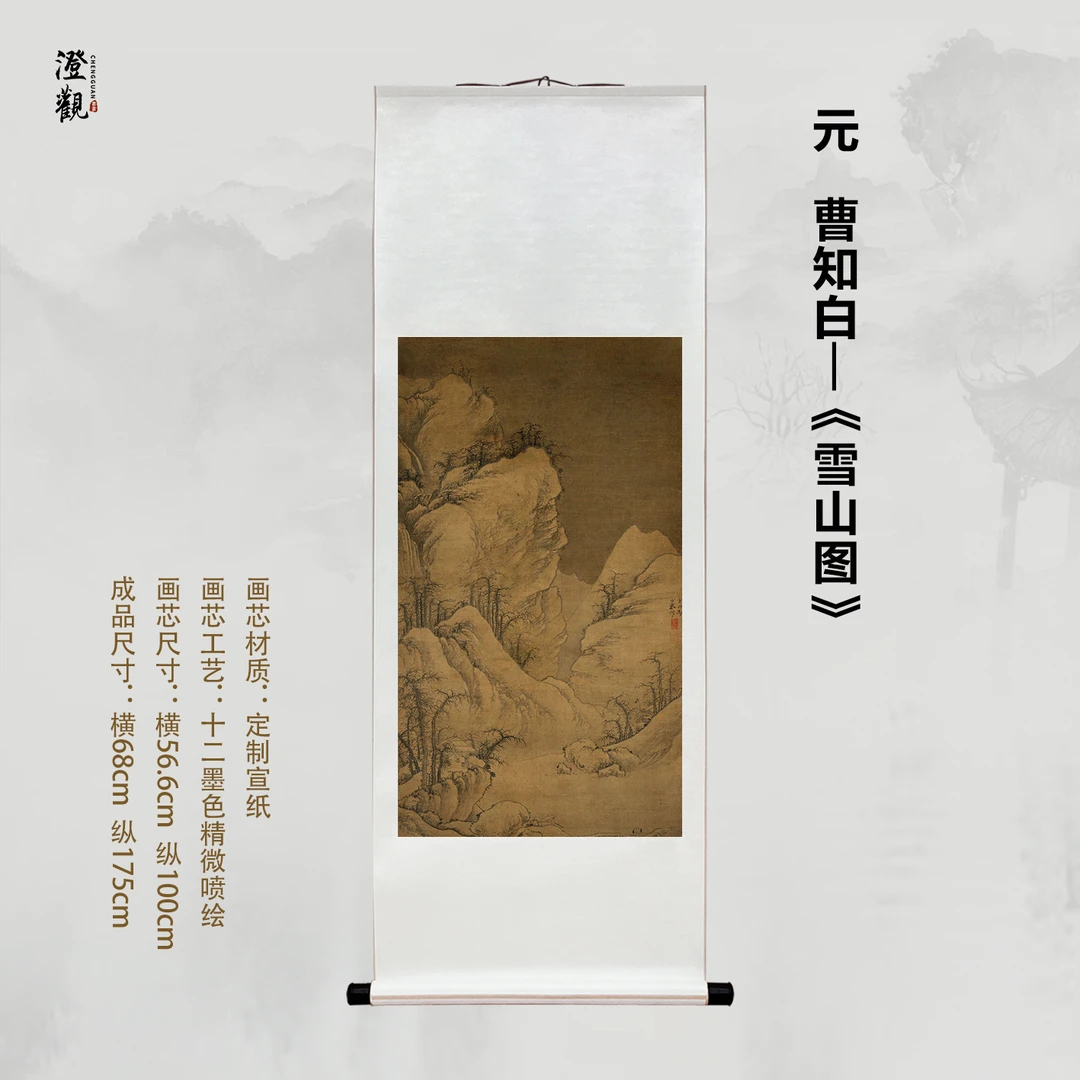
- Sparse Trees and Wintry Vistas: He excelled at painting leafless trees with "crab-claw" branches, often set against a backdrop of chilly, mist-covered mountains.
- Ink Technique: In his later years, his style shifted from the detailed and robust to the sparse and ethereal. He favored pale ink and dry brushwork (fubai), emphasizing the spiritual essence of the landscape over physical likeness.
3. Evolution from Northern to Southern Aesthetics
Art historians often divide Cao Zhibai’s work into two phases. His early work shows a strong, structural brushwork typical of the Northern Song academy. However, as he aged and interacted more with the "Four Masters of the Yuan," his paintings became more subjective and minimalist. This transition reflects the broader Yuan Dynasty shift toward self-expression and the rejection of professional ornamentation.
4. Contributions as a Bibliophile and Engineer
Cao was not only a painter but also a man of multifaceted talents. He was a renowned book collector and a student of water conservancy, once submitting proposals to the court for dredging rivers in the Jiangnan region. This practical knowledge of the earth’s topography likely contributed to the structural integrity and realistic spatial layouts found in his landscape paintings.
5. Historical Legacy and Major Works
Cao Zhibai’s influence was significant in the development of the Wu School in the later Ming Dynasty. His masterpiece, "Clearing After Snow on Mountain Peaks" (Xueshan Guoqing), housed in the National Palace Museum, is a definitive example of his ability to convey a "chilly" and "pure" atmosphere. His work remains a testament to the refined scholarly spirit that sought to find cosmic order within the natural world.
— ALL MASTERPIECES LOADED —