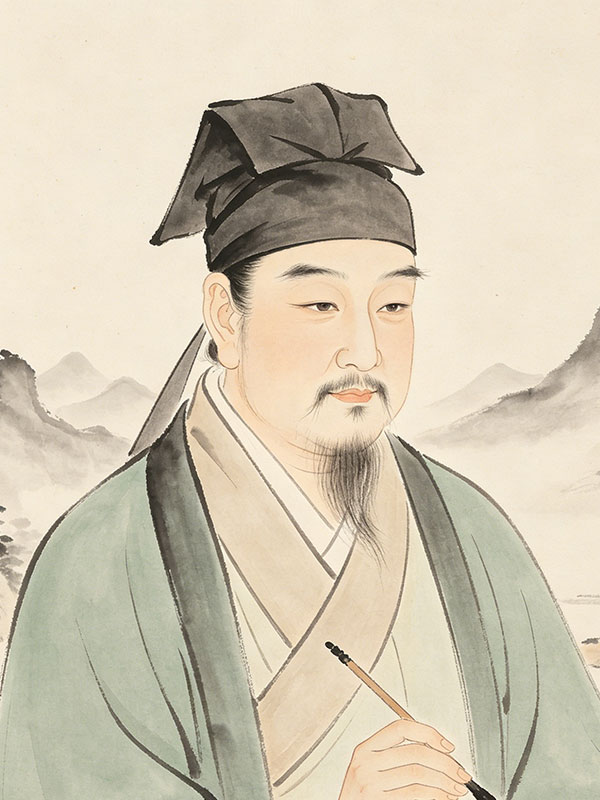
Yan Wengui: The Architect of "Yan-Style Scenery" and Northern Song Grandeur
Yan Wengui (c. 967–1044 AD) was a pivotal landscape painter of the early Northern Song Dynasty whose work successfully bridged the transition from the Five Dynasties to the peak of the Song academic tradition. Originally a soldier from Wuxing, he traveled to the capital, Kaifeng, where his extraordinary talent was discovered by the court painter Gao Yi. He eventually became a painter-in-attendance at the Hanlin Academy, serving under Emperors Taizong and Zhenzong. His humble beginnings and subsequent rise to the imperial court allowed him to integrate popular folk realism with the refined aesthetics of the elite.
1. The Innovation of "Yan-Style Scenery"
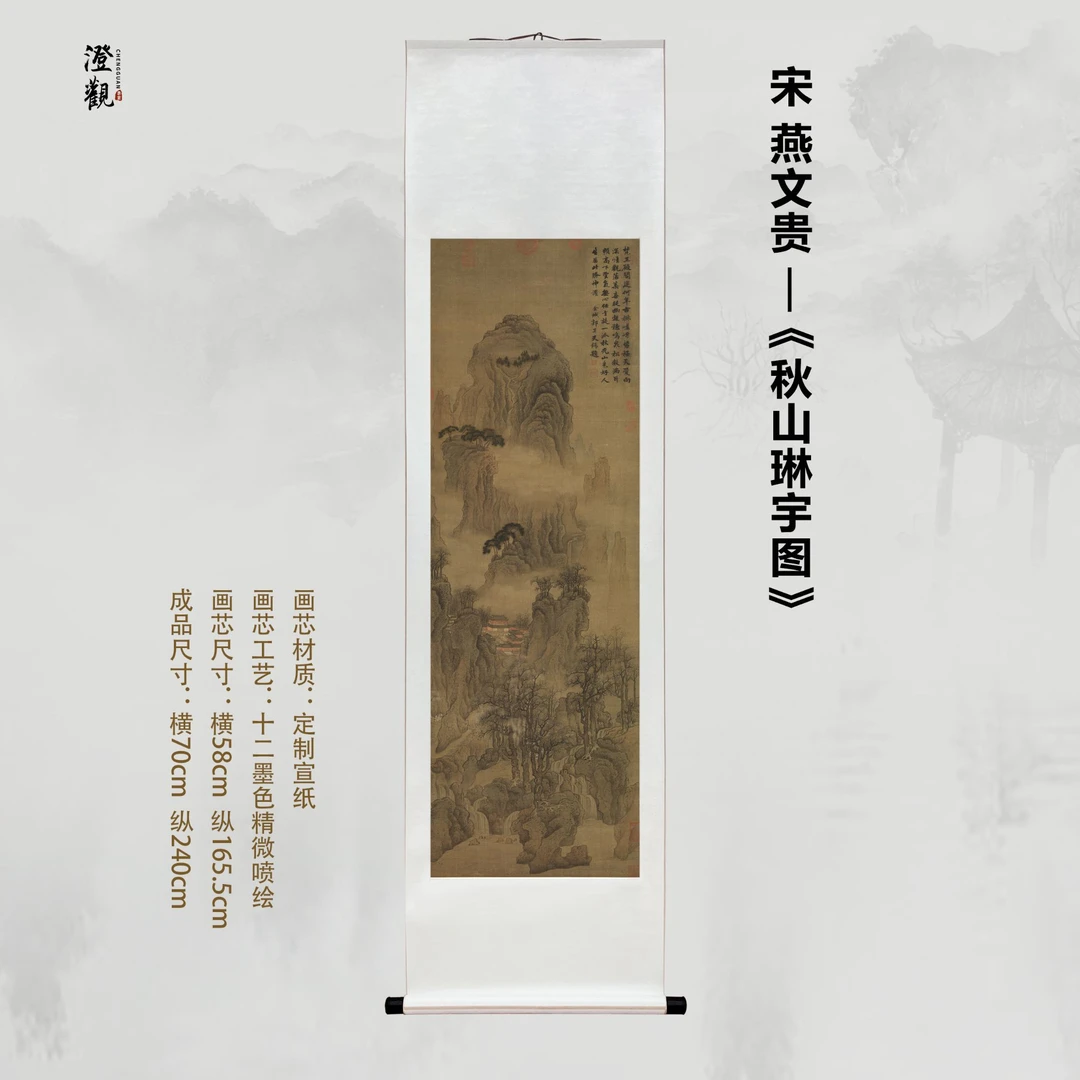
He is best known for creating the "Yan-style Scenery" (Yan Jia Jing Zhi), a unique aesthetic that blended the monumental mountains of the North with the meticulous detail typically found in Southern landscapes. His work was characterized by a panoramic perspective and a remarkable ability to integrate complex architectural structures—such as ships, bridges, and palatial pavilions—into vast natural settings. This mastery of Jiehua (ruled-line painting) made his landscapes feel both majestic and lived-in, a hallmark of early Song naturalistic realism.
2. Technical Mastery and Maritime Depiction
Technically, Yan Wengui excelled in the use of fine, vigorous brushwork and sophisticated ink washes. He was a pioneer in depicting the movement of water and the intricate textures of wintry forests. His mountains were often rendered with sharp, angular strokes, while his water scenes featured detailed ships and bustling maritime activity, reflecting the commercial prosperity and maritime expansion of the Song era. His landscapes were not merely static views but dynamic microcosms where nature and human ingenuity coexisted in perfect harmony.
3. Masterpiece: "A Temple in the Wintry Mountains"
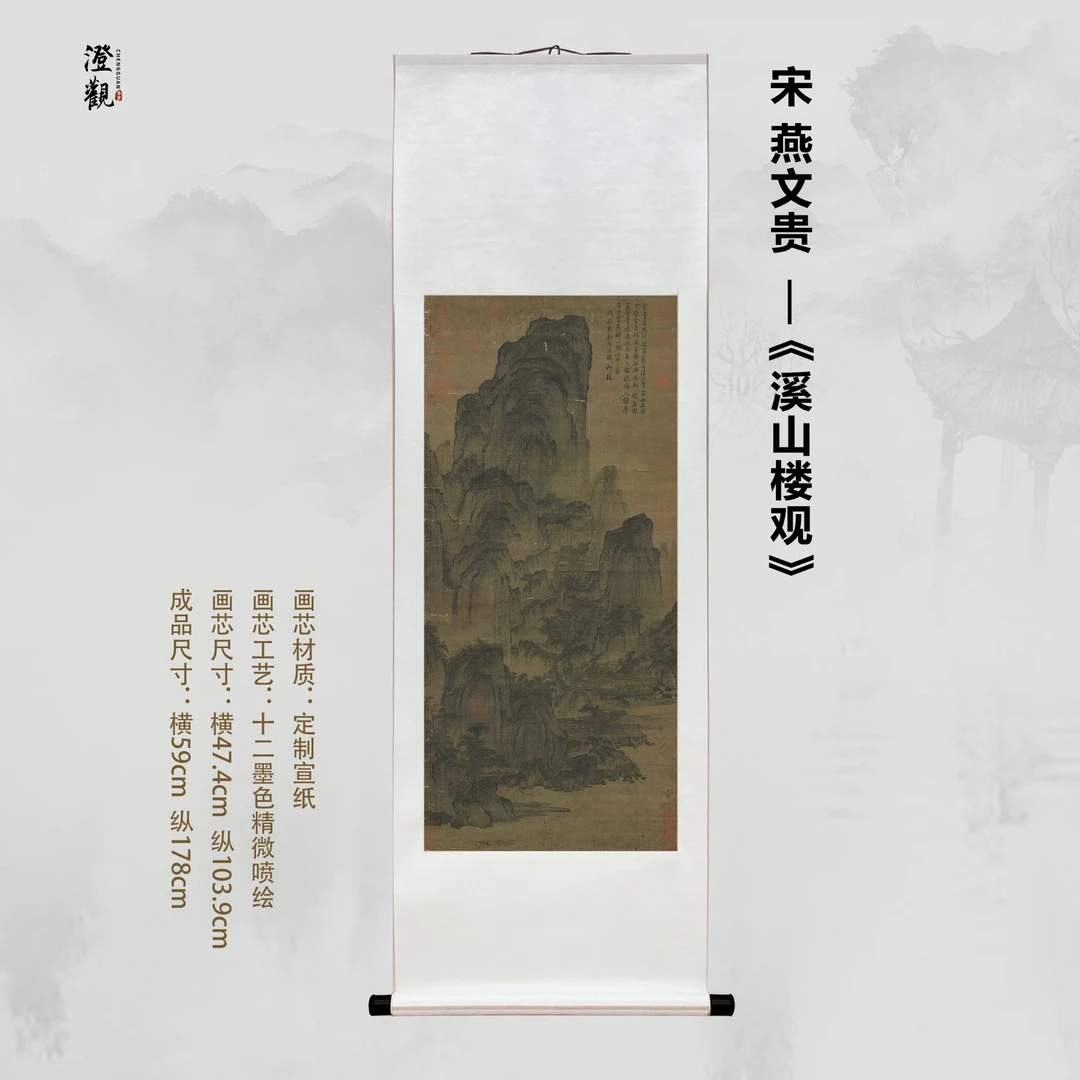
His surviving masterpiece, "A Temple in the Wintry Mountains" (溪山楼观图), currently in the National Palace Museum, is a definitive example of his technical brilliance. The painting features a soaring central peak and deep, misty valleys, populated by exquisitely detailed buildings and tiny figures navigating the slopes. It perfectly illustrates his ability to balance grandeur with intimacy, a quality that made his "Yan-style Scenery" a template for future generations of court painters who sought to capture the infinite variety of nature.
4. Historical Legacy and Influence
The legacy of Yan Wengui is profound, as he was ranked alongside Li Cheng and Fan Kuan as one of the great masters of the early Northern Song. His influence extended to the "Xuanhe Catalogue of Paintings", where his works were praised for their innovation and formal elegance. Today, he is remembered as the artist who refined the monumental landscape by adding a layer of humanistic and structural detail, ensuring that the Song Dynasty aesthetic remained both spiritually lofty and technically sophisticated.
— ALL MASTERPIECES LOADED —