
When Western viewers first encounter A Thousand Li of Rivers and Mountains, they are often struck by its unique "scattered perspective." Unlike Western landscape paintings from the Renaissance, which use a single vanishing point, this Chinese scroll allows the eye to wander freely. There is no one "correct" place to stand; the painting unfolds like a movie.
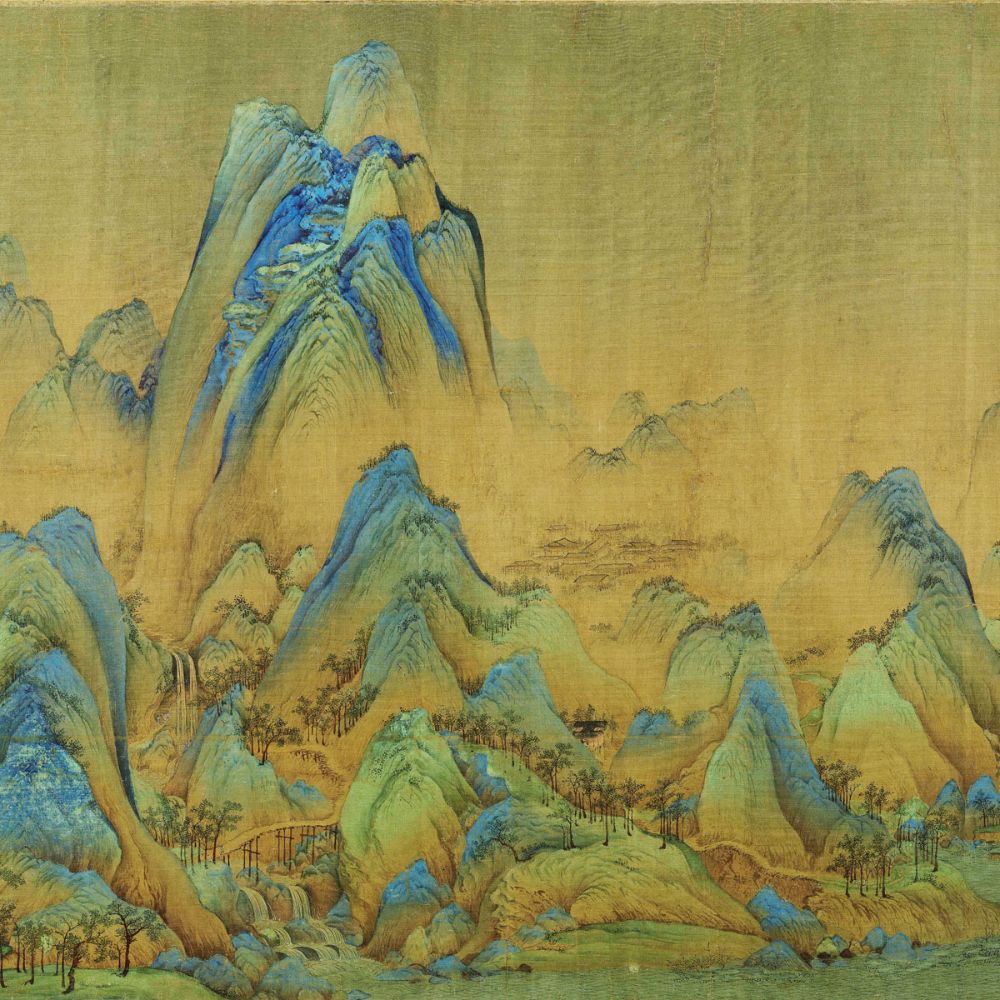
In Western Romanticism, landscapes often focus on a specific moment in time—a sunset or a storm. In contrast, Wang Ximeng’s work represents "eternal time." The scenery does not reflect a single hour of the day but rather a permanent, ideal state of nature. It is an encyclopedia of mountains and rivers gathered into one infinite horizon.
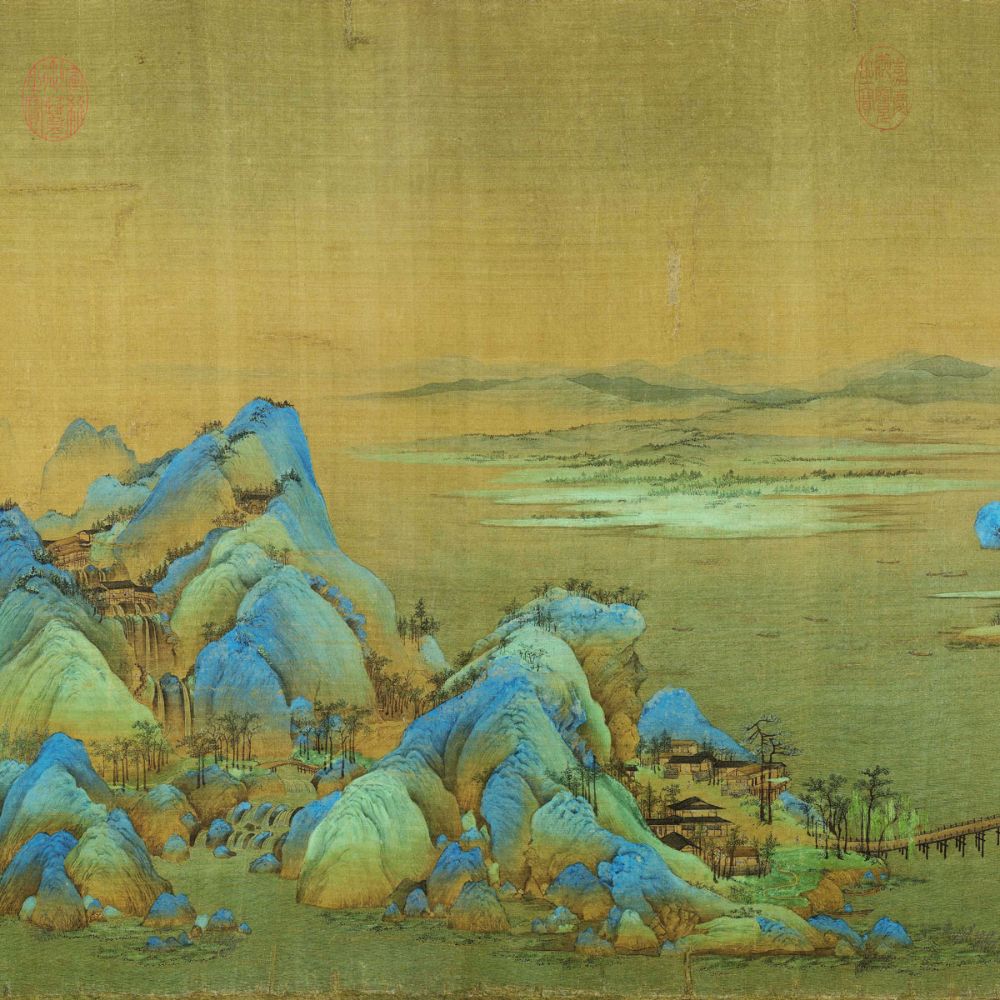
The role of the human figure also differs significantly. In Western art, man is often the conqueror or the central observer of the landscape. In the "Thousand Li" scroll, humans are tiny—almost microscopic. They are part of the ecosystem, not its masters. This reflects the Eastern belief in the "Unity of Heaven and Humanity."
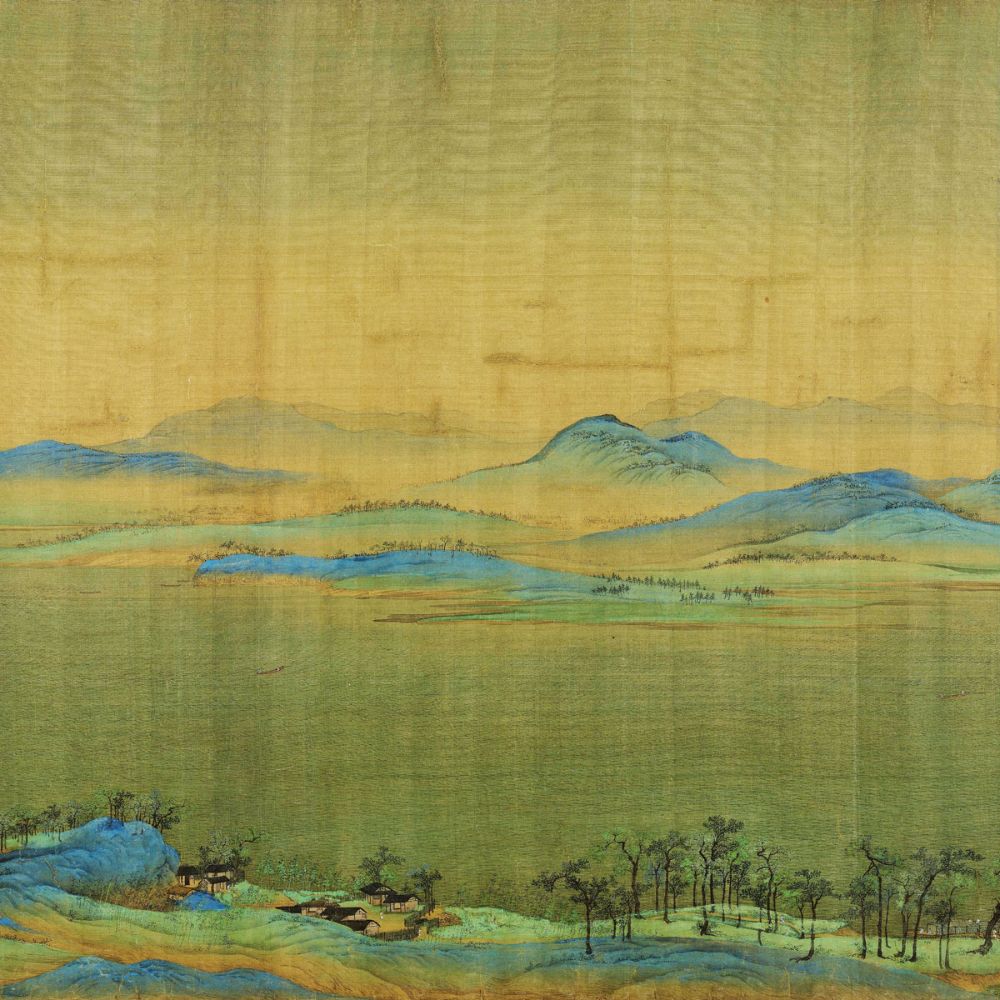
Furthermore, the use of color in the Blue-and-Green style serves a different purpose than Western realism. While Western artists used color to mimic light and shadow, Wang Ximeng used mineral colors to symbolize vitality and preciousness. The teal peaks are not "realistic" in a photographic sense, but they are "true" in a spiritual sense.
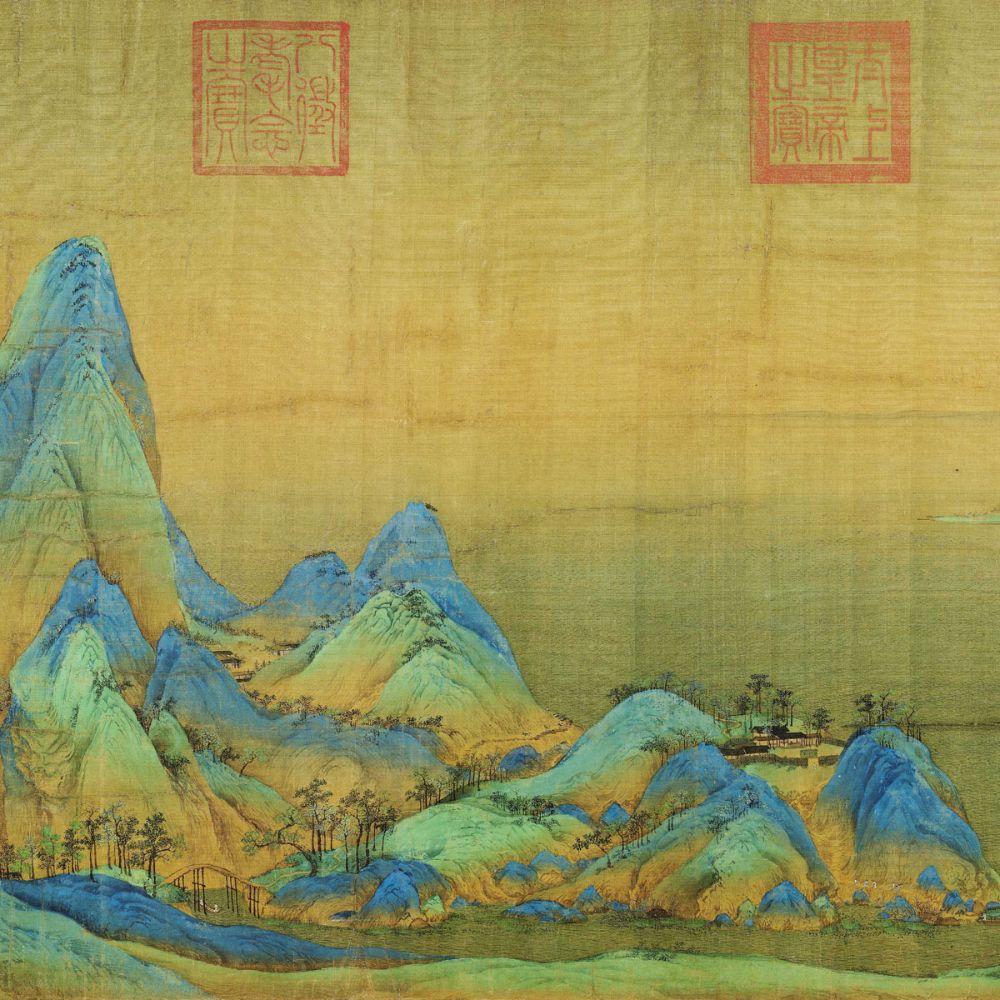
Studying these differences enriches our global understanding of art. By appreciating Wang Ximeng’s masterpiece, Western collectors can gain a new perspective on space, time, and the human condition. It is a bridge between two very different ways of seeing the world.